
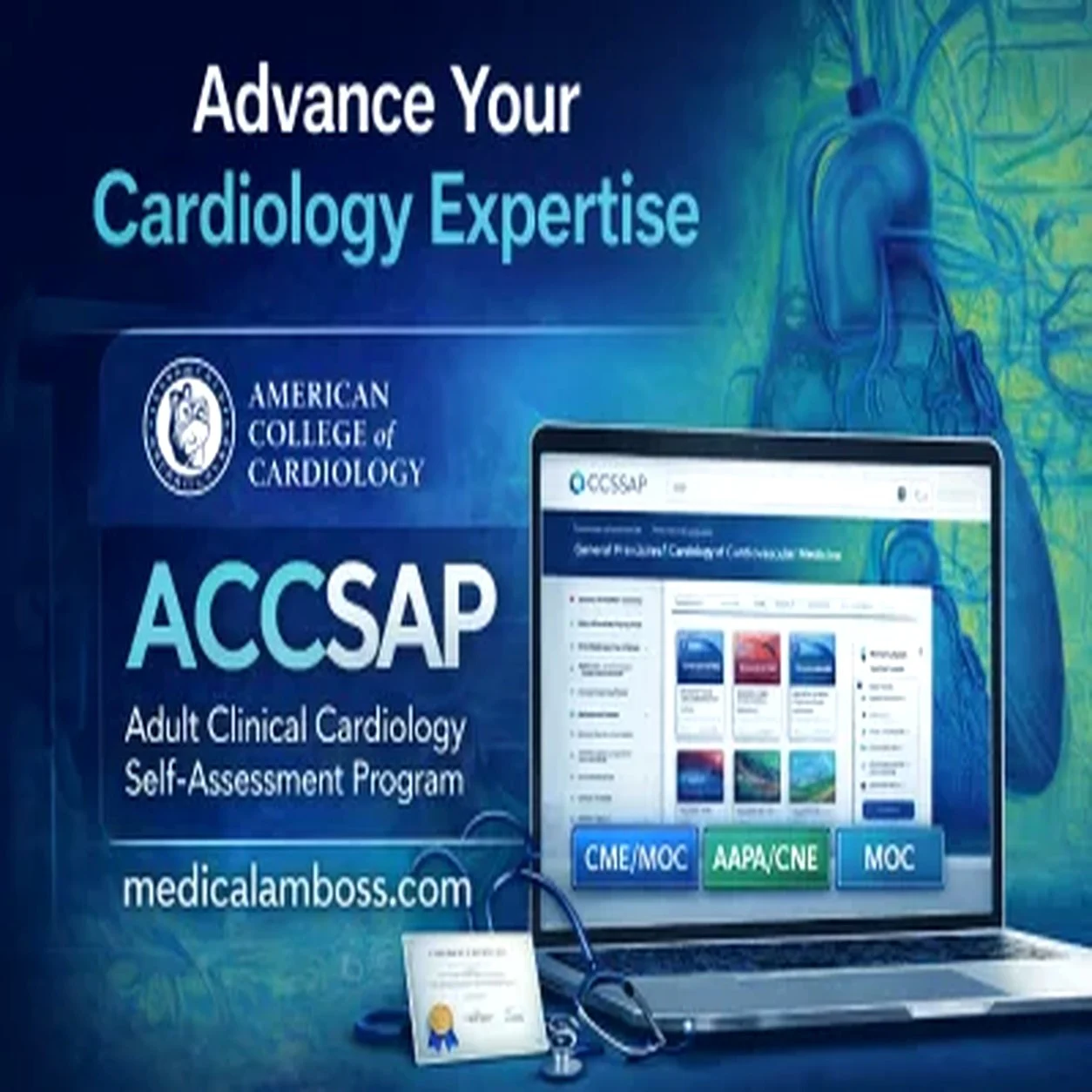
ACCSAP 2025 updated February 2025
Original price was: $1,500.00.$120.00Current price is: $120.00.
ACCSAP 2025 study materials cover adult clinical cardiology and board-oriented review. This listing is for downloadable study materials, not an ACC subscription. Interactive assessments, performance tracking, platform updates, CME and MOC are not included.
Delivery Information: This Product is shared via google drive download link. Please use your correct Gmail address at checkout.
Please note: there are no CME points or certificate associated with this course.
Samples for Courses Can be found here: Free Samples Here!
ACCSAP 2025 Updated February 2025
ACCSAP 2025 study materials cover adult clinical cardiology and board-oriented review. This listing is for downloadable study materials, not an ACC subscription. Interactive assessments, performance tracking, platform updates, CME and MOC are not included.
Introduction
The ACCSAP 2025 – Adult Clinical Cardiology Self-Assessment Program from American College of Cardiology is one of the most comprehensive educational and board-review resources in modern cardiovascular medicine. Designed for cardiologists, fellows, internists, and cardiovascular clinicians, ACCSAP provides an integrated review of adult cardiology through evidence-informed learning modules, board-style assessments, guideline-focused education, and case-based clinical reasoning.
The original ACC program is designed for cardiology education and self-assessment. This file-based listing supports independent study; ACC subscriptions, interactive tools, CME and MOC participation are separate and are not included.
- Cardiovascular board preparation
- Lifelong cardiovascular learning
- Evidence-based clinical decision-making
- Practical patient management strategies
Unlike condensed memorization-based board reviews, ACCSAP approaches cardiology as a clinically integrated specialty combining imaging, electrophysiology, pharmacology, prevention, critical care, hemodynamics, and structural heart disease into real-world cardiovascular scenarios.
Course Overview
📚 Program: ACCSAP 2025 – Adult Clinical Cardiology Self-Assessment Program
🏛️ Presented by American College of Cardiology
📅 Updated: February 2025
🎓 Educational Format
- Cardiovascular educational modules
- Board-style self-assessment questions
- Clinical case discussions
- Guideline-focused reviews
The curriculum delivers broad and clinically practical education across the entire spectrum of adult cardiovascular medicine.
Educational Focus
The program focuses on:
- Adult clinical cardiology
- Cardiovascular board preparation
- Preventive cardiology
- Heart failure medicine
- Electrophysiology and arrhythmias
- Cardiovascular imaging
- Structural heart disease
- Cardiac critical care
- Vascular medicine
- Evidence-based cardiovascular therapeutics
The curriculum is designed to strengthen diagnostic reasoning, clinical decision-making, and long-term professional development in cardiology.
Learning Objectives
After completing this activity, learners strengthen their ability to:
- Review the full spectrum of adult cardiovascular medicine
- Apply current ACC, AHA, and ESC clinical guidelines
- Improve board-style clinical reasoning and assessment skills
- Evaluate coronary artery disease, arrhythmias, and heart failure using evidence-based strategies
- Interpret cardiovascular imaging and hemodynamic findings
- Manage acute cardiovascular emergencies and critical care scenarios
- Strengthen preventive cardiology and cardiovascular risk reduction strategies
- Prepare for ABIM Cardiovascular Disease Certification and Maintenance of Certification examinations
- Review knowledge gaps through independent study of the supplied materials
The educational material integrates bedside cardiology with practical board-focused learning strategies.
Coronary Artery Disease & Preventive Cardiology
A major component of ACCSAP focuses on contemporary coronary and preventive cardiovascular medicine.
Covered Areas
- Stable ischemic heart disease
- Acute coronary syndromes
- Preventive cardiology
- Lipid management
- Coronary imaging
- Revascularization strategies
- Antithrombotic therapy
- Cardiovascular risk stratification
The curriculum emphasizes guideline-directed management and evidence-informed prevention strategies.
Heart Failure & Cardiomyopathy
Dedicated modules review both chronic and advanced heart failure management.
Topics Include
- HFrEF management
- HFpEF management
- Guideline-directed medical therapy
- Advanced heart failure
- Cardiomyopathies
- Mechanical circulatory support
- Cardiac transplantation
- Hemodynamic assessment
Participants strengthen understanding of contemporary heart failure therapeutics and advanced cardiovascular care.
Arrhythmias & Electrophysiology
The program extensively reviews cardiac rhythm disorders and electrophysiology principles.
Educational Topics
- Atrial fibrillation
- Bradyarrhythmias
- Ventricular arrhythmias
- Syncope evaluation
- Pacemakers and ICDs
- Antiarrhythmic pharmacology
- Sudden cardiac death prevention
The sessions highlight practical rhythm management strategies and board-relevant electrophysiology concepts.
Cardiac Critical Care & Acute Cardiovascular Emergencies
Specialized content focuses on high-acuity cardiovascular management.
Covered Areas
- Cardiogenic shock
- Hemodynamic instability
- Post-cardiac arrest care
- Acute heart failure
- ICU cardiovascular management
- Mechanical support devices
- Critical care pharmacology
The curriculum reinforces practical approaches to acute cardiovascular stabilization and intensive care medicine.
Valvular & Structural Heart Disease
The educational content reviews structural and valvular cardiovascular disorders.
Topics Include
- Valvular heart disease
- Hemodynamic valve assessment
- Structural cardiology principles
- Multidisciplinary valve management
Participants strengthen understanding of modern structural heart disease evaluation and management.
Congenital, Genetic & Vascular Cardiology
The curriculum also covers congenital and systemic cardiovascular disorders.
Educational Areas
- Adult congenital heart disease
- Cardiovascular genetics
- Peripheral arterial disease
- Pulmonary hypertension
- Pulmonary circulation disorders
- Multisystem cardiovascular disease
The program highlights integrated management strategies across diverse cardiovascular populations.
Cardiovascular Imaging
Dedicated modules review multimodality cardiovascular imaging interpretation.
Included Imaging Topics
- Echocardiography
- Cardiac CT
- Cardiac MRI
- Hemodynamic imaging integration
The curriculum emphasizes clinically relevant imaging interpretation and integration into cardiovascular decision-making.
Pharmacology & Therapeutics
A major educational focus involves evidence-based cardiovascular pharmacology.
Covered Topics
- Anticoagulants
- Antiplatelet therapy
- Heart failure pharmacology
- Antiarrhythmic medications
- Lipid-lowering therapies
- Antihypertensive medications
- Vasoactive agents
The sessions support optimization of cardiovascular therapeutic strategies in modern practice.
Educational Features
The supplied materials are intended for adult cardiology study and review. Features requiring an ACC login are outside this listing.
Study Topics and Format
- Board-style self-assessment questions
- Clinical case discussions
- Guideline-focused cardiovascular education
- Imaging and hemodynamic interpretation modules
- Flexible self-paced learning access
The curriculum integrates preventive cardiology, imaging, electrophysiology, pharmacology, critical care, and procedural medicine into a unified learning system.
Why ACCSAP Stands Out
Comprehensive Adult Cardiology Review
Reviews adult cardiovascular medicine across multiple subject areas.
Strong Board-Preparation Focus
Designed to support ABIM Cardiovascular Disease Certification and Maintenance of Certification preparation.
Evidence-Based Clinical Education
Integrates ACC, AHA, and ESC guideline-based management strategies.
Practical Real-World Learning
Combines self-assessment with clinically relevant cardiovascular case discussions.
Long-Term Professional Development
Supports continuing education, clinical excellence, and lifelong cardiovascular learning.
Clinical Value
The ACCSAP 2025 – Adult Clinical Cardiology Self-Assessment Program delivers comprehensive cardiovascular education through integrated coverage of:
- Coronary artery disease
- Preventive cardiology
- Heart failure management
- Cardiac electrophysiology
- Cardiovascular imaging
- Structural heart disease
- Cardiac critical care
- Hemodynamic assessment
- Vascular medicine
- Congenital and genetic cardiology
- Cardiovascular pharmacology
- Evidence-based therapeutic strategies
These ACCSAP study materials can support independent cardiology review. They do not replace clinical guidelines or provide access to the publisher’s interactive platform.
Related products
Internal Medicine
Internal Medicine
Cardiology

Critical Care - Emergency medicine

Internal Medicine

Internal Medicine

Critical Care - Emergency medicine

Critical Care - Emergency medicine