
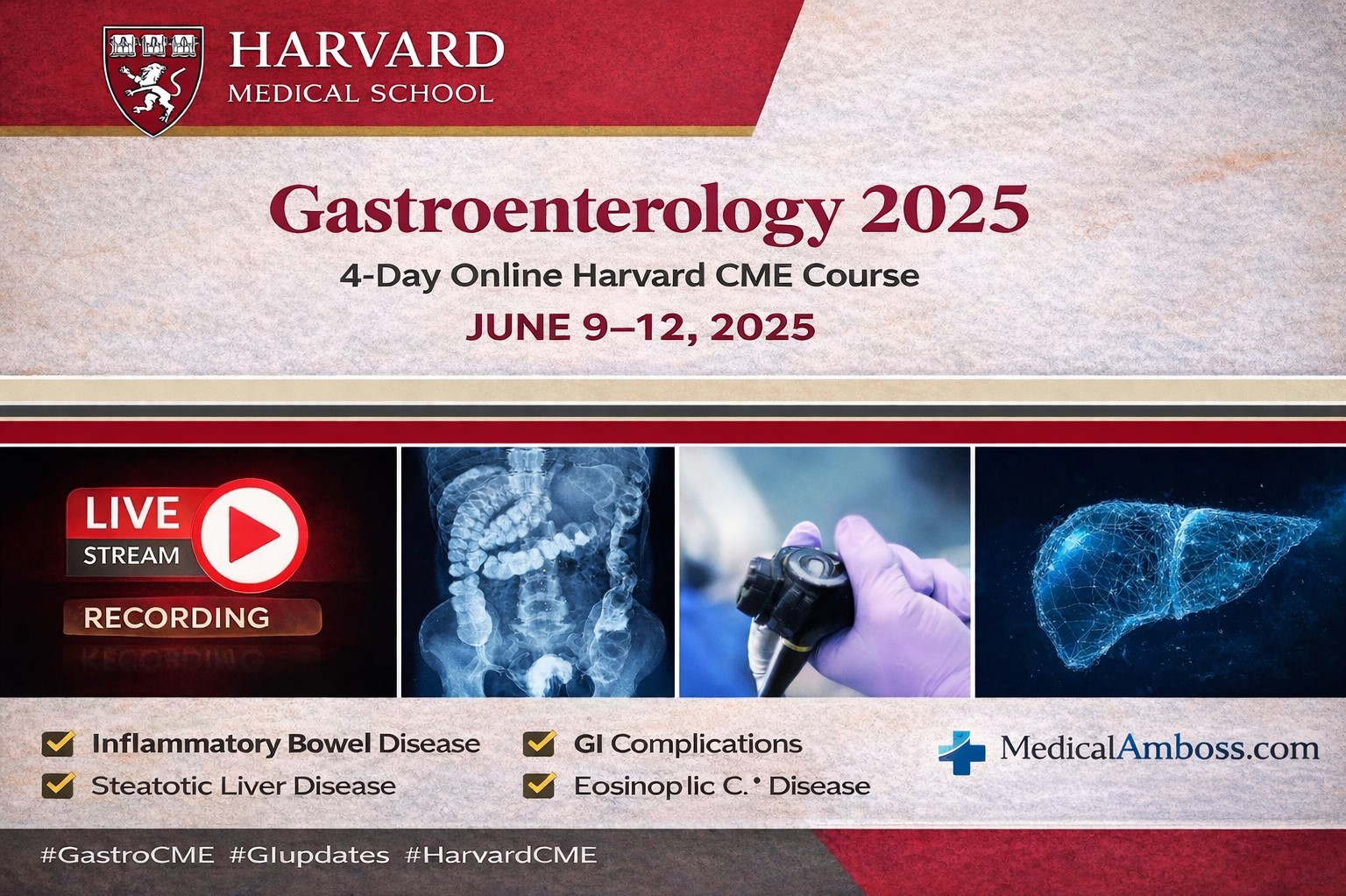
Harvard Gastroenterology 2025

Original price was: $895.00.$75.00Current price is: $75.00.
This Product is shared via google drive download link, So please share your correct Gmail id while placing the order .Please note that there are no CME points or certificate associated with this course Samples for Courses Can be found here : Free Samples Here!
Harvard Gastroenterology 2025
Syllabus : Harvard CME _ Gastroenterology
The Comprehensive 2025 Gastroenterology Update is a comprehensive CME program designed to provide clinicians with the latest evidence-based advances in gastroenterology, hepatology, endoscopy, and digestive disease management. Developed by leading Harvard Medical School faculty and nationally recognized experts, the course delivers practical guidance on current guidelines, emerging therapies, diagnostic innovations, and best practices that can be immediately applied in clinical practice.
This intensive educational program reviews the most important developments affecting the diagnosis and management of common and complex gastrointestinal disorders, including inflammatory bowel disease (IBD), colorectal cancer prevention, Barrett’s esophagus, eosinophilic esophagitis, celiac disease, irritable bowel syndrome (IBS), gastroesophageal reflux disease (GERD), liver disease, pancreatitis, and gastrointestinal bleeding.
Special emphasis is placed on newly published clinical guidelines, biologic therapies, therapeutic drug monitoring, microbiome-based therapies, endoscopic innovations, hereditary gastrointestinal cancer syndromes, and advances in hepatology. Participants will gain practical insights into optimizing patient outcomes while staying current with rapidly evolving standards of care in gastroenterology.
Included Content
- Harvard CME Gastroenterology 2025 Syllabus
- Expert-Led Educational Sessions
- Evidence-Based Clinical Updates
- Gastroenterology Practice Guidelines
- Hepatology and Liver Disease Updates
- Endoscopy and Colonoscopy Quality Improvement Strategies
Key Topics Covered
Inflammatory Bowel Disease (IBD)
- Biologic therapies for IBD
- Therapeutic drug monitoring
- Management of older adults with IBD
- Treatment optimization strategies
- Emerging therapies and clinical updates
Esophageal Disorders
- Barrett’s esophagus
- Eosinophilic esophagitis
- Refractory GERD
- Advanced diagnostic approaches
- Evidence-based treatment strategies
Liver Disease & Hepatology
- Hepatitis B (HBV)
- Hepatitis C (HCV)
- Steatotic liver disease
- Alcohol-related liver disease
- Autoimmune hepatitis
- Cirrhosis diagnosis and management
Gastrointestinal Infections
- Updated management of C. difficile infection
- Fecal microbiota transplantation (FMT)
- Microbiome-based therapies
- Gastrointestinal infectious diseases
Functional Gastrointestinal Disorders
- Irritable bowel syndrome (IBS)
- Chronic gastrointestinal symptoms
- Fecal incontinence
- Patient-centered management strategies
Pancreatic Disorders
- Acute pancreatitis
- Chronic pancreatitis
- Diagnostic evaluation
- Contemporary treatment approaches
Gastrointestinal Oncology & Cancer Prevention
- Hereditary GI cancer syndromes
- Expanded genetic testing strategies
- Colorectal cancer prevention
- Adenoma detection rate (ADR) improvement
- Artificial intelligence in colonoscopy
Endoscopy & Advanced Therapeutics
- Endoscopic management of obesity
- High-quality colonoscopic care
- Acute GI bleeding management
- Endoscopic innovation and quality improvement
Immunotherapy-Related GI Disorders
- GI complications of immunotherapy
- Anti-neoplastic therapy-related toxicities
- Diagnostic and treatment strategies
Learning Objectives
After completing this activity, participants will be able to:
- Apply updated clinical guidelines for common gastrointestinal and liver disorders.
- Optimize biologic therapy selection and monitoring in inflammatory bowel disease.
- Improve diagnosis and management of GERD, Barrett’s esophagus, and eosinophilic esophagitis.
- Utilize current approaches to hepatitis, cirrhosis, and steatotic liver disease.
- Implement best practices for colorectal cancer prevention and adenoma detection.
- Recognize and manage gastrointestinal complications of immunotherapy.
- Integrate emerging technologies and evidence-based innovations into clinical practice.
- Improve patient outcomes through updated diagnostic and therapeutic strategies.
Educational Benefits
Participants will receive a comprehensive update on current gastroenterology practice, including the latest clinical guidelines, therapeutic advances, endoscopic innovations, and hepatology updates. The program provides practical recommendations that can be immediately implemented to improve patient care and optimize outcomes across a wide range of gastrointestinal and liver disorders.
Related products

Critical Care - Emergency medicine
Medical Accounts

Anesthesiology & pain medicine
Cardiology

Medical Accounts
Internal Medicine

Critical Care - Emergency medicine

Cardiology