
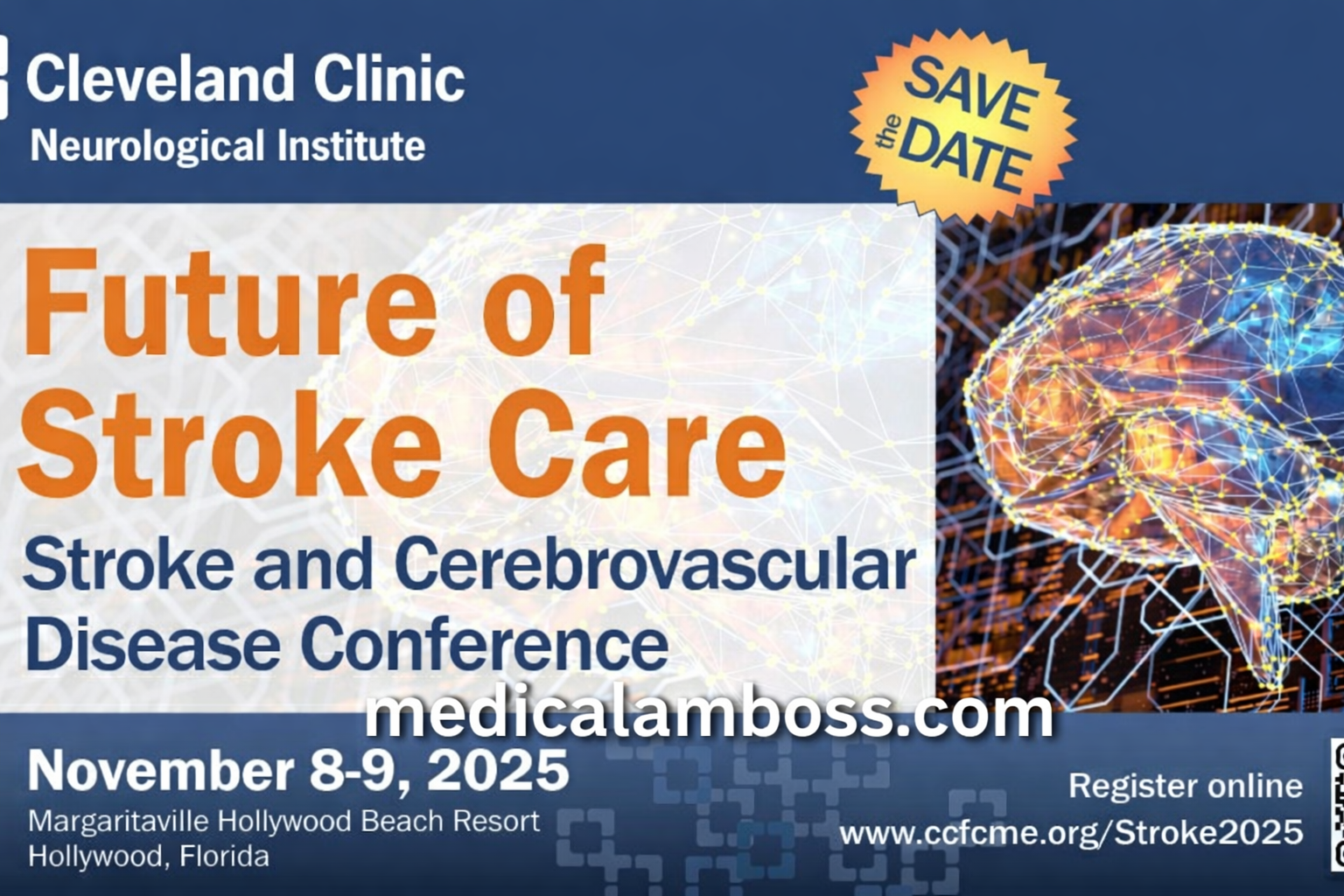
Cleveland Clinic Future of Stroke Care 2025

Original price was: $495.00.$30.00Current price is: $30.00.
This Product is shared via google drive download link, So please share your correct Gmail id while placing the order .Please note that there are no CME points or certificate associated with this course Samples for Courses Can be found here : Free Samples Here!
- 42 Video Lectures
- 1 Course PDF
Cleveland Clinic Future of Stroke Care 2025
Comprehensive Updates in Stroke Prevention, Neurointervention, Neurocritical Care, Artificial Intelligence, and Cerebrovascular Disease Management
Cleveland Clinic Future of Stroke Care 2025 is an advanced educational program designed to provide healthcare professionals with a comprehensive review of modern stroke medicine and the rapidly evolving field of cerebrovascular care. Through expert-led lectures, multidisciplinary discussions, and real-world case presentations, participants gain practical knowledge on stroke prevention, acute stroke intervention, neurocritical care, neurorehabilitation, and emerging technologies that are transforming patient outcomes.
This comprehensive course explores the full spectrum of cerebrovascular disease management, from primary prevention and risk-factor modification to advanced neurointerventional procedures, critical care monitoring, and long-term recovery strategies. Special emphasis is placed on artificial intelligence, precision medicine, advanced neuroimaging, and innovative therapies that are shaping the future of stroke care.
Course Overview
Stroke remains one of the leading causes of death and long-term disability worldwide. Advances in thrombolysis, mechanical thrombectomy, neuroimaging, endovascular interventions, and neurocritical care have dramatically improved outcomes for patients with cerebrovascular disease. At the same time, new insights into inflammation, cardiovascular risk factors, neuroplasticity, and precision medicine are creating opportunities for more individualized and effective treatment approaches.
Cleveland Clinic Future of Stroke Care 2025 delivers evidence-based education designed to help clinicians navigate these advances and apply them to daily clinical practice. The course integrates prevention, acute intervention, rehabilitation, and long-term management strategies while highlighting cutting-edge research and emerging technologies.
Included Content
- 42 Video Lectures
- 1 Comprehensive Course PDF
- Expert Cleveland Clinic Faculty Presentations
- Case-Based Learning Sessions
- Evidence-Based Clinical Updates
Release Date: December 22, 2025
Educational Level: Intermediate to Advanced
File Size: 3.21 GB
Comprehensive Curriculum
Evolving Landscapes in Cerebrovascular Disease
Participants explore emerging concepts including:
- Environmental risk factors for stroke
- Inflammation and vascular injury
- Intracerebral hemorrhage (ICH)
- Minimally invasive hematoma evacuation
- ENRICH Trial updates
- REACH Trial findings
- Brainstem cavernous malformations
- White matter fiber dissection techniques
Faculty review how advances in research are reshaping our understanding of cerebrovascular disease.
The Brain-Heart Connection
Comprehensive sessions focus on:
- Cardioembolic stroke prevention
- Left atrial appendage (LAA) closure
- Patent foramen ovale (PFO) closure
- Structural heart disease and stroke
- Beyond atrial fibrillation
- Artificial intelligence in secondary prevention
Participants learn how cardiovascular and neurologic disciplines increasingly overlap in stroke prevention.
Precision Medicine in Stroke Prevention
Coverage includes:
- Intracranial atherosclerotic disease
- Endovascular prevention strategies
- Medical optimization
- Asymptomatic carotid stenosis
- Metabolic risk reduction
- GLP-1 receptor agonists
- Personalized treatment pathways
The course highlights individualized approaches to cerebrovascular risk management.
Acute Ischemic Stroke Management
Extensive instruction covers:
- Modern thrombolysis strategies
- Mechanical thrombectomy
- Imaging-based patient selection
- Acute ischemic stroke workflows
- Endovascular treatment innovations
- Time-sensitive decision-making
- Complex stroke interventions
Participants review evidence-based approaches for maximizing functional outcomes.
Advanced Neurointerventional Techniques
Topics include:
- Mechanical thrombectomy
- Chronic carotid occlusion
- Chronic total occlusion (CTO)
- Endovascular revascularization
- Challenging neurovascular cases
- Complex intracranial interventions
- Technical decision-making strategies
Case-based discussions provide practical insights into modern neurointerventional care.
Neuroimaging Advances
The program provides detailed instruction on:
- CT perfusion imaging
- Advanced MRI techniques
- Vascular imaging
- Imaging biomarkers
- Artificial intelligence-assisted image interpretation
- Stroke triage technologies
- Imaging-guided treatment selection
Participants learn how advanced imaging improves diagnostic accuracy and therapeutic decision-making.
Artificial Intelligence in Stroke Care
Specialized sessions review:
- AI-assisted stroke detection
- Automated imaging analysis
- Predictive analytics
- Risk stratification
- Secondary prevention algorithms
- Workflow optimization
- Future AI applications in cerebrovascular medicine
Faculty discuss how artificial intelligence is transforming stroke diagnosis and management.
Neurocritical Care
Comprehensive reviews include:
- Multimodal neuromonitoring
- Neurocritical care technologies
- ICU management of stroke patients
- Intracranial pressure monitoring
- Critical care decision-making
- Neurostimulants in recovery
- Ethical and legal challenges in neurocritical care
Participants gain practical knowledge for managing critically ill cerebrovascular patients.
Hemorrhagic Stroke Management
Coverage includes:
- Intracerebral hemorrhage
- Cerebral amyloid angiopathy
- Hematoma evacuation techniques
- Surgical interventions
- Critical care management
- Recovery considerations
Current evidence and emerging treatment strategies are reviewed.
Stroke Rehabilitation and Recovery
Sessions focus on:
- Neuroplasticity
- Brain recovery mechanisms
- Functional recovery pathways
- Neurocognitive rehabilitation
- Dysphagia management
- Vagal nerve stimulation
- Long-term recovery optimization
Faculty emphasize multidisciplinary approaches to rehabilitation.
Stroke in Special Populations
Topics include:
- Stroke in young adults
- Rare stroke etiologies
- Personalized diagnostic pathways
- Complex cerebrovascular presentations
- Translational neuroscience applications
Long-Term Stroke Care
Participants review:
- Neurocognitive impairment after stroke
- Secondary prevention
- Functional outcomes
- Quality of life considerations
- Multidisciplinary follow-up care
- Stroke systems of care
Learning Objectives
Upon completion of this activity, participants will be able to:
- Apply evidence-based strategies for stroke prevention.
- Recognize emerging cerebrovascular risk factors.
- Evaluate artificial intelligence applications in stroke care.
- Optimize management of intracranial and extracranial vascular disease.
- Identify candidates for neurointerventional procedures.
- Implement current thrombolysis and thrombectomy strategies.
- Utilize advanced neurocritical care monitoring techniques.
- Improve stroke recovery through multidisciplinary rehabilitation.
- Integrate precision medicine principles into cerebrovascular care.
- Apply evidence from recent clinical trials to patient management.
Educational Features
✔ Cleveland Clinic Stroke Experts
✔ Comprehensive Cerebrovascular Medicine Review
✔ Artificial Intelligence in Stroke Care
✔ Advanced Neuroimaging Education
✔ Neurointerventional Case Discussions
✔ Neurocritical Care Updates
✔ Precision Medicine Approaches
✔ Rehabilitation and Recovery Strategies
✔ Evidence-Based Clinical Recommendations
✔ Multidisciplinary Faculty Presentations
Target Audience
This course is designed for:
- Neurologists
- Stroke Specialists
- Vascular Neurologists
- Neurointerventionalists
- Neurosurgeons
- Neuroradiologists
- Neurocritical Care Physicians
- Emergency Medicine Physicians
- Critical Care Specialists
- Nurse Practitioners
- Physician Assistants
- Stroke Nurses
- Rehabilitation Specialists
- Neurology Residents
- Stroke Fellows
- Neurosurgery Residents
Why This Course Matters
The future of stroke care extends far beyond acute intervention. Modern cerebrovascular medicine now integrates advanced imaging, artificial intelligence, precision prevention, endovascular therapies, neurocritical care, and innovative rehabilitation strategies to improve both survival and long-term neurological outcomes.
Cleveland Clinic Future of Stroke Care 2025 provides a comprehensive review of these rapidly evolving areas, helping clinicians remain at the forefront of stroke prevention, diagnosis, treatment, and recovery while incorporating the latest evidence and technologies into patient-centered care.
Related products

Critical Care - Emergency medicine
Internal Medicine
Medical Accounts
Internal Medicine
Cardiology

Critical Care - Emergency medicine
Internal Medicine