ACC’s Self-Assessment Program for ACHD 2025
Introduction
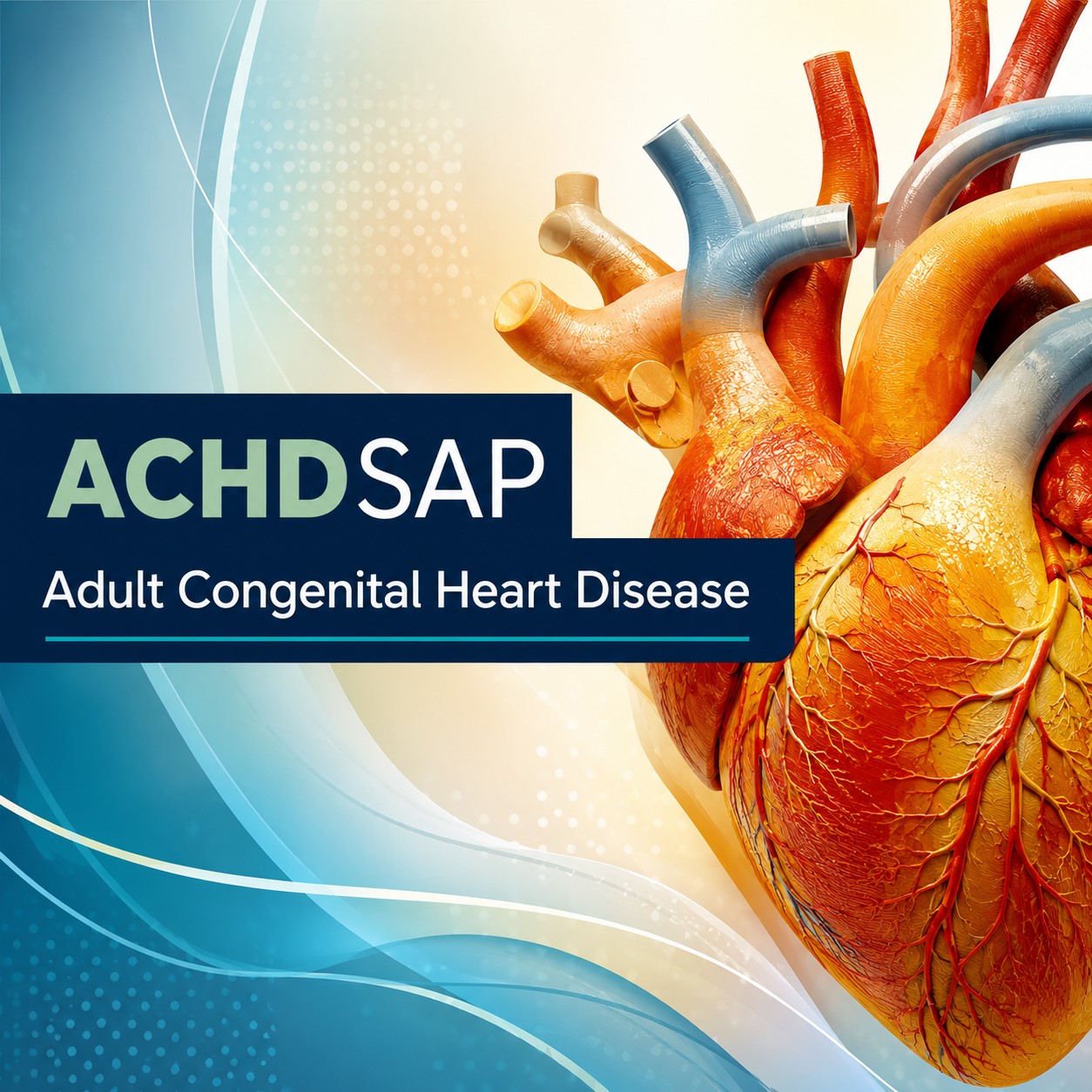
ACC’s Self-Assessment Program for Adult Congenital Heart Disease (ACHD) 2025 is a comprehensive cardiovascular education and board-preparation resource developed for clinicians involved in the management of adult congenital heart disease. Created by American College of Cardiology, the program is designed to support continuous learning, strengthen clinical expertise, and assist physicians preparing for certification and maintenance of certification examinations in ACHD.
The curriculum combines:
- Adult congenital heart disease review
- Board-focused self-assessment
- Congenital cardiac lesion interpretation
- ACHD management strategies
- Hemodynamic concepts
- Arrhythmia management
- Pulmonary hypertension in congenital disease
- Heart failure in congenital heart patients
- Reproductive and genetic considerations
- Multidisciplinary congenital cardiology care
into a structured educational platform centered on evidence-based clinical learning and professional development.
The program emphasizes practical congenital cardiology knowledge, guideline integration, and identification of knowledge gaps relevant to ACHD practice.
Course Overview
📚 Program: ACC’s Self-Assessment Program for ACHD 2025

🏛️ Developed by American College of Cardiology
🎯 Educational focus on adult congenital heart disease review and board preparation.
The curriculum is structured to support:
- Continuous cardiovascular learning
- ACHD certification preparation
- Clinical decision-making improvement
- Evidence-based congenital heart disease management
- Long-term professional development
Educational Focus
The program focuses on:
- Adult congenital heart disease
- ACHD board review
- Congenital cardiac lesion management
- Congenital imaging interpretation
- Hemodynamic assessment
- Arrhythmia management in congenital disease
- Pulmonary vascular disease
- ACHD heart failure
- Reproductive cardiovascular care
- Lifelong congenital heart management
The educational material integrates congenital anatomy, physiology, diagnostics, and clinical management strategies.
Learning Objectives
After completing this activity, learners strengthen their ability to:
- Identify knowledge gaps in adult congenital cardiology
- Improve preparation for ACHD certification examinations
- Apply clinical guidelines in congenital heart disease care
- Recognize complex congenital cardiac lesions
- Integrate multidisciplinary ACHD management approaches
- Improve patient safety and quality of care
- Apply evidence-based strategies in congenital cardiology
- Strengthen long-term management of congenital heart disease patients
The curriculum emphasizes clinically relevant congenital cardiology education applicable to real-world practice.
Board Preparation & Self-Assessment
A major component of the program focuses on preparation for certification and maintenance of certification examinations.
Educational Features
- Self-assessment learning modules
- Board-oriented review topics
- High-yield congenital cardiology concepts
- Examination-focused study guidance
- Knowledge gap identification
The structured review format helps learners strengthen weak areas and improve exam readiness.
Congenital Cardiac Lesions
The curriculum provides extensive review of major congenital heart lesions encountered in adult practice.
Covered Areas
- Shunt lesions
- Conotruncal abnormalities
- Left-sided heart lesions
- Right-sided heart lesions
- Coronary anomalies
- Single ventricle physiology
- Heterotaxy syndromes
- Transposition of the great arteries
- Congenitally corrected transposition
The sessions reinforce congenital anatomy, physiology, and long-term clinical management.
Heart Failure in ACHD
Dedicated educational content reviews heart failure syndromes in congenital heart disease patients.
Topics Include
- Ventricular dysfunction
- Advanced congenital heart failure
- Fontan circulation complications
- Hemodynamic deterioration
- Long-term management strategies
The curriculum highlights the unique challenges associated with congenital heart failure care.
Arrhythmias & Electrophysiology
A major section reviews rhythm disorders commonly encountered in ACHD populations.
Educational Topics
- Supraventricular arrhythmias
- Ventricular arrhythmias
- Conduction abnormalities
- Device-related management
- Electrophysiology considerations in congenital disease
The sessions emphasize recognition and management of complex rhythm issues in congenital patients.
Pulmonary Hypertension & Hemodynamics
The program reviews pulmonary vascular disease and hemodynamic principles in ACHD.
Topics Include
- Pulmonary hypertension evaluation
- Eisenmenger physiology
- Hemodynamic assessment
- Catheterization concepts
- Pulmonary vascular resistance
Participants strengthen understanding of congenital circulatory physiology and advanced hemodynamics.
Diagnostic Testing & Imaging
The curriculum includes noninvasive and invasive diagnostic approaches used in congenital cardiology.
Covered Areas
- Echocardiography
- Advanced imaging strategies
- Cardiac catheterization
- Hemodynamic interpretation
- Functional assessment
These sessions reinforce practical evaluation of congenital cardiac anatomy and physiology.
Reproductive & Genetic Considerations
Specialized modules review reproductive cardiovascular care and genetic syndromes associated with congenital disease.
Educational Topics
- Pregnancy in congenital heart disease
- Reproductive counseling
- Genetic syndromes
- Inherited cardiovascular disorders
- Risk stratification during pregnancy
The program highlights multidisciplinary approaches to long-term congenital care.
Lifelong Adult Congenital Heart Disease Management
The curriculum emphasizes comprehensive lifelong care for adults with congenital heart disease.
Areas Covered
- Preventive cardiovascular care
- Acquired cardiovascular disease in ACHD
- Long-term surveillance
- Lifestyle and health management
- Multispecialty coordination
- Quality improvement strategies
The educational content focuses on optimizing long-term outcomes and continuity of care.
Evidence-Based & Guideline-Oriented Learning
The program integrates contemporary congenital cardiology recommendations and evidence-based management.
Included Components
- Clinical practice guidelines
- Emerging ACHD research
- Performance improvement strategies
- Patient safety initiatives
- Multidisciplinary communication
Participants learn to apply evolving evidence into modern congenital cardiology practice.
Teaching Style & Educational Experience
The educational structure combines:
- Self-assessment learning
- Board-focused congenital review
- Clinical management discussions
- Guideline-based education
- Evidence-driven congenital cardiology
- Practical case-oriented learning
The curriculum emphasizes efficient, clinically relevant congenital heart disease education.
Why This Program Stands Out
Comprehensive ACHD Coverage
Covers major congenital lesions, physiology, and long-term management topics.
Strong Board Preparation Focus
Designed to support ACHD certification and maintenance of certification preparation.
Lifelong Learning Resource
Useful for both examination review and ongoing clinical practice improvement.
Multidisciplinary Clinical Perspective
Integrates congenital cardiology with imaging, electrophysiology, pulmonary hypertension, and reproductive care.
Evidence-Based Educational Design
Emphasizes guideline-driven and research-supported management approaches.
Clinical Value
ACC’s Self-Assessment Program for ACHD 2025 delivers comprehensive congenital cardiology education through integrated coverage of:
- Adult congenital heart disease
- ACHD board review
- Congenital lesion interpretation
- Hemodynamic assessment
- Arrhythmia management
- Pulmonary hypertension
- Congenital heart failure
- Reproductive cardiovascular care
- Genetic syndromes
- Cardiac catheterization
- Long-term congenital heart management
- Evidence-based congenital cardiology practice
The combination of self-assessment learning, congenital cardiology review, and board-focused education makes this program highly valuable for clinicians involved in the care of adults with congenital heart disease.