Harvard Updates in General Internal Medicine for Specialists 2026
Introduction
The Harvard Updates in General Internal Medicine for Specialists 2026 course is a comprehensive multidisciplinary educational program developed through Harvard Medical School to provide subspecialists, internists, and primary care clinicians with evidence-informed updates across the rapidly evolving landscape of modern internal medicine. Held January 26–30, 2026, the course delivers an expansive review of contemporary diagnostic strategies, chronic disease management, preventive medicine, digital health innovation, and cross-specialty clinical care through expert-led lectures, workshops, and practical case-based discussions.

Previously known as General Internal Medicine for Specialists, this longstanding Harvard educational program has become a respected resource for clinicians seeking broader medical expertise beyond their core specialty. Designed specifically for physicians managing increasingly complex and multimorbid patient populations, the course integrates updates from more than 35 medical specialties into a clinically practical learning experience applicable to both outpatient and hospital-based care.
The hybrid learning format allows participants to engage either in person in Boston or remotely through livestream access featuring multilingual translation and real-time captioning, making the program accessible to a broad international medical audience.
Files Included
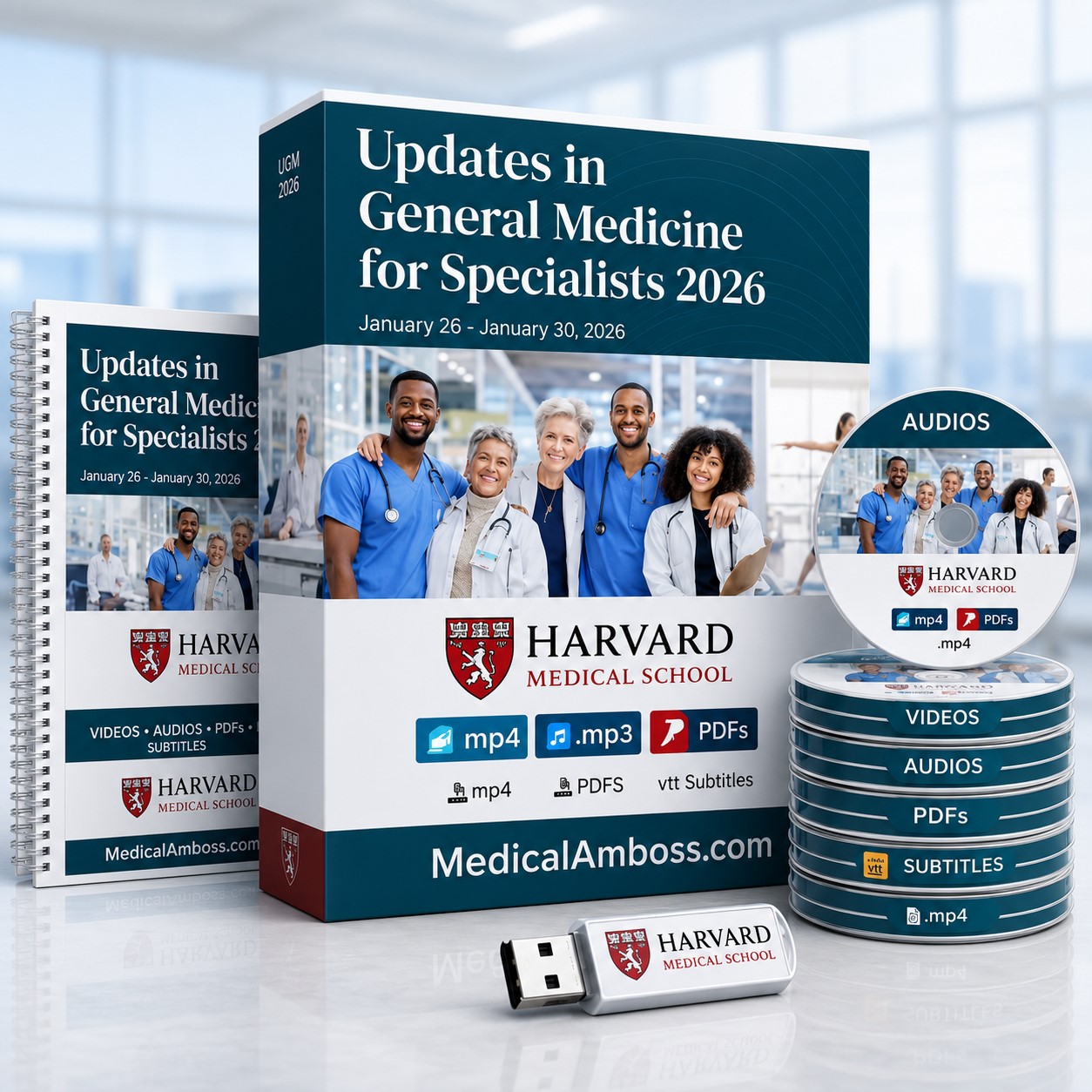
The Harvard Updates in General Internal Medicine for Specialists 2026 educational package includes extensive multidisciplinary internal medicine learning materials designed for flexible self-paced review.
Included resources:
- 64 video lectures (.mp4)
- 64 audio recordings (.mp3)
- 64 subtitle files (.vtt)
- 55 downloadable PDF presentations
- Bonus educational video library
- Interactive workshops and multidisciplinary discussions
- Preventive medicine and chronic disease management sessions
- AI and digital health educational modules
- Cross-specialty clinical management reviews
Total course size: 127.71 GB
These materials support comprehensive continuing medical education and long-term review of contemporary internal medicine and multidisciplinary patient care strategies.
Why This Course Is Important
Modern healthcare increasingly requires subspecialists and primary care clinicians to manage patients with overlapping chronic illnesses, multimorbidity, polypharmacy, and complex therapeutic interactions that extend beyond traditional specialty boundaries. At the same time, rapid advances in cardiovascular medicine, endocrinology, neurology, oncology, digital health, genetics, and preventive care continue to reshape clinical practice.
Clinicians are now expected not only to understand specialty-specific therapies, but also to anticipate treatment interactions, manage comorbid disease, integrate preventive medicine, and incorporate emerging technologies such as artificial intelligence into patient care workflows.
Harvard Updates in General Internal Medicine for Specialists 2026 addresses these challenges through a broad multidisciplinary curriculum focused on practical internal medicine updates, evidence-informed clinical management, preventive healthcare, multimorbidity care, and translational medical innovation. The course emphasizes clinically actionable education relevant to everyday patient care across multiple specialties.
What Participants Will Learn
Participants completing this course will strengthen their understanding of contemporary internal medicine, chronic disease management, preventive care, and digital health innovation.
Learning objectives include:
- Applying updated guidelines for cardiovascular disease, hypertension, diabetes, dyslipidemia, chronic kidney disease, and chronic liver disease
- Translating evidence-informed interventions from multiple specialties into clinical practice
- Understanding management strategies used across medical subspecialties
- Evaluating the role of artificial intelligence in diagnostics, workflow optimization, and clinical decision-making
- Implementing preventive medicine and screening strategies for aging and multimorbid populations
- Assessing new diagnostic technologies and updated screening thresholds
- Managing adverse effects and therapeutic interactions across specialties
- Improving care for medically complex patients with multiple comorbidities
- Performing focused examination skills including orthopedic assessment
- Integrating breakthrough innovations with demonstrated patient benefit into routine practice
The curriculum integrates internal medicine, preventive healthcare, endocrinology, cardiology, pulmonology, neurology, women’s health, digital medicine, and multidisciplinary patient management into a comprehensive educational experience.
Full Course Topics & Lectures
Cardiovascular Medicine
- Ischemic Heart Disease
- Congestive Heart Failure
- Hypertension Management
- Atrial Fibrillation
- Anticoagulation Strategies
- Lipid Management
- Stroke Prevention and Cerebrovascular Disease
Endocrinology & Metabolic Medicine
- Diabetes Management
- Non-Diabetes Endocrinology
- Thyroid Disorders
- Managing Obesity
- Osteoporosis Management
- Menopause Management
Pulmonology & Sleep Medicine
- Chronic Obstructive Lung Disease
- Asthma Management
- Sleep Disorders
- Respiratory Disease Updates
Neurology & Cognitive Health
- Cognitive Decline
- Headaches
- Neurologic Disease Evaluation
- Memory Loss Assessment
Gastroenterology & Hepatology
- Management of GI Complaints
- Hepatitis
- Liver Disease Management
- Gastrointestinal Diagnostic Strategies
Renal Medicine
- Chronic Kidney Disease
- Renal Medicine Updates
- Multisystem Disease Management
Women’s Health & Preventive Medicine
- Menopause Management
- Breast Cancer Risk Assessment
- Disease Prevention and Health Promotion
- Preventive Screening Strategies
Musculoskeletal & Orthopedic Medicine
- Basic Orthopedics
- Lower Back Pain
- Focused Musculoskeletal Examination Skills
Allergy, Immunology & Multisystem Care
- Allergy Medicine
- Multispecialty Chronic Disease Management
- Polypharmacy and Adverse Interactions
Oncology & Genetics
- Cancer Screening and Prevention
- Genetic Testing
- Managing Therapy-Related Adverse Effects
Digital Health & Emerging Innovation
- Artificial Intelligence in Medicine
- AI in Clinical Decision-Making
- Risk Prediction and Workflow Optimization
- Digital Health Tools in Clinical Practice
Educational Experience & Learning Features
The Harvard Updates in General Internal Medicine for Specialists 2026 course combines multidisciplinary medical education with practical clinical management strategies and emerging healthcare innovation.
Educational features include:
- 64 expert-led video lectures
- 64 downloadable audio recordings
- 64 subtitle files for accessible learning
- 55 PDF educational presentations
- Hybrid in-person and virtual participation options
- Real-time captioning and multilingual translation
- Interactive workshops and clinical discussions
- Bonus educational video library
- AI and digital health educational content
- Cross-specialty evidence-informed learning
The curriculum integrates preventive medicine, chronic disease management, digital health innovation, and multidisciplinary internal medicine into a clinically practical educational platform.
Who Should Take This Course
The Harvard Updates in General Internal Medicine for Specialists 2026 course is intended for clinicians seeking broad multidisciplinary updates in internal medicine and chronic disease management.
This course is especially valuable for:
- Internal medicine physicians
- Medical subspecialists
- Primary care physicians
- Surgeons
- OB/GYN clinicians
- Psychiatrists
- Physical medicine and rehabilitation specialists
- Nurse practitioners
- Physician assistants
- Residents and fellows
- Nurses and allied health professionals
The curriculum is particularly relevant for clinicians seeking updated expertise in evidence-informed internal medicine, multimorbidity management, preventive care, and digital health integration.
Clinical Applications & Practice Benefits
The course provides clinically relevant education focused on improving multidisciplinary patient care, chronic disease management, and evidence-informed clinical decision-making.
Participants gain practical insight into:
- Cardiovascular risk reduction and chronic disease management
- Diabetes, obesity, and endocrine disorder treatment strategies
- AI integration into clinical workflows and diagnostics
- Preventive healthcare and cancer screening updates
- Neurologic and cognitive disorder assessment
- Respiratory disease and sleep medicine management
- Multispecialty medication interaction and adverse effect management
- Patient-centered care for medically complex populations
- Cross-specialty clinical reasoning and integrated healthcare delivery
The educational content strengthens multidisciplinary clinical expertise while supporting improved patient outcomes and evidence-informed medical practice.
Professional Summary
The Harvard Updates in General Internal Medicine for Specialists 2026 course from Harvard Medical School delivers one of the most comprehensive multidisciplinary reviews available in modern internal medicine and chronic disease management. Designed specifically for subspecialists and clinicians managing complex patient populations, the program combines evidence-informed medical updates with practical clinical education spanning more than 35 medical specialties.
From cardiovascular disease, diabetes, and chronic kidney disease to cognitive decline, menopause management, AI in medicine, preventive care, and multimorbidity management, the curriculum explores the evolving landscape of modern healthcare through expert-led instruction and clinically focused discussion.
Its combination of internal medicine updates, digital health innovation, preventive medicine, and multidisciplinary clinical management makes this course a valuable educational resource for internists, subspecialists, and primary care clinicians seeking updated expertise across contemporary medicine.
4. Topics
-
01 Course Introduction
-
02 Chronic Ischemic Heart Disease Treatment Choices in 2026
-
03 Women’s Health Hormone Therapy for Treatment and Prevention
-
04 Updates in Stroke Prevention and Treatment
-
05 Frequently Asked Questions in Hematology A Case-Based Approach
-
06 A1 Healthcare Delivery in the Face of Climate
-
07 A2 Insomnia Treatment
-
08 B1 Opioid Use Disorder
-
09 B2 Lyme and Tick-borne Diseases
-
10 C1 Shoulder, Elbow, Wrist, Hand Pain Diagnosis and Management
-
11 C2 Update in Renal Medicine
-
12 D1 Diseases of the Foregut Updates from the Upper GI Tract
-
13 D2 Ophthalmology in Primary Care
-
14 Using Alto Optimize the EHR Experience for Clinicians
-
15 Diabetes An Update forSubSpecialist
-
16 Update on Anticoagulants and Venous Thromboembolism
-
17 Hyperlipidemia 2026
-
18 E1 Autonomic Medicine
-
19 E2 The Digital Healthcare Landscape 2026
-
20 F1 Asthma Updates
-
21 F2 Anxiety and Depression
-
22 G1 Lung CancerScreening and Strategic Approach to the Management of Pulmonary Nodules
-
23 G2 New and Emerging Viruses
-
24 H1 Pre and Post-Exposure Prophylaxis for HIV and STIs
-
25 H2 Neuropathy What You Need to Know
-
26 AI in Medicine Promises and Pitfalls
-
27 Common OutpatientInfections Current Treatment Recommendations
-
28 Updates in Addressing Headaches
-
29 Atrial Fibrillation
-
30 I1 Genetic Testing for Cancer Risk
-
31 I2 Managing Obesity
-
32 J1 Prostate Cancer- Screening and Beyond Disparities, Therapy, Medical Malpractice Avoidance and Advances
-
33 J2 Intermittent Fasting and Circadian Rhythms Does WhenYou Eat Matter
-
34 K1 Chronic Obstructive Pulmonary Disease
-
35 K2 Review & Updates in Hypertension Management
-
36 L1 New Practices for Managing Osteoporosis and Reducing Fractures
-
37 L2 Tuberculosis 2026
-
38 Memory Loss, Alzheimer’s Disease, and Dementia Update 2026
-
39 Infectious and Metabolic Liver Disease
-
40 2026 Heart Failure Update for Subspecialists
-
41 Treating Tobacco Use Optimizing forEnduring Outcomes
-
42 Breast Cancer Current Approaches to Prevention, Diagnosis and Treatment
-
43 Introduction to Lifestyle Medicine
-
44 Updates in Allergy Whatto Know in 2026
-
45 Mood Disorders in Geriatrics
-
46 Putting Evidence Into Practice Lessons from Implementation Research
-
47 Common Thyroid Problems
-
48 Principles of Care for the Older
-
49 Lower BackPain Evaluation and Treatment Approaches
-
50 Case Studies in Reproductive Endocrinology
-
51 Teaching in the 21st Century Leveraging the Science of Learning
-
52 Special Lectures A- New and Emerging Viruses – Martin Hirsch
-
53 Special Lectures B- Supplements – Pieter Cohen
-
54 Special Lectures C- Hormone Therapy for Women- Clinical Cases – Dr. Deborah Gomez Kwolek
-
55 Special Lectures D- Practical Tips to Address Health Insurance Challenges – Lori Tishler
-
56 Special Lectures E- Practicing with Health Equity in Mind – Aisha James
-
Day 1 Track 2
-
Day 1
-
Day 2 Track 2
-
Day 2
-
Day 3 Track 2
-
Day 3
-
Day 4
-
Day 5