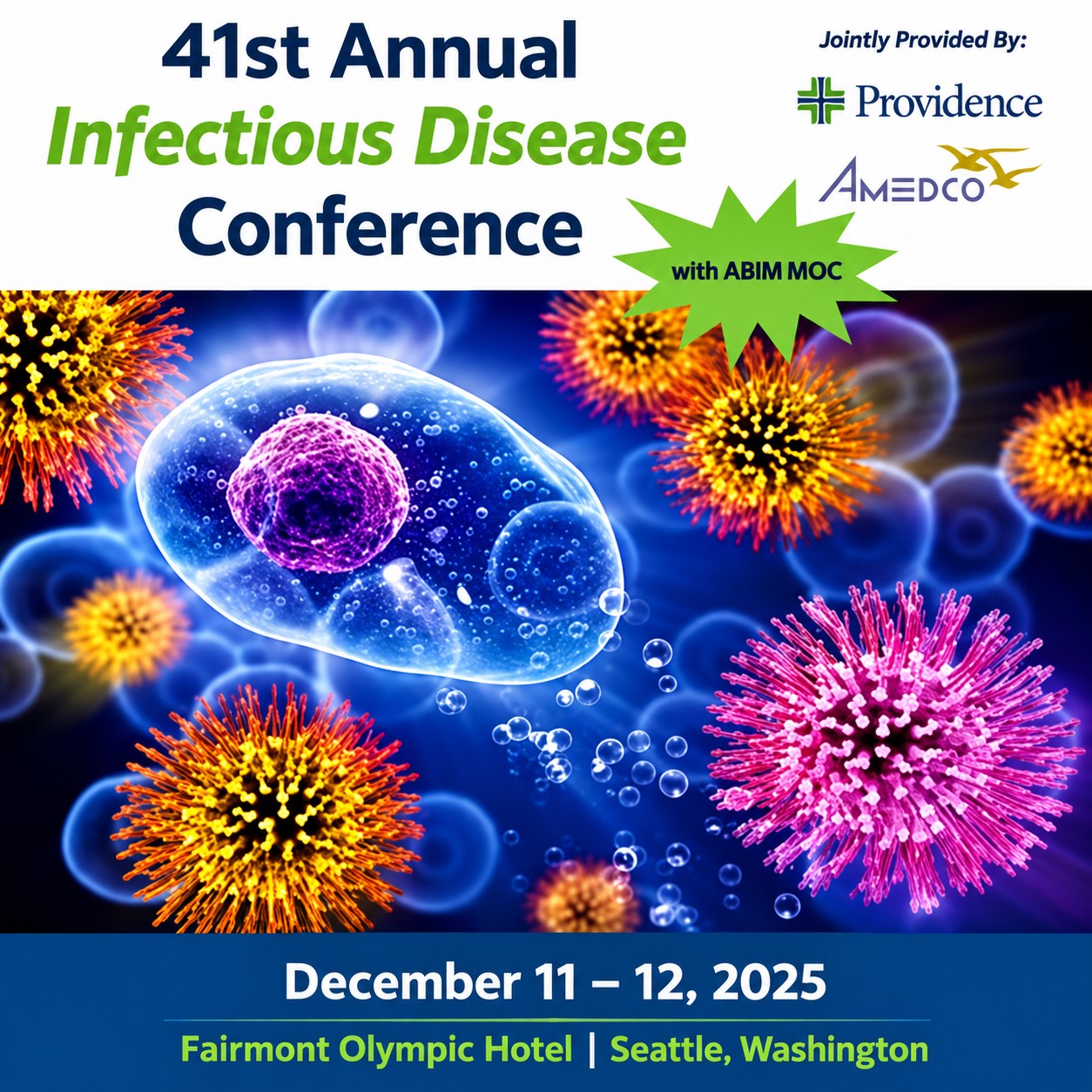
Providence Regional Medical Center Everett 41st Annual Infectious Disease Conference 2025
Comprehensive Updates in Infectious Diseases, Antibiotic Stewardship & Emerging Public Health Threats
The Providence Regional Medical Center Everett 41st Annual Infectious Disease Conference 2025 provides a comprehensive review of the latest advances in infectious disease prevention, diagnosis, treatment, and public health preparedness. Designed for both primary care and infectious disease clinicians, this annual conference delivers practical, evidence-based updates that can be immediately applied in outpatient, inpatient, and community healthcare settings.
Through expert-led presentations and case-based discussions, participants gain valuable insights into antibiotic stewardship, vaccine-preventable diseases, emerging pathogens, gastrointestinal infections, tuberculosis management, and evolving treatment strategies for common and complex infectious conditions.
The program also explores major public health challenges, including vector-borne diseases, hemorrhagic fevers, avian influenza, and other emerging infectious threats, helping clinicians stay prepared for rapidly changing infectious disease landscapes.
Product Details
- Format: 16 Videos (.MP4) + 16 Audios (.MP3) + 16 Subtitle Files (.VTT) + 17 PDFs
- Total Size: 9 GB
- Course Year: 2025
- Access: On-Demand
- Level: Intermediate to Advanced
Program Overview
This annual conference delivers clinically relevant updates on infectious diseases frequently encountered in primary care, hospital medicine, and infectious disease practice.
Major areas of focus include:
- Antibiotic stewardship
- Vaccine-preventable diseases
- Urinary tract infections (UTIs)
- Gastrointestinal infections
- Clostridioides difficile infection
- Helicobacter pylori management
- Diverticulitis
- Tuberculosis
- Vector-borne diseases
- Hemorrhagic fevers
- Avian influenza (Bird Flu)
- Emerging infectious diseases
- Public health preparedness
Participants gain practical tools for improving patient care while promoting responsible antimicrobial use.
Learning Objectives
Upon completion of this activity, participants will be able to:
- Implement updated antibiotic stewardship principles in clinical practice.
- Apply evidence-based treatment strategies for urinary tract infections.
- Recognize and manage vaccine-preventable infectious diseases.
- Diagnose and treat common gastrointestinal infections.
- Utilize current recommendations for Clostridioides difficile management.
- Identify emerging infectious threats and appropriate preventive measures.
- Apply tuberculosis management principles in non-public health settings.
- Integrate recent infectious disease research and guideline updates into patient care.
Core Topics Covered
Antibiotic Stewardship
A major focus of the conference is optimizing antimicrobial prescribing practices.
Topics include:
- Appropriate antibiotic selection
- Shorter treatment durations
- Antimicrobial resistance prevention
- Evidence-based prescribing
- Stewardship implementation strategies
- Reducing unnecessary antibiotic exposure
Faculty review practical approaches applicable to both outpatient and inpatient care.
Vaccine-Preventable Diseases
Participants explore the resurgence of several preventable infections.
Topics include:
- Childhood vaccine-preventable illnesses
- Vaccine hesitancy
- Immunization strategies
- Outbreak prevention
- Community protection measures
Current public health recommendations are reviewed in detail.
Urinary Tract Infections (UTIs)
Dedicated sessions examine:
- Uncomplicated and complicated UTIs
- Updated treatment recommendations
- Antimicrobial selection
- Recurrent infection management
- Emerging therapeutic options
Faculty emphasize guideline-based management approaches.
Gastrointestinal Infections
The conference reviews common GI infectious disorders, including:
Helicobacter pylori
- Diagnostic testing
- Treatment protocols
- Resistance concerns
- Eradication strategies
Diverticulitis
- Updated management approaches
- Antibiotic utilization
- Outpatient treatment considerations
Clostridioides difficile
- Diagnosis
- Recurrence prevention
- Emerging therapies
- Infection control measures
Tuberculosis Updates
Participants receive practical guidance on:
- Latent tuberculosis infection (LTBI)
- Active tuberculosis diagnosis
- Treatment protocols
- Screening recommendations
- Management outside public health settings
Current recommendations and best practices are reviewed.
Emerging Infectious Diseases
The course highlights global infectious disease threats, including:
- Avian influenza (Bird Flu)
- Emerging respiratory pathogens
- Novel infectious outbreaks
- Global surveillance efforts
- Pandemic preparedness
Faculty discuss evolving epidemiologic trends and clinical implications.
Vector-Borne Diseases
Topics include:
- Tick-borne illnesses
- Mosquito-borne infections
- Travel-associated diseases
- Diagnostic evaluation
- Prevention strategies
Participants learn practical approaches to diagnosis and management.
Viral Hemorrhagic Fevers
Sessions review:
- Recognition of hemorrhagic fever syndromes
- Global epidemiology
- Infection prevention
- Public health response
- Clinical management principles
The course provides valuable preparedness education for rare but significant infectious threats.
Infectious Disease Literature Review
A special component of the conference examines:
- Landmark infectious disease publications
- Recent clinical trials
- Updated treatment guidelines
- Emerging evidence affecting clinical practice
Participants gain concise summaries of important developments in the field.
Educational Features
✔ Comprehensive Infectious Disease Updates
✔ Antibiotic Stewardship Training
✔ Emerging Pathogen & Public Health Education
✔ Vaccine-Preventable Disease Review
✔ Tuberculosis Management Updates
✔ Gastrointestinal Infection Management
✔ Evidence-Based Clinical Guidelines
✔ Practical Case-Based Learning
Target Audience
This course is ideal for:
- Infectious Disease Physicians
- Internal Medicine Physicians
- Family Medicine Physicians
- Primary Care Providers
- Hospitalists
- Advanced Practice Providers
- Nurse Practitioners
- Physician Assistants
- Pharmacists
- Public Health Professionals
- Medical Trainees
Why This Course Stands Out
✔ Balances primary care and infectious disease perspectives
✔ Strong emphasis on antimicrobial stewardship
✔ Covers emerging infectious threats and public health challenges
✔ Reviews practical management of common infections
✔ Includes tuberculosis and vaccine-preventable disease updates
✔ Focuses on evidence-based clinical decision-making
✔ Relevant to both outpatient and inpatient practice
✔ Provides actionable recommendations for daily patient care
Clinical & Educational Value
The Providence Regional Medical Center Everett 41st Annual Infectious Disease Conference 2025 delivers a practical and comprehensive review of modern infectious disease management. Through expert instruction covering antibiotic stewardship, vaccine-preventable illnesses, gastrointestinal infections, tuberculosis, and emerging pathogens, participants gain valuable knowledge to improve patient outcomes while addressing evolving public health challenges.
Topics
-
Reemergence of Vaccine-Preventable Childhood Diseases
-
DART Communication with Patient & Parents Dialogue Around Respiratory Therapy
-
New Antibiotic Treatments for UTI Simple & Complex Treatment
-
Shorter Durations of Antibiotics is Better
-
Travel Medicine
-
Key Publications in the ID World
-
07.1 Diagnosis & Treatment of H pylori, Diverticulitis & C-difficile Diarrhea
-
07.2 Diagnosis & Treatment of H pylori, Diverticulitis & C-difficile Diarrhea
-
07.3 Diagnosis & Treatment of H pylori, Diverticulitis & C-difficile Diarrhea
-
Food Chain Illnesses
-
Hemorrhagic Fevers
-
Vector Born Diseases
-
Bird Flu (I warned you about this last year!)
-
Diseases of Public Health Importance
-
Overview from the Author Core Elements of Antibiotic Stewardship
-
Overview of Tuberculosis (TB) for Non-Public Health Providers