
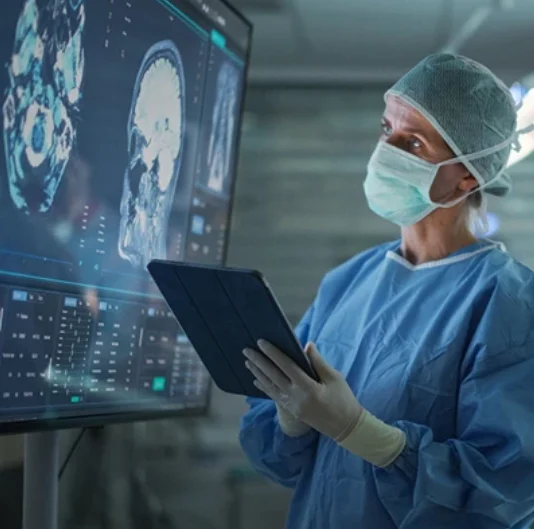
Neurosurgery – A Comprehensive Review 2026 (Videos + PDFs)
$30.00
This Product is shared via google drive download link, So please share your correct Gmail id while placing the order .Please note that there are no CME points or certificate associated with this course Samples for Courses Can be found here : Free Samples Here!
Neurosurgery – A Comprehensive Review 2026 (Videos + PDFs)
Introduction
Neurosurgery – A Comprehensive Review 2026 is an extensive continuing medical education program designed to provide a broad, evidence-based review of the full spectrum of modern neurosurgery. This advanced online video CME course delivers comprehensive instruction across major neurosurgical subspecialties, including cerebrovascular surgery, neurotrauma, spine surgery, neuro-oncology, skull base surgery, functional neurosurgery, hydrocephalus management, peripheral nerve disorders, and pediatric neurosurgical conditions.
Developed with expert faculty from highly respected institutions, the course emphasizes both technical and nontechnical neurosurgical competencies necessary for high-quality patient care. The curriculum integrates surgical principles, clinical decision-making, perioperative management, neurologic evaluation, communication skills, multidisciplinary care coordination, and evidence-based treatment strategies.
Through expert-led lectures and comprehensive subspecialty coverage, participants strengthen diagnostic reasoning, operative planning, complication management, and contemporary neurosurgical practice skills applicable to both academic and clinical settings.
Files Included
The Neurosurgery – A Comprehensive Review 2026 educational package includes advanced neurosurgical learning resources.
Included resources:
- Neurosurgery video lectures
- Comprehensive PDF course materials
- Subspecialty neurosurgery reviews
- Spine and cranial surgery discussions
- Neuro-oncology educational sessions
- Cerebrovascular surgery updates
- Functional neurosurgery lectures
- Neurotrauma management education
- Skull base surgery reviews
- Evidence-based neurosurgical guidelines
Additional highlights:
- Comprehensive online neurosurgery CME curriculum
- Broad neurosurgical subspecialty coverage
- Expert-led evidence-based lectures
- Technical and clinical neurosurgical education
These resources support continuing medical education in neurosurgery, neurocritical care, neuro-oncology, cerebrovascular surgery, spinal surgery, functional neurosurgery, and operative neuroscience.
Why This Course Is Important
Neurosurgery is among the most technically demanding and rapidly evolving medical specialties. Modern neurosurgeons must integrate advanced imaging, microsurgical techniques, minimally invasive procedures, neuro-oncology advances, endovascular technologies, and multidisciplinary perioperative management into clinical practice.
At the same time, neurosurgical care requires careful patient selection, evidence-based decision-making, neurologic localization, risk stratification, and compassionate communication with patients and families facing highly complex neurologic diseases.
Advances in spinal instrumentation, skull base approaches, neuro-oncology therapies, neurotrauma care, stereotactic surgery, and functional neuromodulation continue to reshape contemporary neurosurgical practice.
This comprehensive review course addresses these evolving challenges through guideline-driven, clinically practical education designed to strengthen operative knowledge, diagnostic precision, and multidisciplinary neurosurgical care.
What Participants Will Learn
Participants completing this course will strengthen their expertise in neurosurgical evaluation, operative strategy, and perioperative management.
Learning objectives include:
- Reviewing evidence-based approaches across major neurosurgical subspecialties
- Strengthening diagnostic evaluation of neurologic disorders requiring surgery
- Applying guideline-based neurosurgical treatment strategies
- Understanding operative planning for cranial and spinal pathology
- Managing traumatic brain and spinal cord injuries
- Evaluating vascular and neuro-oncologic disorders
- Improving perioperative neurosurgical decision-making
- Developing technical and nontechnical neurosurgical skills
- Enhancing communication and multidisciplinary care coordination
- Optimizing clinical outcomes in complex neurosurgical disease
The curriculum integrates cerebrovascular neurosurgery, neuro-oncology, spinal surgery, neurotrauma, skull base surgery, and functional neurosurgery into a comprehensive educational framework.
Core Topics & Educational Areas
Cerebrovascular Neurosurgery
Intracranial Aneurysms
Arteriovenous Malformations (AVMs)
Ischemic & Hemorrhagic Stroke Surgery
Cerebrovascular Bypass Techniques
Neurotrauma & Critical Care
Head Injury Management
Craniocerebral Trauma
Spinal Cord Injury
Neurocritical Care Principles
Spine Surgery
Degenerative Spine Disease
Cervical, Thoracic & Lumbar Disorders
Spinal Stabilization & Instrumentation
Minimally Invasive Spine Surgery
Neuro-Oncology
Brain Tumors
Spine & Spinal Cord Tumors
Gliomas & Metastatic Disease
Multidisciplinary Neuro-Oncology Care
Skull Base Surgery
Skull Base Lesions
Complex Cranial Approaches
Endoscopic Skull Base Techniques
Pituitary & Sellar Disorders
Pituitary Adenomas
Craniopharyngiomas
Sellar & Parasellar Lesions
Hydrocephalus & CSF Disorders
Hydrocephalus Management
CSF Diversion Procedures
Intracranial Cysts
Peripheral Nerve Surgery
Entrapment Neuropathies
Peripheral Nerve Tumors
Nerve Repair & Reconstruction
Functional Neurosurgery
Deep Brain Stimulation (DBS)
Epilepsy Surgery
Movement Disorder Surgery
Neuromodulation Therapies
Special Topics in Neurosurgery
Pediatric Neurosurgery
Surgical Ethics & Communication
Perioperative Management
Emerging Neurosurgical Technologies
Educational Experience & Learning Features
Neurosurgery – A Comprehensive Review 2026 combines broad subspecialty neurosurgical education with evidence-based operative and clinical teaching.
Educational features include:
- Expert-led neurosurgery video lectures
- Downloadable PDF educational materials
- Comprehensive subspecialty neurosurgery curriculum
- Guideline-driven treatment discussions
- Technical and nontechnical skill development
- Evidence-based neurosurgical management strategies
- Operative planning and complication management education
- Multidisciplinary neurosurgical care integration
- Spine, cranial, vascular, and tumor surgery reviews
- Practical neurosurgical clinical reasoning instruction
The curriculum integrates operative neurosurgery, neurocritical care, neuro-oncology, spinal surgery, vascular neurosurgery, and perioperative management into a comprehensive educational experience.
Who Should Attend
This course is intended for healthcare professionals involved in neurosurgical and neurologic patient care.
This educational resource is especially valuable for:
- Neurosurgeons
- Neurosurgery residents and fellows
- Spine surgeons
- Neurocritical care physicians
- Neurologists with neurosurgical interests
- Neuro-oncology clinicians
- Skull base surgeons
- Functional neurosurgery specialists
- Physician assistants and nurse practitioners in neurosurgery
- Advanced trainees preparing for neurosurgical boards
The curriculum is particularly relevant for clinicians seeking a broad and practical review of contemporary neurosurgical practice.
Clinical Applications & Practice Benefits
The course provides clinically practical neurosurgical education focused on improving operative planning, neurologic evaluation, and patient outcomes.
Participants gain practical insight into:
- Surgical management of brain and spine disorders
- Neurotrauma evaluation and treatment
- Spine surgery decision-making
- Neuro-oncology operative strategies
- Skull base surgical approaches
- Functional neurosurgical therapies
- Cerebrovascular surgical management
- Hydrocephalus and CSF disorder treatment
- Perioperative neurosurgical care
- Multidisciplinary neurosurgical coordination
The educational content strengthens both technical neurosurgical expertise and comprehensive clinical decision-making skills.
Professional Summary
Neurosurgery – A Comprehensive Review 2026 provides a broad, evidence-based review of modern neurosurgery through expert-led lectures covering cerebrovascular surgery, neurotrauma, spinal surgery, neuro-oncology, skull base pathology, functional neurosurgery, and complex cranial and spinal disorders.
Through guideline-driven instruction, practical operative discussions, and multidisciplinary clinical teaching, the course equips participants with the diagnostic reasoning, surgical planning strategies, technical knowledge, and perioperative management skills necessary for contemporary neurosurgical practice.
Its combination of comprehensive subspecialty coverage, evidence-based neurosurgical education, and clinically focused teaching makes this program an essential educational resource for neurosurgeons, trainees, and clinicians involved in neurologic surgical care.
Topics / Speakers
Vascular
-
Ischemic and Hemorrhagic Stroke – Hakeem Shakir, MD
-
Intracranial Aneurysms – Andrew Bauer, MD
-
Intracranial Vascular Malformations – Gary K. Steinberg, MD, PhD
-
Moyamoya Disease – Gary K. Steinberg, MD, PhD
-
Contemporary Carotid Endarterectomy – Christopher M. Loftus, MD
-
Cerebrovascular Emergencies – An Endovascular Perspective – Bradley Gross, MD
Head Injury/Craniocerebral Trauma
-
Closed Head Injury – Concussion and Head Injury in Sports – William P. Meehan III, MD
-
Blunt and Penetrating Paranasal Sinus Injuries – Modern Lessons from Ukraine – Rocco A. Armonda, MD, FACS
-
Management of Severe Traumatic Brain Injury – Ryan S. Kitagawa, MD
-
Decompressive Craniectomy for Traumatic Brain Injury – Jamie S. Ullman, MD, FACS, FAANS
Spinal Surgery
-
Cervical Spine Trauma – John H. Chi, MD, MPH
-
Management of Thoracolumbar Spine Trauma and Stabilization Techniques – Charles A. Sansur, MD, MHSc
-
Disc Herniations – Cervical, Lumbar, and Thoracic – Charles A. Sansur, MD, MHSc
-
Minimally Invasive Spine Surgery – Praveen V. Mummaneni, MD, MBA
-
Hydromyelia and Syringomyelia – Charles A. Sansur, MD, MHSc
Peripheral Nerves
-
Acute Nerve Injury and Repair – Mark A. Mahan, MD, FAANS
-
What’s New with Peripheral Nerve Tumors and Lesions – Robert J. Spinner, MD
-
Reconstructive Strategies for Brachial Plexus Injuries – Susan E. Mackinnon, MD
-
Compression Neuropathies – Christopher J. Winfree, MD, FAANS
-
Surgical Management of Weakness and Paralysis – Restorative Techniques – Justin M. Brown, MD, FAANS
-
Interpreting Electrodiagnostic Studies for Management of Nerve Injuries – Susan E. Mackinnon, MD
Brain Tumors
-
Modernizing the Approach to Solid Tumor Brain Metastases – Peter E. Fecci, MD, PhD
-
Malignant Gliomas – Charles S. Cobbs, MD
-
Meningiomas – Ossama Al-Mefty, MD, FACS
-
Low-Grade Gliomas – Nader Sanai, MD, FAANS, FACS
-
Pineal Region Tumors – Jeffrey N. Bruce, MD, FACS
-
Vestibular Schwannomas – Kaith K. Almefty, MD
-
Stereotactic Radiosurgery for Arteriovenous Malformations – Contemporary Approaches and Future Possibilities – Jason Sheehan, MD, PhD, FACS
Spine and Spinal Cord Tumors
-
Metastatic Tumors of the Spine – John F. Burke, MD, PhD
Skull Base Lesion
-
Meningiomas of the Skull Base and Other Skull Base Lesions – Ian F. Dunn, MD, FACS, FAANS
-
Skull Base Surgical Approaches – Ian F. Dunn, MD, FACS, FAANS
-
Pituitary Tumors and Craniopharyngiomas
-
Non-Functioning and Functioning Pituitary Tumors – Nelson M. Oyesiku, MD, PhD, FACS
-
Endoscopy for Pituitary Surgery – Gabriel Zada, MD
-
Endoscopic Endonasal Skull Base Surgery for Craniopharyngiomas – Daniel Prevedello, MD
Functional Neurosurgery
-
Functional Neurosurgery – Epilepsy and Movement Disorders Surgery – John Rolston, MD
Special Topics
-
Neurofibromatosis – Ashok R. Asthagiri, MD
-
von Hippel-Lindau Disease – Ashok R. Asthagiri, MD
Related products

Internal Medicine

Anesthesiology & pain medicine

Cardiology

Neurology / neurosurgery courses
Neurology / neurosurgery courses

Neurology / neurosurgery courses
SFNP 2023 – French Congress of Peripheral Neuropathy 2023 ( VIDEOS)

Anesthesiology & pain medicine