
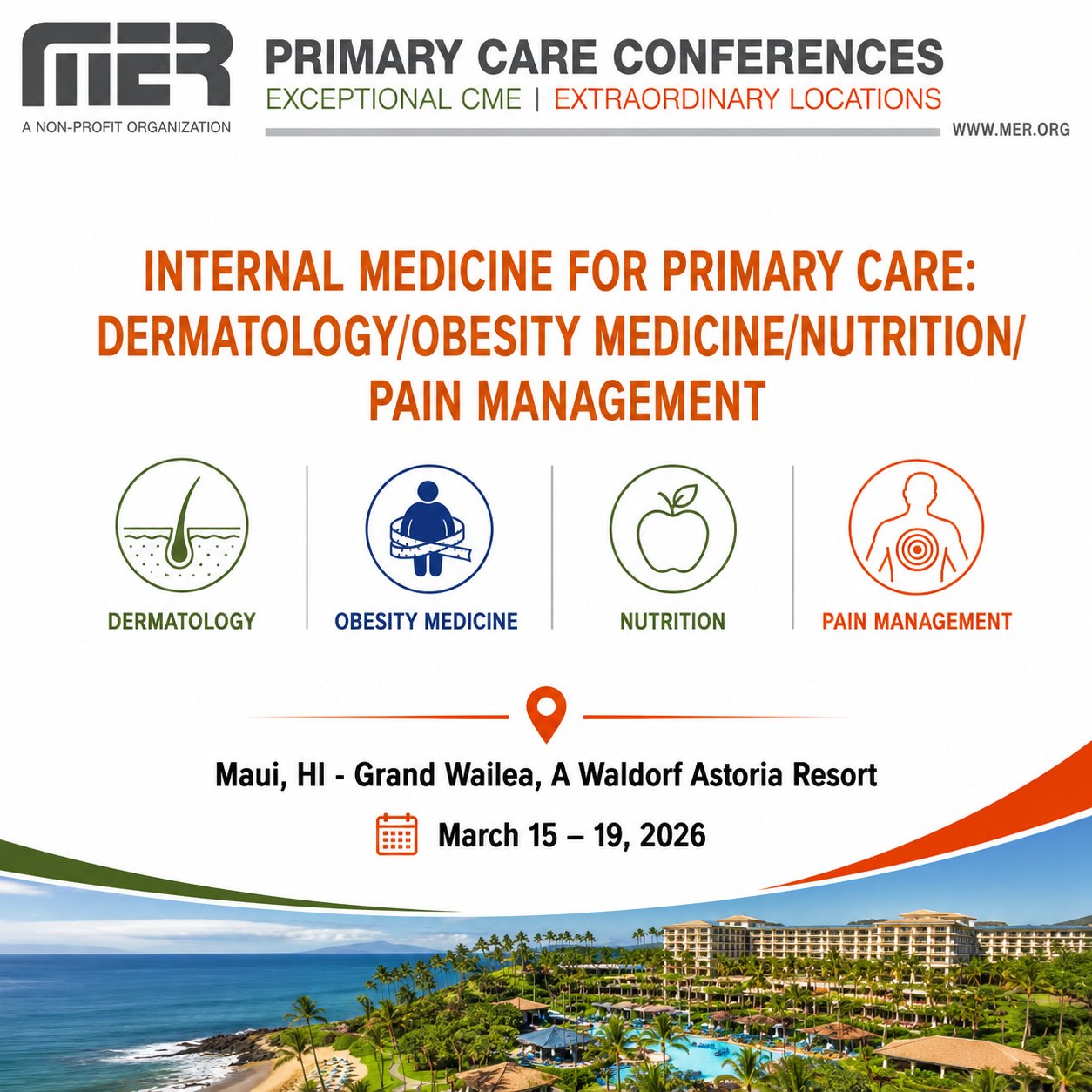
MER Primary Care Conferences Internal Medicine for Primary Care Derm Obesity Nutrition Pain Mar 15-19, 2026

Original price was: $1,295.00.$130.00Current price is: $130.00.
This Product is shared via google drive download link, So please share your correct Gmail id while placing the order .Please note that there are no CME points or certificate associated with this course Samples for Courses Can be found here : Free Samples Here!
MER Primary Care Conferences Internal Medicine for Primary Care: Dermatology, Obesity Medicine, Nutrition & Pain Management 2026 (Videos + PDFs)
Comprehensive Primary Care Updates in Dermatology, Obesity Medicine, Nutrition Science & Pain Management
Expand your clinical expertise with MER Primary Care Conferences: Internal Medicine for Primary Care – Dermatology, Obesity Medicine, Nutrition & Pain Management 2026, a comprehensive continuing medical education (CME) program designed to provide primary care clinicians with practical, evidence-based updates across four essential areas of modern medical practice.
Organized by Medical Education Resources (MER), this multidisciplinary conference combines expert-led lectures, guideline-based reviews, and real-world clinical discussions to help healthcare professionals confidently diagnose, manage, and treat common dermatologic conditions, obesity and metabolic disorders, nutritional challenges, and chronic pain syndromes frequently encountered in primary care settings.
Held at the Grand Wailea, A Waldorf Astoria Resort in Maui, Hawaii, this educational program emphasizes practical clinical decision-making, preventive medicine, lifestyle interventions, and patient-centered management strategies that can be immediately integrated into everyday practice.
Product Details
- Conference: Internal Medicine for Primary Care – Dermatology, Obesity Medicine, Nutrition & Pain Management
- Organizer: Medical Education Resources (MER)
- Conference Date: March 15–19, 2026
- Location: Grand Wailea, A Waldorf Astoria Resort, Maui, Hawaii
- Format: On-Demand Videos + PDFs
- Language: English
- Educational Level: Intermediate to Advanced
Course Overview
Primary care physicians are increasingly responsible for managing chronic diseases that extend far beyond traditional internal medicine. Skin disorders, obesity, nutritional deficiencies, chronic pain syndromes, and lifestyle-related illnesses now represent a substantial proportion of office visits and require evidence-based, multidisciplinary care.
MER Internal Medicine for Primary Care 2026 delivers a practical review of these interconnected disciplines, equipping clinicians with current diagnostic approaches, updated treatment guidelines, and effective counseling strategies to improve long-term patient outcomes.
Participants will review common and complex dermatologic disorders, obesity pathophysiology, nutritional science, weight management, bariatric medicine, chronic pain management, fibromyalgia, opioid stewardship, and evidence-based non-pharmacologic therapies. Through case-based instruction and expert guidance, clinicians will strengthen diagnostic confidence while enhancing preventive care and lifestyle medicine skills.
Course Highlights
- Comprehensive primary care updates
- Dermatology diagnosis and treatment
- Obesity medicine and weight management
- Lifestyle and clinical nutrition
- Chronic pain management strategies
- Fibromyalgia evaluation and treatment
- Bariatric surgery updates
- Evidence-based pharmacologic therapy
- Non-pharmacologic treatment approaches
- Case-based clinical discussions
- Practical office-based management
- Current clinical guideline reviews
What You’ll Learn
After completing this course, participants will be able to:
- Differentiate common inflammatory skin disorders including atopic dermatitis, allergic contact dermatitis, irritant dermatitis, and nummular eczema.
- Recognize benign, premalignant, and malignant skin lesions requiring office management or specialist referral.
- Diagnose and manage viral, fungal, and nail infections using current evidence-based treatment strategies.
- Apply nutritional science principles to promote healthier lifestyles and reduce chronic disease risk.
- Develop individualized nutrition plans based on patient-specific medical conditions, age, lifestyle, and metabolic needs.
- Understand the complex pathophysiology of obesity, including genetic, hormonal, metabolic, and environmental contributors.
- Implement modern non-surgical obesity treatment strategies, including behavioral modification, pharmacotherapy, and nutritional counseling.
- Evaluate patients for bariatric surgery while understanding postoperative management and long-term nutritional considerations.
- Develop safe and effective treatment plans for chronic pain using both opioid and non-opioid therapies.
- Incorporate physical therapy, activity modification, and multidisciplinary approaches into chronic musculoskeletal pain management.
- Optimize treatment strategies for fibromyalgia using current evidence-based pharmacologic and non-pharmacologic interventions.
Comprehensive Topics Covered
Dermatology
Develop practical diagnostic skills for evaluating common dermatologic conditions encountered in primary care, including dermatitis, skin infections, benign and malignant skin tumors, precancerous lesions, fungal infections, nail disorders, and office-based dermatologic procedures.
Obesity Medicine
Review the biological mechanisms underlying obesity and explore comprehensive treatment strategies that combine lifestyle modification, nutritional counseling, pharmacologic therapies, behavioral interventions, and bariatric surgery for long-term weight management.
Clinical Nutrition
Strengthen your understanding of evidence-based nutrition across the lifespan, including dietary assessment, individualized meal planning, athletic nutrition, disease-specific dietary interventions, and counseling techniques that support sustainable lifestyle changes.
Pain Management
Learn practical approaches to evaluating and treating chronic pain conditions using multimodal strategies, including opioid stewardship, non-opioid pharmacotherapy, rehabilitation, physical therapy, activity modification, and patient-centered pain management.
Fibromyalgia
Review current evidence regarding the diagnosis, pathophysiology, pharmacologic management, and multidisciplinary treatment of fibromyalgia and chronic widespread pain syndromes.
Skin Cancer & Office Dermatology
Improve recognition of melanoma, non-melanoma skin cancers, actinic keratoses, and other precancerous lesions while learning appropriate office-based evaluation and management techniques.
Bariatric Medicine
Understand indications for metabolic surgery, patient selection criteria, postoperative care, nutritional monitoring, and long-term management of patients undergoing bariatric procedures.
Learning Objectives
Upon completion of this educational activity, participants will be able to:
- Differentiate inflammatory and infectious dermatologic disorders using clinical examination and evidence-based diagnostic approaches.
- Recognize malignant and premalignant skin lesions requiring timely intervention.
- Develop individualized nutrition plans that promote long-term health and disease prevention.
- Apply current obesity medicine guidelines to improve weight management outcomes.
- Evaluate patients for medical and surgical obesity treatments.
- Design evidence-based chronic pain management strategies incorporating pharmacologic and non-pharmacologic therapies.
- Optimize management of fibromyalgia and chronic musculoskeletal pain syndromes.
- Integrate preventive medicine and lifestyle interventions into routine primary care practice.
Educational Features
- Expert MER Faculty
- Comprehensive Primary Care Review
- Dermatology Clinical Updates
- Obesity Medicine Guidelines
- Nutrition Science Applications
- Pain Management Strategies
- Case-Based Learning
- Evidence-Based Treatment Recommendations
- Lifestyle Medicine Integration
- Practical Office-Based Management
- Current Clinical Guidelines
- On-Demand CME Education
Why This Course Stands Out
Primary care physicians frequently encounter patients with overlapping dermatologic, metabolic, nutritional, and chronic pain conditions that require integrated, multidisciplinary management. Rather than addressing these topics separately, this conference combines four essential clinical disciplines into one practical educational program.
Through expert instruction and clinically relevant case discussions, participants gain practical tools to improve diagnostic accuracy, personalize treatment plans, encourage healthy lifestyle changes, and manage chronic disease using the latest evidence-based recommendations. The program’s strong emphasis on preventive medicine and patient-centered care makes it especially valuable for clinicians managing diverse patient populations.
Target Audience
This educational activity is ideal for:
- Internal Medicine Physicians
- Primary Care Physicians
- Family Medicine Physicians
- General Practitioners
- Dermatologists
- Obesity Medicine Physicians
- Endocrinologists
- Nutrition Specialists
- Hospitalists
- Nurse Practitioners (NPs)
- Physician Assistants (PAs)
- Residents
- Fellows
- Healthcare Professionals involved in primary care
Why Choose This Course?
Whether you manage chronic skin diseases, obesity, nutritional disorders, or persistent pain in everyday practice, MER Internal Medicine for Primary Care: Dermatology, Obesity Medicine, Nutrition & Pain Management 2026 delivers practical education that can immediately improve patient care. Combining evidence-based medicine, preventive healthcare, and multidisciplinary treatment strategies, this comprehensive CME program provides the knowledge and clinical confidence needed to manage some of the most common and challenging conditions seen in modern primary care.
4. Topics
Dermatology
-
Dermatitis: Overview of the causes and forms of skin irritants; Contact, atopic, irritant, nummular, seborrheic and exfoliative; Treatment of blistering, oozing, crusting and flaking; Diagnostic principles and management strategies.
-
Benign Skin Tumors: Proper diagnosis and treatment of common benign tumors; Biopsies and histopathologic examination; Nevi, seborrheic keratosis keloids, hemangiomas and miscellaneous tumors; When to refer.
-
Premalignant and Malignant Skin Tumors: Recognition of precursors of malignancies; Excisional and punch biopsies; Actinic keratosis, Bowen’s disease, squamous cell carcinoma, basal cell carcinoma, melanoma and other selected tumors; Risk reduction education.
-
Viral Infections of the Skin: Proper diagnosis and differences in viral skin presentation; Herpes simplex, varicella-zoster, viral exanthems; Molluscum and warts; Treating lasting post-herpetic neuralgia; Symptom management and referral to dermatology.
-
Fungal Infections of the Skin: Dermatophytes, tinea versicolor, candidiasis; Selected deep fungal infections; Onycholysis; Drug induced nail changes; paronychia, koilonychia, nail discolorations, tumors of the nail; Fungal infections diagnosis and management; Overview and comparison of antifungal treatment options.
Nutrition
-
Myths vs. Science in Nutritional Trends: Approach for the Medical Professional: Discussion of how to scientifically navigate the nutritional maze of popular diets and nutritional trends; The potential nutrition benefits and pitfalls of various dietary preferences and related patient concerns; Ways nutrition affects healthy lifestyles.
-
Nutrition Through the Ages: Prevention and Potential Pitfalls: A working guide for a nutritional and behavioral rubric to understand what is expected (and what may undermine) optimal health from infancy through the elderly; Barriers patients face in implementing and sticking with nutritional strategies.
-
Medical Nutrition Therapy: A Practical Approach to Diet and Disease: Science-based Nutrition and Behavioral Guide to Treating “The Big” Medical Problems that are taking over your practice; Essential (and proven) strategies to help guide patients’ diet and behaviors in the treatment of diabetes, cardiovascular disease, and GI health; Travel through the google-mess of what patients hear and why they turn to these as resources; The science-based strategies and resources that can be implemented to help patients take rational control of their health.
-
Cutting Edge Nutrition Innovation: A Personalized Approach: How to critically evaluate nutrition tools that patients can use to promote optimal health; Review the “latest and greatest” nutrition applications and technologies that can be used to greatly improve patients’ nutrition and health pursuits; Creation of personalized health plans based on unique, patient-specific plans, tests, and analyses.
-
Performance Nutrition: Bridging the Spectrum: Sports nutrition is an evolving field and aims to improve nutrition guidelines for both active adults and competitive athletes; Concepts for how adequate nutrition enhances athletic performance; Discussion of disordered eating and eating disorders; Overview of dietary guidelines and guidance.
Pain Management
-
Chronic Pain Review/Behavioral Interventions for Chronic Pain Syndromes: Chronic pain is much more complex than just acute pain that lasts a long time; The physiological and clinical categorization of chronic pain will be explored; The importance of the final physiologic component of pain–perception–is receiving a lot of attention in the medical literature; Behavioral interventions designed to target this process such as cognitive behavioral therapy and mindfulness approaches will be reviewed.
-
Peripheral Neuropathy and Fibromyalgia: Neuropathic pain arises from damage to neural tissue; Fibromyalgia is a classic example of the nociplastic pain category; A variety of treatment modalities will be discussed for both conditions.
-
Knee Osteoarthritis/Cannabinoids for Chronic Pain: Osteoarthritis has both nociplastic and neuropathic components; Successful treatment planning includes considerations for both; The second half of the presentation will review the medical utility of cannabinoids as analgesic agents.
-
Back Pain: Back pain is a common cause of long term disability; Non-pharmacologic and pharmacologic interventions will be discussed for a variety of causes of back pain including failed back surgery syndrome.
-
Safe Opioid Prescribing: The role of opioids in the management of chronic pain will be addressed in the contexts of the updated CDC guidelines and the increasing prevalence of opioid use disorder.
Obesity Medicine
-
Pathophysiology of Obesity: A guide to understanding practice demographics and considerations; The what and why of epigenetics; A practical guide to behavioral and medication management.
-
Medical Management of Obesity: Overview of obesity as a disease state; Costs to the individual of being obese; Use of appetite suppressant medications and lifestyle modifications.
-
Complications and Considerations of Bariatric Surgery: An overview of risks and effectiveness of bariatric surgery; Overview of potential surgical options; Potential complications; The role of support and behavior modification, nutrition, and the stages of patient management post-surgery.
-
Patient Management Post-bariatric Surgery: The role of the clinician for support and behavior modification, nutrition, and the stages of patient management post-surgery.
-
Guiding Patients in the Medical and Surgical Care of Obesity: Differences in treating obesity vs. other medical conditions, treatments, and procedures; Strategies for better engagement and understanding of patient pathways, perspectives, and team partnership.
Related products

Endocrine and Nutrition

Endocrine and Nutrition
Master Course Carotid and Vertebral Arteries (ABC Vascular) (Videos, Slides & Quizzes)


Endocrine and Nutrition

Endocrine and Nutrition
Internal Medicine
Endocrine and Nutrition
Comprehensive Care for Persons with Diabetes 2022: A Certificate Program