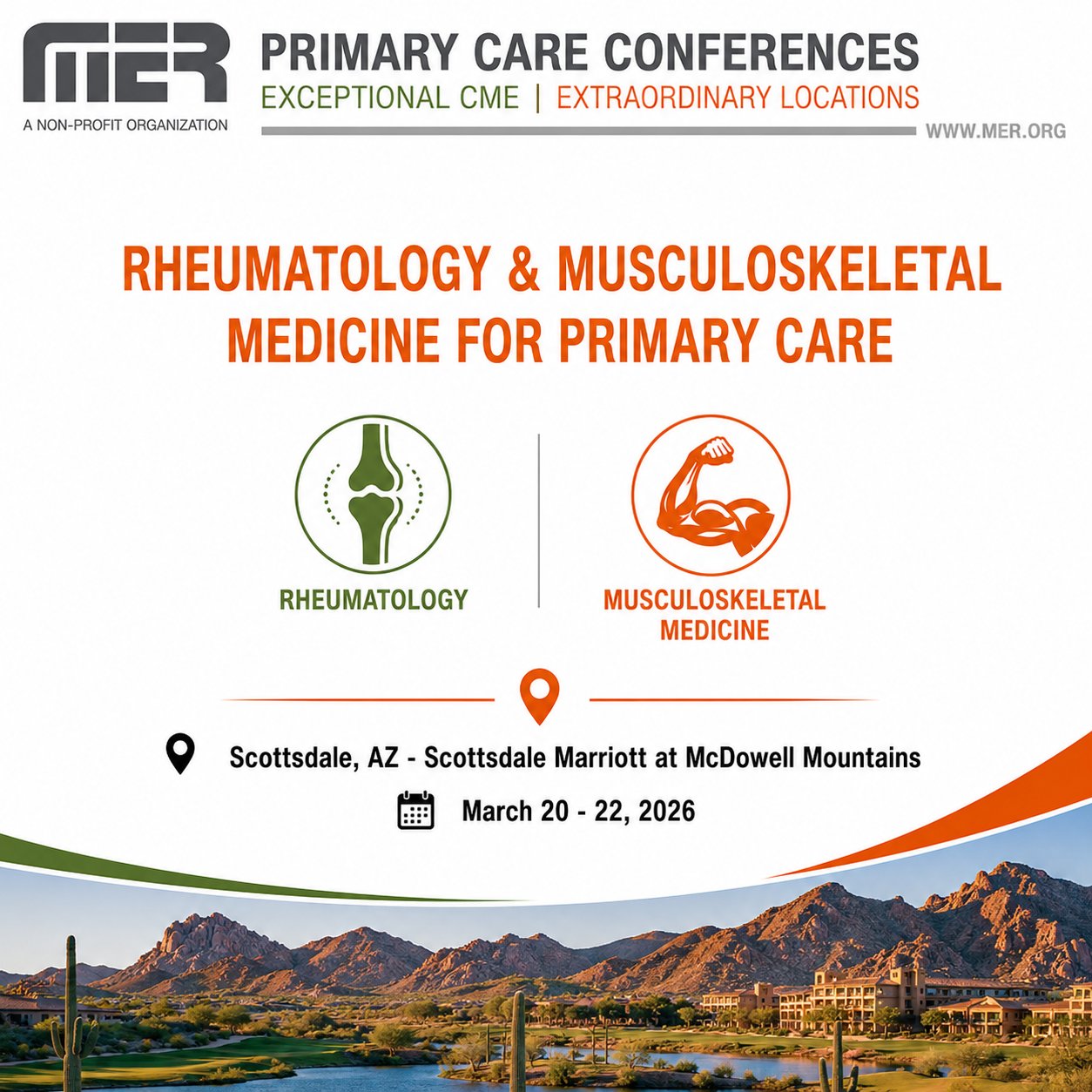
MER Primary Care Conferences Rheumatology & Musculoskeletal Medicine for Primary Care Mar 20-22, 2026

Original price was: $900.00.$100.00Current price is: $100.00.
This Product is shared via google drive download link, So please share your correct Gmail id while placing the order .Please note that there are no CME points or certificate associated with this course Samples for Courses Can be found here : Free Samples Here!
MER Primary Care Conferences Rheumatology & Musculoskeletal Medicine for Primary Care 2026 (Videos + PDFs)
Comprehensive Clinical Updates in Rheumatology, Arthritis, Osteoporosis, Musculoskeletal Disorders & Joint Injection Techniques
Enhance your expertise in diagnosing and managing musculoskeletal and rheumatologic disorders with MER Primary Care Conferences: Rheumatology & Musculoskeletal Medicine for Primary Care 2026. This comprehensive continuing medical education (CME) program is designed to provide primary care clinicians with practical, evidence-based strategies for evaluating, treating, and managing common and complex rheumatic diseases encountered in everyday clinical practice.
Presented by Medical Education Resources (MER), this conference delivers current clinical updates through expert-led lectures, case-based discussions, and practical demonstrations focused on arthritis, inflammatory joint disease, osteoporosis, gout, regional pain syndromes, fibromyalgia, and musculoskeletal examination techniques. Participants will gain valuable clinical skills that can be immediately incorporated into outpatient practice, helping improve diagnostic accuracy, treatment selection, and patient outcomes.
Held at the Scottsdale Marriott at McDowell Mountains in Scottsdale, Arizona, this educational program emphasizes hands-on approaches to musculoskeletal medicine while reviewing current evidence, clinical guidelines, and procedural techniques relevant to office-based physicians.
Course Overview
Musculoskeletal complaints represent one of the most common reasons patients seek primary care. Early recognition of inflammatory arthritis, appropriate management of osteoarthritis, timely diagnosis of crystal-induced arthropathies, and accurate evaluation of regional pain syndromes are essential to preventing disability and improving long-term outcomes.
The Rheumatology & Musculoskeletal Medicine for Primary Care 2026 conference provides a practical review of these conditions with a strong emphasis on differential diagnosis, evidence-based treatment strategies, physical examination techniques, and office-based procedures.
Participants will learn to distinguish inflammatory from non-inflammatory joint disorders, perform comprehensive joint examinations, interpret laboratory findings, evaluate soft tissue disorders, manage osteoporosis using current therapeutic options, and safely perform joint aspiration and injection procedures.
Course Highlights
- Comprehensive review of rheumatology for primary care
- Evidence-based arthritis management strategies
- Practical musculoskeletal examination techniques
- Joint aspiration and injection demonstrations
- Osteoarthritis treatment updates
- Osteoporosis diagnosis and management
- Crystal arthritis (gout and pseudogout) management
- Fibromyalgia evaluation and treatment
- Regional pain syndrome assessment
- Case-based clinical learning
- Office-based procedural techniques
- Current pharmacologic therapy updates
What You’ll Learn
After completing this course, participants will be able to:
- Differentiate inflammatory and non-inflammatory causes of joint pain using clinical presentation, physical examination, and laboratory evaluation.
- Develop evidence-based treatment plans for osteoarthritis, inflammatory arthritis, gout, pseudogout, osteoporosis, and chronic musculoskeletal disorders.
- Perform comprehensive examinations of joints, tendons, bursae, and surrounding soft tissues.
- Utilize current recommendations for NSAIDs, COX-2 inhibitors, DMARDs, biologic therapies, tramadol, and other pharmacologic treatments.
- Recognize indications, contraindications, benefits, and risks of bisphosphonate therapy for osteoporosis.
- Perform joint aspiration and intra-articular injection using proper office-based techniques.
- Interpret synovial fluid analysis for the diagnosis of inflammatory, infectious, and crystal-induced arthropathies.
- Evaluate and manage fibromyalgia using evidence-based pharmacologic and non-pharmacologic approaches.
- Identify regional pain syndromes and formulate individualized treatment strategies.
- Review current evidence regarding the medical use of cannabis in chronic musculoskeletal pain management.
Comprehensive Topics Covered
Arthritis & Inflammatory Joint Disease
Review practical approaches to evaluating inflammatory arthritis, rheumatoid arthritis, crystal arthropathies, and other autoimmune musculoskeletal disorders through clinical examination, laboratory interpretation, and differential diagnosis.
Osteoarthritis
Learn current evidence-based recommendations for diagnosing and managing osteoarthritis, including lifestyle interventions, pharmacologic therapy, rehabilitation strategies, and long-term disease management.
Gout & Pseudogout
Strengthen your understanding of crystal-induced arthritis, including diagnosis, acute management, long-term urate-lowering therapy, prevention of recurrent attacks, and treatment of calcium pyrophosphate deposition disease.
Musculoskeletal Examination
Master systematic examination techniques for major joints and surrounding soft tissues, allowing earlier diagnosis of common regional pain syndromes and musculoskeletal disorders.
Joint Injection & Aspiration
Develop confidence in performing office-based joint aspiration and injection procedures while learning indications, contraindications, proper technique, and interpretation of synovial fluid analysis.
Osteoporosis
Review current guidelines for osteoporosis screening, fracture prevention, risk assessment, pharmacologic therapies, and the appropriate use of bisphosphonates in clinical practice.
Fibromyalgia
Explore modern approaches to diagnosing fibromyalgia, understanding central pain mechanisms, selecting appropriate pharmacologic therapies, and integrating lifestyle and behavioral interventions.
Regional Pain Syndromes
Recognize common tendon, bursa, muscle, and soft tissue disorders through focused physical examination and evidence-based treatment strategies.
Musculoskeletal Pharmacology
Review the benefits, risks, and clinical applications of:
- Non-selective NSAIDs
- COX-2 inhibitors
- Disease-Modifying Antirheumatic Drugs (DMARDs)
- Corticosteroids
- Tramadol
- Opioid therapy
- Bisphosphonates
- Medical cannabis
Learning Objectives
After completing this educational activity, participants will be able to:
- Distinguish inflammatory from non-inflammatory musculoskeletal disorders using clinical reasoning and diagnostic evaluation.
- Apply current evidence-based recommendations for arthritis, osteoporosis, gout, and fibromyalgia management.
- Perform comprehensive musculoskeletal examinations to improve diagnostic accuracy.
- Safely perform joint aspiration and injection procedures in office practice.
- Interpret laboratory findings and synovial fluid analysis to guide diagnosis and treatment.
- Utilize pharmacologic and non-pharmacologic treatment strategies for chronic musculoskeletal pain.
- Integrate current osteoporosis therapies into individualized patient care plans.
- Apply practical musculoskeletal medicine skills to improve outcomes in primary care.
Educational Features
- Expert Faculty in Rheumatology & Musculoskeletal Medicine
- Case-Based Clinical Discussions
- Practical Office-Based Management
- Evidence-Based Clinical Guidelines
- Hands-On Joint Examination Techniques
- Joint Injection & Aspiration Instruction
- Real-World Clinical Cases
- Differential Diagnosis Workshops
- Current Pharmacology Updates
- Practical Treatment Algorithms
Why This Course Stands Out
Musculoskeletal disorders account for millions of primary care visits every year, yet many clinicians receive limited formal training in rheumatology and office-based procedural techniques. This conference bridges that gap by focusing on practical, clinically relevant education that can immediately improve patient care.
Unlike highly specialized rheumatology meetings, this program is specifically designed for primary care providers, emphasizing common clinical scenarios, office-based procedures, diagnostic efficiency, and evidence-based treatment strategies that are directly applicable to everyday practice.
Target Audience
This educational activity is ideal for:
- Primary Care Physicians
- Internal Medicine Physicians
- Family Medicine Physicians
- General Practitioners
- Rheumatologists
- Hospitalists
- Nurse Practitioners (NPs)
- Physician Assistants (PAs)
- Residents
- Fellows
- Healthcare Professionals involved in musculoskeletal medicine
Product Information
- Conference: Rheumatology & Musculoskeletal Medicine for Primary Care
- Organizer: Medical Education Resources (MER)
- Conference Date: March 20–22, 2026
- Location: Scottsdale Marriott at McDowell Mountains, Scottsdale, Arizona
- Format: On-Demand Videos + PDFs
- Language: English
Why Choose This Course?
Whether you manage arthritis, chronic musculoskeletal pain, osteoporosis, gout, or regional pain syndromes in primary care, this conference provides practical, evidence-based education designed to improve diagnostic confidence and therapeutic decision-making. Combining expert instruction with hands-on procedural guidance and case-based learning, MER Rheumatology & Musculoskeletal Medicine for Primary Care 2026 is an excellent educational resource for clinicians seeking comprehensive updates in musculoskeletal medicine.
4. Topics
Friday, March 20, 2026
-
Rheumatology – Evaluating the Patient with Joint Pain: Differentiating between inflammatory and non-inflammatory joint pain; The utility of joint aspiration and lab work-up with interpretation of synovial fluid analysis; Differential diagnosis of joint pain and inflammatory arthritis.
-
Rheumatology – Update in Pharmacology for Arthritis: Review risks and benefits of traditional NSAIDs and cox-2 inhibitors; Analgesics (narcotics and tramadol), acetaminophen, conventional-synthetic DMARDs, and bDMARDs.
-
Rheumatology – Differential Diagnosis of Inflammatory Arthritis: Clinical presentation and laboratory work-up and treatment for rheumatoid arthritis, systemic lupus erythematosus, spondyloarthropathies (SPA), infectious arthritis and systemic sclerosis; Treatment of RA with DMARDs; Treatment principles of SLE, Sjogren’s, SPA and PMR.
-
Rheumatology – Physical Examination of Joints and Soft Tissue & Diagnosis of Regional Pain Syndromes: Includes: carpal tunnel syndrome; De Quervain’s tenosynovitis; epicondylitis; impingement; hip, knee, ankle and foot overuse syndromes.
-
All Faculty – Joint & Soft Tissue Examination Workshop: Small-group workshops.
Saturday, March 21, 2026
-
Rheumatology – Osteoarthritis: Pathogenesis, diagnosis and treatment.
-
Rheumatology – Crystal Disease: Gout & Pseudogout: Properly diagnosing and treating crystal diseases such as gout and pseudogout.
-
Rheumatology – Osteoporosis: Review the epidemiology and pathophysiology of osteoporosis along with interpretation of DEXA scans and FRAX risk assessment; up-to-date therapeutic options.
-
All Faculty / Rheumatology – Panel Discussion/Joint Injection Technique: Interactive panel discussion with all faculty covering all aspects of rheumatology; Instruction on proper joint injection technique of major joints including shoulder, elbow, fingers, hip, knee, and ankle.
-
All Faculty – Joint Aspiration & Injection Technique Workshop: Small-group workshops.
Sunday, March 22, 2026
-
Rheumatology – Fibromyalgia: Differential diagnosis and treatment of this difficult-to-manage pain syndrome; Treatment options of anti-epileptics and SNRI’s.
-
Rheumatology – Update on Cannabis as Medicine for Primary Care: Cannabis mechanism of action; Clinical effects on pain; Addiction, withdrawal and dependency; Adverse effects.
Related products
Family medicine

Internal Medicine

Critical Care - Emergency medicine

Medical Accounts
Critical Care - Emergency medicine
The Brigham Board Review in Infectious Diseases Brigham and Women’s Hospital Board Review
Internal Medicine