
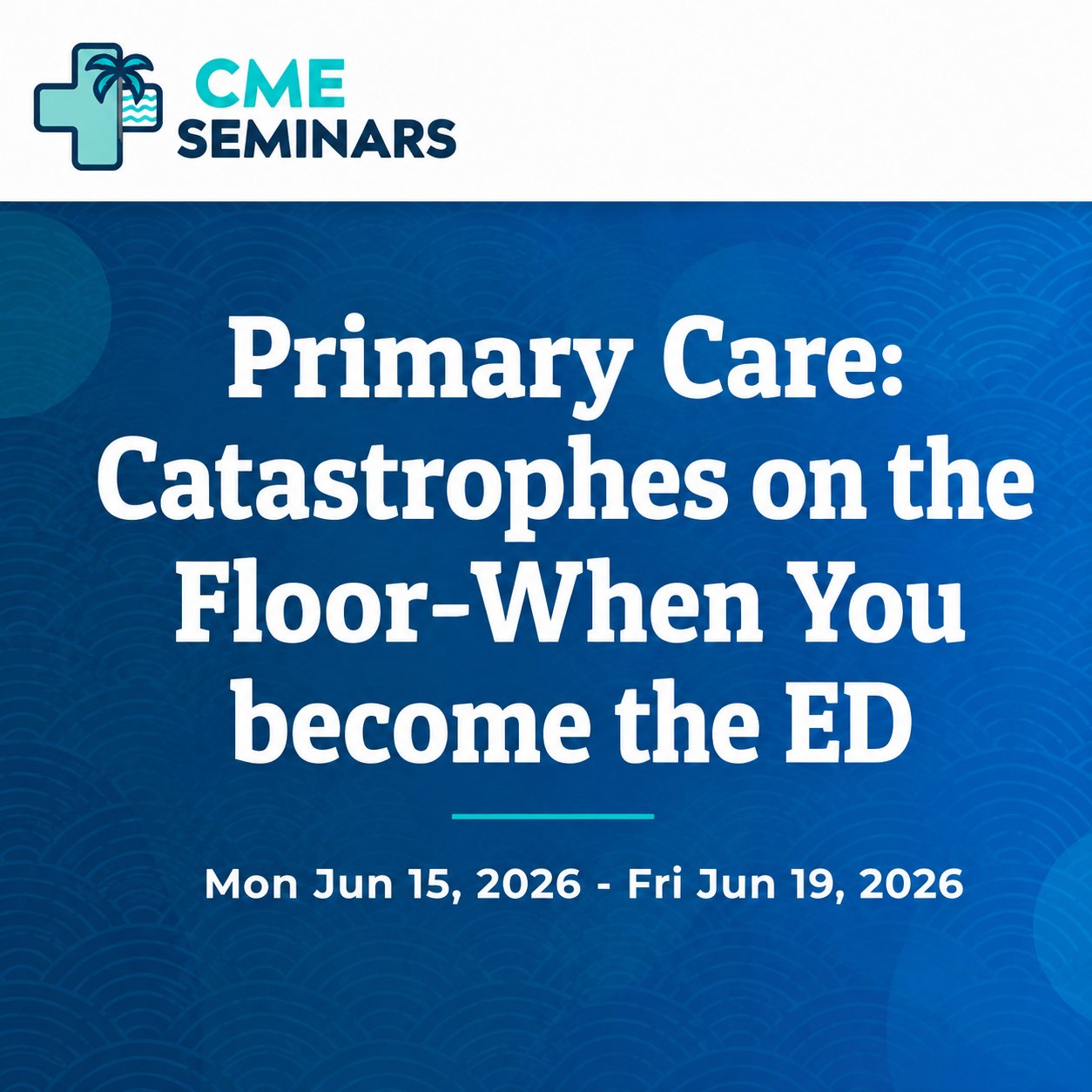
CME Seminars Primary Care Catastrophes on the Floor-When You become the ED 2026
Original price was: $999.00.$100.00Current price is: $100.00.
This Product is shared via google drive download link, So please share your correct Gmail id while placing the order .Please note that there are no CME points or certificate associated with this course Samples for Courses Can be found here : Free Samples Here!
CME Seminars Primary Care: Catastrophes on the Floor – When You Become the ED 2026
Advanced Management of Medical Emergencies for Primary Care, Hospital Medicine, Emergency Medicine, Cardiology, and Pulmonary Critical Care
CME Seminars Primary Care: Catastrophes on the Floor – When You Become the ED 2026 is an intensive continuing medical education (CME) conference designed to prepare primary care clinicians and hospital-based providers to rapidly recognize, evaluate, and manage life-threatening medical emergencies before specialty or emergency department support becomes available. Through expert-led lectures, practical case discussions, and evidence-based clinical updates, participants develop the confidence and skills needed to stabilize critically ill patients in outpatient clinics, hospital wards, and urgent care settings.
Held June 15–19, 2026, at the DoubleTree Beach Resort by Hilton, Clearwater Beach – North Redington Beach, Florida, this conference focuses on high-acuity conditions commonly encountered by frontline physicians, emphasizing early recognition, rapid diagnosis, and evidence-based emergency management.
Whether treating unstable cardiac arrhythmias, undifferentiated shock, pulmonary embolism, hypertensive emergencies, or acute respiratory failure, participants will gain practical tools that can be immediately applied in everyday clinical practice.
Course Overview
Medical emergencies frequently occur outside the emergency department, requiring internists, family physicians, hospitalists, and primary care providers to initiate lifesaving treatment before emergency or specialty teams arrive. This course bridges the gap between outpatient medicine and emergency care by providing focused education on the diagnosis and management of critical illnesses commonly encountered on the hospital floor and in ambulatory practice.
Expert faculty present real-world cases, current clinical guidelines, and practical management strategies that enable clinicians to confidently evaluate unstable patients, prioritize life-threatening conditions, and initiate appropriate treatment while coordinating definitive care.
Cardiac Emergencies
Develop practical skills for managing acute cardiovascular emergencies, including:
- Dangerous ECG interpretation
- Tachyarrhythmias
- Bradyarrhythmias
- Acute coronary syndromes
- Hypertensive emergencies
- Acute heart failure exacerbations
- Cardiogenic shock
- Acute aortic syndromes
- Pericardial tamponade
- Cardiac arrest recognition
Faculty emphasize rapid diagnosis, risk stratification, and evidence-based treatment strategies for critically ill cardiac patients.
Pulmonary & Respiratory Emergencies
Comprehensive pulmonary sessions include:
- Pulmonary embolism
- Pulmonary hypertension
- Acute hypoxemic respiratory failure
- Dyspnea evaluation
- Respiratory distress
- Oxygen therapy
- Ventilatory support principles
- Critical pulmonary care
Participants learn systematic approaches to evaluating and stabilizing patients with severe respiratory compromise.
Shock & Hemodynamic Emergencies
Review current evidence for diagnosing and managing:
- Undifferentiated shock
- Hemorrhagic shock
- Cardiogenic shock
- Obstructive shock
- Septic shock
- Hypovolemic shock
- Hemodynamic monitoring
- Initial resuscitation strategies
Clinical algorithms focus on early recognition and timely intervention to improve patient outcomes.
Point-of-Care Ultrasound (POCUS)
Learn practical bedside ultrasound applications for:
- Chest pain evaluation
- Shortness of breath
- Cardiac function assessment
- Volume status evaluation
- Pericardial effusion detection
- Pulmonary assessment
- Rapid bedside diagnosis
Faculty demonstrate how POCUS enhances clinical decision-making during medical emergencies.
Emergency Medicine in Primary Care
Sessions address common situations where primary care clinicians must function as emergency physicians, including:
- Rapid patient stabilization
- Initial emergency assessment
- Clinical prioritization
- Escalation of care
- Hospital transfers
- Time-sensitive decision making
- Multidisciplinary communication
Participants develop confidence managing unstable patients until advanced care becomes available.
Learning Objectives
Upon completion of this educational activity, participants should be able to:
- Identify dangerous ECG abnormalities and manage complex cardiac arrhythmias.
- Diagnose and initiate treatment for pulmonary embolism and pulmonary hypertension.
- Develop evidence-based approaches to undifferentiated and hemorrhagic shock.
- Recognize and manage acute cardiovascular emergencies, including hypertensive crises, acute heart failure, acute aortic syndromes, and cardiac tamponade.
- Utilize point-of-care ultrasound (POCUS) to evaluate patients presenting with chest pain and shortness of breath.
- Apply current emergency medicine principles to stabilize critically ill patients in outpatient and inpatient settings.
- Improve diagnostic accuracy and clinical decision-making during medical emergencies.
- Coordinate timely consultation, referral, and definitive patient management.
Educational Features
- Evidence-based emergency medicine updates
- Interactive clinical case discussions
- Practical bedside management strategies
- Advanced ECG interpretation
- Point-of-care ultrasound applications
- Cardiology and pulmonary emergency updates
- Shock and resuscitation algorithms
- Primary care-focused emergency medicine education
- Expert faculty presentations
Who Should Attend
This conference is ideal for:
- Primary Care Physicians
- Internal Medicine Physicians
- Family Medicine Physicians
- Emergency Medicine Physicians
- Hospitalists
- Cardiologists
- Pulmonologists
- Nurse Practitioners
- Physician Assistants
- Urgent Care Physicians
- Residents and Fellows
- Other healthcare professionals involved in acute patient care
Why Take This Course?
Medical emergencies often occur in clinics, hospital wards, and other non-emergency settings where rapid recognition and immediate intervention are critical. Primary Care: Catastrophes on the Floor – When You Become the ED 2026 equips clinicians with the practical knowledge, emergency management skills, and evidence-based strategies needed to confidently stabilize critically ill patients before specialized emergency teams arrive.
Through expert instruction, real-world case reviews, and practical bedside guidance, participants will strengthen their ability to recognize life-threatening conditions, initiate timely treatment, and improve patient outcomes across a wide range of cardiovascular, pulmonary, and critical care emergencies.
Course Highlights
- Advanced ECG interpretation
- Acute cardiac emergency management
- Pulmonary embolism and pulmonary hypertension updates
- Shock recognition and resuscitation
- Point-of-care ultrasound (POCUS)
- Hypertensive emergencies
- Heart failure management
- Acute aortic syndromes
- Pericardial tamponade
- Evidence-based emergency medicine for primary care
4. Topics
June 15, 2026
-
Dangerous ECGs: Not so “Complex”.
-
Wacky and Tachy ECGs: Understanding Tachyarrhythmias.
-
Fast and Furious: Deadly Tachyarrhythmias.
-
Pulmonary Embolism: When the Right goes Wrong (Part 1).
June 16, 2026
-
Pulmonary Embolism: When the Right goes Wrong (Part 2).
-
Damned if You Do, Damned if You Don’t: Managing Pulmonary Hypertension and the Spiral of Death.
-
Bradycardias: Moving Fast When Your Patient is Slow.
-
Worrisome ECGs: To Cath or Not to Cath.
June 17, 2026
-
Chest Pain in Pregnancy: Grave Dangers in the Gravid.
-
First 15 Minutes: Approach to Undifferentiated Shock (Part 1).
-
In Pace Of Emergency: When Pacemakers Go Haywire.
-
Probing Your Way through Chest Pain and Shortness of Breath: How POCUS Will Change Your Management.
June 18, 2026
-
The Pressure is on: Hypertensive Emergencies.
-
The Failing Heart: CHF Exacerbations.
-
First 15 Minutes: Approach to Undifferentiated Shock (Part 2).
-
Fast Fibs, A Cardiac Treachery: Management of Unstable Atrial Fibrillation.
June 19, 2026
-
Acute Aortic Syndrome, Not so Cute.
-
Running on Empty: Resuscitation of Hemorrhagic Shock.
-
Heart Squeeze: Pericardial Tamponade.
-
A Code Book for the Coding Patient.
Related products
Critical Care - Emergency medicine
Critical Care - Emergency medicine
2022 UPDATES IN THERAPEUTICS: CRITICAL CARE PHARMACY PREPARATORY REVIEW AND RECERTIFICATION COURSE

Critical Care - Emergency medicine
Medical Accounts
Critical Care - Emergency medicine
Critical Care - Emergency medicine
40th ISICEM International Symposium on Intensive Care & Emergency Medicine 2021
Critical Care - Emergency medicine

Internal Medicine