
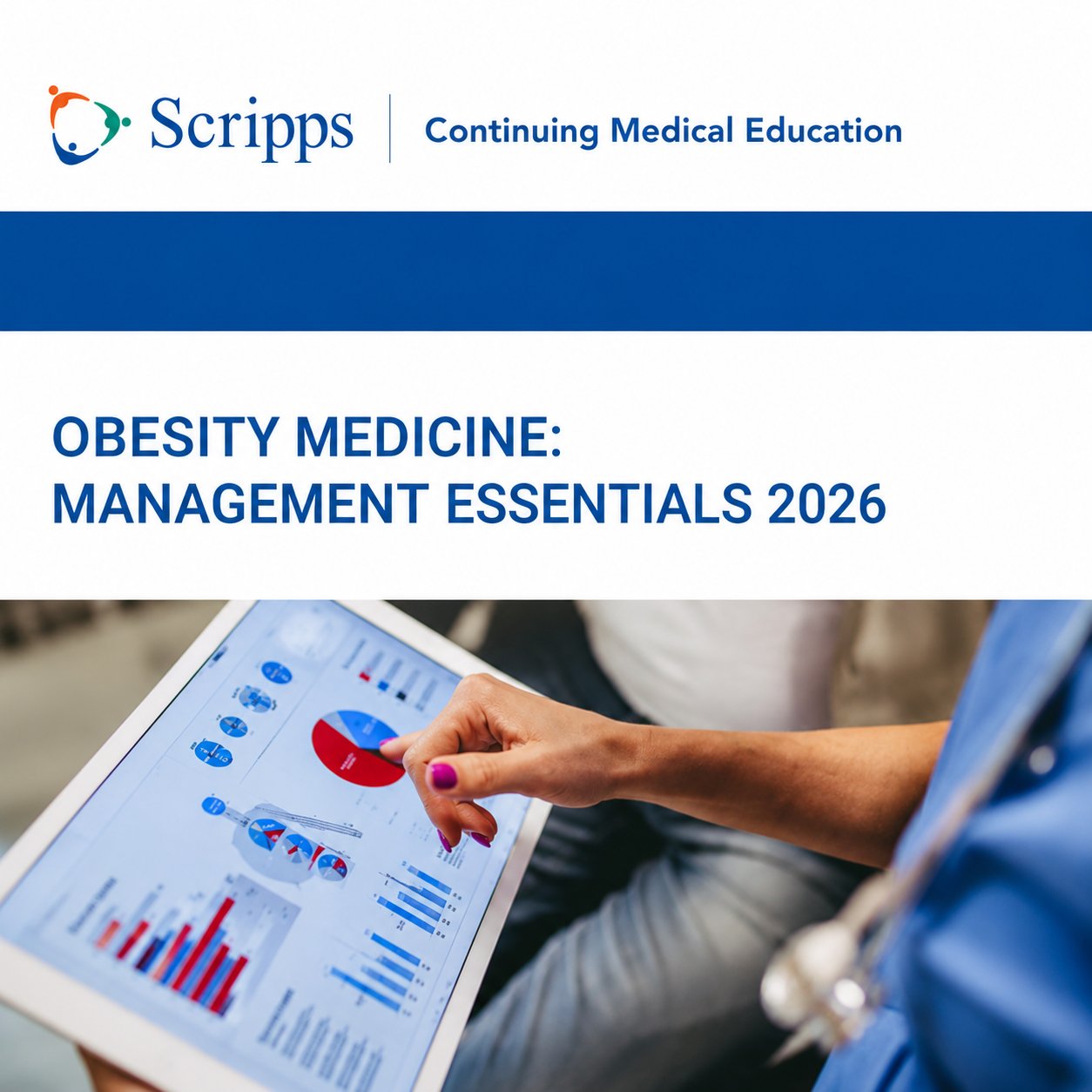
Scripps Obesity Medicine Management Essentials 2026
Original price was: $250.00.$45.00Current price is: $45.00.
This Product is shared via google drive download link, So please share your correct Gmail id while placing the order .Please note that there are no CME points or certificate associated with this course Samples for Courses Can be found here : Free Samples Here!
Scripps Obesity Medicine: Management Essentials 2026 (Videos + PDFs)
Practical, Evidence-Based Strategies for Modern Obesity Management
Advance your clinical expertise with Scripps Obesity Medicine: Management Essentials 2026, a comprehensive continuing medical education (CME) program designed to provide healthcare professionals with the latest evidence-based approaches to obesity prevention, evaluation, and treatment. Developed by leading obesity medicine experts from Scripps Health, this practical course equips clinicians with the knowledge and tools needed to successfully integrate obesity management into everyday clinical practice.
Held on May 16, 2026, at The Schaetzel Center, Scripps Memorial Hospital La Jolla, California, this one-day intensive program explores the biological, metabolic, psychological, and social aspects of obesity while emphasizing patient-centered care and long-term weight management. Participants will review current lifestyle interventions, nutrition strategies, physical activity recommendations, anti-obesity medications, bariatric procedures, and multidisciplinary treatment models that improve both weight loss outcomes and obesity-related comorbidities.
Designed for clinicians caring for adults with overweight and obesity, this course delivers practical guidance that can be immediately applied in primary care, endocrinology, bariatric medicine, and internal medicine settings.
Product Details
- Course: Scripps Obesity Medicine: Management Essentials 2026
- Provider: Scripps Health
- Course Date: May 16, 2026
- Location: The Schaetzel Center, Scripps Memorial Hospital La Jolla, California
- Format: Videos + PDFs
- Language: English
- Educational Level: Intermediate
Course Overview
Obesity is a complex chronic disease affecting nearly every organ system and significantly increasing the risk of cardiovascular disease, type 2 diabetes, fatty liver disease, obstructive sleep apnea, osteoarthritis, and numerous metabolic disorders. Effective management requires much more than simple weight-loss advice—it demands individualized, evidence-based care that addresses biological, behavioral, environmental, and psychosocial factors.
Scripps Obesity Medicine: Management Essentials 2026 provides a practical framework for evaluating patients with obesity, identifying obesity-related complications, and developing comprehensive treatment plans tailored to each patient’s medical needs and personal goals.
Participants will review modern dietary approaches, exercise prescription, behavioral interventions, pharmacologic therapy, bariatric procedures, culturally sensitive care, and strategies for improving long-term patient engagement and adherence.
Course Highlights
- Comprehensive obesity medicine update
- Obesity epidemiology and pathophysiology
- Lifestyle intervention strategies
- Nutrition and dietary planning
- Physical activity prescription
- Anti-obesity pharmacotherapy
- Bariatric surgery overview
- Obesity-related complications
- Patient assessment tools
- Behavioral medicine
- Culturally sensitive obesity care
- Multidisciplinary treatment
- Individualized weight management
- Evidence-based clinical guidelines
What You’ll Learn
After completing this course, participants will be able to:
- Explain the epidemiology and biological mechanisms underlying obesity.
- Perform comprehensive clinical assessment of patients with overweight and obesity.
- Design individualized nutrition and physical activity programs based on patient needs.
- Develop evidence-based treatment plans incorporating lifestyle, pharmacologic, and procedural therapies.
- Recognize and manage obesity-related medical complications.
- Integrate culturally sensitive communication into obesity care.
- Improve long-term patient adherence through behavioral counseling and multidisciplinary management.
- Apply current obesity medicine guidelines in everyday clinical practice.
Comprehensive Topics Covered
Obesity Pathophysiology
Review the complex biological, hormonal, metabolic, genetic, and environmental mechanisms that contribute to obesity development and long-term weight regulation.
Patient Assessment
Learn practical approaches to obesity evaluation, including anthropometric measurements, metabolic assessment, risk stratification, obesity staging, and identification of obesity-related complications.
Lifestyle Medicine
Develop individualized nutrition plans, exercise prescriptions, and behavioral modification strategies that support sustainable weight reduction and long-term health improvement.
Medical Management
Explore current evidence supporting anti-obesity medications, patient selection, treatment monitoring, combination therapy, and integration of pharmacotherapy into comprehensive weight management programs.
Bariatric & Procedural Therapy
Review indications, benefits, limitations, and expected outcomes of bariatric surgery and other procedural interventions used in obesity treatment.
Obesity-Related Complications
Strengthen your understanding of obesity-associated conditions including type 2 diabetes, hypertension, dyslipidemia, cardiovascular disease, fatty liver disease, obstructive sleep apnea, and metabolic syndrome.
Behavioral & Psychological Care
Learn effective patient counseling techniques, motivational interviewing, behavior change strategies, and methods for improving long-term adherence to treatment plans.
Culturally Sensitive Care
Understand how cultural, socioeconomic, and environmental factors influence obesity while developing inclusive, patient-centered approaches that improve engagement and health outcomes.
Learning Objectives
Upon completion of this educational activity, participants will be able to:
- Review the epidemiology and pathophysiology of obesity.
- Implement appropriate assessment tools for evaluating patients with obesity.
- Design individualized dietary and physical activity programs.
- Develop comprehensive treatment plans addressing obesity and associated comorbidities.
- Deliver culturally competent, evidence-based obesity care.
- Integrate lifestyle, pharmacologic, and procedural therapies into clinical practice.
- Improve long-term patient outcomes through multidisciplinary obesity management.
Educational Features
- Expert Scripps Faculty
- Evidence-Based Clinical Updates
- Practical Treatment Algorithms
- Lifestyle Medicine Education
- Nutrition and Exercise Planning
- Pharmacotherapy Review
- Bariatric Medicine Essentials
- Behavioral Counseling Strategies
- Case-Based Learning
- On-Demand Videos and PDFs
Why This Course Stands Out
Unlike obesity programs focused exclusively on medications or bariatric surgery, Scripps Obesity Medicine: Management Essentials 2026 provides a balanced, multidisciplinary approach that integrates lifestyle medicine, pharmacotherapy, behavioral science, and procedural interventions into one comprehensive educational experience. The curriculum emphasizes practical clinical implementation, enabling participants to confidently incorporate obesity medicine into routine patient care while improving long-term weight management outcomes.
Target Audience
This educational activity is ideal for:
- Primary Care Physicians
- Internal Medicine Physicians
- Family Medicine Physicians
- Endocrinologists
- Bariatric Medicine Specialists
- Obesity Medicine Physicians
- Nurse Practitioners (NPs)
- Physician Assistants (PAs)
- Dietitians
- Clinical Nutrition Specialists
- Residents and Fellows
- Healthcare Professionals involved in weight management
Why Choose This Course?
Whether you are beginning to integrate obesity medicine into your practice or seeking to strengthen your expertise with the latest evidence-based therapies, Scripps Obesity Medicine: Management Essentials 2026 provides practical education that improves confidence in diagnosing, treating, and supporting patients with obesity. Through expert instruction and clinically focused guidance, this course equips healthcare professionals with the knowledge needed to deliver comprehensive, patient-centered obesity care.
+ Topics:
- 01 Welcome & Overview
- 02 Introduction to Obesity Medicine
- 03 Reframing Obesity as a Complex, Chronic Disease
- 04 Understanding the Whole Patient Evaluating Patients with Obesity
- 05 Psychosocial and Social Dimensions of Obesity
- 06 Panel Discussion Q&A
- 07 Lifestyle Interventions That Work and Don’t
- 08 Pharmacotherapy for Obesity 2026 Updates
- 09 Metabolic and Bariatric Surgery
- 10 Complications of Obesity and Their Management
- 11 The Patient Perspective
- 12 Women and Weight From Pregnancy to Menopause
- 13 Maintenance of Weight Loss
- 14 Overcoming Barriers to Obesity Care and Panel Discussion Q&A
Related products
Cardiology

Endocrine and Nutrition
Master Course Carotid and Vertebral Arteries (ABC Vascular) (Videos, Slides & Quizzes)
Endocrine and Nutrition
Harvard Testosterone Therapy and Sexual Dysfunction February 2023
Endocrine and Nutrition
Endocrine and Nutrition

Internal Medicine
Internal Medicine