
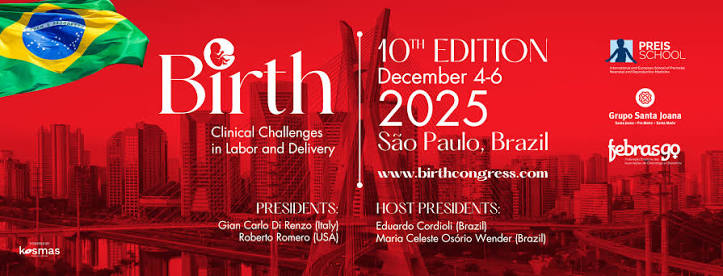
MCA Scientific Events 10th edition BIRTH Clinical Challenges in Labor and Delivery 2025
$40.00
This Product is shared via google drive download link, So please share your correct Gmail id while placing the order .Please note that there are no CME points or certificate associated with this course Samples for Courses Can be found here : Free Samples Here!
MCA Scientific Events – 10th Edition BIRTH: Clinical Challenges in Labor and Delivery 2025 (Videos)
Advanced Updates in Labor & Delivery, High-Risk Obstetrics, Maternal-Fetal Medicine, Operative Delivery, Obstetric Ultrasound, and Artificial Intelligence in Obstetrics
Advance your expertise in modern obstetric care with the MCA Scientific Events – 10th Edition BIRTH: Clinical Challenges in Labor and Delivery 2025, a premier international continuing medical education (CME) program dedicated to the latest advances in labor, delivery, maternal-fetal medicine, and high-risk obstetrics. Bringing together internationally recognized leaders in obstetrics and gynecology, this comprehensive congress delivers practical, evidence-based strategies for managing complex clinical scenarios, improving maternal and neonatal outcomes, and integrating emerging technologies into daily obstetric practice.
Held December 4–6, 2025, at the Frei Caneca Convention Center in São Paulo, Brazil, the congress is organized by Grupo Santa Joana in collaboration with the Brazilian Federation of Gynecology and Obstetrics Associations (FEBRASGO). The scientific program features distinguished Brazilian faculty alongside 37 internationally renowned experts, offering keynote lectures, multidisciplinary panel discussions, interactive communication sessions, lunch workshops, live simulation training, and hands-on ultrasound education focused on labor and childbirth.
The curriculum addresses contemporary challenges in obstetric care, including vaginal birth innovations, cesarean delivery techniques, postpartum hemorrhage, twin pregnancies, preterm birth prevention, maternal obesity, diabetes in pregnancy, fetal assessment, artificial intelligence, and advanced labor management strategies.
Product Details
- Course: 10th Edition BIRTH: Clinical Challenges in Labor and Delivery 2025
- Provider: MCA Scientific Events
- Conference Dates: December 4–6, 2025
- Location: Frei Caneca Convention Center, São Paulo, Brazil
- Organized By: Grupo Santa Joana & FEBRASGO
- Format: Videos
- Language: English
- Educational Level: Advanced
Course Overview
Labor and delivery management continues to evolve with advances in fetal monitoring, obstetric ultrasound, minimally invasive delivery techniques, simulation-based education, and artificial intelligence. At the same time, clinicians face increasingly complex pregnancies complicated by obesity, diabetes, multiple gestation, advanced maternal age, and rising cesarean delivery rates.
The BIRTH Clinical Challenges in Labor and Delivery 2025 congress provides an evidence-based review of modern obstetric practice, emphasizing safe delivery techniques, multidisciplinary management, and individualized patient care. International experts review current clinical guidelines, challenging obstetric cases, emerging technologies, and innovative approaches that improve outcomes for both mothers and newborns.
Participants gain practical knowledge that can be immediately incorporated into labor wards, delivery suites, maternal-fetal medicine practices, and high-risk obstetric services.
What You’ll Learn
After completing this course, participants will be able to:
- Apply modern evidence-based strategies for labor and delivery management.
- Evaluate new vaginal birth assistance techniques, including the OdonAssist method.
- Optimize cesarean section planning and surgical techniques.
- Recognize and manage obstetric emergencies such as postpartum hemorrhage.
- Apply current strategies for the management of twin pregnancies and preterm labor.
- Integrate artificial intelligence into labor monitoring and obstetric decision-making.
- Utilize obstetric ultrasound to evaluate labor progression and fetal wellbeing.
- Improve maternal and neonatal outcomes through multidisciplinary, evidence-based care.
Comprehensive Topics Covered
Modern Labor & Delivery
Review current best practices for safe and effective labor management.
Topics include:
- Normal labor
- Labor progression
- Delivery planning
- Intrapartum management
- Maternal monitoring
- Fetal surveillance
- Clinical decision-making
Faculty discuss practical approaches to optimizing labor while minimizing maternal and neonatal complications.
Vaginal Birth Innovations
Explore new techniques designed to improve assisted vaginal delivery.
Topics include:
- OdonAssist
- Instrument-assisted delivery
- Vaginal birth techniques
- Operative vaginal delivery
- Clinical indications
- Patient selection
Participants review current evidence supporting emerging technologies in assisted childbirth.
Cesarean Delivery
Develop a comprehensive understanding of modern cesarean section techniques and indications.
Topics include:
- Cesarean delivery
- Surgical techniques
- Operative planning
- Risk reduction
- Maternal safety
- Enhanced recovery
Faculty address strategies to reduce unnecessary cesarean delivery while optimizing outcomes when surgery is required.
High-Risk Obstetrics
Review evidence-based management of complex obstetric conditions.
Topics include:
- Twin pregnancy
- High-risk labor
- Maternal complications
- Fetal complications
- Obstetric emergencies
- Multidisciplinary management
Postpartum Hemorrhage
Strengthen your ability to rapidly recognize and manage one of the leading causes of maternal mortality worldwide.
Topics include:
- Hemorrhage prevention
- Early recognition
- Medical management
- Surgical interventions
- Massive transfusion
- Emergency protocols
Preterm Birth
Review current prevention, diagnosis, and management strategies for preterm labor and delivery.
Topics include:
- Preterm birth prevention
- Cervical assessment
- Risk stratification
- Fetal protection
- Neonatal outcomes
Maternal Obesity & Diabetes
Learn practical approaches to managing pregnancies complicated by metabolic disease.
Topics include:
- Maternal obesity
- Gestational diabetes
- Nutritional management
- Lifestyle interventions
- Pregnancy complications
- Delivery planning
Obstetric Ultrasound
Enhance diagnostic confidence through modern ultrasound applications during pregnancy and labor.
Topics include:
- Labor ultrasound
- Fetal assessment
- Labor progression
- Obstetric imaging
- Simulation training
- Hands-on interpretation
Artificial Intelligence in Obstetrics
Explore how artificial intelligence is transforming maternal-fetal medicine and labor management.
Topics include:
- AI-assisted labor monitoring
- Predictive analytics
- Clinical decision support
- Digital obstetrics
- Future technologies
Faculty discuss the practical integration of AI into modern obstetric practice.
Simulation-Based Education
Improve procedural confidence through expert-led simulation sessions focused on obstetric emergencies, labor management, and ultrasound-guided assessment.
Learning Objectives
Upon completion of this educational activity, participants will be able to:
- Evaluate innovative vaginal birth assistance techniques, including OdonAssist.
- Apply contemporary cesarean delivery techniques and operative strategies.
- Assess and manage maternal and fetal risks during labor and delivery.
- Integrate artificial intelligence into obstetric clinical decision-making.
- Develop evidence-based strategies for preventing and managing preterm birth.
- Optimize care for pregnancies complicated by obesity and diabetes.
- Utilize obstetric ultrasound to diagnose abnormalities during labor.
- Improve maternal and neonatal outcomes through multidisciplinary management.
Educational Highlights
- Labor & Delivery
- Obstetrics
- Maternal-Fetal Medicine
- High-Risk Pregnancy
- Vaginal Birth
- OdonAssist
- Cesarean Section
- Postpartum Hemorrhage
- Twin Pregnancy
- Preterm Birth
- Maternal Obesity
- Gestational Diabetes
- Obstetric Ultrasound
- Fetal Assessment
- Artificial Intelligence
- Simulation Training
- Obstetric Emergencies
- Case-Based Learning
- Human Reproduction
- Continuing Medical Education (CME)
Why This Course Stands Out
The 10th Edition BIRTH: Clinical Challenges in Labor and Delivery 2025 is one of the world’s leading international meetings dedicated exclusively to labor and childbirth. Combining world-renowned faculty, evidence-based lectures, live simulation sessions, practical ultrasound workshops, and emerging technologies such as artificial intelligence, the program provides a comprehensive update that bridges cutting-edge research with everyday obstetric practice. Its strong emphasis on maternal safety, fetal wellbeing, and multidisciplinary collaboration makes it an invaluable educational resource for clinicians managing both routine and high-risk pregnancies.
Target Audience
This educational activity is ideal for:
- Obstetricians
- Gynecologists
- Maternal-Fetal Medicine Specialists
- High-Risk Obstetricians
- Fetal Medicine Specialists
- Reproductive Medicine Physicians
- Obstetrics & Gynecology Residents
- Maternal-Fetal Medicine Fellows
- Midwives
- Labor & Delivery Physicians
- Women’s Health Physicians
- Healthcare Professionals involved in obstetric and perinatal care
Why Choose This Course?
Whether you specialize in obstetrics, maternal-fetal medicine, or high-risk pregnancy management, MCA Scientific Events – 10th Edition BIRTH: Clinical Challenges in Labor and Delivery 2025 provides an exceptional evidence-based review of modern labor and delivery. Featuring internationally recognized experts, practical case discussions, simulation-based education, advanced ultrasound training, and the latest innovations in obstetric care, this program equips clinicians with the knowledge and confidence to improve maternal and neonatal outcomes across a wide range of clinical scenarios.
Topics
-
Opening Ceremony
-
BREAKFAST SESSION 1: Breaking News
-
BREAKFAST SESSION 2: Updates & Global Reflections
-
SESSION 1: Labor and Monitoring
-
SESSION 2: Risks of vaginal delivery
-
SESSION 3: Preterm birth
-
SESSION 4: Postpartum hemorrhage
-
SESSION 5: Emergencies and unexpected problems
-
SESSION 6: Controversial issues
-
SESSION 7: OK Matters still debated
-
SESSION 8: AI, simulation and the future of labor and delivery care
-
Workshop A: Cesarea De Emergencia Dia 3 Sala 2
-
Workshop A: Labor Emergencies
-
Workshop B: Prevention of Rh immunization
-
WORKSHOP: Natural Cycles
Related products

Anesthesiology & pain medicine

Critical Care - Emergency medicine
ECHO-Guided Life Support Using ultrasound to categorise shock and guide initial management

Internal Medicine
Hematology / Oncology