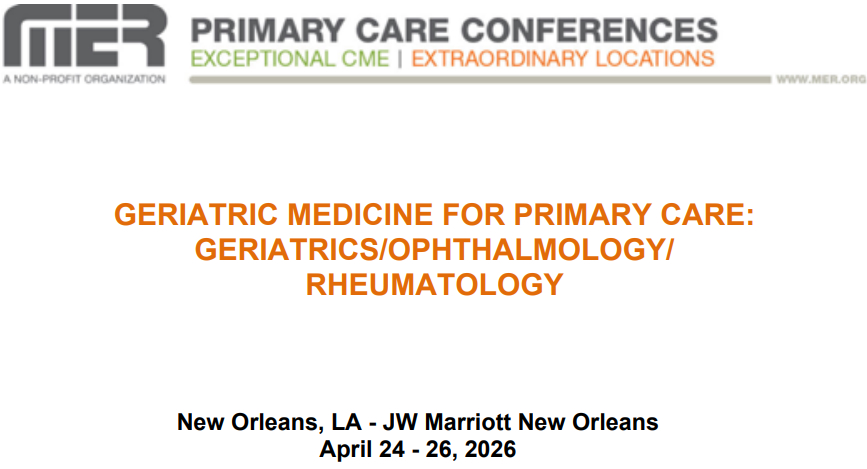
MER Primary Care Conferences: Geriatric Medicine for Primary Care – Geriatrics, Ophthalmology & Rheumatology 2026 (Videos)
Comprehensive Primary Care Updates in Geriatric Medicine, Rheumatology, Ophthalmology, Osteoporosis, Arthritis, Falls Prevention, Vision Disorders, and Healthy Aging
Enhance your expertise in caring for older adults with MER Primary Care Conferences: Geriatric Medicine for Primary Care – Geriatrics, Ophthalmology & Rheumatology 2026, a comprehensive continuing medical education (CME) program developed by Medical Education Resources (MER). Designed specifically for primary care clinicians and healthcare professionals, this evidence-based conference delivers practical updates on the diagnosis, treatment, and long-term management of common geriatric, rheumatologic, and ophthalmologic conditions encountered in everyday outpatient practice.
Held April 24–26, 2026, at the JW Marriott New Orleans, Louisiana, this interactive educational program combines expert-led lectures, clinical guideline updates, and case-based discussions to help clinicians improve functional outcomes, preserve independence, reduce disability, and enhance quality of life for aging patients.
The curriculum integrates contemporary management of arthritis, osteoporosis, chronic pain, gait disorders, falls prevention, inflammatory rheumatic diseases, gout, dry eye disease, red eye, blurred vision, and age-related ocular disorders, providing practical strategies that can be immediately applied in primary care settings.
Product Details
- Course: Geriatric Medicine for Primary Care – Geriatrics, Ophthalmology & Rheumatology 2026
- Provider: Medical Education Resources (MER)
- Conference Dates: April 24–26, 2026
- Location: JW Marriott New Orleans, New Orleans, Louisiana, USA
- Format: Videos
- Language: English
- Educational Level: Intermediate
Course Overview
As populations continue to age, primary care clinicians increasingly manage complex older adults with multiple chronic conditions, musculoskeletal disorders, visual impairment, frailty, chronic pain, and polypharmacy. Delivering effective care requires integrating evidence-based management across multiple specialties while maintaining a patient-centered approach.
MER Geriatric Medicine for Primary Care 2026 provides a multidisciplinary review of modern geriatric medicine, rheumatology, and ophthalmology tailored specifically to office-based practice. The course emphasizes early diagnosis, functional assessment, guideline-directed treatment, preventive strategies, medication safety, and individualized care planning for older adults.
Through practical clinical cases and expert guidance, participants strengthen diagnostic reasoning, improve therapeutic decision-making, and gain confidence managing the medical conditions most commonly affecting aging populations.
What You’ll Learn
After completing this course, participants will be able to:
- Evaluate and manage musculoskeletal disorders commonly affecting older adults.
- Develop individualized treatment plans for osteoarthritis and inflammatory arthritis.
- Diagnose and treat gout and calcium pyrophosphate deposition disease (pseudogout).
- Assess gait disorders and implement effective falls prevention strategies.
- Apply current recommendations for osteoporosis screening and treatment.
- Recognize common ophthalmologic conditions encountered in primary care.
- Evaluate blurred vision, dry eye disease, and red eye presentations.
- Improve comprehensive care for older adults using evidence-based multidisciplinary approaches.
Comprehensive Topics Covered
Geriatric Medicine
Develop practical approaches to the comprehensive assessment and management of older adults.
Topics include:
- Comprehensive geriatric assessment
- Frailty
- Functional decline
- Healthy aging
- Polypharmacy
- Multimorbidity
- Preventive care
- Shared decision-making
Faculty emphasize individualized treatment plans that preserve independence and improve quality of life.
Musculoskeletal Disorders in Older Adults
Review the diagnosis and treatment of common musculoskeletal conditions affecting elderly patients.
Topics include:
- Chronic musculoskeletal pain
- Degenerative joint disease
- Soft tissue disorders
- Functional impairment
- Mobility preservation
- Non-operative management
Pain Management in Geriatrics
Learn evidence-based strategies for treating pain while minimizing medication-related complications.
Topics include:
- Chronic pain assessment
- Multimodal pain management
- Pharmacologic therapy
- Non-pharmacologic interventions
- Medication safety
- Opioid stewardship
Osteoarthritis
Strengthen your understanding of current evidence-based management for osteoarthritis.
Topics include:
- Clinical diagnosis
- Conservative treatment
- Exercise therapy
- Weight management
- Pharmacologic options
- Joint injections
- Surgical referral
Faculty review updated treatment recommendations aimed at improving mobility and reducing pain.
Inflammatory Arthritis
Improve recognition and management of inflammatory rheumatic diseases.
Topics include:
- Rheumatoid arthritis
- Polymyalgia rheumatica
- Seronegative arthritis
- Autoimmune disease
- Laboratory evaluation
- Differential diagnosis
Participants learn when early referral and disease-modifying therapy are indicated.
Osteoporosis & Bone Health
Review current recommendations for fracture prevention and osteoporosis management.
Topics include:
- Bone mineral density testing
- Fracture risk assessment
- Bisphosphonate therapy
- Calcium and vitamin D
- Secondary osteoporosis
- Long-term treatment strategies
Gout & Crystal Arthropathies
Develop practical approaches to diagnosing and treating crystal-induced arthritis.
Topics include:
- Gout
- Hyperuricemia
- Pseudogout (CPPD)
- Acute flare management
- Urate-lowering therapy
- Long-term prevention
Falls Prevention & Gait Disorders
Reduce fall-related injuries through comprehensive mobility assessment.
Topics include:
- Gait assessment
- Balance disorders
- Fall risk evaluation
- Assistive devices
- Rehabilitation
- Exercise programs
- Injury prevention
Ophthalmology for Primary Care
Review common eye disorders encountered in outpatient practice.
Topics include:
- Vision screening
- Comprehensive eye evaluation
- Age-related eye disease
- Referral guidelines
- Clinical decision-making
Dry Eye, Red Eye & Blurred Vision
Enhance recognition of common ophthalmologic complaints requiring primary care evaluation.
Topics include:
- Dry eye disease
- Red eye
- Blurred vision
- Conjunctivitis
- Corneal disorders
- Urgent ophthalmic referral
- Differential diagnosis
Faculty discuss practical examination techniques and warning signs requiring specialist consultation.
Learning Objectives
Upon completion of this educational activity, participants will be able to:
- Evaluate and manage common musculoskeletal disorders in older adults.
- Apply evidence-based therapies for osteoarthritis and inflammatory arthritis.
- Assess chronic pain and develop individualized treatment plans for elderly patients.
- Prevent falls through comprehensive gait assessment and risk reduction strategies.
- Diagnose and manage osteoporosis using current clinical guidelines.
- Recognize and treat gout and pseudogout.
- Evaluate common ophthalmologic complaints including dry eye, red eye, and blurred vision.
- Utilize eye examination findings to improve diagnosis and clinical decision-making in primary care.
Educational Highlights
- Geriatric Medicine
- Healthy Aging
- Osteoarthritis
- Rheumatoid Arthritis
- Inflammatory Arthritis
- Osteoporosis
- Bone Health
- Bisphosphonate Therapy
- Gout
- Pseudogout (CPPD)
- Chronic Pain
- Falls Prevention
- Gait Disorders
- Ophthalmology
- Dry Eye Disease
- Red Eye Evaluation
- Blurred Vision
- Vision Screening
- Primary Care Medicine
- Continuing Medical Education (CME)
Why This Course Stands Out
MER Geriatric Medicine for Primary Care – Geriatrics, Ophthalmology & Rheumatology 2026 provides a uniquely integrated educational experience that addresses three essential disciplines in the care of older adults. Rather than focusing on isolated diseases, the course emphasizes practical outpatient management of age-related musculoskeletal disorders, visual impairment, chronic pain, mobility challenges, and rheumatologic diseases using current evidence-based guidelines. Through expert instruction and clinically relevant case discussions, participants gain practical knowledge that improves diagnostic confidence, promotes healthy aging, and enhances patient-centered care.
Target Audience
This educational activity is ideal for:
- Primary Care Physicians
- Family Medicine Physicians
- Internal Medicine Physicians
- Geriatricians
- Ophthalmologists
- Rheumatologists
- Nurse Practitioners
- Physician Assistants
- Hospitalists
- Residents and Fellows
- Nurses and Allied Healthcare Professionals involved in geriatric care
Why Choose This Course?
Whether you practice primary care, geriatrics, rheumatology, ophthalmology, or internal medicine, MER Geriatric Medicine for Primary Care – Geriatrics, Ophthalmology & Rheumatology 2026 provides an outstanding evidence-based review of the medical conditions most commonly affecting older adults. Featuring expert faculty, practical case-based discussions, updated clinical guidelines, and multidisciplinary management strategies, this course equips clinicians with the knowledge needed to optimize functional health, preserve independence, and improve quality of life in aging patients.
4. Topics
Geriatrics
-
Common Musculoskeletal Problems in the Elderly: Discuss strategies to minimize musculoskeletal problems in the elderly patient population.
-
Update in Pharmacology for Arthritis in the Older Adult: Review risks and benefits of traditional NSAIDs and cox-2 inhibitors; analgesics (narcotics and tramadol) and acetaminophen.
-
Pain Management in the Older Adult: Assessment and management of pain in the older adult.
-
Geriatric Gait Disorders & Falls: Diagnosing problems associated with gait abnormalities; considering causes and prevention of falls; exercise training, aerobics, balance training, resistance.
Rheumatology
-
Osteoarthritis: Pathogenesis, diagnosis and treatment.
-
Differential Diagnosis of Inflammatory Arthritis: Clinical presentation and laboratory work-up and treatment for rheumatoid arthritis, systemic lupus erythematosus, spondyloarthropathies (SPA), infectious arthritis and systemic sclerosis; Treatment of RA with DMARDs; Treatment principles of SLE, Sjogren’s, SPA and PMR.
-
Osteoporosis: Review the epidemiology and pathophysiology of osteoporosis along with interpretation of DEXA scans and FRAX risk assessment; up-to-date therapeutic options.
-
Crystal Disease: Gout & Pseudogout: Properly diagnosing and treating crystal diseases such as gout and pseudogout.
Ophthalmology
-
Approach to the Aging Eye: Differentiation between “normal” aging process and the “diseases” of ocular aging; Highlighting of the most common issues facing the aging population with respect to ophthalmology: macular degeneration, diabetes and glaucoma.
-
Dry Eye: The role of age, hormone levels and environmental factors in producing dry eyes; Differentiating and understanding triggers of dry eye disease; The ocular role in photophobia and migraine; Overview of treatment options.
-
Blurred Vision: Blurred vision is a common problem seen in primary care and the emergency room. Lecture will develop an algorithm to evaluate, triage and treat these patients. When should someone with a complaint of blurred vision be sent to an ophthalmologist? When should an imaging study be done? What could be causing this problem in the first place? Lecture will address these questions and others.
-
Ophthalmic Manifestations of Systemic Diseases: In this talk we will explore the variety of ways that examination of the eye can impact the diagnosis, treatment and clinical decision making for patients seen on a daily basis in primary care offices. We will discuss vascular, hematologic, respiratory and autoimmune conditions with attention to the ways in which a patients’ care can be positively influenced by taking into account the information available from visual system analysis and monitoring.