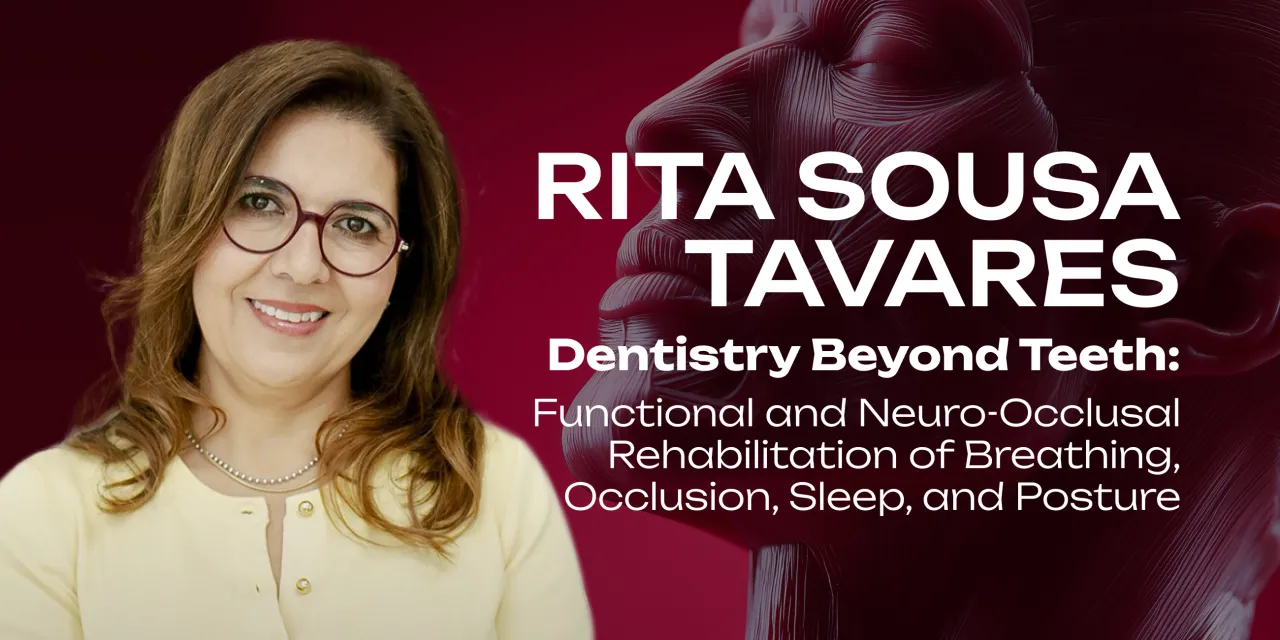
OHI-S Dentistry Beyond Teeth Functional and Neuro-Occlusal Rehabilitation of Breathing, Occlusion, Sleep, and Posture 7 lessons 3h 1min
Original price was: $350.00.$30.00Current price is: $30.00.
Explore Rita Tavares’s functional and neuro-occlusal approach to breathing, occlusion, sleep and posture. Seven presentations, listed at 3 hours 1 minute, cover assessment, lip seal, Planas Tracks, Simões Network appliances and interdisciplinary case planning. The complete topic list is retained, with clear distinctions between dental screening and medical sleep assessment.
Delivery Information: This Product is shared via google drive download link. Please use your correct Gmail address at checkout.
Please note: there are no CME points or certificate associated with this course.
Samples for Courses Can be found here: Free Samples Here!
Rita Tavares presents a functional approach to dental assessment that considers breathing, occlusion, orofacial muscle activity, sleep and posture together. Dentistry Beyond Teeth explores the instructor’s neuro-occlusal concepts through clinical cases, from lip-seal assessment and recognition of functional signs to Planas Tracks, Simões Network appliances and myofunctional integration. The English-language course comprises six lessons plus one free clinical video, with a listed total duration of 3 hours 1 minute. It is aimed primarily at orthodontists and dental professionals interested in functional assessment and interdisciplinary planning. The teaching includes the limits of dental intervention and the role of referral when broader medical assessment is needed.
The relationships and treatment approaches discussed are the instructor’s teaching framework; the course does not establish that correcting occlusion necessarily resolves breathing, sleep, postural or systemic conditions.
Topics
Lesson 1. Breath to Heal: How to Seal the Lips
-
Understanding the impact of lip seal on functional breathing and overall health
-
The 10 most essential clinical “permissions” for nasal breathing
-
The most common blocks to nasal breathing
-
Application of immediate clinical strategies for correction
-
Integration of practical exercises for lip seal training
-
Analysis of case studies with clinical outcomes
Lesson 2. Diagnosing and Treating Functional Disorders
-
The transformative role of the dentist in prevention and early diagnosis
-
Identifying oral, postural, and respiratory signs in daily practice
-
Limits of dental clinical action and when to refer
-
Tools for transdisciplinary functional assessment
-
Integrative treatment approaches within a team
-
Clinical case discussions
Lesson 3. Orthodontics and Function: Influence, Interference, or Ignorance?
-
The relationship between orthodontics and nasal breathing
-
The impact of extractions and fixed mechanics on functional balance
-
Long-term consequences for occlusal stability
-
Functional orthodontics vs mechanical orthodontics
-
Preventive orthodontics in paediatric patients
-
Comparative clinical cases
Lesson 4. What Teeth, Muscles, and Bones Reveal
-
Identifying diagnostic clues in the stomatognathic system
-
Hidden cavitations: diagnosis and clinical impact
-
Muscular and postural asymmetries as early warning signs
-
The link between muscle tone and respiratory function
-
Interpreting skeletal signs in daily practice
-
Practical case documentation with photos and radiographs
Lesson 5. Mouth, Sleep, and Posture: The Invisible Triad of Vitality
-
How nasal breathing affects sleep quality
-
The impact of open-mouth posture on the myofascial system
-
Postural consequences of orofacial imbalance
-
Links between sleep apnoea, posture, and systemic health
-
Therapeutic strategies to restore the triad
-
Clinical cases with long-term follow-up
Lesson 6. Planas Tracks and the Simões Network in Clinical Practice
-
Foundations of the Planas and Simões functional treatment philosophies
-
Diagnostic principles and clinical indications for direct and indirect Planas tracks
-
Biomechanics and therapeutic applications of the Simões Network in occlusal development and reorganization
-
Clinical protocols for appliance selection, design, placement, and adjustment
-
Benefits, limitations, and factors influencing treatment success
-
Analysis of clinical cases demonstrating treatment planning, execution, and outcomes
Lesson 7. Breathing and Neuro-Occlusal Rehabilitation
-
Functional relationships between breathing, occlusion, craniofacial development, and posture
-
Impact of altered breathing patterns on facial growth, occlusal development, and overall function
-
Principles of neuro-occlusal rehabilitation in the management of breathing-related dysfunctions
-
Clinical protocols for promoting nasal breathing through functional orthopedic and orthodontic approaches
-
Integration of neuro-occlusal rehabilitation with myofunctional therapy and broader systemic health considerations
-
Clinical case studies demonstrating interdisciplinary approaches and treatment outcomes
Sleep and Airway Scope
Dental screening is distinct from a medical diagnosis of sleep apnea. The source description includes these limits:
- Mouth breathing does not confirm OSA.
- Malocclusion does not confirm airway disease.
- Dental radiographs do not establish an OSA diagnosis.
- Orthodontic treatment should not automatically be prescribed solely to treat suspected sleep apnea.
- Patients with suspected OSA should be referred for appropriate medical assessment.
The source lists 3.25 CE credits for eligible participation in the original OHI-S activity: 0.25 for each of lessons 1–4 and 0.75 for each of lessons 5–7. These provider credits and the official OHI-S certificate are not included in this store package.
Related products