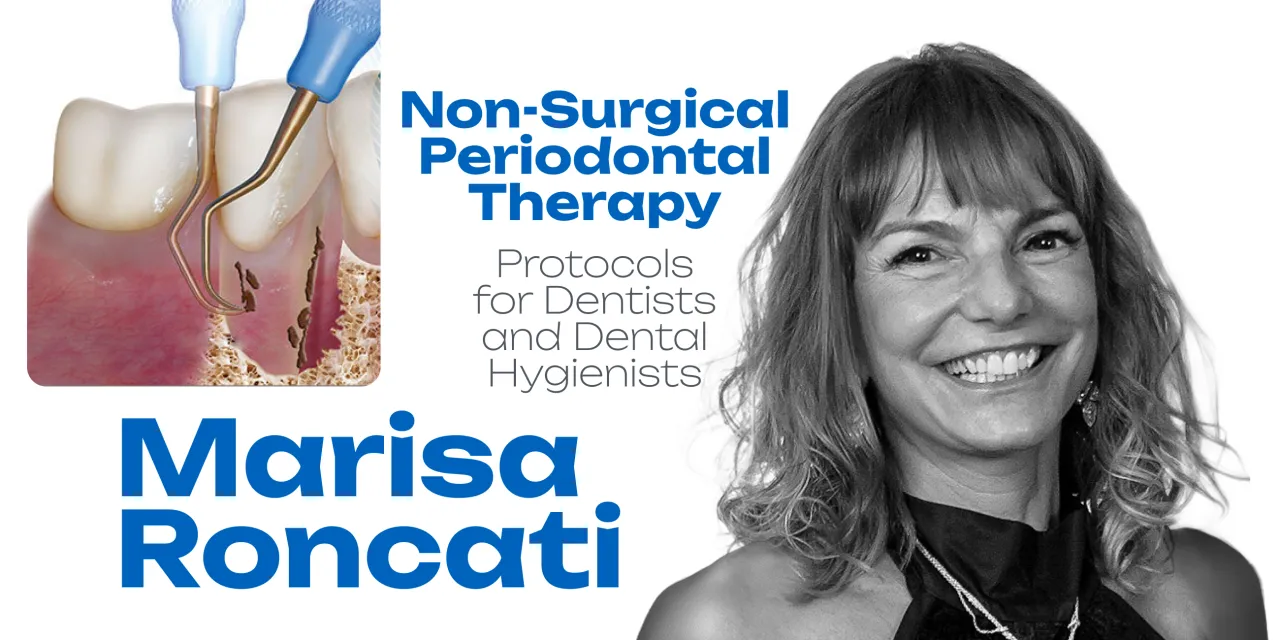
OHI-S Non-Surgical Periodontal Therapy. Protocols for Dentists and Dental Hygienists 4 lessons 1h 38min
$15.00
This Product is shared via google drive download link, So please share your correct Gmail id while placing the order .Please note that there are no CME points or certificate associated with this course Samples for Courses Can be found here : Free Samples Here!
OHI-S Non-Surgical Periodontal Therapy
Protocols for Dentists and Dental Hygienists
4 Lessons | 1 Hour 38 Minutes | Marisa Roncati
Develop a practical, clinically driven approach to the non-surgical management of periodontal and peri-implant disease with OHI-S Non-Surgical Periodontal Therapy: Protocols for Dentists and Dental Hygienists.
Presented by Marisa Roncati, this focused periodontology course moves beyond rigid treatment algorithms and concentrates on practical clinical decision-making, instrumentation, reevaluation, adjunctive laser therapy, and long-term periodontal maintenance.
The program covers:
- Non-surgical periodontal therapy
- Scaling and root planing
- Subgingival instrumentation
- Residual calculus detection
- Root debridement
- Periodontal reevaluation
- Periodontal probing-depth assessment
- Diode laser adjunctive therapy
- Stage III–IV periodontitis
- Peri-implant disease
- Periodontal maintenance
- Surgical vs. non-surgical decision-making
- Bone remineralization assessment
- Long-term periodontal stability
The central clinical pathway is:
Diagnose → Debride → Reevaluate → Identify Residual Disease → Select Adjunctive or Surgical Therapy When Appropriate → Maintain
Course Details
- Course: Non-Surgical Periodontal Therapy. Protocols for Dentists and Dental Hygienists
- Provider: OHI-S
- Instructor: Marisa Roncati
- Lessons: 4
- Official Duration: 1 Hour 38 Minutes
- Language: English
- Official OHI-S CE: 1.25 CE Credits
- Primary Specialty: Periodontology
- Clinical Focus: Non-Surgical Periodontal Therapy
- Additional Focus: Peri-Implant Disease & Laser-Assisted Periodontal Therapy
Course Overview
Non-surgical periodontal therapy remains a fundamental component of periodontal care.
However, effective treatment requires more than simply performing routine scaling.
The clinician must determine:
- Where subgingival deposits remain
- Whether adequate debridement has been achieved
- Which pockets require reevaluation
- Whether tissues are responding to therapy
- Whether further non-surgical treatment is reasonable
- Whether adjunctive therapy may be considered
- When surgical management becomes appropriate
- How long-term stability should be maintained
This course organizes those decisions into a practical clinical framework.
Non-Surgical Periodontal Therapy
A comprehensive non-surgical approach may incorporate:
- Patient education
- Biofilm control
- Supra- and subgingival instrumentation
- Scaling
- Root surface debridement
- Reevaluation
- Maintenance
The objective is not simply to remove visible deposits but to establish clinically meaningful periodontal endpoints.
Scaling and Root Planing
Scaling and root planing remain key concepts within non-surgical periodontal treatment.
The course focuses particularly on:
- Manual instrumentation
- Modified subgingival techniques
- Residual calculus
- Clinical execution
- Follow-up
The emphasis is on adapting instrumentation to the clinical site rather than applying the same sequence mechanically to every patient.
LESSON 1
Non-Surgical Periodontal Tissue Management: Biological Principles, Instrumentation Protocols, and Clinical Endpoints
Instructor: Marisa Roncati
Duration: 22 Minutes
Official OHI-S CE: 0.25 Credit
Lesson 1 establishes the biological and clinical framework for non-surgical periodontal therapy.
Topics include:
- Biological principles of periodontal healing
- Bone remineralization concepts
- Longitudinal periodontal cases
- Periodontal stability
- Calculus detection
- Subgingival debridement
- Residual calculus removal
- Root debridement
- Clinical treatment endpoints
Biological Response After Therapy
Periodontal tissues can demonstrate substantial clinical improvement after effective non-surgical treatment.
However, treatment response varies between:
- Patients
- Teeth
- Sites
- Defect morphologies
The course therefore avoids treating periodontal healing as completely predictable.
Bone Remineralization
OHI-S specifically discusses the biological rationale behind unpredictable yet achievable bone remineralization following non-surgical therapy.
This is an important distinction.
The course demonstrates longitudinal cases and discusses how changes can be evaluated over time, but bone regeneration or remineralization should not be represented as guaranteed following scaling and root planing.
Calculus Detection
Residual subgingival calculus can compromise periodontal treatment.
The curriculum therefore includes protocols for:
- Detecting residual calculus
- Identifying incompletely debrided areas
- Re-instrumenting when appropriate
A useful clinical sequence is:
Detect → Instrument → Reassess → Verify Endpoint
Root Debridement
Effective root debridement requires more than aggressive instrumentation.
The goal is controlled removal of deposits and disruption of pathogenic biofilm while preserving tissues as appropriately as possible.
Clinical Endpoints
One of the strongest topics in Lesson 1 is identifying meaningful clinical endpoints after instrumentation.
The clinician must decide:
When Has Adequate Debridement Been Achieved?
This requires clinical judgment rather than simply counting instrument strokes.
LESSON 2
Manual Scaling Techniques and Clinical Outcome Analysis
Instructor: Marisa Roncati
Duration: 18 Minutes
Official OHI-S CE: 0.25 Credit
Lesson 2 moves into practical instrumentation.
Topics include:
- Periodontal follow-up protocols
- Manual scaling demonstration
- Modified manual subgingival instrumentation
- Clinical rationale for instrumentation
- Scaling and root planing protocols
- Management of periodontally compromised patients
- Bone remineralization assessment
- Post-treatment clinical cases
- Literature review
Modified Manual Instrumentation
The course demonstrates a modified approach to manual subgingival instrumentation.
The objective is to improve:
- Access
- Calculus removal
- Root-surface debridement
- Procedural control
while adapting technique to the anatomy of the periodontal pocket.
Manual Scaling
Manual instrumentation remains highly relevant even in practices using ultrasonic technology.
Clinical competence requires understanding:
- Instrument adaptation
- Working angulation
- Pressure
- Stroke control
- Root anatomy
- Furcations
- Pocket morphology
Follow-Up Protocols
Periodontal treatment does not end after the initial debridement appointment.
Follow-up helps determine:
- Reduction in inflammation
- Changes in probing depths
- Residual bleeding
- Persistent calculus
- Patient plaque control
- Need for additional treatment
Clinical Outcome Analysis
Longitudinal cases allow the practitioner to compare:
Baseline → Non-Surgical Treatment → Reevaluation → Maintenance
This helps distinguish true treatment response from assumptions based only on immediate post-treatment appearance.
LESSON 3
Laser-Assisted Non-Surgical Protocols in Advanced Periodontal Therapy
Instructor: Marisa Roncati
Duration: 19 Minutes
Official OHI-S CE: 0.25 Credit
This lesson examines the adjunctive use of laser therapy in advanced periodontal treatment.
Topics include:
- Generalized Stage III–IV periodontitis
- Grade B–C disease
- Indications for laser-assisted treatment
- Limitations of laser therapy
- Diode laser application
- Advanced non-surgical protocols
- Periodontal reevaluation
- Initial probing depths ≥6 mm
- Surgical vs. non-surgical decision-making
- Peri-implant disease protocols
Laser Therapy as an Adjunct
The most important wording for this module is:
Adjunctive
The laser should not be presented as replacing:
- Diagnosis
- Mechanical debridement
- Biofilm control
- Periodontal maintenance
- Surgical treatment when indicated
The official curriculum specifically discusses both the indications and limitations of laser-assisted therapy.
Diode Laser in Periodontal Therapy
The program reviews integration of a diode laser into selected non-surgical periodontal protocols.
The clinician should understand:
- Treatment indication
- Device-specific training
- Tissue response
- Safety
- Limitations
rather than simply adding laser treatment to every periodontal pocket.
Stage III–IV Periodontitis
Lesson 3 specifically addresses advanced disease classified as:
- Stage III
- Stage IV
- Grade B
- Grade C
This adds a strong evidence-based periodontology keyword cluster to the product.
Reevaluation of Deep Periodontal Pockets
The official course specifically asks how and when to reevaluate sites that initially demonstrate:
Probing Depth ≥6 mm
Reevaluation can help determine whether the patient requires:
- Continued non-surgical management
- Additional debridement
- Adjunctive treatment
- Surgical consultation or intervention
Periodontal vs. Surgical Treatment
A central theme is recognizing the limits of non-surgical therapy.
The objective is not to avoid surgery at all costs.
Instead:
Use Non-Surgical Therapy Where Appropriate → Measure Response → Escalate When Clinically Indicated
Peri-Implant Disease
Lesson 3 also extends non-surgical thinking to peri-implant diseases.
OHI-S specifically includes a laser-assisted peri-implant protocol and the associated clinical decision-making process.
This makes the course relevant not only to periodontists but also to implant clinicians involved in maintenance and complication management.
PERIODONTITIS vs. PERI-IMPLANT DISEASE
These conditions share inflammatory features but should not be treated as identical diseases.
Important differences exist in:
- Tissue anatomy
- Implant surface
- Instrument selection
- Debridement access
- Treatment response
The clinician should adapt treatment accordingly.
LESSON 4
Clinical Strategy for Achieving Long-Term Periodontal Stability
Instructor: Marisa Roncati
Duration: 37 Minutes
Official OHI-S CE: 0.5 Credit
The final lesson focuses on long-term clinical decision-making.
Topics include:
- Patient-related risk factors
- Surgical vs. non-surgical treatment
- Nonresponsive sites
- Indications for periodontal surgery
- Severely compromised teeth
- Compromised implants
- Cases in which surgery is contraindicated
- Evidence review
- Patient expectations
- Long-term outcomes
- Periodontal stability
Long-Term Periodontal Stability
The goal of periodontal therapy is not merely a short-term reduction in inflammation.
Long-term stability requires:
- Patient plaque control
- Periodontal maintenance
- Reassessment
- Risk-factor management
- Early detection of recurrent disease
When Non-Surgical Therapy Is Not Enough
The curriculum explicitly addresses indications for surgical management after a site has failed to respond adequately to non-surgical therapy.
This is clinically important because repeated instrumentation without a clear endpoint may not resolve every periodontal defect.
Surgical vs. Non-Surgical Decision-Making
A useful framework is:
Initial Therapy
↓
Reevaluation
↓
Residual Pocket / Inflammation?
↓
Assess Anatomy + Risk + Patient Factors
↓
Additional Non-Surgical Therapy OR Surgical Management
Severely Compromised Teeth
The course also discusses management when teeth remain severely compromised.
Treatment planning may need to consider:
- Prognosis
- Periodontal support
- Patient preference
- Surgical feasibility
- Maintenance potential
Compromised Implants
The same principle applies around implants.
The clinician should determine:
- Disease severity
- Implant stability
- Bone loss
- Soft-tissue condition
- Prosthetic access
- Maintenance potential
before selecting continued non-surgical management or escalation.
When Surgery Is Contraindicated
One of the more practical elements of Lesson 4 is management of patients in whom surgery may not be feasible or appropriate.
This reinforces the importance of optimizing:
- Non-surgical care
- Maintenance
- Risk management
- Patient-specific treatment objectives
Supportive Periodontal Therapy
Successful active therapy should transition into long-term supportive care.
Maintenance appointments may incorporate:
- Periodontal probing
- Bleeding assessment
- Plaque evaluation
- Professional debridement
- Oral-hygiene reinforcement
- Implant assessment
- Risk reassessment
Periodontal Maintenance
Periodontal disease should be managed as a chronic condition requiring ongoing surveillance.
A useful long-term pathway is:
Active Therapy → Reevaluation → Stabilization → Supportive Periodontal Care → Reassessment
Evidence-Based Decision-Making
The official curriculum includes critical review of literature within several lessons.
The objective is to connect:
Clinical Experience
with:
Current Evidence
rather than relying only on anecdotal protocols.
Key Topics Covered
- Non-Surgical Periodontal Therapy
- Periodontitis
- Periodontology
- Scaling and Root Planing
- Root Debridement
- Subgingival Instrumentation
- Manual Scaling
- Calculus Detection
- Residual Calculus
- Periodontal Reevaluation
- Periodontal Probing
- Deep Periodontal Pockets
- Stage III Periodontitis
- Stage IV Periodontitis
- Grade B Periodontitis
- Grade C Periodontitis
- Diode Laser
- Laser Periodontology
- Laser-Assisted Periodontal Therapy
- Peri-Implant Disease
- Peri-Implantitis
- Periodontal Maintenance
- Supportive Periodontal Therapy
- Bone Remineralization
- Periodontal Stability
- Dental Hygiene
Who Should Take This Course?
The strongest target audience includes:
- Periodontists
- Dental Hygienists
- General Dentists
- Dentists providing periodontal care
- Implantologists managing peri-implant tissues
- Periodontology Residents
- Dental Hygiene Professionals
The strongest primary groups are:
Periodontists + Dental Hygienists + General Dentists
because the official title specifically emphasizes protocols for both dentists and dental hygienists.
Implantologists remain highly relevant because the curriculum includes peri-implant disease management.
Why This Course Is Useful
The course combines four essential stages of non-surgical periodontal care:
1. Instrumentation
- Scaling
- Root planing
- Residual calculus removal
2. Reevaluation
- Probing depths
- Clinical endpoints
- Healing response
3. Adjunctive Therapy
- Diode laser
- Advanced periodontal cases
- Peri-implant disease
4. Long-Term Strategy
- Maintenance
- Surgical indications
- Compromised teeth and implants
- Stability
The complete clinical framework is:
Instrument → Reevaluate → Decide → Maintain
Important Laser Therapy Notice
The course discusses diode laser therapy as an adjunctive strategy.
It should not be marketed as:
- Replacing mechanical periodontal debridement
- Eliminating the need for surgery in all advanced cases
- Guaranteeing periodontal regeneration
- Guaranteeing bone remineralization
Device-specific laser use requires appropriate training and adherence to applicable safety and regulatory requirements.
Bone Remineralization Notice
OHI-S specifically describes bone remineralization as:
Unpredictable yet achievable
within selected longitudinal clinical cases.
Therefore, MedicalAmboss copy should avoid statements such as:
“This protocol regenerates periodontal bone.”
The more accurate wording is:
“The course reviews longitudinal post-treatment cases and protocols for evaluating bone remineralization following non-surgical periodontal therapy.”
Original OHI-S CE Information
The official OHI-S course is listed for:
1.25 CE Credits
Individual lesson credits are:
- Lesson 1 — 0.25 CE
- Lesson 2 — 0.25 CE
- Lesson 3 — 0.25 CE
- Lesson 4 — 0.50 CE
Total:
1.25 CE Credits
These credits apply to eligible participation through the official OHI-S activity.
An independently distributed MedicalAmboss recording package should not automatically be represented as providing official OHI-S CE credit or certificate unless official OHI-S participation is included.
Product Summary
- Product: Non-Surgical Periodontal Therapy. Protocols for Dentists and Dental Hygienists
- Provider: OHI-S
- Instructor: Marisa Roncati
- Lessons: 4
- Official Duration: 1h 38min
- Language: English
- Official OHI-S CE: 1.25 Credits
- Primary Specialty: Periodontology
- Main Focus: Non-Surgical Periodontal Therapy
- Additional Focus: Peri-Implant Disease & Diode Laser Therapy
4. Short Description
OHI-S Non-Surgical Periodontal Therapy: Protocols for Dentists and Dental Hygienists is a focused 4-lesson, 1h 38min periodontology course presented by Marisa Roncati.
The program covers manual subgingival instrumentation, scaling and root planing, residual calculus detection and debridement, periodontal reevaluation, clinical root-debridement endpoints, Stage III–IV periodontitis, adjunctive diode laser protocols, peri-implant disease, surgical vs. non-surgical decision-making, bone remineralization assessment, periodontal maintenance, and long-term stability.
Topics
Lesson 1. Non-Surgical Periodontal Tissue Management: Biological Principles, Instrumentation Protocols, and Clinical Endpoints
-
Biological rationale behind unpredictable yet achievable bone remineralization
-
Longitudinal clinical cases demonstrating periodontal stability achieved through non-surgical protocols
-
Protocols for calculus detection and debridement
-
Step-by-step techniques for residual calculus debridement
-
Clinical endpoints for effective root debridement
Lesson 2. Manual Scaling Techniques and Clinical Outcome Analysis
-
Follow-up protocols for periodontal patients
-
Video demonstration of manual scaling techniques
-
Modified manual subgingival instrumentation technique: clinical rationale and execution
-
Protocols of scaling and root planning
-
Management of periodontally compromised patients
-
Evaluation of bone remineralization through analysis of post–non-surgical periodontal therapy cases
-
Critical review of the latest literature
Lesson 3. Laser-Assisted Non-Surgical Protocols in Advanced Periodontal Therapy
-
Indications and limitations of laser-assisted therapy in Generalized Stage III–IV Grade B–C periodontal disease
-
Step-by-step recommended laser-assisted non-surgical protocol
-
Diode laser application in non-surgical periodontal treatment
-
Reevaluation of initial ≥ 6 mm PD. When is the appropriate time?
-
Patient-related factors that may influence surgical or nonsurgical case management
-
Laser-assisted protocol for treating peri-implant diseases and the strategic thinking process
Lesson 4. Clinical Strategy for Achieving Long-Term Periodontal Stability
-
Patient-related factors influencing surgical versus non-surgical treatment planning
-
Indications for surgical management after nonresponsive nonsurgical therapy
-
Management of severely compromised teeth or implants when surgery is contraindicated
-
Critical literature review supporting clinical protocols
-
Closing remarks: clinical insights, expectations management, and long-term outcome
Related products
Basic science