
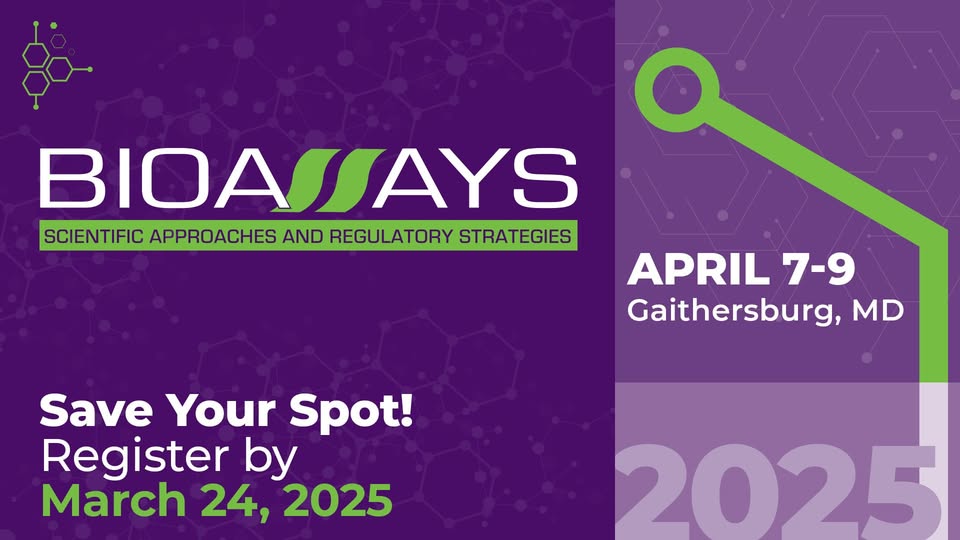
CASSS Sharing Science Solutions Bioassays 2025
$25.00
This Product is shared via google drive download link, So please share your correct Gmail id while placing the order .Please note that there are no CME points or certificate associated with this course Samples for Courses Can be found here : Free Samples Here!
EXPRESS DISCOVER PayPal
CASSS Sharing Science Solutions Bioassays 2025
Bioassays • Potency Assays • Biologics • Regulatory Science • Cell & Gene Therapy
April 7–9, 2025 | Gaithersburg, Maryland
Explore contemporary scientific approaches, regulatory strategies, and emerging technologies in bioassay development with CASSS Sharing Science Solutions Bioassays 2025.
Officially titled Bioassays 2025: Scientific Approaches and Regulatory Strategies, the symposium was held April 7–9, 2025, at the Gaithersburg Marriott Washingtonian Center in Gaithersburg, Maryland. The meeting brought together professionals involved in biologics development, analytical science, potency testing, regulatory strategy, and advanced therapeutic modalities.
Organized by CASSS – Sharing Science Solutions, the Bioassays symposium provides an international forum for discussing current perspectives, scientific strategies, technologies, lessons learned, and the development and standardization of methods used for bioassays. The program combines scientific presentations, case studies, panel discussions, roundtables, posters, and interaction with industry thought leaders.
The 2025 scientific program placed particular emphasis on bioassay fundamentals, potency assays, multi-specific antibodies, antibody-drug conjugates (ADCs), Fc-mediated biology, emerging bioassay technologies, artificial intelligence, assay lifecycle management, cell and gene therapy, CAR potency strategies, and AAV infectivity assays.
Course Details
- Program: Bioassays 2025: Scientific Approaches and Regulatory Strategies
- Organization: CASSS – Sharing Science Solutions
- Year: 2025
- Dates: April 7–9, 2025
- Venue: Gaithersburg Marriott Washingtonian Center
- Location: Gaithersburg, Maryland, United States
- Primary Field: Biopharmaceutical Analytical Science
- Primary Focus: Bioassay Development, Potency Assessment, and Regulatory Strategy
- Related Areas: Biologics, Multi-Specific Antibodies, ADCs, Cell & Gene Therapy
- Educational Formats: Workshops, Scientific Sessions, Case Studies, Panel Discussions, Roundtables, Posters
- Primary Audience: Scientists and Professionals Involved in Bioassay Development, Analytical Science, Biologics, and Regulatory Strategy
CASSS reported that Bioassays 2025 drew more than 120 attendees, with discussions spanning potency assays, multispecific antibodies, ADCs, emerging technologies, and related scientific and regulatory challenges.
Who Was the Original Program Designed For?
Bioassays 2025 was designed for professionals involved in the scientific, analytical, quality, and regulatory aspects of bioassays and biologic drug development.
The program is especially relevant for:
- Bioassay Scientists
- Analytical Scientists
- Potency Assay Scientists
- Biopharmaceutical Development Scientists
- Quality Control Scientists
- Regulatory Professionals
- CMC Professionals
- Cell-Based Assay Scientists
- Biologics Researchers
- Cell and Gene Therapy Scientists
- Scientists working with multispecific antibodies
- Scientists working with antibody-drug conjugates
It is also particularly relevant for:
- Immunologists
- Pharmacologists
- Clinical Pathologists
- Oncologists
The strongest scientific audience remains:
Bioassay Development + Biopharmaceutical Analytics + Potency Testing + Regulatory Science
Learning Objectives
Upon completion of this program, participants should be better able to:
- Evaluate current perspectives, regulatory strategies, and technologies used in bioassay development.
- Analyze technical and regulatory details through high-quality case studies and scientific discussions.
- Formulate strategies for the development and standardization of methods used for bioassays.
- Implement specific bioassay strategies for multi-specific antibodies and antibody-drug conjugates.
- Assess emerging innovations and the development of new target cell lines to evaluate cytotoxicity.
Bioassay Development
Bioassays are central to evaluating the biological activity and potency of many complex biologic products.
The CASSS program follows bioassays across the development lifecycle:
Mechanism of Action → Assay Design → Method Development → Characterization → Validation → QC → Lifecycle Management
Rather than focusing only on assay execution, the symposium also examines how scientific understanding, product complexity, regulatory expectations, and manufacturing strategy influence the selection and performance of an appropriate bioassay.
Introduction to Bioassay Development
The April 7 pre-conference workshop included:
Introduction to Bioassay Development: CMC Strategy and Practical Application
with instructors from AstraZeneca.
The workshop connected foundational bioassay principles with practical CMC considerations.
Important areas include:
- Assay strategy
- Method design
- Biological relevance
- Product development
- Analytical performance
- Practical implementation
Practical Applications for Method Design & Performance
The second half of the official workshop focused on:
Practical Applications for Method Design and Performance
with instructors from Bristol Myers Squibb.
This connects theoretical bioassay development with the practical challenge of producing methods that perform reliably throughout product development.
The overall framework can be summarized as:
Understand Biology → Select Assay → Design Method → Characterize Performance → Optimize
Bioassay Foundations
The first major scientific session was:
Bioassays Foundations / Nuts and Bolts of Bioassays.
This session included presentations addressing cell-based potency assays, Fc-mediated activity, and potency evaluation strategies.
Cell-Based Potency Assays
One confirmed presentation addressed:
A Novel Cell-Based Potency Assay to Measure Cell/Cell Phagocytosis Induced by Antibody-Dependent Cellular Phagocytosis
presented by Lena Knauber of AbbVie.
This illustrates the role of cell-based methods in assessing biological activity that reflects a therapeutic product’s mechanism of action.
Antibody-Dependent Cellular Phagocytosis
Antibody-Dependent Cellular Phagocytosis – ADCP is one mechanism that may require a functional bioassay capable of reflecting relevant cellular activity.
Bioassay development in this context requires connecting:
Biologic Product → Mechanism of Action → Cellular Response → Quantifiable Potency
Afucosylation & Potency Evaluation
Another confirmed presentation was:
Afucosylation: Potency Evaluation Strategies
presented by Victoria Swiss of Bristol Myers Squibb.
This topic connects glycosylation-related product characteristics with functional potency assessment.
Fc-Mediated Cytotoxicity
The symposium also featured the technical seminar:
Development of a New Class of Target Cell Lines to Evaluate Fc-Mediated Cytotoxicity.
This directly supports the program’s focus on emerging cell systems and improved biological models for cytotoxicity testing.
New Target Cell Lines
Developing suitable target cell lines can improve the biological relevance and performance of cell-based assays.
Relevant considerations include:
- Target expression
- Cellular response
- Reproducibility
- Assay robustness
- Cytotoxicity readout
- Mechanistic relevance
The goal is to create an experimental system capable of reliably reflecting the biological activity being measured.
Multi-Specific Antibodies
One of the defining sessions of Bioassays 2025 was:
Bioassay Strategies for Multi-Specific Antibodies.
Multi-specific molecules can create unique assay-development challenges because more than one target, mechanism, or functional pathway may contribute to product activity.
Bi-Specific Antibodies
The session included:
Navigating the Complexities of Bi-Specifics: Leveraging Bioassays for Product Variant Characterization and Process Development
presented by Yishi Liu of Genentech.
This topic connects bioassay strategy with:
- Product variants
- Molecular complexity
- Process development
- Functional characterization
- Potency assessment
Elranatamab Bioassay Strategy
Another presentation was:
Elranatamab: Bispecific mAb Bioassay Strategy from R&D to Commercialization
presented by Peter Richard of Pfizer.
This provides a real-world example of how a bioassay strategy may need to evolve across:
Research → Development → Manufacturing → Commercialization
Potency Specification Strategy
The multi-specific antibody session also included:
Bridges Over Montgomery County: Revamping the Potency Specification Strategy for a Complex Modality
presented by Dylan Weil of AstraZeneca.
This reinforces the importance of linking assay performance with specification strategy for complex biologics.
Antibody-Drug Conjugates – ADCs
A full scientific session on April 9 focused on:
Antibody Drug Conjugates.
ADCs combine biologic targeting with drug delivery and therefore present unique analytical and potency-assay challenges.
ADC Development & Potency Assay Lifecycle
The session included:
Navigating Complexity: A Strategic Framework for Streamlining and Simplifying Antibody Drug Conjugates Development and Potency Assay Lifecycle Management
presented by Larisa Toulokhonova of Merck.
This connects ADC development with:
- Potency strategy
- Assay design
- Lifecycle management
- Analytical complexity
- Regulatory expectations
Cell-Based Potency Assays for ADCs
Another confirmed presentation was:
Use of High Content Imaging to Enable Cell-Based Potency Assay Development for ADCs
presented by Madhumati Mukherjee of AstraZeneca.
High-content imaging can extend bioassay readouts beyond traditional endpoint measurements and support more detailed evaluation of cellular responses.
Inducible Promoter Systems
The ADC session also featured:
Inducible Promoter Systems: Pioneering the Future of Bioassay Development for Enhanced Precision Control
presented by Nicole Shi of Eli Lilly.
This represents another example of emerging biological tools being applied to improve assay control and performance.
ADC Bystander Killing
The Emerging Professionals session included:
Development of an in Vitro Bystander Killing Bioassay for ADCs
presented by Andrea Parsons of Pfizer.
This topic addresses functional assessment of an important biological effect relevant to some ADC products.
Biotherapeutic Fusion Proteins
The Emerging Professionals session also included:
Potency Control Strategy for Biotherapeutic Fusion Proteins
presented by Long Zheng of Bristol Myers Squibb.
This demonstrates that potency-assay strategy extends beyond conventional monoclonal antibodies to increasingly diverse biologic modalities.
Emerging Technologies & Innovations in Bioassays
Another major session was:
Emerging Technologies / Innovations in Bioassays.
This session explored how newer technologies and assay designs may improve biological relevance, QC testing, and characterization.
MoA-Reflective Bioassays
A confirmed presentation was:
MoA-Reflective Bioassays for Next-Gen QC Testing
presented by Ayumi Takayanagi of Chugai Pharmaceutical.
Mechanism-of-action-reflective assays aim to ensure that QC testing remains biologically meaningful rather than simply analytically convenient.
Next-Generation QC Testing
A central challenge in biologics quality control is achieving an appropriate balance between:
- Biological relevance
- Precision
- Robustness
- Reproducibility
- Throughput
- Regulatory suitability
The program considers newer approaches for improving that balance.
Immunostimulatory Drug Conjugates
The Emerging Technologies session also included:
Development of Cell-based Potency Assays For a Novel Immunostimulatory Drug Conjugate
presented by Marshall Davis of Pfizer.
This illustrates bioassay development for newer therapeutic modalities whose mechanisms may require specialized functional systems.
Fc-Receptor Bioassays
Another confirmed presentation was:
Development of Fc-Receptor Bioassays to Unravel the Impact of Glycosylation
presented by Caterina Giorno and Daniel Markx of Boehringer Ingelheim.
This topic connects:
Glycosylation → Fc Receptor Interaction → Functional Bioassay → Potency / Characterization
Cell & Gene Therapy
The final major scientific session was:
Cell and Gene Therapy and More!
Cell and gene therapies present particularly difficult potency challenges because biological activity can involve multiple steps and complex mechanisms.
Potency Assays for Complex Therapeutics
Developers working with advanced therapies must often design assays that balance:
- Biological relevance
- Manufacturing consistency
- QC practicality
- Reproducibility
- Regulatory requirements
This is especially important for cell therapy, viral-vector products, and other complex modalities.
Immunostimulatory Virus-Like Particle Products
The session included:
Overcoming Challenges in Potency Bioassay Development: A Case Study on an Immunostimulatory Virus-Like Particle Investigational Drug
presented by Cristinel Sandu of Regeneron.
The case illustrates the challenges involved when conventional potency-assay designs are not sufficient for newer product classes.
CAR Potency Assurance
Another presentation was:
Uniting for Success: Collaboration between Analytics, Research and Process Development for a CAR Potency Assurance Strategy
presented by Sonia Connaughton of Sanofi.
This emphasizes the multidisciplinary nature of potency strategy.
Successful development may require collaboration among:
- Analytical teams
- Research
- Process Development
- Manufacturing
- Regulatory functions
AAV Infectivity
The final scientific session also included:
Bridging Potency: Implementation of AAV Infectivity by Viral Entry Assay
presented by Ting He of Ultragenyx.
This highlights assay strategies relevant to adeno-associated virus – AAV gene therapy products.
Artificial Intelligence in Bioassays
Artificial intelligence was a dedicated roundtable topic:
Let’s Brainstorm on Applications of AI for Bioassays.
The inclusion of AI reflects growing interest in applying computational tools to:
- Data interpretation
- Assay development
- Method monitoring
- Automation
- Pattern recognition
- Analytical workflows
Method Comparability & Bridging
A dedicated roundtable addressed:
Method Comparability and Method Bridging: Are They the Same Thing?
This is particularly important when methods change during development or across laboratories, platforms, or product lifecycle stages.
Reagent & Equipment Lifecycle Management
Another roundtable focused on:
Life Cycle Management of Reagents and Equipment.
Bioassay performance can depend heavily on reagents, instruments, cells, and critical materials.
Effective lifecycle management therefore supports:
- Assay consistency
- Reproducibility
- Method continuity
- QC reliability
Reference Standards
The program included:
Managing the Potency of Your Reference Standards.
Reference standards are central to quantitative potency testing because the measured activity of a test sample is frequently interpreted relative to a qualified standard.
Monitoring Bioassay Method Health
Another roundtable asked:
How Are You Monitoring the Health of Your Bioassay Methods?
Ongoing method monitoring can help identify:
- Assay drift
- Reagent changes
- Cell-line changes
- Performance deterioration
- Unexpected variability
before they significantly affect routine testing.
Bioassay Lifecycle Management
Bioassay development does not stop after validation.
The 2025 program repeatedly addresses lifecycle considerations involving:
- Method performance
- Specifications
- Reference standards
- Reagents
- Equipment
- Comparability
- Bridging
- QC
- Product changes
- Commercialization
The broader lifecycle can be represented as:
Development → Qualification → Validation → Transfer → QC → Monitoring → Change Management
Potency Assays
Potency was one of the most prominent themes across Bioassays 2025.
The meeting examined potency strategies for:
- Conventional biologics
- Bispecific antibodies
- Multispecific molecules
- ADCs
- Fusion proteins
- Immunostimulatory conjugates
- Cell therapies
- Gene therapies
- AAV-based products
CASSS’s year-end review specifically identified potency assays as one of the central scientific themes of the 2025 symposium.
Regulatory Science
Bioassays 2025 combines scientific development with regulatory strategy.
This means assay decisions must be considered not only in terms of technical performance but also:
- Product mechanism
- Development phase
- Manufacturing control
- Specifications
- Regulatory submissions
- Quality control
- Lifecycle changes
The conference’s emphasis on both scientific approaches and regulatory strategies reflects this integrated CMC perspective.
Major Topics Covered
- Bioassays
- Bioassay Development
- Potency Assays
- Cell-Based Potency Assays
- Bioassay Method Development
- Bioassay Standardization
- CMC Strategy
- Regulatory Science
- Biologics
- Biological Activity
- Mechanism of Action
- MoA-Reflective Assays
- Quality Control
- Next-Generation QC
- Antibody-Dependent Cellular Phagocytosis
- ADCP
- Fc-Mediated Cytotoxicity
- Fc-Receptor Bioassays
- Afucosylation
- Glycosylation
- Multispecific Antibodies
- Bispecific Antibodies
- Elranatamab
- Product Variant Characterization
- Potency Specifications
- Antibody-Drug Conjugates
- ADCs
- ADC Potency Assays
- Bystander Killing
- High-Content Imaging
- Inducible Promoter Systems
- Biotherapeutic Fusion Proteins
- Immunostimulatory Drug Conjugates
- Cell Therapy
- Gene Therapy
- CAR Potency
- AAV
- AAV Infectivity
- Viral Entry Assays
- Virus-Like Particles
- Artificial Intelligence
- AI for Bioassays
- Method Comparability
- Method Bridging
- Reagent Lifecycle Management
- Equipment Lifecycle Management
- Reference Standards
- Method Monitoring
- Bioassay Lifecycle Management
- Emerging Bioassay Technologies
Who Should Take This Course?
CASSS Sharing Science Solutions Bioassays 2025 is particularly relevant for:
- Bioassay Scientists
- Analytical Scientists
- Potency Assay Scientists
- Biopharmaceutical Development Scientists
- Quality Control Scientists
- CMC Professionals
- Regulatory Professionals
- Cell-Based Assay Scientists
- Biologics Researchers
- Cell and Gene Therapy Scientists
- ADC Development Scientists
- Multispecific Antibody Scientists
- Immunologists
- Pharmacologists
- Clinical Pathologists
- Oncologists
The strongest scientific audience remains:
Bioassay Science + Biopharmaceutical Development + Potency Testing + Regulatory Strategy
Why This Course Is Useful
CASSS Sharing Science Solutions Bioassays 2025 provides a focused review of how bioassay science is evolving alongside increasingly complex biopharmaceutical products.
The curriculum connects several major areas:
Bioassay Foundations
- Assay development
- CMC strategy
- Method design
- Practical assay performance
Functional Potency
- Cell-based assays
- ADCP
- Fc biology
- Glycosylation
Complex Antibodies
- Bispecific antibodies
- Multispecific antibodies
- Product variants
- Potency specifications
Antibody-Drug Conjugates
- ADC potency
- High-content imaging
- Bystander killing
- Assay lifecycle management
Emerging Technology
- MoA-reflective assays
- AI
- New cell systems
- Advanced imaging
Cell & Gene Therapy
- CAR potency
- AAV infectivity
- Virus-like particles
- Advanced therapy assay development
Lifecycle & Regulatory Strategy
- Reference standards
- Method comparability
- Bridging
- Reagent management
- Method monitoring
- Quality control
The overall scientific pathway can be summarized as:
Understand Mechanism → Design Bioassay → Establish Potency → Characterize Performance → Validate → Implement in QC → Monitor Throughout Lifecycle
Product Summary
- Product: CASSS Sharing Science Solutions Bioassays 2025
- Official Program: Bioassays 2025: Scientific Approaches and Regulatory Strategies
- Organization: CASSS – Sharing Science Solutions
- Year: 2025
- Dates: April 7–9, 2025
- Venue: Gaithersburg Marriott Washingtonian Center
- Location: Gaithersburg, Maryland
- Primary Field: Biopharmaceutical Analytical Science
- Primary Focus: Bioassay Development and Regulatory Strategy
- Major Modalities: Biologics, Bispecific/Multispecific Antibodies, ADCs, Cell & Gene Therapy, AAV
- Major Analytical Areas: Potency Assays, Cell-Based Bioassays, QC, Reference Standards, Method Lifecycle Management
- Primary Audience: Bioassay Scientists, Analytical Scientists, QC and Regulatory Professionals
- Additional Audience: Immunologists, Pharmacologists, Clinical Pathologists, and Oncologists
Short Description
CASSS Sharing Science Solutions Bioassays 2025 is a leading scientific symposium focused on current approaches, technologies, and regulatory strategies for bioassay development and potency testing.
Held April 7–9, 2025, in Gaithersburg, Maryland, the program covers bioassay foundations, cell-based potency assays, multispecific and bispecific antibodies, ADCs, Fc-mediated biology, emerging technologies, AI, reference standards, method comparability, cell and gene therapy, CAR potency strategies, and AAV infectivity assays.
Topics
Monday, April 7, 2025
- WATCH NOW: Development of a New Class of Target Cell Lines to Evaluate Fc-Mediated Cytotoxicity
- Workshop Part I – Introduction to Bioassay Development: CMC Strategy and Practical Application
- Workshop Part II – Practical Applications for Method Design and Performance
Tuesday, April 8, 2025
- CASSS Welcome and Introductory Comments
- Keynote Presentation – The Special World of Bioassay: Key Learnings, Special Situations and Keys to Success
- Session I: Bioassays Foundations / Nuts and Bolts of Bioassays
- A Novel Cell-Based Potency Assay to Measure Cell/Cell Phagocytosis Induced by Antibody-Dependent Cellular Phagocytosis
- Afucosylation: Potency Evaluation Strategies
- Of Mice and (Wo)Men
- Session I: Panel Discussion
- Session II: Bioassay Strategies for Multi-Specific Antibodies
- Navigating the Complexities of Bi-Specifics: Leveraging Bioassays for Product Variant Characterization and Process Development
- Elranatamab: Bispecific mAb Bioassay Strategy from R&D to Commercialization
- Bridges Over Montgomery County: Revamping the Potency Specification Strategy for a Complex Modality
- Session II: Panel Discussion
- Poster Session
- Roundtable Session 1
- Let’s Brainstorm on Applications of AI for Bioassays
- Method Comparability and Method Bridging: Are They the Same Thing?
- Life Cycle Management of Reagents and Equipment
- Managing the Potency of Your Reference Standards
- How Are You Monitoring the Health of Your Bioassay Methods?
- Emerging Professionals Session
- Development of an in Vitro Bystander Killing Bioassay for ADCs
- Potency Control Strategy for Biotherapeutic Fusion Proteins
Wednesday, April 9, 2025
- Session III: Antibody Drug Conjugates
- Navigating Complexity: A Strategic Framework for Streamlining and Simplifying Antibody Drug Conjugates Development and Potency Assay Lifecycle Management
- Inducible Promoter Systems: Pioneering the Future of Bioassay Development for Enhanced Precision Control
- Use of High Content Imaging to Enable Cell-Based Potency Assay Development for ADCs
- Session III: Panel Discussion
- Roundtable Session 2
- Let’s Brainstorm on Applications of AI for Bioassays
- Method Comparability and Method Bridging: Are They the Same Thing?
- Life Cycle Management of Reagents and Equipment
- Managing the Potency of Your Reference Standards
- How Are You Monitoring the Health of Your Bioassay Methods?
- Poster Session
- Session IV: Emerging Technologies / Innovations in Bioassays
- MoA-Reflective Bioassays for Next-Gen QC Testing
- Development of Cell-based Potency Assays For a Novel Immunostimulatory Drug Conjugate
- Development of Fc-Receptor Bioassays to Unravel the Impact of Glycosylation
- Session IV: Panel Discussion
- Session V: Cell and Gene Therapy and More!
- Overcoming Challenges in Potency Bioassay Development: A Case Study on an Immunostimulatory Virus-Like Particle Investigational Drug
- Uniting for Success: Collaboration between Analytics, Research and Process Development for a CAR Potency Assurance Strategy
- Bridging Potency: Implementation of AAV Infectivity by Viral Entry Assay
- Session V: Panel Discussion
- Closing Remarks and Invitation to Bioassays 2026
Topics
-
CASSS Welcome and Introductory Comments
-
Keynote Presentation: The Special World of Bioassay Key Learnings Special Situations and Keys to Success
-
Session I: Bioassays Foundations Nuts and Bolts of Bioassays
-
Session I: Panel Discussion
-
Session II: Bioassay Strategies for Multi-Specific Antibodies
-
Session II: Panel Discussion
-
Session III: Antibody Drug Conjugates
-
Session III: Panel Discussion
-
Session IV: Emerging Technologies Innovations in Bioassays
-
Session IV: Panel Discussion
-
Session V: Panel Discussion
-
Development of a New Class of Target Cell Lines to Evaluate Fc-Mediated Cytotoxicity Presented by Svar Life Science
-
Lunch and Learn Vendor Showcase
-
Closing Remarks and Invitation to Bioassays 2026
Related products
Medical Accounts

Critical Care - Emergency medicine

Critical Care - Emergency medicine
Internal Medicine

Internal Medicine
Critical Care - Emergency medicine

Critical Care - Emergency medicine
Internal Medicine
- Anesthesiology & pain medicine
- Books
- Anesthesiology books
- Basic science
- Cardiology books
- Dermatology books
- DENTAL BOOKS
- Endocrine and Nutrition books
- Gastroenterology and Hepatology books
- Hematology / Oncology books
- INTERNAL MEDICINE BOOKS
- Nephrology / urology books
- Neurology / neurosurgery books
- Obstetrics and gynecology books
- ophthalmology / Optometry books
- ORTHOPEDIATRICS BOOKS
- Pathology books
- pediatric books
- plastic surgery books
- Psychiatric books
- PULMONARY BOOKS
- Qbank & Questions
- Radiology books
- Cardiology
- Critical Care – Emergency medicine
- DENTAL
- Dermatology
- Endocrine and Nutrition
- ENT / Otolaryngology
- Family medicine
- General Surgery
- GIT COURSES
- Hematology / Oncology
- Internal Medicine
- Medical Accounts
- Nephrology / Urology
- Neurology / neurosurgery courses
- Obstetrics & Gynecology
- Ophthalmology & Optometry
- Orthopaedic
- Pathology
- Pediatrics
- physiotherapy
- Plastic Surgery
- psychology
- Qbank & Questions
- Radiology
- Respiratory / Pulmonary
- Rheumatology
- Surgery