
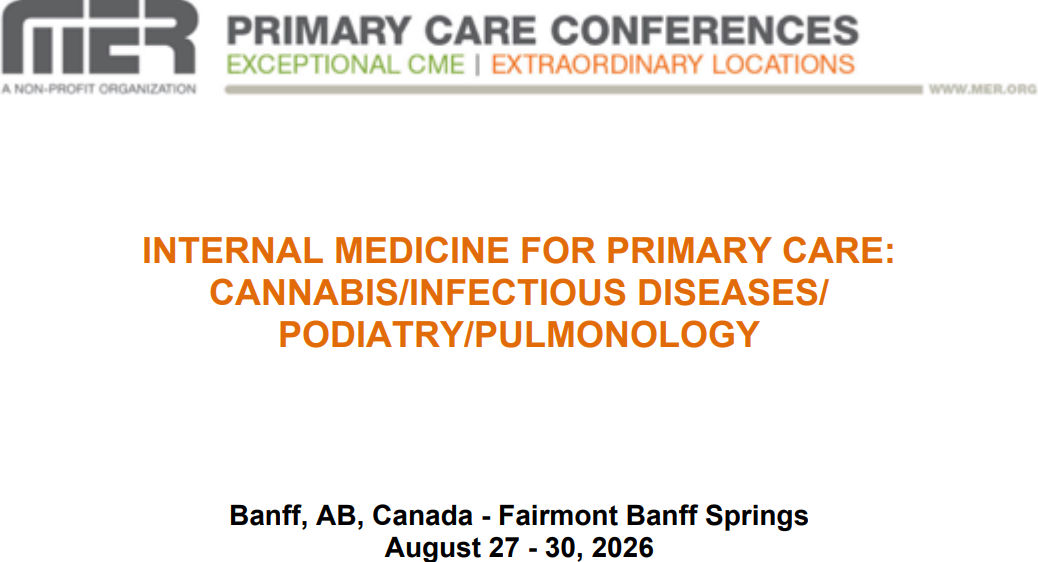
MER Primary Care Conferences Internal Medicine for Primary Care Cannabis ID Pod Pulm Aug 27-30, 2026
$130.00
This Product is shared via google drive download link, So please share your correct Gmail id while placing the order .Please note that there are no CME points or certificate associated with this course Samples for Courses Can be found here : Free Samples Here!
MER Primary Care Conferences Internal Medicine for Primary Care Cannabis ID Pod Pulm Aug 27-30, 2026
Cannabis Medicine • Infectious Diseases • Podiatry • Pulmonology • Internal Medicine • Primary Care
Expand your clinical approach across four diverse areas of primary care with MER Primary Care Conferences Internal Medicine for Primary Care Cannabis ID Pod Pulm Aug 27-30, 2026, a multidisciplinary continuing medical education program from Medical Education Resources (MER).
Held August 27–30, 2026, at The Fairmont Banff Springs in Banff, Alberta, Canada, this four-day program provides evidence-based updates in cannabis medicine, infectious diseases, podiatry, and pulmonology, with an emphasis on practical diagnosis, treatment, prevention, and patient management in the primary care setting.
The curriculum connects four important areas of everyday clinical practice, covering skin and soft tissue infections, diarrhea and gastrointestinal infection, genitourinary infections, antimicrobial stewardship, cannabinoid physiology, neurological and cardiovascular effects of cannabis, cannabis across different age groups, asthma, respiratory infections, COPD, pulmonary nodules, lung cancer, common foot and ankle disorders, ankle injuries, plantar fasciitis, and Achilles tendinitis.
Course Details
- Course: Internal Medicine for Primary Care: Cannabis/ID/Pod/Pulm
- Provider: Medical Education Resources – MER
- Year: 2026
- Dates: August 27–30, 2026
- Venue: The Fairmont Banff Springs
- Location: Banff, Alberta, Canada
- Specialties: Cannabis Medicine / Infectious Diseases / Podiatry / Pulmonology
- Primary Focus: Internal Medicine / Primary Care
- Original Live Activity: 16 Credit Hours
- Pharmacotherapeutic Content: 6.50 ANCC Pharmacotherapeutic Contact Hours
- Language: English
MER officially lists the conference as Internal Medicine for Primary Care: Cannabis/ID/Pod/Pulm – 16 Credit Hours, with 6.50 ANCC pharmacotherapeutic contact hours.
Course Overview
Primary care clinicians routinely encounter patients whose medical problems span several specialties rather than fitting into a single organ-system category.
This MER program combines four clinically relevant areas:
Cannabis Medicine + Infectious Diseases + Podiatry + Pulmonology
The course addresses issues ranging from antimicrobial prescribing and respiratory disease to the physiologic effects of cannabinoids and common musculoskeletal conditions involving the foot and ankle.
The program is designed to help clinicians progress from:
Recognition → Diagnostic Evaluation → Risk Assessment → Evidence-Based Treatment → Follow-Up → Referral When Appropriate
Learning Objectives
Upon completion of this program, participants should be better able to:
- Review epidemiology and microbiology of skin and soft tissue infections (SSTI).
- Evaluate the severity of diarrhea and evaluate the need for treatment.
- Diagnose and manage genitourinary infections.
- List goals of an antimicrobial stewardship program and strategies for antimicrobial treatment.
- Describe the effects the endocannabinoid and opioid systems have on the body.
- List was cannabis impacts a patient’s brain activity.
- Demonstrate an understanding of the cardiac impacts by cannabinoids.
- Discuss the impacts of cannabis on the adolescent, in utero and the elderly.
- Diagnose and manage patients with asthma.
- Design treatment strategies reflective of current evidence-based medicine for common respiratory infections.
- Describe the current therapeutic management of COPD.
- Discuss diagnosis and screening strategies as well as treatment plans for lung nodules and lung cancer.
- Recognize and diagnose common foot and ankle pathologies as they present in the primary care setting.
- Diagnose and manage ankle injuries and identify when referral is appropriate.
- Discuss technologies used to treat acute and chronic plantar fasciitis.
- Recognize achilles tendinitis and recommend appropriate treatment.
Infectious Diseases in Primary Care
Infectious diseases represent a major component of everyday outpatient medicine.
The program focuses on practical conditions frequently encountered by primary care clinicians, including:
- Skin and soft tissue infections
- Gastrointestinal infections
- Diarrheal illness
- Genitourinary infections
- Respiratory infections
- Appropriate antimicrobial use
- Antimicrobial stewardship
A practical infectious-disease framework can be summarized as:
Clinical Syndrome → Likely Pathogen → Determine Need for Testing → Assess Severity → Decide Whether Antimicrobial Therapy Is Indicated → Select Appropriate Treatment
Skin and Soft Tissue Infections – SSTI
The infectious disease curriculum reviews the epidemiology and microbiology of skin and soft tissue infections (SSTIs).
Important clinical considerations may include:
- Infection type
- Extent of involvement
- Systemic symptoms
- Patient comorbidities
- Likely organisms
- Antimicrobial resistance
- Need for drainage or procedural treatment
- Need for escalation of care
Common skin and soft tissue infections often require clinicians to distinguish relatively localized disease from infections requiring more intensive evaluation or treatment.
SSTI Microbiology
Understanding likely microbiology can help guide empirical antimicrobial therapy.
Evaluation may consider:
Clinical Appearance + Site of Infection + Severity + Patient Risk Factors + Local Resistance Patterns
This supports appropriate treatment while avoiding unnecessarily broad antimicrobial exposure.
Diarrhea & Gastrointestinal Infection
Acute diarrhea ranges from mild, self-limited illness to more severe infection requiring diagnostic evaluation and specific treatment.
The program emphasizes assessment of disease severity and the need for therapy.
Clinical evaluation can include:
- Duration of symptoms
- Frequency of stools
- Fever
- Dehydration
- Blood in stool
- Recent travel
- Food exposure
- Antibiotic exposure
- Healthcare exposure
- Immunocompromised status
A practical approach is:
Assess Severity → Evaluate Exposure & Risk Factors → Determine Need for Testing → Provide Supportive Care → Treat Specific Causes When Indicated
Genitourinary Infections
Genitourinary infections are frequently managed in primary care.
The program addresses the diagnosis and management of genitourinary infections, requiring consideration of:
- Clinical symptoms
- Urinalysis and diagnostic testing
- Patient characteristics
- Complicated versus uncomplicated infection
- Previous infections
- Antimicrobial resistance
- Appropriate treatment selection
- Follow-up
Clinical decision-making should balance effective treatment with responsible antimicrobial use.
Antimicrobial Stewardship
Antimicrobial stewardship is an important theme of the infectious-disease component.
The program reviews both the goals of stewardship programs and strategies for appropriate antimicrobial treatment.
Key principles include:
- Treat infection when antimicrobial therapy is indicated
- Avoid antibiotics for conditions unlikely to benefit
- Choose the narrowest appropriate therapy
- Use appropriate dosing
- Use appropriate duration
- Review microbiological results
- Reassess therapy as clinical information changes
The overall goal is:
Effective Infection Treatment + Reduced Unnecessary Antibiotic Exposure + Reduced Resistance Pressure
Cannabis Medicine
Cannabis use increasingly intersects with primary care, internal medicine, mental health, cardiovascular medicine, pain management, and public health.
The MER curriculum examines cannabis from a medical and physiologic perspective rather than limiting discussion to a single clinical indication.
Topics include:
- Endocannabinoid system
- Opioid system
- Cannabinoid effects on the body
- Cannabis and brain activity
- Cardiovascular effects
- Cannabis exposure in adolescence
- Cannabis exposure during pregnancy
- Cannabis use in older adults
Endocannabinoid & Opioid Systems
The course reviews how the endocannabinoid and opioid systems influence human physiology.
These signaling systems can influence multiple functions involving:
- Pain
- Neurological activity
- Behavior
- Appetite
- Cardiovascular physiology
- Stress responses
- Other physiologic processes
Understanding these systems provides a foundation for evaluating the potential clinical effects of cannabinoids.
Cannabis & Brain Activity
Cannabinoids interact with receptors involved in central nervous-system signaling.
For primary care clinicians, cannabis history may be relevant when evaluating:
- Cognition
- Attention
- Mood
- Behavior
- Motor function
- Medication interactions
- Neurological symptoms
The curriculum includes consideration of the impact of cannabis on brain activity as part of a broader review of cannabinoid physiology.
Cardiovascular Effects of Cannabinoids
Cannabis use may have cardiovascular implications that are important when assessing patients with existing risk factors or cardiovascular disease.
The program specifically addresses the cardiac impacts of cannabinoids.
Clinical assessment can include consideration of:
- Heart rate
- Blood pressure
- Cardiovascular symptoms
- Underlying heart disease
- Other medications or substances
- Patient-specific cardiovascular risk
Cannabis Across the Lifespan
Cannabis exposure may have different implications depending on age and physiologic context.
The program specifically examines effects involving:
- Adolescents
- In-utero exposure
- Older adults
These groups may differ in:
- Neurological vulnerability
- Developmental considerations
- Cardiovascular risk
- Medication use
- Comorbid disease
- Physiologic response
This reinforces the importance of individualized rather than uniform counseling.
Pulmonology for Primary Care
Respiratory complaints are among the most common problems evaluated in outpatient medicine.
The pulmonology component covers:
- Asthma
- Respiratory infections
- COPD
- Lung nodules
- Lung cancer
- Screening strategies
A primary-care respiratory pathway can be summarized as:
Symptoms → History & Examination → Pulmonary Testing / Imaging When Appropriate → Diagnosis → Evidence-Based Treatment → Monitoring
Asthma
Asthma management requires both accurate diagnosis and long-term control of airway inflammation and bronchial hyperresponsiveness.
The program focuses on helping clinicians:
- Diagnose asthma
- Assess symptoms
- Evaluate disease control
- Develop treatment strategies
- Monitor response
- Adjust therapy when appropriate
A practical management framework includes:
Confirm Diagnosis → Assess Severity / Control → Initiate Therapy → Educate Patient → Reassess → Step Treatment Up or Down
Respiratory Infections
Primary care physicians frequently manage:
- Upper respiratory infections
- Lower respiratory infections
- Acute cough syndromes
- Bronchitis
- Pneumonia and related presentations
The program emphasizes treatment strategies that reflect current evidence-based medicine.
Appropriate management requires distinguishing:
Likely Viral Illness → Supportive Care
from
Likely Bacterial Infection → Targeted Antimicrobial Treatment When Appropriate
This also links the pulmonary curriculum with the conference’s antimicrobial-stewardship objectives.
Chronic Obstructive Pulmonary Disease – COPD
COPD is a chronic respiratory disease frequently managed longitudinally in primary care.
The program reviews current therapeutic management.
Important aspects may include:
- Clinical diagnosis
- Symptom burden
- Exacerbation history
- Pulmonary function
- Smoking history
- Inhaled therapies
- Exacerbation prevention
- Vaccination
- Pulmonary rehabilitation
- Monitoring
Treatment plans should be individualized to disease severity and patient characteristics.
Lung Nodules
Pulmonary nodules are frequently identified during chest imaging performed for a variety of reasons.
A structured evaluation may include:
- Nodule size
- Imaging characteristics
- Growth
- Patient age
- Smoking history
- Previous cancer
- Other malignancy risk factors
The course addresses diagnosis, screening strategies, and treatment planning related to lung nodules and lung cancer.
Lung Cancer
Early recognition and appropriate screening can influence lung cancer outcomes.
The program includes discussion of:
- Lung cancer risk
- Screening strategies
- Pulmonary nodules
- Diagnostic pathways
- Treatment planning
A general clinical pathway is:
Risk Assessment → Screening When Appropriate → Nodule Detection → Risk Stratification → Diagnostic Evaluation → Treatment / Surveillance
Podiatry for Primary Care
Foot and ankle complaints are common in outpatient medicine and may involve musculoskeletal, neurologic, vascular, or traumatic pathology.
The podiatry portion of the program helps clinicians recognize and manage common conditions before determining when specialist referral is appropriate.
Major areas include:
- Foot pathology
- Ankle pathology
- Ankle injuries
- Plantar fasciitis
- Achilles tendinitis
Common Foot & Ankle Disorders
Primary care clinicians may encounter:
- Foot pain
- Heel pain
- Ankle pain
- Swelling
- Tendon injury
- Ligament injury
- Overuse syndromes
- Acute trauma
The program emphasizes recognizing and diagnosing common foot and ankle conditions using:
History + Mechanism of Injury + Examination + Functional Assessment + Imaging When Appropriate
Ankle Injuries
Ankle injuries range from uncomplicated sprains to fractures, tendon injuries, and unstable ligamentous injuries.
The curriculum focuses on:
- Diagnosis
- Initial management
- Assessment of severity
- Determining when imaging is appropriate
- Treatment
- Identifying when referral is necessary
A practical pathway includes:
Mechanism → Examination → Stability Assessment → Imaging if Indicated → Conservative Treatment or Referral
Plantar Fasciitis
Plantar fasciitis is a frequent cause of heel pain.
The course discusses technologies and approaches used in both:
- Acute plantar fasciitis
- Chronic plantar fasciitis
Management may involve progressive strategies tailored to symptom duration and response to previous therapy.
Achilles Tendinitis
Achilles tendon disorders can occur in active patients as well as individuals with repetitive mechanical stress.
The program focuses on:
- Recognition
- Diagnosis
- Clinical assessment
- Appropriate conservative treatment
- Identification of conditions requiring additional evaluation
Clinicians must also differentiate tendinopathy from more significant tendon injury.
Integrating the Four Specialties
One of the strengths of this MER conference is its multidisciplinary structure.
The program brings together:
Cannabis Medicine → Infectious Diseases → Podiatry → Pulmonology
These specialties intersect with primary care in different ways.
For example:
- Respiratory infections connect pulmonology with antimicrobial stewardship.
- Cannabis exposure may influence neurologic and cardiovascular assessment.
- Diabetes and vascular disease may complicate foot disorders.
- Medication selection can influence multiple organ systems.
- Older adults may have overlapping pulmonary, infectious, medication, and mobility concerns.
This makes the program particularly relevant to clinicians managing patients with multiple concurrent conditions.
Primary Care Clinical Decision-Making
Primary care requires clinicians to determine not only the diagnosis but also the appropriate level of management.
For many conditions covered by this course, the key questions include:
What Is the Likely Diagnosis? → Is the Patient High Risk? → Is Testing Needed? → What Treatment Is Appropriate? → What Can Be Managed in Primary Care? → When Is Referral Needed?
Target Audience
This program is targeted to office-based primary care providers and other health professionals with updates in primary care medicine.
MER identifies its primary care programs as intended for office-based clinicians and other healthcare professionals seeking contemporary primary-care updates.
The program is especially relevant for:
- Primary Care Physicians
- Infectious Disease Specialists
- Pulmonologists
- Podiatrists
- Internal Medicine Physicians
- Family Medicine Physicians
- General Practitioners
- Clinicians managing common infectious and respiratory disorders
- Clinicians evaluating foot and ankle complaints
- Clinicians counseling patients about cannabis use
Who Should Take This Course?
MER Primary Care Conferences Internal Medicine for Primary Care Cannabis ID Pod Pulm Aug 27-30, 2026 is particularly suited to clinicians seeking practical updates across multiple common areas of outpatient medicine.
The curriculum is relevant for professionals interested in:
- Cannabis medicine
- Cannabinoid physiology
- Infectious diseases
- Skin and soft tissue infections
- Gastrointestinal infection
- Genitourinary infection
- Antimicrobial stewardship
- Asthma
- Respiratory infections
- COPD
- Lung cancer screening
- Pulmonary nodules
- Podiatry
- Foot and ankle disorders
- Ankle injuries
- Plantar fasciitis
- Achilles tendinitis
Why This Course Is Useful
The strength of MER Internal Medicine for Primary Care: Cannabis/ID/Pod/Pulm 2026 is its combination of four distinct specialties that regularly intersect with primary care.
The curriculum can be summarized as:
Cannabis & Cannabinoids → Infectious Diseases → Antimicrobial Stewardship → Asthma & COPD → Lung Nodules & Cancer → Foot & Ankle Disorders
This multidisciplinary structure supports practical clinical decision-making across a wide range of outpatient presentations.
Original Conference Accreditation
The official MER listing identifies the conference as:
- 16 Credit Hours
- 6.50 ANCC Pharmacotherapeutic Contact Hours
MER states that its four-day primary care conferences are designed for 16 educational credit hours. Its general accreditation framework includes IPCE, AMA PRA Category 1 Credit™, ABIM MOC, ANCC and other professional-credit pathways, subject to the requirements for the individual official activity.
Important CME / Certificate Notice
Official continuing education credit applies to participation through the MER activity and completion of MER’s required official processes.
If the MedicalAmboss product consists only of independently delivered educational files, do not advertise:
- 16 CME Credits Included
- 16 ABIM MOC Points Included
- 16 IPCE Credits Included
- 6.50 Pharmacotherapeutic Contact Hours Included
- Official MER Certificate Included
- Official MER Registration Included
unless official MER participation and credit-claiming access are actually included.
The safer wording for the MedicalAmboss product is:
Original MER Live Activity: 16 Credit Hours
Short Description
MER Primary Care Conferences Internal Medicine for Primary Care Cannabis ID Pod Pulm Aug 27-30, 2026 is a multidisciplinary clinical update held August 27–30, 2026, at The Fairmont Banff Springs in Banff, Alberta, Canada.
The program covers cannabis medicine, endocannabinoid and opioid physiology, cannabis effects on the brain and cardiovascular system, skin and soft tissue infections, diarrhea, genitourinary infections, antimicrobial stewardship, asthma, respiratory infections, COPD, lung nodules, lung cancer, foot and ankle disorders, ankle injuries, plantar fasciitis, and Achilles tendinitis.
Provider: Medical Education Resources – MER
Dates: August 27–30, 2026
Venue: The Fairmont Banff Springs
Location: Banff, Alberta, Canada
Original Live Activity: 16 Credit Hours
Pharmacotherapeutic Content: 6.50 ANCC Pharmacotherapeutic Contact Hours
Primary Focus: Internal Medicine / Primary Care
Specialties: Cannabis / Infectious Diseases / Podiatry / Pulmonology
Topics
- Skin and Soft Tissue Infections (SSTI): Epidemiology, microbiology, severity assessment, and management of common skin and soft tissue infections.
- Diarrhea: Assessment of disease severity and determination of when specific treatment is required.
- Genitourinary Infections: Diagnosis and management of infections involving the genitourinary system.
- Antimicrobial Stewardship: Goals of antimicrobial stewardship programs and strategies for responsible antimicrobial treatment.
- Endocannabinoid and Opioid Systems: Physiologic effects and clinical relevance of endocannabinoid and opioid signaling systems.
- Cannabis and Brain Activity: Neurological and cognitive effects associated with cannabis and cannabinoids.
- Cardiac Effects of Cannabinoids: Cardiovascular implications of cannabinoid exposure.
- Cannabis Across the Lifespan: Effects of cannabis in adolescents, in-utero exposure, and older adults.
- Asthma: Diagnosis and evidence-based management of patients with asthma.
- Common Respiratory Infections: Evidence-based treatment strategies for respiratory infections encountered in primary care.
- COPD: Current therapeutic management of chronic obstructive pulmonary disease.
- Lung Nodules and Lung Cancer: Diagnosis, screening strategies, risk assessment, and treatment planning.
- Common Foot and Ankle Pathology: Recognition and diagnosis of disorders frequently encountered in primary care.
- Ankle Injuries: Diagnosis, treatment, and identification of patients requiring specialist referral.
- Plantar Fasciitis: Technologies and treatment approaches for acute and chronic plantar fasciitis.
- Achilles Tendinitis: Recognition and appropriate management of Achilles tendon disorders.
-
Skin & Soft Tissue Infections: Presentation on important skin and soft-tissue infections and their prompt recognition, emphasizing evaluation and management strategies.
-
Gastrointestinal Infections & Clostridiodes Difficile: Presentation on important enteric pathogens and their recognition, diagnosis and management; special emphasis on clostridiodes difficile colitis and related updates from the ID and infection control literature.
-
Genitourinary Infections: Presentation on a relevant and clinically practical approach to the patient with genitourinary complaints focusing on the latest guidelines for the range of urinary tract infections and highlights of selected and important sexually-transmitted disease syndromes.
-
The Science Behind the Endocannabinoid System: Discussion of the endocannabinoid system and how it interacts in various organ systems; Discussion of how the endocannabinoid and opioid systems interact; Discussion will demonstrate the various drug interactions exogenous cannabinoids may have on the human body.
-
The Brain on Cannabis: Addiction, Depression, Psychosis, and More: The brain as the target organ in the use of cannabis; Description of the impacts on the brain, including anxiety, depression, suicidality, and psychosis; The biological mechanisms of these impacts will be outlined.
-
The Heart on Cannabis: Short and Long-Term Risks: The heart as the second most important targeted organ by the endocannabinoid system; Demonstration of the mechanisms and highlights of the importance of screening for cannabis use, particularly in younger people; Examples of the cardiac impacts.
-
Exposure to Cannabis In Vulnerable Populations: Discussion of the impact of cannabis use on vulnerable populations; Inclusion of in utero effects and the effects on young children as well as the elderly; tips for providers in conversations with patients, parents, and family members.
-
Antimicrobial Stewardship and Multidrug Resistance: Definition of an antimicrobial stewardship program (ASP); Concepts of the antimicrobial stewardship program; Four goals of antimicrobial stewardship; Most recent additions to the antimicrobial armamentarium.
-
Asthma: The medical impact of asthma; fundamental role of inflammation, with possible scarring and irreversible loss of lung function; practical points of diagnosis; goal setting management based on levels of severity; risk factors for mortality and treatment in the acute setting; management options for the difficult to control asthmatic patient.
-
Controversies in the Treatment of Common Respiratory Infections: Acute and chronic bronchitis; pneumonia (community versus hospital-acquired); role of the Pneumonia Severity Index score in determining indication for hospitalization; cost- effective use of antibiotics; clinical significance of drug resistance; guidelines for management.
-
COPD: Definition; pathophysiology; early detection and intervention; risk reduction; management update including new modalities (including lung volume reduction surgery) and the role of inhaled corticosteroids and domiciliary oxygen.
-
Lung Cancer Screening & Pulmonary Nodules: Appropriate use of the new lung cancer screening recommendations; Fleischner Society guidelines and American College of Chest Physician Lung Cancer guidelines; approach to definitive evaluation and management strategies.
-
Common Foot and Ankle Pathologies Seen in Primary Care: Gain a familiarity and confidence to recognize common foot and ankle pathologies in the clinical setting and gain better knowledge of treatment options; Differential diagnoses and understanding of when to send patients to a specialist; Common pathologies include: Morton’s neuromas, bunions, flatfoot deformities, capsulitis, hammertoes, etc.; Determining which patients need further diagnostic imaging and surgical intervention.
-
Ankle Sprains: Session will explore those injuries which present to the primary care office that can easily be managed, those that require additional diagnostics, and the tricky injuries that may need referral.
-
Plantar Fasciitis: Session will discuss the causes and prevention of this common problem and discuss new and exciting technologies used to treat the acute and chronic forms of this condition.
-
Achilles Tendinitis: The Achilles tendon is the largest and strongest tendon in the body, yet it is highly susceptible to injury. Achilles tendon injuries account for the third most common injury to the lower extremity after the ankle sprain and plantar fasciitis. This lecture will explore the causes of Achilles tendon conditions and their treatment. A differentiation between insertional and non-insertional tendonitis is critical for proper treatment. A multitude of new modalities which are available for the primary care provider to effectively treat and prevent Achilles tendon injuries will be discussed.
Related products
Internal Medicine

Internal Medicine
Critical Care - Emergency medicine
ASN Critical Care Nephrology – 2022 Update (On-Demand and Livestream)
Anesthesiology & pain medicine
Critical Care Symposium: Mastering ED Mechanical Ventilation
Critical Care - Emergency medicine
Internal Medicine
Critical Care - Emergency medicine
2022 UPDATES IN THERAPEUTICS: CRITICAL CARE PHARMACY PREPARATORY REVIEW AND RECERTIFICATION COURSE

Critical Care - Emergency medicine