
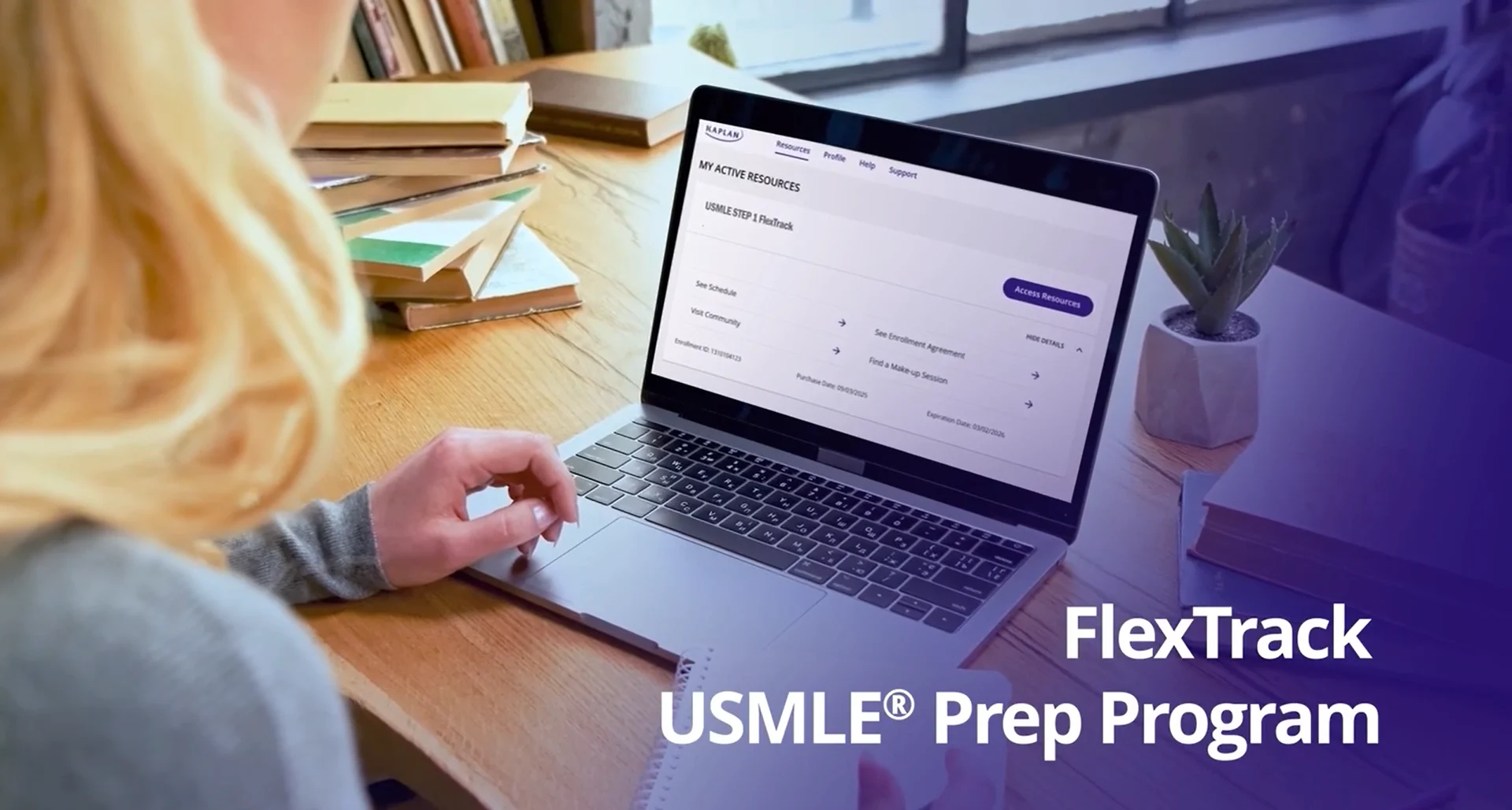
Kaplan USMLE Step 1 2026 (Videos + Quiz + Questions with Answers)

Original price was: $1,299.00.$200.00Current price is: $200.00.
Kaplan USMLE Step 1 2026 covers basic sciences and organ systems. Check the sample for supplied videos, quizzes and questions; official platform access is separate.
Delivery Information: This Product is shared via google drive download link. Please use your correct Gmail address at checkout.
Please note: there are no CME points or certificate associated with this course.
Samples for Courses Can be found here: Free Samples Here!
Kaplan USMLE Step 1 2026 (Videos + Quiz + Questions with Answers)
Kaplan USMLE Review | Step 1 Basic Sciences and Organ-System Study
The MedicalAmboss listing supplies the file formats named in the product title. The counts and platform features discussed below describe Kaplan’s official program; they are not a verified inventory of this downloadable package. Check the sample for the exact files. Official account access, progress tracking and live instruction are separate.
The Kaplan USMLE Step 1 2026 (Videos + Quiz + Questions with Answers) provides a comprehensive review of the foundational sciences tested on the United States Medical Licensing Examination (USMLE) Step 1.
The official Kaplan Step 1 program describes nearly 1,200 videos, 1,600+ module questions and a Qbank of more than 3,000 questions. These provider figures are given for comparison and do not establish the number of files or questions delivered by this store.
The program allows students to study either by traditional foundational science discipline or through an integrated organ-system approach, making it possible to build a strong basic science foundation while also practicing the way concepts are integrated on the current Step 1 examination.
Major disciplines include Anatomy, Behavioral Sciences, Biochemistry, Immunology, Microbiology, Physiology, Pathology, and Pharmacology, while system-based study covers areas such as cardiovascular, respiratory, renal, gastrointestinal, endocrine, reproductive, nervous system, hematology/oncology, infectious disease, and more.
Course Details
- Course: Kaplan USMLE Step 1 2026
- Provider: Kaplan Medical / Kaplan Test Prep
- Exam: USMLE Step 1
- Publication / Study Year: 2026
- Format Available Here: Videos + Quizzes + Questions with Answers
- Instructional Videos: Nearly 1,200
- Additional Module Quiz Questions: 1,600+
- Step 1 QBank: 3,000+ exam-style questions
- Diagnostic Exam: Included in the official Kaplan curriculum
- Discipline Assessment Exams: 9
- Lecture Notes: Kaplan USMLE Step 1 Lecture Notes
- Study Structure: Discipline-Based + Organ-System-Based
- High-Yield Filtering: Available within Kaplan’s official activity structure
- Primary Focus: Foundational Science, Clinical Integration and Step 1 Board Preparation
Kaplan’s current official Step 1 course confirms nearly 1,200 instructional videos, more than 1,600 quiz questions, a 3,000+ question QBank, a diagnostic examination, nine discipline assessments, and digital Step 1 Lecture Notes.
Official Kaplan Program Components
The following descriptions refer to the provider’s learning program. Inclusion in the MedicalAmboss file package must be checked against its contents and sample.
Nearly 1,200 Instructional Videos
Kaplan’s Step 1 curriculum includes nearly 1,200 educational videos organized into structured learning modules.
The video-based format is designed to help students build foundational understanding before moving into intensive question practice.
Major areas include:
- Anatomy
- Behavioral Sciences
- Biochemistry
- Genetics
- Immunology
- Microbiology
- Physiology
- Pathology
- Pharmacology
- Organ-system integration
1,600+ Additional Quiz Questions
Each Kaplan learning module incorporates:
- Reading assignments
- Pre-quizzes
- Post-quizzes
Together, these provide more than 1,600 additional questions beyond the main QBank.
The pre- and post-question structure helps students assess understanding before and after studying each module.
Kaplan USMLE Step 1 QBank – 3,000+ Questions
The official Kaplan Step 1 QBank contains more than 3,000 exam-style questions.
The QBank is designed to reinforce:
- Foundational science concepts
- Clinical application
- Integrated reasoning
- Patient-centered vignettes
- Diagnostic thinking
- Mechanisms of disease
- Pharmacology
- System-based knowledge
Question practice helps students move from passive content review toward the application-based reasoning expected on the USMLE.
Kaplan USMLE Step 1 Lecture Notes
The curriculum includes access to Kaplan’s USMLE Step 1 Lecture Notes.
Kaplan describes these books as frequently updated, highly illustrated resources containing clinical correlations, connections between disciplines, outline-based explanations, and high-yield summary material.
Major Lecture Notes volumes include:
- Anatomy
- Behavioral Science / Social Sciences
- Biochemistry / Medical Genetics
- Immunology / Microbiology
- Pathology
- Pharmacology
- Physiology
Diagnostic Exam
The Kaplan curriculum includes a diagnostic examination designed to help identify areas of strength and weakness early in preparation.
Students can use diagnostic results to:
- Identify weak disciplines
- Prioritize high-yield topics
- Adjust their study schedule
- Direct additional QBank practice
- Monitor knowledge gaps
This allows the study process to become more individualized.
9 Discipline Assessment Exams
Kaplan includes nine discipline assessment exams to evaluate knowledge across major foundational science subjects.
These assessments provide an additional way to determine whether a student has mastered a discipline before progressing toward broader integrated practice.
Study by Discipline or Organ System
One of the major strengths of the Kaplan Step 1 curriculum is its flexible organization.
Students can study:
By Discipline
Build detailed foundational understanding before integrating material.
or
By Organ System
Connect anatomy, physiology, pathology, pharmacology, microbiology, and other concepts around a single clinical system.
This approach is consistent with the modern USMLE Step 1 blueprint, which integrates foundational sciences across organ systems.
Discipline-Based Review
Anatomy
Learn structural anatomy in a clinically relevant framework.
Important areas include:
- Gross anatomy
- Neuroanatomy
- Musculoskeletal anatomy
- Embryology
- Anatomical relationships
- Clinical correlations
Anatomy knowledge is increasingly integrated into clinical vignettes rather than tested only as isolated structures.
Behavioral Sciences
The Behavioral Sciences curriculum helps students review:
- Biostatistics
- Epidemiology
- Ethics
- Patient communication
- Behavioral medicine
- Health systems
- Population health
- Clinical decision-making
USMLE currently assigns explicit content weighting to both Biostatistics & Epidemiology/Population Health and Communication and Interpersonal Skills.
Biochemistry
Kaplan’s Biochemistry review helps students integrate:
- Metabolic pathways
- Molecular biology
- Genetics
- Enzyme function
- Cellular metabolism
- DNA and RNA
- Gene expression
- Nutritional biochemistry
The emphasis is on understanding mechanisms rather than simply memorizing isolated pathways.
Immunology
The Immunology section explains immune-system mechanisms relevant to both normal physiology and disease.
Topics include:
- Innate immunity
- Adaptive immunity
- Antibodies
- T-cell function
- B-cell function
- Hypersensitivity
- Autoimmunity
- Immunodeficiency
- Vaccination
Microbiology
The Microbiology curriculum organizes clinically important organisms into testable patterns.
Major groups include:
- Bacteria
- Viruses
- Fungi
- Parasites
- Antimicrobial mechanisms
- Host-pathogen interaction
This helps students move beyond simple organism memorization toward clinically integrated infectious disease reasoning.
Physiology
Physiology provides the mechanistic foundation necessary to understand disease.
Major areas include:
- Cardiovascular physiology
- Pulmonary physiology
- Renal physiology
- Gastrointestinal physiology
- Endocrine physiology
- Reproductive physiology
- Neurophysiology
- Acid-base physiology
USMLE continues to assign substantial weight to physiology within Step 1.
Pathology
Pathology is one of the largest and most important disciplines on Step 1.
Kaplan’s pathology content emphasizes:
- Mechanisms of disease
- Cellular injury
- Inflammation
- Neoplasia
- Organ-system pathology
- Histopathology
- Clinical disease patterns
The official USMLE Step 1 blueprint currently lists pathology at approximately 45–55%, noting that individual questions can overlap multiple disciplines.
Pharmacology
The Pharmacology curriculum emphasizes understanding drugs through their mechanisms and clinical applications, rather than relying only on memorization.
Key areas include:
- Pharmacokinetics
- Pharmacodynamics
- Mechanisms of action
- Drug interactions
- Adverse effects
- Therapeutic indications
- Toxicology
- System-specific pharmacology
Organ-System-Based Review
Foundations of Medicine
Provides a framework for concepts that apply across multiple organ systems.
Areas may include:
- Cellular biology
- Genetics
- Immunology
- Pathology
- Pharmacologic principles
- Molecular mechanisms
Nervous System
Integrates:
- Neuroanatomy
- Neurophysiology
- Neuropathology
- Neurology
- Neuropharmacology
This section helps connect structural neuroanatomy with clinical neurologic disease.
Cardiovascular System
Major areas include:
- Hemodynamics
- Cardiac physiology
- Murmurs
- Ischemic heart disease
- Heart failure
- Arrhythmias
- Hypertension
- Cardiovascular pharmacology
The goal is to connect normal cardiovascular physiology with pathology and therapeutic mechanisms.
Respiratory System
The respiratory curriculum integrates:
- Pulmonary physiology
- Ventilation and perfusion
- Acid-base physiology
- Obstructive disease
- Restrictive disease
- Pulmonary pathology
- Respiratory pharmacology
Renal System
The Renal section focuses on commonly challenging topics such as:
- Renal physiology
- Glomerular function
- Tubular transport
- Electrolytes
- Acid-base disorders
- Kidney disease
- Renal pharmacology
Gastrointestinal System
The Gastrointestinal curriculum connects:
- Anatomy
- Physiology
- Digestion
- Absorption
- Pathology
- Liver disease
- Pancreatic disease
- GI pharmacology
Endocrine System
The Endocrine section helps students understand:
- Hormonal physiology
- Feedback mechanisms
- Pituitary disease
- Thyroid disorders
- Adrenal disease
- Diabetes
- Calcium metabolism
- Endocrine pharmacology
Reproductive System
Relevant content includes:
- Male reproductive anatomy
- Female reproductive anatomy
- Reproductive physiology
- Embryology
- Pregnancy
- Reproductive pathology
- Hormonal pharmacology
Musculoskeletal, Skin & Connective Tissue
This system integrates:
- Musculoskeletal anatomy
- Bone physiology
- Muscle disease
- Dermatology
- Rheumatology
- Connective tissue disorders
- Autoimmune disease
Hematology & Oncology
This section focuses on recognizing patterns involving:
- Anemia
- Hemoglobin disorders
- Coagulation
- Leukemia
- Lymphoma
- Cancer biology
- Oncogenes
- Tumor suppressors
- Chemotherapy principles
Immune System
The Immune System curriculum connects basic immunology with clinical disorders.
Major topics include:
- Immunodeficiency
- Hypersensitivity
- Autoimmune disease
- Transplant immunology
- Immune therapies
- Vaccine mechanisms
Infectious Disease
The Infectious Disease section integrates microbiology with clinically relevant diagnosis and treatment.
Students review:
- Pathogen identification
- Disease patterns
- Antimicrobial mechanisms
- Resistance
- Appropriate therapy
- Host response
High-Yield Filter Capability
Kaplan’s current Step 1 course includes an Activity Library that allows students to filter educational content by criteria including organ system and high-yield material.
This can be useful when:
- Dedicated study time is limited
- Weak topics need targeted review
- Students are approaching the examination
- A rapid final review is needed
Integrated Learning
One of the most important features of modern Step 1 preparation is integration.
For example, a cardiovascular question may require understanding of:
- Anatomy
- Physiology
- Pathology
- Pharmacology
- Biochemistry
- Microbiology
rather than testing one isolated discipline.
USMLE officially describes Step 1 as using an integrated content outline organized according to organ systems, with foundational sciences distributed throughout disease processes and clinical scenarios.
Built for Understanding and Retention
The Kaplan curriculum emphasizes concept understanding before repeated question practice.
A practical sequence is:
Learn → Quiz → Identify Weaknesses → Review → Practice QBank → Reassess
This approach helps students develop knowledge that can be applied to new clinical vignettes rather than repeatedly memorizing disconnected facts.
Current USMLE Step 1 Exam Structure – 2026
An important format change took effect on May 14, 2026.
For Step 1 examinations taken on or after that date:
- The exam remains a one-day examination
- Total testing session remains approximately 8 hours
- There are 14 blocks
- Each block is 30 minutes
- Each block contains no more than 20 questions
- Total examination questions remain no more than 280
- Minimum break time is 55 minutes
- Optional tutorial is 5 minutes
This replaced the previous seven 60-minute block structure.
How Step 1 Tests Knowledge
The USMLE states that Step 1 assesses whether students can understand and apply foundational science concepts underlying:
- Health
- Disease
- Mechanisms of disease
- Therapy
Although some questions assess knowledge directly, most require interpretation and application.
Questions can involve:
- Patient-centered clinical vignettes
- Tables
- Graphs
- Microscopic pathology
- Gross pathology
- Clinical reasoning
The official exam uses single-best-answer multiple-choice questions.
Major USMLE Step 1 Disciplines
The official USMLE blueprint includes:
- Pathology
- Physiology
- Nutrition
- Gross Anatomy & Embryology
- Microbiology
- Pharmacology
- Behavioral Sciences
- Biochemistry
- Histology & Cell Biology
- Immunology
- Genetics
Questions are deliberately integrated, and a single question may be classified under multiple disciplines.
Suggested Study Strategy
1. Start With the Diagnostic Exam
Identify your strongest and weakest subjects.
2. Review Weak Disciplines
Use Kaplan videos and Lecture Notes to rebuild foundational understanding.
3. Complete Module Quizzes
Use pre- and post-quizzes to verify understanding.
4. Integrate by Organ System
Once basic knowledge is established, move toward system-based study.
5. Use the QBank
Practice exam-style clinical questions.
6. Review Every Explanation
Analyze both correct and incorrect responses.
7. Take Discipline Assessments
Use the nine assessments to check progress.
8. Focus on High-Yield Material
Use targeted review as the exam approaches.
9. Move Toward Mixed Practice
Combine organ systems and disciplines to better reflect actual Step 1 reasoning.
Who Is This Course For?
The Kaplan USMLE Step 1 2026 course is designed for:
- Medical students preparing for USMLE Step 1
- International Medical Graduates
- U.S. medical students
- Students beginning Step 1 content review
- Students preparing during preclinical medical school
- Students entering dedicated Step 1 study
- Learners with foundational science weaknesses
- Students seeking a structured video curriculum
- Students who prefer discipline-based learning
- Students who prefer organ-system integration
- Students who want both video learning and question-based practice
Key Features
- Nearly 1,200 instructional videos
- 1,600+ additional module questions
- 3,000+ Step 1 QBank questions
- Diagnostic examination
- 9 discipline assessment exams
- Kaplan USMLE Step 1 Lecture Notes
- Discipline-based learning
- Organ-system-based learning
- High-yield content filtering
- Integrated foundational science review
- Clinical correlations
- Question-based reinforcement
Why This Course Is Relevant
USMLE Step 1 increasingly emphasizes integrated foundational science rather than isolated memorization.
Students must connect mechanisms across:
- Pathology
- Physiology
- Pharmacology
- Microbiology
- Anatomy
- Biochemistry
- Immunology
- Behavioral science
The Kaplan USMLE Step 1 2026 program supports this style of learning by allowing students to begin with individual disciplines and then reorganize their study around organ systems.
The combination of nearly 1,200 videos, 1,600+ quiz questions, 3,000+ QBank questions, Lecture Notes, diagnostic testing, and discipline assessments creates a comprehensive framework for long-term Step 1 preparation.
Important Product Information
This MedicalAmboss listing contains:
Videos + Quizzes + Questions with Answers
Kaplan’s official commercial courses may separately include additional services or online platform features such as:
- Personalized study calendars
- AI tutoring
- Advising sessions
- Full-length simulated examinations
- Performance dashboards
- Live instruction
- Private tutoring
Those additional features should not be assumed to be included with this MedicalAmboss product unless specifically listed with the files or access provided.
Official Program Summary
This summary describes the source program, not verified file counts or subscription entitlements for the retailer’s package.
Kaplan USMLE Step 1 2026 (Videos + Quiz + Questions with Answers) provides a comprehensive Step 1 review with nearly 1,200 instructional videos, 1,600+ module quiz questions, and a 3,000+ question Kaplan Step 1 QBank. Review Anatomy, Behavioral Sciences, Biochemistry, Immunology, Microbiology, Physiology, Pathology and Pharmacology by discipline or integrate learning across cardiovascular, respiratory, renal, GI, endocrine, reproductive, nervous and other major organ systems.
Related products
Cardiology

Internal Medicine
Anesthesiology & pain medicine
Critical Care - Emergency medicine
ASN Critical Care Nephrology – 2022 Update (On-Demand and Livestream)
Critical Care - Emergency medicine
2022 UPDATES IN THERAPEUTICS: CRITICAL CARE PHARMACY PREPARATORY REVIEW AND RECERTIFICATION COURSE

Internal Medicine

Internal Medicine