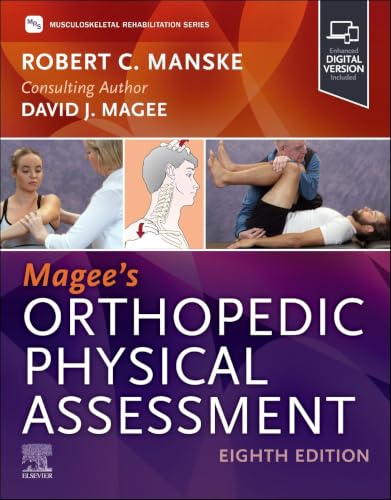
Magee’s Orthopedic Physical Assessment, 8th edition (Videos Only)

Original price was: $144.99.$40.00Current price is: $40.00.
Kaplan USMLE Review: explore Step 1 basic sciences and organ systems. This listing names videos, quizzes and questions with answers; check the sample for the supplied files. Official account access and provider question counts are not confirmed for this package.
-
Magee’s Orthopedic Physical Assessment, 8th edition (Videos Only)
Orthopedic Physical Assessment Videos | Musculoskeletal Examination | Special Orthopedic Tests | Physical Therapy | Range of Motion | Manual Muscle Testing | Differential Diagnosis
Course Overview
Magee’s Orthopedic Physical Assessment, 8th edition (Videos Only) is a specialized musculoskeletal examination video resource associated with the Eighth Edition of the internationally recognized orthopedic physical assessment reference by Robert C. Manske and David J. Magee.
Published by Elsevier, the original textbook provides a comprehensive, evidence-based approach to orthopedic examination, musculoskeletal pathology assessment, clinical evaluation, and differential diagnosis.
Selected for 2026 Doody’s Core Titles in Orthopedics, the Eighth Edition emphasizes systematic clinical assessment of the body’s major anatomical regions, including the spine, shoulder, elbow, wrist, hand, pelvis, hip, knee, ankle, and foot.
The accompanying educational videos demonstrate orthopedic special tests and clinical examination techniques, supporting visual learning of patient positioning, assessment procedures, and the practical application of musculoskeletal evaluation.
The revised edition incorporates expanded content on range of motion assessment, muscle strength evaluation, updated concussion management, and additional orthopedic special tests.
The original textbook also addresses gait analysis, postural assessment, amputee evaluation, primary care screening, and emergency sports assessment, providing a broad framework for musculoskeletal rehabilitation practice.
Through video demonstrations and evidence-based examination principles, this resource may help physical therapists, orthopedic clinicians, rehabilitation specialists, and healthcare students strengthen their understanding of orthopedic clinical testing.
This product is presented as Videos Only, focusing on visual educational content related to the Eighth Edition rather than the complete textbook or enhanced eBook.
Product Details
- Product Title: Magee’s Orthopedic Physical Assessment, 8th edition (Videos Only)
- Original Reference Title: Magee’s Orthopedic Physical Assessment
- Edition: Eighth Edition
- Authors: Robert C. Manske, PT, DPT, SCS, MEd, ATC, CSCS, and David J. Magee, BPT, PhD, CM
- Publisher: Elsevier
- Publication Year: 2026
- Copyright Year: 2027
- Language: English
- Product Type: Orthopedic Physical Assessment Video Resource
- Advertised Product Format: Videos Only
- Original Textbook Length: 1,328 Pages
- Original Textbook Chapters: 18
- Original Textbook Illustrations: More than 2,500
- Original Publisher Video Resources: Hundreds of online video clips demonstrating special diagnostic tests
- Original Print ISBN-13: 9780443128646
- Original eBook ISBN-13: 9780443128196
- Series: Musculoskeletal Rehabilitation
- Primary Specialty: Physical Medicine & Rehabilitation
- Related Specialties: Physical Therapy, Orthopedics, Sports Medicine, and Musculoskeletal Rehabilitation
- Main Focus: Musculoskeletal Physical Examination, Orthopedic Special Tests, and Differential Diagnosis
Product Format Clarification: This is a Videos Only listing. The 1,328-page textbook, enhanced eBook, illustrations, reference tables, and other publisher resources are not automatically included in the video collection.
Target Audience
This orthopedic physical assessment video resource is particularly relevant to:
- Physical Therapists
- Doctor of Physical Therapy (DPT) Students
- Physical Therapist Assistant (PTA) Students
- Orthopedic Physical Therapists
- Sports Physical Therapists
- Orthopedic Surgeons
- Physical Medicine and Rehabilitation Physicians (Physiatrists)
- Sports Medicine Physicians
- Athletic Trainers
- Rehabilitation Specialists
- Occupational Therapists
- Musculoskeletal Clinicians
- Medical and Rehabilitation Students
- Healthcare Professionals Involved in Musculoskeletal Examination
The resource may also support students preparing for practical clinical examinations, orthopedic assessment competencies, and rehabilitation-related board examinations.
Program Overview
The video materials associated with Magee’s Orthopedic Physical Assessment, 8th Edition are designed to complement a systematic, evidence-based approach to examining patients with musculoskeletal disorders.
Orthopedic Special Tests
The original multimedia materials emphasize demonstrations of special diagnostic tests used during musculoskeletal assessment.
These demonstrations support understanding of patient positioning, clinician technique, test performance, and the relationship between physical examination findings and clinical decision-making.
Regional Musculoskeletal Assessment
The Eighth Edition provides a structured examination framework covering the cervical, thoracic, and lumbar spine, upper extremity, pelvis, and lower extremity.
Regional assessment topics include joint examination, clinical anatomy, range of motion, muscle strength, and differential diagnosis.
Range of Motion and Strength Assessment
Expanded content in the Eighth Edition addresses joint range of motion measurement and manual muscle testing.
These assessment techniques are important components of physical therapy, orthopedic examination, and functional rehabilitation.
Neurological and Sports-Related Assessment
The original reference includes updated concussion management and material related to emergency sports assessment.
These topics emphasize recognition of potentially serious injuries, appropriate clinical screening, and safe decision-making in sports and rehabilitation settings.
Functional Assessment and Rehabilitation
Additional content addresses posture, gait, amputee assessment, and the interpretation of musculoskeletal examination findings within a rehabilitation framework.
Learning Objectives
After reviewing relevant orthopedic physical assessment video demonstrations, learners should be better prepared to:
- Recognize the principles of systematic orthopedic physical examination.
- Identify appropriate patient positioning and procedural techniques for selected musculoskeletal special tests.
- Understand clinical assessment of major joints and anatomical regions.
- Review methods for measuring joint range of motion.
- Understand manual muscle testing and strength assessment techniques.
- Recognize orthopedic special tests used during evaluation of the cervical, thoracic, and lumbar spine.
- Review clinical examination techniques for the shoulder, elbow, wrist, and hand.
- Understand examination approaches for the pelvis, hip, knee, ankle, and foot.
- Recognize the role of gait and postural assessment in musculoskeletal rehabilitation.
- Review clinical considerations for neurological screening and concussion assessment.
- Understand how test reliability, validity, and clinical findings influence orthopedic examination.
- Apply visual demonstrations to strengthen musculoskeletal assessment knowledge and practical examination skills.
These are proposed educational outcomes based on the textbook’s scope. They are not separately published learning objectives for the Videos Only package.
Official Table of Contents of the Eighth Edition
The following 18 chapters represent the official structure of the original Elsevier reference. They are provided to identify the subject coverage of the associated textbook, not to claim that each chapter has a corresponding video.
Chapter 1 — Principles and Concepts
Foundational principles of orthopedic physical assessment, clinical examination, evidence-based evaluation, and musculoskeletal diagnostic reasoning.
Chapter 2 — Head and Face
Assessment considerations involving the head and facial structures, including relevant neurological examination principles and updated concussion management content.
Chapter 3 — Cervical Spine
Clinical examination of the cervical spine, including assessment principles for cervical mobility, musculoskeletal dysfunction, and related neurological findings.
Chapter 4 — Temporomandibular Joint
Physical examination of the temporomandibular joint and related functional abnormalities.
Chapter 5 — Shoulder
Orthopedic assessment of the shoulder, including joint mobility, strength, functional examination, and special testing.
Chapter 6 — Elbow
Clinical examination of the elbow, including regional musculoskeletal assessment and functional testing.
Chapter 7 — Forearm, Wrist, and Hand
Evaluation of forearm, wrist, and hand structures through physical examination and regional special tests.
Chapter 8 — Thoracic (Dorsal) Spine
Assessment of the thoracic spine and related musculoskeletal dysfunction.
Chapter 9 — Lumbar Spine
Physical examination of the lumbar spine, with emphasis on clinical evaluation and differential diagnosis.
Chapter 10 — Pelvis
Assessment of pelvic structures and their relationship to lower-extremity and spinal function.
Chapter 11 — Hip
Clinical evaluation of the hip, including mobility, strength, and orthopedic examination techniques.
Chapter 12 — Knee
Orthopedic examination of the knee, including regional assessment, functional testing, and relevant diagnostic procedures.
Chapter 13 — Lower Leg, Ankle, and Foot
Musculoskeletal assessment of the lower leg, ankle, and foot, including joint examination and functional evaluation.
Chapter 14 — Assessment of Gait
Systematic observation and evaluation of gait patterns, movement abnormalities, and functional mobility.
Chapter 15 — Assessment of Posture
Clinical observation and assessment of posture, alignment, and musculoskeletal relationships.
Chapter 16 — Assessment of the Amputee
Assessment considerations involving individuals with limb amputations and related functional limitations.
Chapter 17 — Primary Care Assessment
Musculoskeletal screening and broader clinical evaluation principles relevant to primary care assessment.
Chapter 18 — Emergency Sports Assessment
Assessment of acute sports-related injuries, emergency evaluation, and recognition of conditions requiring urgent intervention.
Orthopedic Assessment Video Topics
These are thematic subject areas derived from the original reference. They are not a verified inventory of the individual video files.
Cervical, Thoracic, and Lumbar Spine Examination
- Cervical spine physical examination
- Cervical range of motion assessment
- Cervical neurological screening
- Thoracic spine examination
- Lumbar spine physical assessment
- Spinal mobility evaluation
- Regional orthopedic special tests
- Clinical interpretation of spinal examination findings
Shoulder and Upper Extremity Assessment
- Shoulder physical examination
- Shoulder range of motion
- Rotator cuff assessment
- Shoulder stability examination
- Elbow examination
- Forearm assessment
- Wrist and hand examination
- Upper-extremity muscle testing
Pelvis, Hip, and Knee Examination
- Pelvic assessment
- Hip joint examination
- Hip mobility and muscle strength
- Knee physical examination
- Ligament assessment principles
- Meniscal examination principles
- Lower-extremity functional testing
- Regional orthopedic examination techniques
Ankle and Foot Assessment
- Ankle joint examination
- Foot and lower-leg assessment
- Ankle mobility evaluation
- Musculoskeletal screening of the lower extremity
- Orthopedic special testing principles
- Functional examination techniques
Range of Motion and Manual Muscle Testing
- Active range of motion assessment
- Passive range of motion assessment
- Joint mobility measurement
- Manual muscle testing
- Muscle strength grading principles
- Patient positioning during strength assessment
- Interpretation of physical examination findings
Functional and Neurological Assessment
- Gait analysis
- Postural examination
- Functional movement assessment
- Neurological screening
- Concussion management considerations
- Amputee assessment
- Primary care musculoskeletal screening
- Emergency sports assessment
Major Topics Covered
Orthopedic Special Tests
- Clinical orthopedic examination
- Special diagnostic test procedures
- Patient positioning
- Joint stability assessment
- Musculoskeletal screening
- Interpretation of examination findings
- Clinical utility of special tests
- Evidence-based diagnostic reasoning
Musculoskeletal Examination
- Cervical spine
- Thoracic spine
- Lumbar spine
- Temporomandibular joint
- Shoulder
- Elbow
- Wrist and hand
- Pelvis
- Hip
- Knee
- Ankle and foot
Physical Therapy Assessment
- Range of motion measurement
- Manual muscle testing
- Muscle strength assessment
- Functional examination
- Gait analysis
- Postural evaluation
- Rehabilitation assessment
- Clinical documentation principles
Sports Medicine and Rehabilitation
- Sports injury examination
- Emergency sports assessment
- Concussion management considerations
- Neurological screening
- Functional movement evaluation
- Musculoskeletal injury assessment
- Return-to-activity assessment principles
Evidence-Based Clinical Evaluation
- Differential diagnosis
- Diagnostic test reliability
- Diagnostic test validity
- Red flag identification
- Yellow flag recognition
- Clinical examination strategies
- Interpretation of special test findings
- Evidence-informed patient assessment
What’s New in the Eighth Edition
The updated Eighth Edition introduces several enhancements to the original textbook’s orthopedic physical assessment content.
Expanded Range of Motion Assessment
Additional material focuses on methods for evaluating joint mobility and measuring range of motion during musculoskeletal examination.
Enhanced Muscle Strength Assessment
The edition expands content on muscle strength evaluation, including illustrated approaches to manual muscle testing.
Updated Concussion Management
Updated educational material addresses concussion assessment and management considerations.
Additional Orthopedic Special Tests
The revised edition adds new special tests across the textbook to support clinical evaluation and diagnostic reasoning.
Evidence-Based Assessment Resources
The original textbook includes updated reliability and validity tables and quick-reference information intended to support interpretation of examination findings.
These enhancements describe the Eighth Edition as a whole; availability of any corresponding videos in this product depends on the actual video package.
About the Authors
Robert C. Manske, PT, DPT, SCS, MEd, ATC, CSCS
Robert C. Manske is Professor and Chair of the Department of Physical Therapy at Wichita State University in Wichita, Kansas, USA.
His professional expertise includes orthopedic physical therapy, sports rehabilitation, musculoskeletal clinical examination, and education in physical therapy assessment.
David J. Magee, BPT, PhD, CM
David J. Magee is Professor in the Department of Physical Therapy, Faculty of Rehabilitation Medicine, at the University of Alberta in Edmonton, Alberta, Canada.
His contributions to orthopedic physical assessment and rehabilitation education are reflected in the systematic examination principles presented throughout the Magee reference.
Video Collection and Multimedia Features
The original Eighth Edition includes access to hundreds of online video clips that demonstrate musculoskeletal special diagnostic tests.
Original Publisher Video Features
- Visual demonstrations of orthopedic special tests
- Practical examples of musculoskeletal examination procedures
- Clinical assessment techniques
- Educational support for joint and regional examination
- Integration with the textbook’s evidence-based assessment framework
Videos Only Product Format
Magee’s Orthopedic Physical Assessment, 8th edition (Videos Only) is intended as a video-focused educational resource.
The exact number of included videos, their file formats, resolution, organization, and coverage must be determined from the actual distributed package.
Important: The video package should not be assumed to include the original 1,328-page textbook, enhanced eBook, 2,500-plus illustrations, case studies, diagnostic tables, or access to Elsevier’s publisher platform.
Why This Resource Is Relevant
Accurate orthopedic physical examination is essential for identifying musculoskeletal disorders, selecting appropriate diagnostic procedures, and developing individualized rehabilitation plans.
Physical therapists and other musculoskeletal clinicians must understand not only the names of orthopedic special tests, but also their execution, interpretation, clinical utility, and limitations.
The videos associated with Magee’s Orthopedic Physical Assessment, 8th Edition provide a visual approach to reinforcing musculoskeletal examination skills.
Key Educational Benefits
- Strengthen understanding of orthopedic special test procedures.
- Review clinical examination techniques for major joints and anatomical regions.
- Improve familiarity with patient positioning during physical assessment.
- Support learning of range of motion and manual muscle testing principles.
- Reinforce musculoskeletal clinical reasoning and differential diagnosis.
- Explore gait, posture, and functional examination concepts.
- Review assessment considerations for sports injuries and concussion.
- Support practical preparation for physical therapy clinical education.
This resource is particularly relevant to DPT students, physical therapists, orthopedic rehabilitation professionals, athletic trainers, and clinicians involved in musculoskeletal examination.
Short Description
Magee’s Orthopedic Physical Assessment, 8th edition (Videos Only) is a musculoskeletal examination video resource associated with the Elsevier reference by Robert C. Manske and David J. Magee, focusing on orthopedic special tests, physical examination, range of motion, manual muscle testing, joint assessment, and musculoskeletal differential diagnosis.
Key Highlights:
- ✅ Eighth Edition of Magee’s Orthopedic Physical Assessment.
- ✅ Selected for 2026 Doody’s Core Titles in Orthopedics.
- ✅ Video demonstrations of orthopedic special tests.
- ✅ Musculoskeletal physical examination techniques.
- ✅ Cervical, thoracic, and lumbar spine assessment.
- ✅ Shoulder, elbow, wrist, and hand examination.
- ✅ Hip, pelvis, knee, ankle, and foot assessment.
- ✅ Range of motion and manual muscle testing.
- ✅ Gait, posture, and functional assessment principles.
- ✅ Updated concussion and sports injury assessment topics.
- ✅ Evidence-based orthopedic examination and differential diagnosis.
- ✅ Videos Only — textbook and enhanced eBook not included.
Related products
Orthopaedic
Anesthesiology & pain medicine


Orthopaedic