
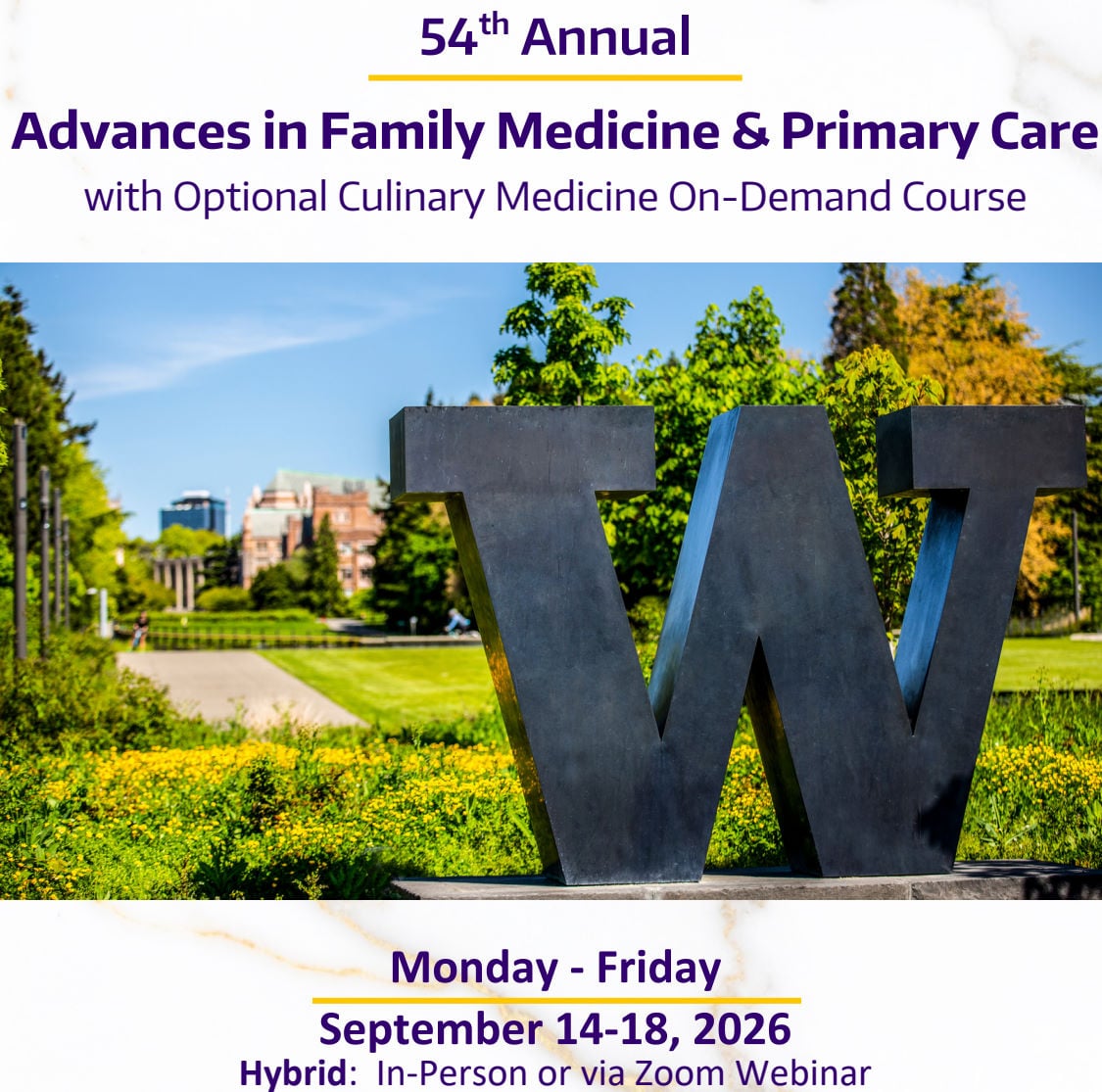
UW Medicine 54th Annual Advances in Family Medicine and Primary Care 2026
$100.00
UW Family Medicine and Primary Care 2026 reviews chronic disease, prevention, mental health and clinical workflows. Live workshops, publisher accounts and optional Culinary Medicine access are not included.
Delivery Information: This Product is shared via google drive download link. Please use your correct Gmail address at checkout.
Please note: there are no CME points or certificate associated with this course.
Samples for Courses Can be found here: Free Samples Here!
UW Family Medicine and Primary Care 2026 covers chronic disease, prevention, behavioral health and clinical practice updates. This digital-materials listing is separate from University of Washington conference registration.
UW Medicine 54th Annual Advances in Family Medicine and Primary Care 2026 is a comprehensive five-day continuing medical education program designed to strengthen clinical knowledge and improve evidence-based, team-centered patient care across family medicine and primary care practice.
Presented by the Department of Family Medicine and the Interprofessional Continuing Education Office at the University of Washington School of Medicine, this hybrid conference addresses contemporary challenges encountered by physicians and multidisciplinary healthcare teams in everyday clinical practice.
Course Details
Course: UW Medicine 54th Annual Advances in Family Medicine and Primary Care 2026
Original event format: Hybrid conference, September 14–18, 2026. This purchase does not provide live attendance or a UW learning-platform account.
Duration: 5 Days
Provider: University of Washington School of Medicine, Department of Family Medicine and Interprofessional Continuing Education Office
Focus: Family Medicine, Primary Care, Preventive Medicine, Chronic Disease Management, Clinical Skills, Behavioral Health, and Interprofessional Care
Target Audience
This educational activity is designed for family medicine physicians and multidisciplinary primary healthcare teams, including:
- Family Medicine Physicians
- Internists
- Pediatricians
- Osteopathic Physicians
- Physician Associates
- Nurse Practitioners
- Nurses
- Naturopathic Physicians
- Other healthcare team members involved in primary care
The program is also highly relevant for specialists who regularly manage conditions encountered in primary care, including:
- Cardiologists
- Pulmonologists
- Endocrinologists
- Rheumatologists
- Gastroenterologists
- Hepatologists
- Nephrologists
- Dermatologists
- Psychiatrists
- Orthopedic Surgeons
- Sports Medicine Specialists
- Obstetricians and Gynecologists
- Urologists
- Hematologists
- Infectious Disease Specialists
Program Overview
The 54th Annual Advances in Family Medicine and Primary Care provides a broad review of clinically important topics affecting modern primary care practice.
The program is structured to help clinicians strengthen diagnostic reasoning, update treatment strategies, improve preventive care, and implement multidisciplinary approaches across a wide spectrum of acute and chronic conditions.
Special attention is given to rapidly evolving areas such as artificial intelligence in clinical workflows, obesity medicine, diabetes management, behavioral health, pediatric development, reproductive and sexual health, and evidence-based medication management.
The original meeting offered practical sessions on musculoskeletal examination, dermoscopy, intrauterine devices and endometrial biopsy. Hands-on attendance and the availability of workshop recordings are not included or established by this store listing.
Artificial Intelligence in Clinical Practice
Artificial intelligence is becoming increasingly relevant to primary care workflows.
The program examines how emerging AI-enabled clinical support tools may be incorporated into healthcare environments to improve:
- Clinical workflow efficiency
- Team communication
- Diagnostic support
- Documentation processes
- Clinical decision-making
- Coordination of care
Participants will consider how AI technologies can complement rather than replace evidence-based clinical judgment and interprofessional collaboration.
Cardiovascular, Metabolic, and Endocrine Care
The conference provides evidence-based updates on conditions frequently encountered in family medicine and primary care.
Participants will explore collaborative approaches to managing cardiovascular, metabolic, and endocrine disorders, including issues related to:
- Cardiovascular risk
- Lipid disorders
- Diabetes
- Obesity
- Osteoporosis
- Metabolic health
- Medication management
The course emphasizes the importance of coordinated care when treating patients with multiple overlapping chronic conditions.
Obesity and Diabetes Management
Obesity and diabetes remain major challenges in contemporary primary care.
The program reviews evidence-based approaches to assessment, treatment, behavioral modification, lifestyle intervention, and pharmacologic therapy.
Particular attention is given to safe prescribing and clinical use of:
- GLP-1 receptor agonists
- Incretin mimetics
- Other metabolic therapies relevant to primary care
Participants will examine how these treatments can be integrated into multidisciplinary patient care plans.
Mental and Behavioral Health
Mental health conditions frequently intersect with chronic disease and overall patient well-being.
The conference addresses diagnosis and management of conditions including:
- ADHD
- Depression
- Dementia
- Behavioral health concerns
The program also explores trauma-informed care, clinician well-being, and strategies for supporting both patients and healthcare professionals.
Pediatric and Developmental Care
Pediatric primary care topics include evidence-based approaches to developmental assessment, screening, preventive medicine, and common clinical concerns.
Participants will explore strategies for incorporating developmental screening and pediatric preventive services into coordinated primary care workflows.
Reproductive and Sexual Health
The conference addresses several important aspects of reproductive and sexual healthcare, including:
- Cervical cancer screening
- Sexually transmitted infection prevention
- Contraceptive care
- Breastfeeding support
- Reproductive counseling
- Preventive women’s health
The original conference also offered practical instruction in intrauterine devices and endometrial biopsy; digital study is not supervised procedural training.
Hands-On Clinical Skills
Practical clinical education is an important component of the program.
The original meeting’s hands-on and skills-based areas included:
- Musculoskeletal physical examinations
- Dermoscopy fundamentals
- Intrauterine device procedures
- Endometrial biopsy techniques
These were original-event activities, not hands-on training supplied by this digital purchase.
Optional Publisher Add-On
UW advertises Culinary Medicine as a separate optional add-on. Its inclusion in these store-delivered files has not been verified; do not assume it is bundled. Publisher credit, registration and extended-viewing access are not included.
Preventive Care and Screening
Preventive medicine remains a central component of high-quality primary care.
The program reviews evidence-based screening, counseling, and prevention strategies involving:
- Cervical cancer screening
- STI prevention
- Vaccination
- Breastfeeding support
- Sports evaluations
- Lifestyle modification
- Chronic disease prevention
Participants will explore how preventive interventions can be incorporated efficiently into team-based clinical workflows.
Medication Management
Safe prescribing across complex patient populations is an important focus of the conference.
Medication-related topics include:
- GLP-1 therapies
- Incretin mimetics
- Suboxone/Buprenorphine
- Proton pump inhibitors
- Osteoporosis therapies
The program emphasizes evidence-based prescribing, patient monitoring, interdisciplinary coordination, and appropriate medication selection.
Learning Objectives
Upon completion of this activity, attendees should be able to:
- Apply evidence-based strategies to collaboratively manage cardiovascular, metabolic, and endocrine conditions commonly encountered in primary care settings.
- Analyze team-based approaches for diagnosing and managing chronic conditions such as asthma, interstitial lung disease, obesity, osteoporosis, ADHD, depression, and dementia.
- Integrate behavioral, lifestyle, and integrative medicine principles into coordinated care plans that support whole-patient and multidisciplinary management.
- Evaluate patient cases using interprofessional perspectives to strengthen shared decision-making in areas such as lipid disorders, dermatologic conditions, and multimorbidity.
- Utilize emerging tools, including AI-enabled clinical support, to enhance team communication, diagnostic accuracy, and workflow efficiency.
- Incorporate trauma-informed care, mental health awareness, and healthcare worker well-being strategies into team-based approaches to improve patient and clinician outcomes.
- Implement evidence-based screening, prevention, and counseling practices, including cervical cancer screening, STI prevention, breastfeeding support, vaccines, and sports evaluations, within team workflows.
- Apply safe and collaborative prescribing practices for GLP-1s, incretin mimetics, Suboxone/Buprenorphine, PPIs, and osteoporosis therapies across interprofessional care teams.
Why This Course Is Relevant
Family medicine and primary care clinicians must manage a continually expanding range of clinical conditions while incorporating new diagnostic technologies, medications, preventive strategies, and interdisciplinary care models.
UW Medicine 54th Annual Advances in Family Medicine and Primary Care 2026 provides a broad clinical review that connects evidence-based medicine with practical patient management.
Its combination of chronic disease management, preventive medicine, behavioral health, clinical skills, AI-enabled healthcare, obesity medicine, medication safety, and lifestyle interventions makes the program relevant for clinicians seeking to update their everyday clinical practice.
Original Program Topics
These topics describe the conference agenda, not a verified inventory of delivered files. Confirm available formats, recording coverage and any optional modules before ordering.
-
Monday, September 14, 2026
-
Hypertension Updates and Atrial Fibrillation
-
Cardiac Health Outcomes: An Integrative Approach to Proactive Cardiovascular Health
-
Cardio Panel Discussion
-
Menopause and Heart Disease: An Opportunity to Make a Difference
-
Dementia Management in Primary Care: Advanced Care Planning
-
Obesity Medicine Updates
-
Osteoporosis Medication Sequences and Complimentary Non-Pharmacological Therapies to Keep Your Patients Thriving
-
Supporting Breast Feeding From Primary Care
-
-
Tuesday, September 15, 2026
-
Updates on Adult Asthma
-
Interstitial Lung Disease (ILD): Clinical Approach, Diagnosis, and Treatment for Primary Care
-
Pulmonary Panel Discussion
-
Lifestyle Medicine: What Is It and How Do We Integrate It into Primary Care Practice?
-
Long COVID
-
Metabolic Dysfunction-Associated Steatotic Liver Disease (MASLD)
-
Hypertension and CKD
-
Lower Urinary Tract Symptoms (LUTS)
-
-
Wednesday, September 16, 2026
-
Practical AI in Primary Care
-
AI Risks and Benefits
-
Artificial Intelligence Panel Discussion
-
Common Consults, Common Rashes, and Practical Pearls to Dermatology
-
Integrative Digestive Health: GERD and Chronic Proton Pump Inhibitor (PPI)
-
Perimenopausal & Menopause Management Pearls
-
Value-Based Care
-
Hematology in the Clinic: When to Monitor, When to Work Up, and When to Refer
-
-
Thursday, September 17, 2026
-
Understanding and Managing Triglycerides in Primary Care
-
Role of Incretin-Mimetics – Beyond Glycemia
-
Diabetes and Lipid Panel Discussion
-
Diabetes Management for the PCP
-
Alcohol Use Disorder Management in Primary Care
-
Must-Not-Miss Orthopedic Urgencies and Emergencies
-
Update in Caring for Gender Diverse People Now
-
Sexually Transmitted Disease Updates and Vaccines
-
-
Friday, September 18, 2026
-
Pediatric ADHD Diagnosis and Management in Primary Care
-
Pediatric Developmental Screening and Autism
-
Pediatric Panel Discussion
-
Medication Management for Adult ADHD
-
Healthcare Well-being
-
Publisher reference: University of Washington original course overview.
Related products

Internal Medicine
Critical Care - Emergency medicine

Critical Care - Emergency medicine

Internal Medicine
Family medicine
Medical Accounts
Critical Care - Emergency medicine