
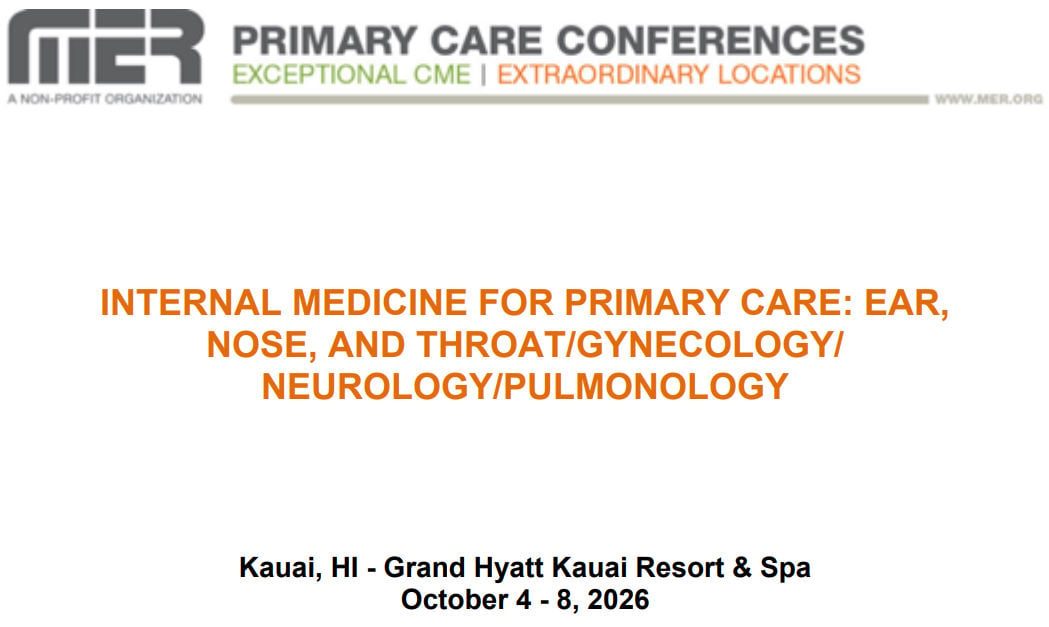
MER Primary Care Conferences Internal Medicine for Primary Care ENT Gyn Neuro Pulm Oct 04-08, 2026

$130.00
This Product is shared via google drive download link, So please share your correct Gmail id while placing the order .Please note that there are no CME points or certificate associated with this course Samples for Courses Can be found here : Free Samples Here!
MER Primary Care Conferences Internal Medicine for Primary Care: ENT Gyn Neuro Pulm Oct 04–08, 2026
MER Primary Care 2026 | Otolaryngology, Gynecology, Neurology, Pulmonology, Asthma, COPD, Stroke, Women’s Health & Clinical Medicine Updates
The MER Primary Care Conferences Internal Medicine for Primary Care: ENT/Gyn/Neuro/Pulm 2026 is a comprehensive five-day continuing medical education conference designed for internists, family medicine physicians, primary care providers, and other healthcare professionals seeking evidence-based updates in outpatient medicine.
Organized by Medical Education Resources (MER), the conference was held October 4–8, 2026, at the Grand Hyatt Kauai Resort & Spa in Poipu, Kauai, Hawaii, USA.
The program offers a multidisciplinary clinical review of four major specialties: Otolaryngology (Ear, Nose and Throat), Gynecology, Neurology, and Pulmonology.
Through expert-led educational presentations, diagnostic frameworks, practical clinical discussions, and guideline-based reviews, the curriculum explores common and challenging conditions encountered in primary care.
Important subjects include neurological weakness, seizures, epilepsy, status epilepticus, headaches, migraines, cerebrovascular disorders, asthma, respiratory infections, chronic obstructive pulmonary disease (COPD), lung cancer screening, pulmonary nodules, deep vein thrombosis (DVT), pulmonary embolism, neck masses, sinusitis, allergic rhinitis, sudden hearing loss, tinnitus, contraceptive management, breast cancer screening, abnormal uterine bleeding, and cervical cancer prevention.
The MER Internal Medicine for Primary Care 2026 program emphasizes accurate clinical assessment, appropriate diagnostic testing, medication selection, evidence-based treatment, preventive care, and timely specialist referral.
Its practical approach makes the conference relevant to healthcare professionals seeking to improve everyday outpatient clinical decision-making.
Course Details
- Course Name: MER Primary Care Conferences Internal Medicine for Primary Care: ENT/Gyn/Neuro/Pulm
- Organizer: Medical Education Resources (MER)
- Edition: 2026
- Conference Dates: October 4–8, 2026
- Duration: Five Days
- Original Venue: Grand Hyatt Kauai Resort & Spa
- Address: 1571 Poipu Road, Koloa, Hawaii 96756, USA
- Location: Kauai, Hawaii, United States
- Original Format: In-Person Continuing Medical Education Conference
- Published Curriculum: 20 Scientific Lectures
- Original CME Designation: Up to 20 AMA PRA Category 1 Credits
- ANCC Pharmacotherapeutic Contact Hours: 8.25
- Primary Specialty: Internal Medicine / Primary Care
- Core Specialties: ENT, Gynecology, Neurology and Pulmonology
- Language: English
- Educational Methods: Clinical Lectures, Diagnostic Reviews and Evidence-Based Medical Education
The original conference agenda covers five days and 20 hours of scheduled educational sessions. It does not establish the exact number or format of independently distributed digital recordings.
Course Highlights
- Five-Day Medical Education Conference
- Twenty Clinical Presentations
- Four Major Primary Care Specialties
- Neurological Weakness and Diagnostic Evaluation
- Seizures, Epilepsy and Status Epilepticus
- Headaches and Migraines
- Stroke and Transient Ischemic Attacks
- Asthma Diagnosis and Management
- Respiratory Infections
- COPD Treatment Updates
- Lung Cancer Screening and Pulmonary Nodules
- Deep Vein Thrombosis and Pulmonary Embolism
- Neck Mass Evaluation
- Sinusitis and Allergic Rhinitis
- Sudden Hearing Loss and Tinnitus
- Annual Women’s Health Examination
- Complex Contraceptive Counseling
- Breast Cancer Screening
- Abnormal Uterine Bleeding
- Cervical Cancer Screening and High-Risk HPV
Target Audience
The program is intended for office-based primary care clinicians and other healthcare professionals involved in outpatient medicine.
Relevant participants include:
- Internal Medicine Physicians
- Family Medicine Physicians
- Primary Care Physicians
- General Practitioners
- Neurologists
- Pulmonologists
- Otolaryngologists
- Head and Neck Surgeons
- Obstetricians and Gynecologists
- Allergists and Immunologists
- Vascular Medicine Specialists
- Hospitalists
- Nurse Practitioners
- Physician Assistants
- Medical Residents
- Clinical Fellows
- Allied Healthcare Professionals
Learning Objectives
Upon completion of the original educational activity, participants should be better able to:
- Utilize prevention and treatment strategies for cerebrovascular disorders.
- Discuss evidence-based clinical management options for neurological diseases.
- Evaluate patients presenting with weakness or other neurological symptoms.
- Differentiate seizures, epilepsy, and related paroxysmal disorders.
- Compare pharmacological treatments used in epilepsy.
- Describe the differential diagnosis and treatment options for headaches and migraines.
- Diagnose and manage patients with asthma.
- Apply evidence-based treatment strategies for common respiratory infections.
- Describe contemporary management approaches for COPD.
- Discuss appropriate lung cancer screening and pulmonary nodule evaluation.
- Diagnose DVT and pulmonary embolism and review therapeutic options.
- Determine when imaging or ENT referral is indicated for patients with neck masses.
- Review systemic and topical antimicrobial options for sinusitis.
- Explain allergic pathways relevant to nasal and sinus disorders.
- Differentiate sensorineural from conductive hearing loss.
- Identify management approaches for tinnitus.
- Review evidence-based components of annual women’s health visits.
- Provide patient-centered counseling for complex contraceptive decisions.
- Evaluate breast cancer screening recommendations.
- Diagnose and manage abnormal uterine bleeding.
- Review the management of abnormal cervical cytology and HPV-related abnormalities.
Complete Official 2026 Conference Curriculum
The following schedule preserves the published lecture titles, dates, and presentation times in Hawaii local time.
Day 1 – Sunday, October 4, 2026
Neurology – Diagnostic Evaluation and Epilepsy
2:30 PM – Conference Check-In
1. Evaluating Weakness
3:00 PM – 4:00 PM
Specialty: Neurology
This presentation reviews the diagnostic approach to patients presenting with weakness.
Important topics include:
- Neurological Weakness
- Clinical History
- Physical Examination
- Neuromuscular Assessment
- Localization of Neurological Disease
- Differential Diagnosis
- Generalized versus Focal Weakness
- Recognition of Serious Neurological Conditions
The educational focus is on distinguishing true neurological weakness from nonspecific fatigue or other symptoms and recognizing patterns that suggest particular neurological disorders.
2. Diagnosis of Epilepsy, Paroxysmal Disorders, and Status Epilepticus
4:00 PM – 5:00 PM
Specialty: Neurology
Reviews the evaluation of seizure-like events and the clinical diagnosis of epilepsy.
Relevant educational subjects include:
- Seizure Classification
- Epilepsy Diagnosis
- Paroxysmal Neurological Events
- Seizure Mimics
- Status Epilepticus
- Diagnostic Evaluation
- Antiepileptic Medication Considerations
- Clinical Monitoring
The presentation emphasizes distinguishing different causes of paroxysmal events and recognizing patients requiring urgent evaluation.
3. Treatment of Epilepsy and Status Epilepticus
5:00 PM – 6:00 PM
Specialty: Neurology
Examines evidence-based approaches to the treatment of epileptic disorders.
Important topics include:
- Antiseizure Medications
- Treatment Selection
- Medication Initiation
- Drug Discontinuation
- Therapeutic Monitoring
- Medication Safety
- Difficult-to-Treat Epilepsy
- Status Epilepticus Management
The session emphasizes treatment goals and practical clinical considerations relevant to managing epilepsy.
6:00 PM – Session Adjourns
Day 2 – Monday, October 5, 2026
Pulmonology and Neurology
7:00 AM – Arrival
4. Asthma
7:30 AM – 8:30 AM
Specialty: Pulmonology
Reviews the diagnosis, classification, and medical management of asthma.
Important educational topics include:
- Asthma Pathophysiology
- Airway Inflammation
- Airway Remodeling
- Symptom Recognition
- Diagnostic Evaluation
- Treatment Selection
- Disease Control
- Acute Asthma Exacerbations
- Difficult-to-Control Asthma
- Risk Factors for Severe Outcomes
The presentation emphasizes practical management strategies for patients with both routine and difficult-to-control asthma.
5. Controversies in the Treatment of Common Respiratory Infections
8:30 AM – 9:30 AM
Specialty: Pulmonology
Reviews important diagnostic and therapeutic issues involving respiratory tract infections.
Relevant subjects include:
- Acute Bronchitis
- Chronic Bronchitis
- Community-Acquired Pneumonia
- Hospital-Acquired Pneumonia
- Pneumonia Severity Assessment
- Appropriate Antibiotic Use
- Antimicrobial Resistance
- Outpatient versus Inpatient Management
- Guideline-Based Treatment
The session considers factors influencing hospitalization decisions and responsible antimicrobial selection.
9:30 AM – 9:40 AM – Coffee Break
6. COPD
9:40 AM – 10:40 AM
Specialty: Pulmonology
Examines contemporary approaches to chronic obstructive pulmonary disease.
Major topics include:
- COPD Definition
- Disease Pathophysiology
- Early Diagnosis
- Pulmonary Function Testing
- Risk Reduction
- Smoking Cessation
- Inhaled Bronchodilators
- Inhaled Corticosteroids
- Oxygen Therapy
- COPD Exacerbations
- Lung Volume Reduction Strategies
The educational focus includes evidence-based management and patient selection for advanced therapies.
7. Headaches & Migraines
10:40 AM – 11:40 AM
Specialty: Neurology
Reviews the diagnostic evaluation and management of headache syndromes.
Relevant topics include:
- Migraine
- Tension-Type Headache
- Cluster Headache
- Trigeminal Neuralgia
- Headache Triggers
- Headache Red Flags
- Giant Cell Arteritis
- Intracranial Lesions
- Subarachnoid Hemorrhage
- Acute Treatment
- Preventive Therapy
The session emphasizes distinguishing primary headache syndromes from serious secondary causes.
8. Cerebrovascular Disorders
11:40 AM – 12:40 PM
Specialty: Neurology
Examines cerebrovascular disease recognition, prevention, and treatment.
Important areas include:
- Stroke
- Transient Ischemic Attacks
- Cerebrovascular Risk Factors
- Carotid Circulation
- Vertebrobasilar Circulation
- Transient Neurological Deficits
- Migraine versus TIA
- Stroke Prevention
- Clinical Risk Stratification
- Diagnostic Evaluation
The presentation reviews practical strategies for recognizing and assessing patients with possible cerebrovascular disorders.
12:40 PM – Session Adjourns
Day 3 – Tuesday, October 6, 2026
ENT and Pulmonology
7:00 AM – Arrival
9. Evaluation of the Neck Mass
7:30 AM – 8:30 AM
Specialty: Otolaryngology
Reviews the diagnostic evaluation of neck masses in primary care.
Important topics include:
- Neck Mass Assessment
- Clinical History
- Physical Examination
- Infectious Causes
- Inflammatory Disorders
- Benign and Malignant Lesions
- Imaging Indications
- Diagnostic Testing
- Urgent Referral
- ENT Consultation
The educational focus is on identifying patients who require further imaging, specialist evaluation, or urgent investigation.
10. Antimicrobial Therapy in Treating Sinusitis
8:30 AM – 9:30 AM
Specialty: Otolaryngology
Examines the diagnosis and clinical management of sinusitis.
Relevant topics include:
- Acute Rhinosinusitis
- Bacterial Sinusitis
- Viral Sinusitis
- Clinical Diagnostic Criteria
- Systemic Antibiotics
- Topical Treatments
- Antimicrobial Resistance
- Imaging
- Treatment Failure
- ENT Referral
The presentation emphasizes appropriate treatment selection and distinguishing conditions requiring antimicrobial therapy.
9:30 AM – 9:40 AM – Coffee Break
11. Allergic Rhinitis
9:40 AM – 10:40 AM
Specialty: Otolaryngology
Reviews the clinical mechanisms and management of allergic rhinitis.
Important areas include:
- Allergic Inflammation
- Nasal Symptoms
- Sinus Symptoms
- Allergen Exposure
- Diagnostic Testing
- Allergen Avoidance
- Pharmacotherapy
- Intranasal Medications
- Immunotherapy
- Long-Term Symptom Management
The session connects basic allergic pathways with practical management of nasal and sinus disorders.
12. Lung Cancer Screening & Pulmonary Nodules
10:40 AM – 11:40 AM
Specialty: Pulmonology
Reviews clinical approaches to lung cancer screening and the evaluation of pulmonary nodules.
Important topics include:
- Lung Cancer Screening
- Low-Dose CT
- Screening Eligibility
- Pulmonary Nodules
- Nodule Risk Assessment
- Fleischner Society Recommendations
- Diagnostic Follow-Up
- Imaging Surveillance
- Referral Decisions
- Lung Cancer Evaluation
The presentation emphasizes appropriate screening and management strategies for patients with pulmonary nodules.
13. Deep Vein Thrombosis & Pulmonary Embolism
11:40 AM – 12:40 PM
Specialty: Pulmonology
Examines venous thromboembolic disease and its clinical management.
Relevant subjects include:
- Deep Vein Thrombosis
- Pulmonary Embolism
- Clinical Presentation
- Pretest Probability
- Diagnostic Testing
- Risk Stratification
- Anticoagulation
- Acute Treatment
- Long-Term Therapy
- Complications
- Clinical Guidelines
12:40 PM – Session Adjourns
Day 4 – Wednesday, October 7, 2026
Gynecology and ENT
7:00 AM – Arrival
14. Annual Exam for Women
7:30 AM – 8:30 AM
Specialty: Gynecology
Reviews essential components of the annual women’s health examination.
Important topics include:
- Preventive Women’s Health
- Annual Clinical Assessment
- Pelvic Examination
- Clinical Breast Examination
- Screening Recommendations
- Immunizations
- Reproductive History
- Risk Assessment
- Patient Counseling
- Age-Appropriate Preventive Care
The session examines evidence-based approaches to planning annual visits according to patient risk, age, and clinical needs.
15. Contraception: A Primary Care Review of Best Practice
8:30 AM – 9:30 AM
Specialty: Gynecology
Reviews contraception options and clinical counseling strategies.
Relevant areas include:
- Hormonal Contraception
- Nonhormonal Contraception
- Contraceptive Effectiveness
- Side Effects
- Noncontraceptive Benefits
- Shared Decision-Making
- Patient-Centered Counseling
- Contraception with Hypertension
- Contraception with VTE History
- Contraception and Breast Cancer Considerations
The educational emphasis is on individualized and noncoercive contraceptive counseling.
9:30 AM – 9:40 AM – Coffee Break
16. Breast Cancer Screening
9:40 AM – 10:40 AM
Specialty: Gynecology
Examines recommendations for breast cancer screening and risk assessment.
Important topics include:
- Mammography
- Breast Cancer Screening
- Screening Age
- Screening Intervals
- Benefits and Limitations
- USPSTF Recommendations
- ACOG, ACS and NCCN Perspectives
- Family History
- BRCA-Related Cancer Risk
- Genetic Counseling
- Genetic Testing
The session reviews how clinicians can use risk assessment and screening recommendations in primary care.
17. A Primary Care Approach to Sudden Hearing Loss
10:40 AM – 11:40 AM
Specialty: Otolaryngology
Reviews the recognition and assessment of sudden hearing loss.
Relevant topics include:
- Sudden Hearing Loss
- Sensorineural Hearing Loss
- Conductive Hearing Loss
- Otoscopic Examination
- Clinical Differentiation
- Audiometry
- Urgent Assessment
- Treatment Considerations
- ENT Referral
The presentation emphasizes distinguishing conditions requiring urgent specialist evaluation.
18. Tinnitus
11:40 AM – 12:40 PM
Specialty: Otolaryngology
Reviews common presentations of tinnitus and their diagnostic and treatment considerations.
Relevant areas include:
- Tinnitus
- Hearing Assessment
- Clinical History
- Audiological Evaluation
- Differential Diagnosis
- Associated Hearing Loss
- Patient Counseling
- Symptom Management
- Specialist Referral
12:40 PM – Session Adjourns
Day 5 – Thursday, October 8, 2026
Gynecology and Women’s Health
7:00 AM – Arrival
19. Abnormal Uterine Bleeding
7:30 AM – 8:30 AM
Specialty: Gynecology
Reviews the evaluation and management of abnormal uterine bleeding.
Important educational topics include:
- Normal Menstrual Physiology
- Abnormal Menstrual Patterns
- Ovulatory Bleeding
- Anovulatory Bleeding
- Menstrual Irregularities
- Clinical History
- Diagnostic Evaluation
- Treatment Selection
- Patient Monitoring
- Referral Considerations
20. Abnormal Pap Smears and High Risk HPV
8:30 AM – 9:30 AM
Specialty: Gynecology
Examines the management of abnormal cervical cytology and high-risk human papillomavirus.
Relevant topics include:
- Cervical Cancer Screening
- Pap Smears
- Human Papillomavirus
- High-Risk HPV
- ASC-US
- LSIL
- HSIL
- Atypical Glandular Cells
- ASCCP Management Guidelines
- HPV Testing
- Cervical Cancer Prevention
- HPV Vaccination
The presentation emphasizes appropriate screening, follow-up, and risk-based management of abnormal results.
9:30 AM – Conference Adjourns
Major Topics Covered
- MER Primary Care Conferences 2026
- Internal Medicine for Primary Care
- Otolaryngology
- Gynecology
- Neurology
- Pulmonology
- Primary Care Medicine
- Evaluating Weakness
- Epilepsy
- Status Epilepticus
- Headaches and Migraines
- Cerebrovascular Disorders
- Stroke Prevention
- Transient Ischemic Attacks
- Asthma
- Respiratory Infections
- COPD
- Neck Mass Evaluation
- Sinusitis
- Allergic Rhinitis
- Lung Cancer Screening
- Pulmonary Nodules
- Deep Vein Thrombosis
- Pulmonary Embolism
- Annual Women’s Health Examination
- Contraceptive Counseling
- Breast Cancer Screening
- Sudden Hearing Loss
- Sensorineural Hearing Loss
- Tinnitus
- Abnormal Uterine Bleeding
- Cervical Cytology
- High-Risk HPV
- HPV Vaccination
Neurology in Primary Care
Neurological complaints can range from common outpatient symptoms to serious clinical emergencies.
The MER program provides education on weakness, epilepsy, status epilepticus, headache syndromes, migraine, stroke, and transient ischemic attacks.
These sessions emphasize appropriate diagnostic reasoning, recognition of warning signs, risk assessment, and evidence-based management.
Pulmonary Medicine
The pulmonary curriculum reviews asthma, COPD, respiratory infections, pulmonary nodules, lung cancer screening, venous thromboembolism, and pulmonary embolism.
The educational focus includes practical diagnosis, pharmacological management, clinical guidelines, and appropriate referral.
Otolaryngology
The ENT curriculum focuses on conditions frequently encountered by primary care clinicians.
Important subjects include neck masses, sinusitis, allergic rhinitis, sudden hearing loss, and tinnitus.
These sessions help clinicians recognize when specialist evaluation or urgent investigation is required.
Women’s Health and Gynecology
The gynecology curriculum examines annual preventive visits, contraception, breast cancer screening, abnormal uterine bleeding, cervical cytology, and HPV.
The program emphasizes individualized assessment, evidence-based screening, shared decision-making, and patient-centered counseling.
Continuing Medical Education
The original MER conference was designated for a maximum of:
- 20 AMA PRA Category 1 Credits
- 20 IPCE Credits
- 8.25 ANCC Pharmacotherapeutic Contact Hours
Additional professional credit categories and ABIM MOC recognition are governed by MER’s applicable accreditation requirements.
Important CME Notice
Purchasing independently distributed educational files does not automatically include:
- Official MER CME Credits
- ABIM MOC Points
- ANCC Contact Hours
- Official Completion Certificates
- Conference Registration
- In-Person Attendance
- MER Learning Platform Access
- Hotel or Travel Arrangements
- Live Interactive Participation
Why This Course Is Relevant
The MER Primary Care Conferences Internal Medicine for Primary Care: ENT/Gyn/Neuro/Pulm 2026 provides a comprehensive and clinically focused review of four important medical specialties.
Its 20-lecture curriculum addresses common outpatient problems, neurological emergencies, respiratory disorders, ENT conditions, women’s health, preventive screening, and evidence-based treatment strategies.
The conference is relevant to internists, family physicians, primary care clinicians, neurologists, pulmonologists, otolaryngologists, gynecologists, nurse practitioners, and physician assistants seeking practical updates in everyday clinical medicine.
Course Information
| Feature | Details |
|---|---|
| Course | Internal Medicine for Primary Care: ENT/Gyn/Neuro/Pulm |
| Organizer | Medical Education Resources |
| Dates | October 4–8, 2026 |
| Duration | Five Days |
| Venue | Grand Hyatt Kauai Resort & Spa |
| Location | Kauai, Hawaii, USA |
| Original Format | In-Person CME Conference |
| Scientific Lectures | 20 |
| Original CME | Up to 20 Hours |
| Pharmacotherapeutic Contact Hours | 8.25 |
| Primary Specialty | Internal Medicine |
| Language | English |
Frequently Asked Questions
What is MER Internal Medicine for Primary Care: ENT/Gyn/Neuro/Pulm 2026?
It is a five-day CME conference covering otolaryngology, gynecology, neurology, and pulmonary medicine for primary care providers.
When was the conference held?
October 4–8, 2026.
Where was the conference held?
At the Grand Hyatt Kauai Resort & Spa in Poipu, Kauai, Hawaii, USA.
How many lectures are included in the original agenda?
The published conference agenda lists 20 scientific presentations.
Does the course cover neurological disorders?
Yes. The program includes weakness, epilepsy, status epilepticus, headaches, migraines, and cerebrovascular disease.
Does it cover pulmonary conditions?
Yes. Sessions address asthma, COPD, respiratory infections, lung cancer screening, pulmonary nodules, DVT, and pulmonary embolism.
Does it include ENT and women’s health?
Yes. The curriculum includes neck masses, sinusitis, allergic rhinitis, hearing loss, tinnitus, contraception, breast cancer screening, abnormal uterine bleeding, and HPV-related conditions.
Are official CME credits included with separately distributed educational materials?
No. Official credits require eligible participation through Medical Education Resources under the applicable provider requirements.
Short Description
MER Primary Care Conferences Internal Medicine for Primary Care: ENT/Gyn/Neuro/Pulm 2026 provides a comprehensive five-day educational review covering neurology, pulmonology, otolaryngology, and gynecology.
Held October 4–8, 2026, at the Grand Hyatt Kauai Resort & Spa in Hawaii, the original MER conference includes 20 scientific presentations focused on clinically relevant diagnosis, treatment, prevention, and referral strategies for primary care professionals.
Topics
-
Sunday, October 4, 2026
-
Neurology: Stroke and TIA Management in Primary Care (Epidemiology; identifying the high-risk patient; treatment effects; transient neurological deficit: carotid, vertebrobasilar; non-specific cerebral symptoms; migraines vs. TIA; treatment options)
-
Neurology: Delirium and Dementia (Review changes in cognition with normal aging; Behavioral changes that may precede early dementia; Screening tools for dementia; Characteristics of different dementia syndromes; Risks and benefits for treatment of Alzheimer Disease; Risk factors and causes of delirium, and how to reduce them; How to suspect and identify delirium; Management of the symptoms of delirium; Distinguishing delirium from dementia)
-
Neurology: The Medically Complex Patient with POTS, EDS and Mast Cell Activation (MCAS) (Strategies for handling challenging and complex presentations in neurology)
-
-
Monday, October 5, 2026
-
Pulmonology: Asthma (The medical impact of asthma; fundamental role of inflammation, with possible scarring and irreversible loss of lung function; practical points of diagnosis; goal setting management based on levels of severity; risk factors for mortality and treatment in the acute setting; management options for the difficult to control asthmatic patient)
-
Pulmonology: Controversies in the Treatment of Common Respiratory Infections (Acute and chronic bronchitis; pneumonia [community versus hospital-acquired]; role of the Pneumonia Severity Index score in determining indication for hospitalization; cost-effective use of antibiotics; clinical significance of drug resistance; guidelines for management)
-
Pulmonology: COPD (Definition; pathophysiology; early detection and intervention; risk reduction; management update including new modalities [including lung volume reduction surgery] and the role of inhaled corticosteroids and domiciliary oxygen)
-
Neurology: Migraine and Chronic Daily Headache (Diagnosis based on headache history; Classification and pathophysiology of migraine; Acute migraine treatment; Prophylaxis for recurrent migraine attacks; Chronic migraine, tension-type headaches, and cluster headaches; Trigeminal Neuralgia)
-
Neurology: An Approach to the Dizzy Patient (Definition of terms; concepts; physiologic mechanisms; medical, neurological and laboratory evaluation of the patient; diseases that present with a complaint of dizziness; acute paroxysmal vertigo; acute positional vertigo; Meniere’s disease; acoustic neuroma; cerebellar hemorrhage, etc.)
-
-
Tuesday, October 6, 2026
-
ENT: Evaluation of the Neck Mass (Patients presenting with masses in the neck are challenging and worrisome. The diagnostic and therapeutic process is described. A method for evaluating the mass, guidance on when imaging studies are indicated, and when immediate or routine referral to ENT becomes appropriate is discussed)
-
ENT: Antimicrobial Therapy in Treating Sinusitis (Symptoms, signs and examination findings helpful in diagnosing sinusitis are outlined. When to use systemic and topical agents as well as emerging resistance to these agents is discussed. Imaging studies and proper referral to specialists is described with clarity)
-
ENT: Allergic Rhinitis (The lecture will focus on a review of the basic allergic pathways that affect the body. Special emphasis will be given to the nasal and sinus regions, with discussion to include diagnostic testing and modes of treatment, including avoidance, pharmacotherapy and immunotherapy)
-
Pulmonology: Lung Cancer Screening & Pulmonary Nodules (Appropriate use of the new lung cancer screening recommendations; Fleischner Society guidelines and American College of Chest Physician Lung Cancer guidelines; approach to definitive evaluation and management strategies)
-
Pulmonology: Deep Vein Thrombosis & Pulmonary Embolism (Clinical presentation: The great masquerader; diagnostic controversies; acute treatment; chronic therapy and complications; ACCP Guidelines)
-
-
Wednesday, October 7, 2026
-
Gynecology: Annual Exam for Women (Best practices in offering annual pelvic examinations in asymptomatic non-pregnant women; Determination of who should be offered a clinical breast exam as a routine part of the annual women’s health exam; The principal elements of the annual women’s health visit: screening, vaccinations, evaluation of health risks and needs, counseling; Evidence-based tools to guide components of the annual women’s health visit based on age and health needs)
-
Gynecology: Contraception: A Primary Care Review of Best Practice (Coverage of the effectiveness, side effects and non-contraceptive benefits of available contraceptive options in the U.S.; Discussion of contraceptive counseling that is patient-centric including communicating without coercion; Management strategies for medically complex contraceptive decisions [patients with a history of VTE, breast cancer, hypertension])
-
Gynecology: Breast Cancer Screening (Comparison of recent breast cancer screening recommendations from U.S. Preventive Services Task Force, ACOG/ACS/NCCN, including a discussion of risks and benefits of screening at various ages; Review of the new USPSTF guideline on BRCA-related cancer: risk assessment, genetic counseling, and genetic testing, including risk assessment tools for women with a personal or family history of breast, ovarian and related cancers)
-
ENT: A Primary Care Approach to Sudden Hearing Loss (When a patient presents with sudden hearing loss, accurate differentiation of sensorineural versus conductive loss is essential. Techniques to make that differentiation, testing and treatment strategies will be discussed; Urgent treatment and when to render for audiometric testing and ENT referral will be outlined)
-
ENT: Tinnitus (Primary care approach to proper diagnosis and treatment of common ringing in the ear; includes latest advancements in treatment approaches)
-
-
Thursday, October 8, 2026
-
Gynecology: Abnormal Uterine Bleeding (Overview of normal/abnormal menstrual physiology/profile; Menstrual disturbances; Ovulatory and anovulatory uterine bleeding; Other menstrual abnormalities; Diagnosis and appropriate treatment options)
-
Gynecology: Abnormal Pap Smears and High Risk HPV (Current recommendations for cervical cancer screening; Incorporating the ASCCP consensus guidelines for management of cytologic cervical abnormalities [including ASCUS, LGSIL, HGSIL and atypical glandular cells] into your practice; Algorithm for the appropriate use of HPV testing; History of HPV and effectiveness of its use; Recommendations for missed doses; Storage and administration of HPV vaccines)
-
Related products

Internal Medicine

Internal Medicine

USMLE / kaplan and Board Review
Uworld USMLE COMLEX Level 1 Qbank, Updated Jan 2023, System- and Subject-wise (PDF)

Critical Care - Emergency medicine

Critical Care - Emergency medicine
ASN Critical Care Nephrology – 2022 Update (On-Demand and Livestream)

Anesthesiology & pain medicine
Critical Care - Emergency medicine
2022 UPDATES IN THERAPEUTICS: CRITICAL CARE PHARMACY PREPARATORY REVIEW AND RECERTIFICATION COURSE