
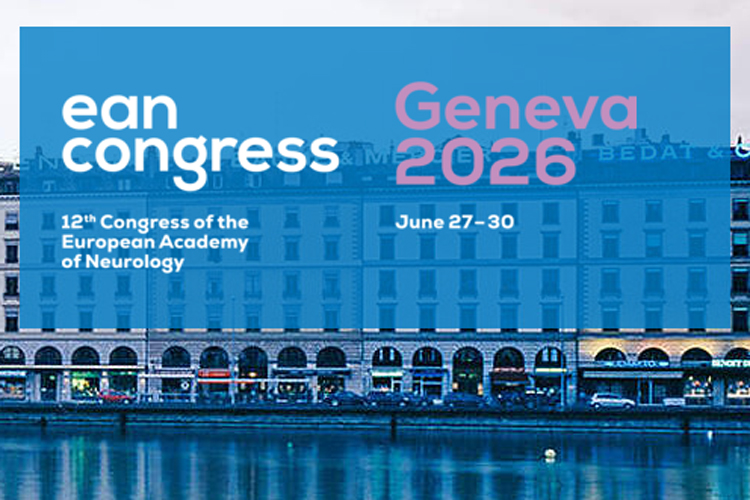
European Academy of Neurology 12th Congress 2026

$70.00
This Product is shared via google drive download link, So please share your correct Gmail id while placing the order .Please note that there are no CME points or certificate associated with this course Samples for Courses Can be found here : Free Samples Here!
European Academy of Neurology 12th Congress 2026 (Videos)
EAN 2026 | Brains, Bytes & Beyond: Tech in Neurology | AI, Stroke, Multiple Sclerosis, Parkinson’s Disease, Epilepsy & Neurotechnology
The 12th Congress of the European Academy of Neurology (EAN 2026) is a major international neurology conference bringing together leading neurologists, neuroscientists, clinical researchers, and healthcare professionals to explore advances in neurological diagnosis, treatment, and research.
Held June 27–30, 2026, at Palexpo in Geneva, Switzerland, the congress focused on the overarching theme “Brains, Bytes & Beyond: Tech in Neurology.”
The scientific program explored how artificial intelligence, machine learning, digital biomarkers, wearable devices, advanced neuroimaging, brain stimulation, and emerging neurotechnologies are transforming clinical neurology.
The congress also covered major neurological disorders, including stroke, Alzheimer’s disease, Parkinson’s disease, multiple sclerosis, epilepsy, headache disorders, neuromuscular conditions, neuroimmunological diseases, and neurodegenerative disorders.
Educational formats included Presidential Symposia, Focused Workshops, Clinical Grand Rounds, Teaching Courses, Case-Based Workshops, Scientific Sessions, and research presentations.
Congress Details
- Organizer: European Academy of Neurology (EAN)
- Congress: 12th Annual Congress
- Dates: June 27–30, 2026
- Venue: Palexpo, Geneva, Switzerland
- Original Format: Hybrid – In-Person and Virtual
- MedicalAmboss Product Format: Videos
- Language: English
- Primary Specialty: Neurology
- Theme: Brains, Bytes & Beyond: Tech in Neurology
Key Scientific Topics
- Artificial Intelligence in Neurology
- Machine Learning and Digital Biomarkers
- Brain–Computer Interfaces
- Adaptive Deep Brain Stimulation
- Noninvasive Brain Stimulation
- Stroke and Cerebrovascular Disease
- Alzheimer’s Disease and Dementia
- Parkinson’s Disease and Movement Disorders
- Multiple Sclerosis, NMOSD and MOGAD
- Epilepsy and Status Epilepticus
- Migraine and Headache Disorders
- Neuromuscular Diseases and ALS
- Clinical Neurophysiology
- Advanced Neuroimaging
- Neurorehabilitation
- Neurocritical Care
- Neuro-Oncology and Neurogenetics
Selected Official Scientific Sessions and Faculty
1. AI in Hospital Neurology — June 27, 2026
- AI in Acute Stroke — Susanne Wegener
- AI in Disorders of Consciousness — Anna Estraneo
- AI in Identification & Diagnosis of Multiple Sclerosis — Celia Oreja-Guevara
2. AI in Outpatient Neurology — June 28, 2026
- AI in Epilepsy — Sandor Beniczky
- AI for Parkinson’s Disease and Rare Parkinsonian Conditions — Christian Lambert
- AI in Headache Care — Anker Stubberud
3. Innovations in Neurology: From Brain Machine Interface to AI — June 29, 2026
- Adaptive Deep Brain Stimulation for Movement Disorders — Andrea Kühn
- Advances in Non-Invasive Brain Stimulation — Friedhelm Hummel
- Applying AI in Clinical Neurology — James Teo
- Interacting with Robots — Astrid Rosenthal-von der Pütten
These are confirmed presentations from the original congress program. Their inclusion in the agenda does not guarantee that every presentation is present in the separately supplied video package.
Learning Objectives
The educational program aims to help participants:
- Evaluate applications of artificial intelligence and digital technology in neurological practice.
- Apply current neurological research and evidence-based clinical recommendations.
- Review advances in stroke diagnosis, treatment, and neurorehabilitation.
- Understand emerging biomarkers and therapeutic developments in Alzheimer’s and Parkinson’s diseases.
- Evaluate new approaches to multiple sclerosis, epilepsy, headache, and neuromuscular disorders.
- Integrate advances in neuroimaging, neurophysiology, and brain stimulation into clinical practice.
- Recognize opportunities and limitations associated with wearable technology and digital clinical decision support.
Target Audience
This congress is relevant to:
- Neurologists and Neurology Residents
- Stroke Specialists
- Movement Disorder Specialists
- Cognitive and Behavioral Neurologists
- Neuroimmunologists
- Epileptologists
- Headache Specialists
- Neuromuscular Specialists
- Clinical Neurophysiologists
- Neurocritical Care Physicians
- Neuro-Oncologists
- Pediatric Neurologists
- Neuroscientists and Clinical Researchers
- Neuroradiologists and Neurosurgeons
- Neurorehabilitation Specialists
- Allied Healthcare Professionals
Educational Value
EAN 2026 provides an extensive review of contemporary neurological science, with particular emphasis on technology-driven improvements in diagnosis, monitoring, treatment, and clinical decision-making.
The congress combines research developments and practical clinical education across a wide range of neurological subspecialties.
Important Product Information
This MedicalAmboss listing provides educational video materials from EAN 2026 for independent study.
- Delivery: Google Drive download link
- Gmail Address: Provide your correct Gmail address at checkout
- Official EAN Account: Not included
- Official CME Credits: Not included
- Completion Certificate: Not included
The exact number of videos and completeness of the recordings should be confirmed against the supplied file inventory.
Short Description
European Academy of Neurology 12th Congress 2026 (EAN 2026) features educational video materials covering advances in neurology, artificial intelligence, stroke, Parkinson’s disease, multiple sclerosis, epilepsy, headache disorders, neuroimaging, and emerging brain technologies.
Held June 27–30, 2026, in Geneva, Switzerland, under the theme “Brains, Bytes & Beyond: Tech in Neurology.”
Topics
1. Overarching Theme Track: “Brains, Bytes & Beyond: Tech in Neurology”
-
Artificial Intelligence (AI) and Machine Learning in Neurological Diagnostics and Prognostication
-
Digital Biomarkers, Wearable Sensors, and Remote Patient Monitoring in Neurological Diseases
-
Brain-Computer Interfaces (BCIs), Neuroprosthetics, and Closed-Loop Neuromodulation
-
Big Data, Computational Neuroscience, and Precision Medicine in Neurology
-
Telemedicine, Telestroke Networks, and Virtual Care Models in Clinical Practice
-
Ethical, Legal, and Regulatory Challenges of AI and Emerging Neurotechnologies
2. Cerebrovascular Diseases & Stroke
-
Hyperacute Management of Acute Ischemic Stroke: Intravenous Thrombolysis and Mechanical Thrombectomy
-
Neuroimaging Selection in Extended Time Windows and Large Core Infarcts
-
Intracerebral Hemorrhage (ICH) and Subarachnoid Hemorrhage: Acute Blood Pressure Control, Hemostatic Therapy, and Minimally Invasive Surgery
-
Cerebral Small Vessel Disease, Vascular Cognitive Impairment, and Cerebral Amyloid Angiopathy
-
Secondary Stroke Prevention: Antithrombotic Strategies, Patent Foramen Ovale (PFO) Closure, and Carotid Stenosis Management
-
Stroke in Young Adults, Rare Causes of Stroke, and Cerebral Venous Sinus Thrombosis (CVST)
3. Movement Disorders
-
Parkinson’s Disease: Prodromal Markers, Alpha-Synuclein Seed Amplification Assays, and Disease-Modifying Trials
-
Device-Aided Therapies in Advanced Parkinson’s Disease: Adaptive Deep Brain Stimulation (aDBS), Focused Ultrasound, and Continuous Subcutaneous Infusions
-
Atypical Parkinsonian Syndromes: Multiple System Atrophy (MSA), Progressive Supranuclear Palsy (PSP), and Corticobasal Degeneration (CBD)
-
Hyperkinetic Movement Disorders: Essential Tremor, Dystonia, Huntington’s Disease, Chorea, Myoclonus, and Tics
-
Functional Movement Disorders: Positive Diagnostic Signs and Multidisciplinary Rehabilitation
4. Dementia, Cognitive & Behavioral Neurology
-
Alzheimer’s Disease in the Era of Anti-Amyloid Immunotherapies: Patient Selection, APOE Genotyping, and ARIA Monitoring
-
Fluid (Plasma and CSF) and PET Biomarkers for Early Detection of Neurodegeneration
-
Frontotemporal Lobar Degeneration (FTLD), Primary Progressive Aphasias, and Dementia with Lewy Bodies (DLB)
-
Normal Pressure Hydrocephalus (NPH) and Reversible Causes of Cognitive Decline
-
Management of Neuropsychiatric Symptoms and Behavioral Disturbances in Dementia
5. Multiple Sclerosis & Neuroimmunology
-
Evolving Diagnostic Criteria (McDonald Criteria Updates) and Early High-Efficacy Treatment in Multiple Sclerosis
-
Smoldering MS, Progression Independent of Relapse Activity (PIRA), and BTK Inhibitors
-
Neuromyelitis Optica Spectrum Disorder (NMOSD) and MOG Antibody-Associated Disease (MOGAD): Diagnostic Pitfalls and Targeted Biologics
-
Autoimmune Encephalitis and Paraneoplastic Neurological Syndromes
-
Neurosarcoidosis, CNS Vasculitis, and Neurological Complications of Immune Checkpoint Inhibitors
6. Epilepsy & Clinical Neurophysiology
-
Classification and Medical Management of Focal, Generalized, and Developmental and Epileptic Encephalopathies (DEEs)
-
First Seizure Evaluation, Seizure Mimics, and Psychogenic Non-Epileptic Seizures (PNES)
-
Diagnosis and Protocol-Driven Management of Refractory and Super-Refractory Status Epilepticus
-
Presurgical Evaluation, Stereo-EEG (sEEG), Epilepsy Surgery, and Neurostimulation (VNS, RNS, DBS)
-
Women with Epilepsy: Teratogenicity, Contraception, and Antiseizure Medication Management in Pregnancy
-
Quantitative EEG, Automated Seizure Detection, and Long-Term Video-EEG Monitoring
7. Headache & Pain Disorders
-
Pathophysiology and Personalized Treatment of Migraine: CGRP Monoclonal Antibodies, Gepants, and Ditans
-
Medication-Overuse Headache and Chronic Migraine Management Strategies
-
Trigeminal Autonomic Cephalalgias (Cluster Headache, Paroxysmal Hemicrania, SUNCT/SUNA)
-
Secondary Headache Red Flags, Idiopathic Intracranial Hypertension (IIH), and Spontaneous Intracranial Hypotension (SIH)
-
Trigeminal Neuralgia, Cranial Neuralgias, and Central/Peripheral Neuropathic Pain Syndromes
8. Neuromuscular Disorders, Muscle & NMJ Diseases
-
Amyotrophic Lateral Sclerosis (ALS) and Motor Neuron Diseases: Genetic Testing, Antisense Oligonucleotides, and Multidisciplinary Care
-
Immune-Mediated Neuropathies: Guillain-Barré Syndrome (GBS), CIDP, and Autoimmune Nodopathies
-
Hereditary Neuropathies (Charcot-Marie-Tooth Disease) and Transthyretin Familial Amyloid Polyneuropathy (hATTR-PN)
-
Myasthenia Gravis and Lambert-Eaton Myasthenic Syndrome: FcRn Antagonists and Complement Inhibitors
-
Inherited Myopathies, Muscular Dystrophies, Channelopathies, and Idiopathic Inflammatory Myopathies (Dermatomyositis, Antisynthetase Syndrome, IMNM, IBM)
9. Sleep-Wake Disorders
-
REM Sleep Behavior Disorder (RBD) as a Prodrome of Synucleinopathies
-
Narcolepsy and Central Disorders of Hypersomnolence: Orexin Agonists and Current Pharmacotherapy
-
Restless Legs Syndrome (RLS), Periodic Limb Movement Disorder, and Circadian Rhythm Sleep-Wake Disorders
-
Sleep-Related Breathing Disorders and Nocturnal Epilepsy
10. Neurocritical Care, Coma & Disorders of Consciousness
-
Multimodal Neuromonitoring and Management of Intracranial Hypertension and Traumatic Brain Injury (TBI)
-
Diagnosis, Prognostication, and Neurorehabilitation of Coma and Prolonged Disorders of Consciousness (UWS, MCS, Cognitive Motor Dissociation)
-
Neurological Prognostication After Cardiac Arrest and Hypoxic-Ischemic Brain Injury
-
Determination of Brain Death / Death by Neurologic Criteria (DNC)
11. Neuro-Oncology, Neuro-Infectious Diseases & Neurogenetics
-
Molecular Classification and Targeted Therapy of Gliomas, CNS Lymphomas, and Brain Metastases
-
Neurological Complications of Systemic Cancer, CAR-T Cell Therapy (ICANS), and Radiation Necrosis
-
Acute Bacterial, Viral, Fungal, and Tuberculous Meningitis and Encephalitis
-
Neuroborreliosis, Neurosyphilis, HIV-Associated Neurocognitive Disorders, and Emerging Neurotropic Infections
-
Next-Generation Sequencing (NGS), Repeat Expansion Disorders, Hereditary Spastic Paraplegias, Spinocerebellar Ataxias, and Gene Therapies in Neurology
12. Autonomic Nervous System, Neuro-Ophthalmology, Neuro-Otology & Neurorehabilitation
-
Evaluation and Management of Neurogenic Orthostatic Hypotension, Postural Orthostatic Tachycardia Syndrome (POTS), and Autonomic Failure
-
Acute Vestibular Syndrome, Episodic Vertigo (BPPV, Vestibular Migraine, Meniere’s Disease), and Eye Movement Disorders
-
Optic Neuritis, Ischemic Optic Neuropathies, and Diplopia Workup
-
Robotics, Non-Invasive Brain Stimulation (TMS, tDCS), Virtual Reality, and Spasticity Management in Neurorehabilitation
-
Palliative Care, Advance Care Planning, and End-of-Life Decision-Making in Severe Neurological Illness
Related products
Cardiology
Critical Care - Emergency medicine

Internal Medicine
Critical Care - Emergency medicine
ASN Critical Care Nephrology – 2022 Update (On-Demand and Livestream)
Medical Accounts
Internal Medicine
Internal Medicine

Internal Medicine