
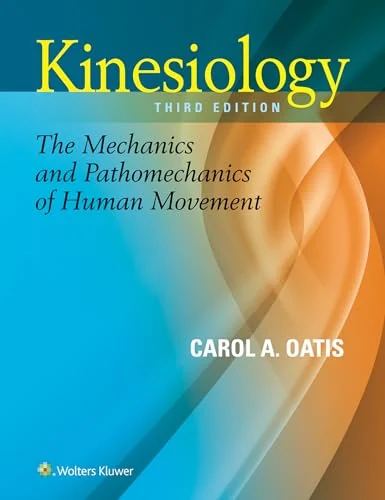
Kinesiology: The Mechanics and Pathomechanics of Human Movement, 3rd Edition (Videos)
Original price was: $130.27.$30.00Current price is: $30.00.
This Product is shared via google drive download link, So please share your correct Gmail id while placing the order .Please note that there are no CME points or certificate associated with this course Samples for Courses Can be found here : Free Samples Here!
Kinesiology: The Mechanics and Pathomechanics of Human Movement, 3rd Edition (Videos)
Clinical Kinesiology, Human Biomechanics, Movement Analysis & Musculoskeletal Pathomechanics – 138 HD Educational Videos
Overview
Kinesiology: The Mechanics and Pathomechanics of Human Movement, 3rd Edition (Videos) is a comprehensive educational video collection featuring 138 high-definition MP4 recordings designed to illustrate the principles of normal and pathological human movement, joint biomechanics, muscle function, and musculoskeletal mechanics.
Accompanying the third edition of Kinesiology: The Mechanics and Pathomechanics of Human Movement, this multimedia resource provides visual demonstrations and biomechanical movement analyses that help learners understand the mechanical principles governing human motion and the functional consequences of musculoskeletal dysfunction.
Human movement is the result of complex interactions between the skeletal, muscular, and nervous systems. Understanding these relationships is essential for evaluating movement efficiency, identifying biomechanical abnormalities, and recognizing compensatory movement strategies associated with injury, disease, and functional limitations.
This video collection explores fundamental and applied kinesiology concepts, including joint mechanics, muscle recruitment patterns, gait abnormalities, and pathomechanical compensations affecting the upper extremities, lower extremities, and axial skeleton.
Through detailed movement demonstrations and clinical biomechanical analysis, the videos help bridge the gap between theoretical kinesiology and practical applications in physical therapy, rehabilitation medicine, orthopedic assessment, and human movement science.
Curriculum Overview (138 MP4 Files)
The collection includes 138 biomechanical video recordings and movement analyses examining normal human movement, joint function, muscle recruitment, gait abnormalities, and pathological movement patterns across major anatomical regions.
Key Educational Areas
1. Fundamentals of Human Kinesiology
Visual demonstrations supporting the understanding of human movement principles, functional anatomy, and the mechanical relationships between bones, joints, muscles, and surrounding tissues.
2. Joint Mechanics and Biomechanics
Movement analyses illustrating joint motion, mechanical interactions, and the biomechanical principles that influence normal and abnormal musculoskeletal function.
3. Muscle Recruitment and Movement Control
Clinical demonstrations examining muscle activation patterns, muscular coordination, and the functional contributions of different muscle groups during human movement.
4. Upper Extremity Biomechanics
Biomechanical observations of the shoulder, elbow, wrist, and hand, focusing on joint mechanics, coordinated movement, and upper-limb functional performance.
5. Shoulder Complex Movement Analysis
Educational illustrations of shoulder mechanics, muscular coordination, and movement patterns relevant to upper-extremity function and musculoskeletal assessment.
6. Lower Extremity Kinesiology
Movement demonstrations involving the hip, knee, ankle, and foot, emphasizing joint interactions, movement efficiency, and lower-limb biomechanics.
7. Gait Mechanics and Abnormalities
Visual analyses of walking patterns, gait deviations, and biomechanical abnormalities associated with altered movement control and musculoskeletal dysfunction.
8. Axial Skeleton and Trunk Mechanics
Movement analyses involving the spine and trunk, highlighting the mechanical relationships supporting posture, stability, and coordinated body movement.
9. Pathomechanics of Human Movement
Demonstrations of abnormal movement patterns associated with biomechanical dysfunction, including altered joint mechanics, muscular imbalances, and compensatory movement strategies.
10. Compensatory Movement Patterns
Clinical observations illustrating how the body modifies movement in response to functional limitations, musculoskeletal abnormalities, or altered mechanical demands.
11. Functional Movement Analysis
Application of biomechanical principles to the observation and interpretation of movement patterns relevant to daily activities and rehabilitation assessment.
12. Clinical Applications of Kinesiology
Integration of movement analysis, functional anatomy, and biomechanical reasoning to support musculoskeletal evaluation and rehabilitation planning.
Educational Benefits
This comprehensive kinesiology video collection helps learners:
- Develop a stronger understanding of normal and pathological human movement.
- Visualize biomechanical principles through practical movement demonstrations.
- Improve knowledge of joint mechanics and functional musculoskeletal anatomy.
- Recognize muscle recruitment patterns and their contributions to movement.
- Understand gait mechanics and common biomechanical deviations.
- Identify compensatory movement strategies associated with musculoskeletal dysfunction.
- Strengthen knowledge of upper- and lower-extremity biomechanics.
- Explore the mechanical relationships involving the spine and axial skeleton.
- Connect theoretical kinesiology concepts with clinical movement assessment.
- Support the development of biomechanical observation and analytical skills.
Target Audience
- Physical Therapists and Physiotherapy Students
- Occupational Therapists
- Orthopedic and Musculoskeletal Healthcare Professionals
- Sports Medicine Physicians
- Rehabilitation Medicine Specialists
- Athletic Trainers
- Kinesiology and Exercise Science Students
- Biomechanics Researchers and Educators
- Strength and Conditioning Professionals
- Medical and Allied Health Students
Clinical Applications
Understanding the mechanics and pathomechanics of human movement is essential for evaluating musculoskeletal function and identifying abnormalities that may contribute to pain, movement limitations, and reduced physical performance.
This educational collection provides visual demonstrations relevant to several clinical and academic applications.
- Musculoskeletal Assessment: Understanding normal joint function and recognizing abnormal movement patterns during clinical examination.
- Physical Therapy and Rehabilitation: Applying biomechanical principles to functional movement assessment and rehabilitation planning.
- Orthopedic Evaluation: Exploring altered joint mechanics and compensatory movements associated with musculoskeletal conditions.
- Sports Medicine: Analyzing movement mechanics and identifying patterns relevant to athletic performance and injury assessment.
- Gait Analysis: Observing walking mechanics, gait abnormalities, and lower-extremity movement relationships.
- Movement Science Education: Strengthening understanding of functional anatomy, muscle coordination, and human biomechanics.
Product Details
- Title: Kinesiology: The Mechanics and Pathomechanics of Human Movement, 3rd Edition (Videos)
- Edition: 3rd Edition
- Content Type: Clinical Kinesiology and Biomechanical Movement Analysis Videos
- Total Videos: 138 MP4 Files
- Total Size: 471 MB
- Format: High Definition MP4 Videos
- Specialty: Kinesiology, Human Biomechanics, Musculoskeletal Rehabilitation & Movement Science
- Delivery: Digital Video Collection
Why Choose This Video Collection?
Kinesiology: The Mechanics and Pathomechanics of Human Movement, 3rd Edition (Videos) offers an extensive visual learning resource for understanding the mechanical foundations of human movement and the biomechanical changes associated with musculoskeletal dysfunction.
Featuring 138 high-definition biomechanical videos, the collection illustrates normal and abnormal movement patterns involving major joints, muscle groups, and anatomical regions.
By connecting functional anatomy with real-world movement observations, these demonstrations help students and healthcare professionals understand complex biomechanical concepts and their relevance to clinical assessment.
Whether used for physiotherapy education, kinesiology training, orthopedic rehabilitation study, sports medicine reference, or independent professional development, this multimedia resource supports a deeper understanding of human movement and its pathomechanics.
Short Description
Kinesiology: The Mechanics and Pathomechanics of Human Movement, 3rd Edition (Videos) features 138 high-definition MP4 videos demonstrating normal and pathological human movement, joint biomechanics, muscle recruitment patterns, gait abnormalities, and compensatory movement strategies. Covering the upper and lower extremities and axial skeleton, this comprehensive educational collection provides a valuable visual learning resource for physical therapists, rehabilitation professionals, sports medicine practitioners, and kinesiology students.
138 HD MP4 Videos | 471 MB | Human Biomechanics & Movement Analysis
Related products

Anesthesiology & pain medicine



Dermatology
ACS(I) Textbook of Cutaneous & Aesthetic Surgery (2 Volumes) (Original PDF from Publisher)


Basic science
Kaplan Preclinical Immunology and Microbiology Review 2023 For USMLE Step 1 (High Quality Image PDF)

Internal Medicine