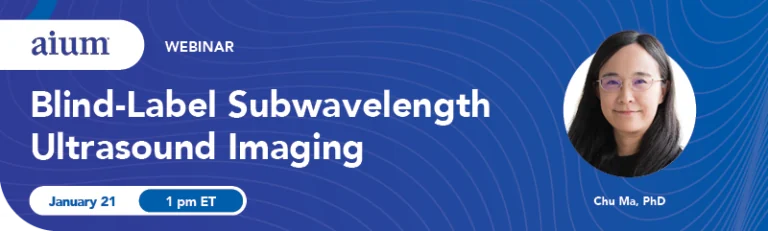
Blind-Label Subwavelength Ultrasound Imaging (Videos)

Original price was: $19.00.$5.00Current price is: $5.00.
This Product is shared via google drive download link, So please share your correct Gmail id while placing the order .Please note that there are no CME points or certificate associated with this course Samples for Courses Can be found here : Free Samples Here!
Blind-Label Subwavelength Ultrasound Imaging (Videos)
Blind-Label Subwavelength Ultrasound Imaging (Videos) is an advanced ultrasound imaging research webinar presented by the American Institute of Ultrasound in Medicine (AIUM) in 2025. Featuring Chu Ma, PhD, from the University of Wisconsin–Madison, this educational presentation explores subwavelength ultrasound imaging, acoustic random scattering, computational image reconstruction, and innovative techniques for improving ultrasound spatial resolution. The recording examines how integrating scattered acoustic information with computational imaging methods may help researchers investigate imaging capabilities beyond conventional ultrasound resolution limits.
Target Audience
Radiologists, Ultrasound Researchers, Biomedical Engineers, Medical Physicists, Diagnostic Sonographers, Medical Imaging Scientists, Computational Imaging Researchers, Ultrasound Technology Developers, Graduate Students, Research Fellows, Acoustic Imaging Specialists, and healthcare professionals interested in ultrasound physics, advanced image reconstruction, and emerging biomedical imaging technologies.
Course Information
- Course Title: Blind-Label Subwavelength Ultrasound Imaging
- Organizer: American Institute of Ultrasound in Medicine (AIUM)
- Faculty: Chu Ma, PhD
- Faculty Affiliation: University of Wisconsin–Madison
- Publication Year: 2025
- Format: High-Definition MP4 Video
- Included Files: 1 MP4 Video
- File Size: 858 MB
- Language: English
- Primary Specialty: Ultrasound Imaging Research
- Additional Focus: Computational Imaging / Acoustic Scattering / Biomedical Engineering
The AIUM Blind-Label Subwavelength Ultrasound Imaging 2025 educational webinar examines emerging research methods aimed at improving the spatial resolution of ultrasound imaging through the combination of acoustic random scattering and computational image reconstruction.
Conventional ultrasound imaging is subject to physical constraints related to acoustic wavelength, wave propagation, and imaging system characteristics. These limitations can make it difficult to distinguish structures separated by distances smaller than the effective resolution of the imaging system. Addressing these challenges is an important objective in advanced ultrasound physics and biomedical imaging research.
Presented by Chu Ma, PhD, from the University of Wisconsin–Madison, this educational activity introduces the concept of subwavelength ultrasound imaging, which investigates how additional spatial information may be obtained through innovative acoustic measurement and computational processing techniques.
A central focus is acoustic random scattering, a phenomenon in which ultrasound waves interact with scattering structures and produce complex acoustic signal patterns. Although scattering can complicate conventional image formation, research approaches investigate whether information contained in scattered signals can be used to improve image reconstruction and spatial detail.
The webinar explores the integration of acoustic scattering with computational ultrasound imaging, emphasizing how signal processing and reconstruction methods may contribute to extracting spatial information that is challenging to resolve using traditional imaging approaches.
Another important theme is the relationship between ultrasound resolution, acoustic signal behavior, and computational image formation. Understanding these principles provides a foundation for evaluating experimental imaging methodologies and their potential advantages and limitations.
The presentation also connects fundamental ultrasound physics with broader developments in biomedical engineering and medical imaging innovation. Research into subwavelength imaging may create opportunities for improved visualization of fine structures, although practical applications depend on experimental validation, system performance, and clinical feasibility.
Through this specialized educational recording, ultrasound researchers, biomedical engineers, medical physicists, and computational imaging scientists can develop a clearer understanding of advanced acoustic imaging concepts, scattering-based reconstruction, and emerging approaches to ultrasound resolution enhancement.
Learning Objectives
Upon reviewing this educational activity, participants should be better able to:
- Understand the physical principles and technical limitations affecting spatial resolution in conventional ultrasound imaging.
- Explain the concept of subwavelength ultrasound imaging and its relevance to advanced biomedical imaging research.
- Recognize the role of acoustic wavelength and wave propagation in determining ultrasound imaging performance.
- Describe the fundamental concepts of acoustic random scattering and its influence on ultrasound signal behavior.
- Explore how acoustic scattering information may be incorporated into computational image reconstruction methods.
- Understand the relationship between ultrasound signal processing, computational imaging, and spatial resolution enhancement.
- Review research approaches designed to investigate imaging capabilities beyond conventional resolution constraints.
- Recognize potential technical challenges and limitations associated with emerging subwavelength imaging methods.
- Discuss the relevance of acoustic scattering and computational ultrasound research to the development of future biomedical imaging technologies.
These learning objectives summarize the research focus described in the supplied course information and are not presented as verified official AIUM faculty learning objectives.
Comprehensive Educational Topics
1. Subwavelength Ultrasound Imaging
This section introduces subwavelength imaging concepts and examines why conventional ultrasound systems face limitations when resolving closely spaced or very small structures. It provides the physical context for understanding research into alternative image formation methods.
Key Educational Areas:
- Subwavelength ultrasound imaging concepts
- Ultrasound spatial resolution
- Acoustic wavelength considerations
- Conventional ultrasound resolution limitations
- Advanced ultrasound imaging research
2. Acoustic Random Scattering
Acoustic random scattering is an important component of the imaging approach discussed in this webinar. The educational focus considers how ultrasound waves interact with scattering structures and how the resulting acoustic signals may contain useful information for computational analysis.
Key Educational Areas:
- Acoustic wave scattering
- Random scattering concepts
- Scattered ultrasound signals
- Acoustic signal behavior
- Applications in computational imaging research
3. Computational Ultrasound Imaging
This topic explores the role of computational techniques in processing ultrasound data and reconstructing images. It emphasizes the research connection between acquired acoustic signals, image reconstruction, and the extraction of spatial information.
Key Educational Areas:
- Computational imaging principles
- Ultrasound signal processing
- Computational image reconstruction
- Integration of acoustic data
- Advanced imaging research methods
4. Improving Ultrasound Resolution
The presentation considers research strategies aimed at improving ultrasound spatial resolution by combining information from scattered acoustic waves with computational imaging approaches.
Key Educational Areas:
- Spatial resolution enhancement
- Subwavelength imaging approaches
- Imaging system limitations
- Signal-based reconstruction concepts
- Emerging imaging methodologies
5. Biomedical Imaging Research
This educational area connects subwavelength ultrasound research with broader developments in medical imaging physics and biomedical engineering. It considers the potential significance of experimental imaging techniques and the challenges involved in translating research innovations into practical applications.
Key Educational Areas:
- Ultrasound physics
- Biomedical engineering
- Medical imaging innovation
- Acoustic imaging technologies
- Potential translational applications
Key Topics Covered
- Blind-Label Subwavelength Ultrasound Imaging
- Advanced Ultrasound Imaging Research
- Ultrasound Spatial Resolution
- Acoustic Wavelength and Imaging Limitations
- Acoustic Random Scattering
- Scattered Acoustic Signal Analysis
- Computational Ultrasound Imaging
- Computational Image Reconstruction
- Ultrasound Signal Processing
- Subwavelength Resolution Enhancement
- Acoustic Wave Propagation
- Advanced Image Formation Techniques
- Biomedical Engineering Applications
- Medical Imaging Physics
- Emerging Acoustic Imaging Technologies
- Experimental Ultrasound Imaging Methods
- Biomedical Imaging Innovation
- Potential Translational Imaging Applications
Clinical & Educational Value
Blind-Label Subwavelength Ultrasound Imaging (Videos) provides specialized educational content connecting fundamental acoustic physics with emerging computational approaches to improving ultrasound resolution.
By examining acoustic random scattering, subwavelength imaging concepts, and computational reconstruction techniques, the presentation helps learners understand research methods that seek to extend the capabilities of conventional ultrasound systems.
The educational material is especially valuable for biomedical engineers, medical physicists, ultrasound researchers, computational imaging specialists, and medical imaging scientists investigating new approaches to image formation and high-resolution acoustic imaging.
This webinar is primarily research-oriented rather than a practical training course in routine diagnostic ultrasound. The technologies discussed represent emerging imaging research and should not be assumed to have established clinical availability or regulatory approval.
Short Description
AIUM Blind-Label Subwavelength Ultrasound Imaging (Videos) 2025 is an advanced ultrasound imaging research webinar featuring Chu Ma, PhD, from the University of Wisconsin–Madison. This 858 MB HD MP4 recording explores acoustic random scattering, computational ultrasound imaging, subwavelength resolution enhancement, acoustic signal processing, and advanced image reconstruction. Designed for biomedical engineers, medical physicists, ultrasound researchers, radiologists, and computational imaging scientists interested in emerging ultrasound technologies.
Related products
Critical Care - Emergency medicine
Gulfcoast Ultrasound-Guided Upper Extremity Nerve Blocks for Emergency Medicine
Critical Care - Emergency medicine
2020 Radiology After Five: How to Make Night and Weekend Call a Success!

Hematology / Oncology

Critical Care - Emergency medicine

Hematology / Oncology
2023 Psychopharmacology in Cancer Care: An Update for Clinicians of All Disciplines