
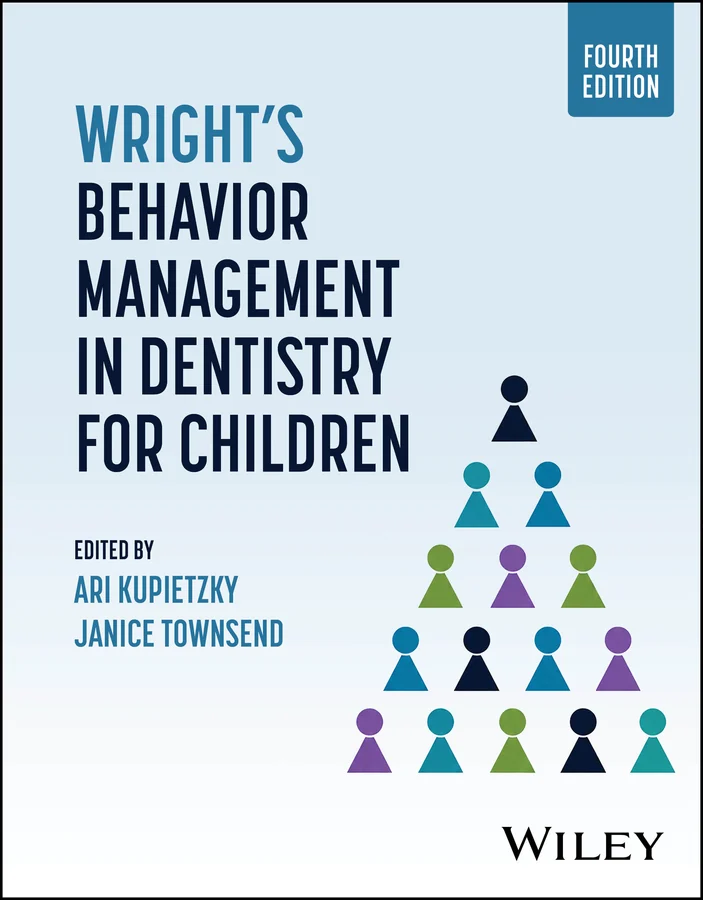
Wright’s Behavior Management in Dentistry for Children, 4th Edition (Original PDF from Publisher)


Original price was: $159.99.$15.00Current price is: $15.00.
This Product is shared via google drive download link, So please share your correct Gmail id while placing the order .Please note that there are no CME points or certificate associated with this course Samples for Courses Can be found here : Free Samples Here!
Wright’s Behavior Management in Dentistry for Children, 4th Edition (Original PDF from Publisher)
Pediatric Dentistry | Child Behavior Guidance | Dental Anxiety Management | Parent-Child Communication | Wiley-Blackwell 2026
Target Audience
Pediatric Dentists, General Dentists Treating Children, Pediatric Dental Specialists, Dental Residents, Pediatric Dentistry Residents, Dental Students, Dental Hygienists, Dental Therapists, Dental Educators, and oral healthcare professionals interested in behavior guidance, communication, and patient-centered dental care for children.
Information
Wright’s Behavior Management in Dentistry for Children, 4th Edition is a comprehensive reference book in pediatric dentistry, authored by Ari Kupietzky and Janice Townsend and published by Wiley-Blackwell in 2026.
This fully updated fourth edition examines the scientific foundations and practical applications of behavior guidance in pediatric dental practice.
Effective pediatric dental care requires more than technical expertise. Understanding a child’s developmental stage, emotional needs, family environment, and relationship with caregivers is essential for creating a supportive clinical experience.
The book approaches behavior management as a dynamic process based on communication, trust-building, child development, family relationships, and thoughtful clinical judgment.
Rather than treating behavior guidance simply as a collection of methods for controlling behavior, the text emphasizes understanding the individual child and the interactions between patients, parents, and dental professionals.
The fourth edition incorporates contemporary scientific evidence and practical clinical perspectives to address the evolving challenges encountered in pediatric dentistry.
A major focus is the relationship between child development, family dynamics, social influences, and behavior during dental treatment.
The publication also explores communication strategies that support cooperation, improve the clinical experience, and help dental professionals establish productive relationships with children and their caregivers.
Case-based clinical scenarios throughout the book illustrate real-world challenges and connect theoretical principles with everyday decisions in the dental operatory.
With contributions reflecting a new generation of expertise, this edition provides updated perspectives on pediatric behavior guidance, parent communication, and the diverse needs of modern families.
Wright’s Behavior Management in Dentistry for Children is particularly valuable for pediatric dentists, general dentists treating children, residents, and dental students seeking to strengthen their clinical judgment and communication skills.
Book Details
| Information | Details |
|---|---|
| Book Title | Wright’s Behavior Management in Dentistry for Children |
| Authors | Ari Kupietzky; Janice Townsend |
| Publisher | Wiley-Blackwell |
| Publication Year | 2026 |
| Edition | 4th Edition |
| Format | Original Publisher PDF |
| File Size | 34.2 MB |
| Language | English |
| ISBNs | 9781394387380, 9781394387342, 9781394387373 |
| Primary Specialty | Pediatric Dentistry |
| Additional Focus | Behavior Guidance, Pediatric Dental Psychology & Clinical Communication |
Core Topics Covered
1. Foundations of Behavior Guidance in Pediatric Dentistry
The book explores behavior guidance as a fundamental component of effective pediatric dental care.
Key Topics
- Pediatric dental behavior guidance
- Principles of behavior management
- Evidence-based pediatric dentistry
- Clinical judgment
- Patient-centered dental care
- Building trust during dental treatment
2. Child Development and Dental Behavior
Understanding developmental differences is important when adapting dental care to the individual needs of children.
Key Topics
- Child development
- Developmental influences on behavior
- Emotional and behavioral responses
- Age-appropriate communication
- Individual patient needs
- Clinical behavior assessment
3. Parent-Child Relationships and Family Dynamics
The text emphasizes the influence of parents, caregivers, and family relationships on the pediatric dental experience.
Key Topics
- Parent-child interactions
- Family dynamics
- Caregiver involvement
- Parental communication
- Family-centered dental care
- Diverse family environments
4. Communication and Trust-Building
The fourth edition highlights effective communication as a central element of successful behavior guidance.
Key Topics
- Communication with children
- Communication with parents
- Establishing patient trust
- Positive clinical relationships
- Supportive dental interactions
- Collaborative decision-making
5. Behavioral and Social Influences in Dental Practice
The book considers the broader social and interpersonal factors that may affect a child’s behavior in the dental setting.
Key Topics
- Social influences on behavior
- Family and environmental factors
- Behavioral responses to dental care
- Individual patient considerations
- Understanding complex clinical situations
6. Practical Behavior Guidance in the Dental Operatory
The publication connects behavior guidance principles with everyday clinical practice.
Key Topics
- Practical pediatric dental communication
- Clinical behavior guidance
- Managing challenging appointments
- Individualized patient approaches
- Appropriate clinical decision-making
- Behavior guidance in routine practice
7. Case-Based Pediatric Dental Management
Clinical scenarios help illustrate how behavior guidance principles can be applied to real-world situations.
Key Topics
- Case-based clinical learning
- Pediatric dental scenarios
- Communication challenges
- Behavior-related clinical decisions
- Practical problem-solving
- Integration of scientific evidence with clinical experience
8. Contemporary Approaches to Pediatric Dental Care
The fourth edition incorporates updated scientific knowledge and current perspectives on pediatric dentistry.
Key Topics
- Contemporary behavior guidance
- Evidence-based clinical approaches
- Evolving patient and family needs
- Modern pediatric dental practice
- Professional judgment
- Patient-centered treatment experiences
Key Features of the Fourth Edition
- Comprehensive coverage of behavior guidance in pediatric dentistry
- Updated scientific evidence and clinical perspectives
- Strong emphasis on child development
- Detailed consideration of parent-child relationships and family dynamics
- Greater focus on communication with parents and caregivers
- Recognition of diverse modern families and clinical environments
- Practical case-based scenarios
- Integration of clinical experience with evidence-based dentistry
- Emphasis on trust-building and supportive patient interactions
- Practical approaches applicable to everyday dental practice
- Guidance for pediatric dentists, general dentists, residents, and students
Clinical & Educational Value
Wright’s Behavior Management in Dentistry for Children, 4th Edition provides a comprehensive educational foundation for understanding the behavioral, developmental, and interpersonal aspects of pediatric dental care.
The publication emphasizes that effective behavior guidance depends on recognizing the individual needs of children and understanding how family relationships, emotional responses, communication, and social circumstances influence the dental experience.
Its evidence-based approach combines contemporary research with practical clinical considerations.
The inclusion of case-based scenarios helps connect scientific concepts with everyday decisions encountered by dental professionals.
The fourth edition is particularly relevant to clinicians seeking to improve communication with children and caregivers, strengthen professional judgment, and deliver supportive and developmentally appropriate pediatric dental care.
The book is a valuable reference for pediatric dentistry education, clinical training, and continuing professional development.
Educational Notice: This product is supplied as a publisher PDF. It is a professional educational reference and does not include video lectures, supervised clinical training, CME credits, or professional certification.
Related products

Anesthesiology & pain medicine

Basic science
Comprehensive Pharmacy Review for NAPLEX: Practice Exams, Cases, and Test Prep Eighth Edition





Basic science