
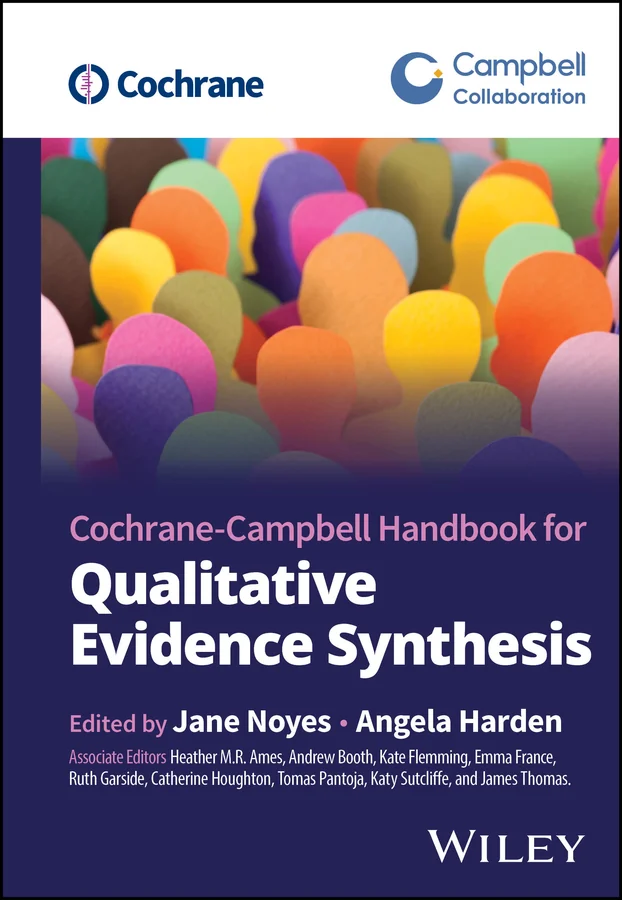
Cochrane-Campbell Handbook for Qualitative Evidence Synthesis (EPUB)


Original price was: $80.00.$8.00Current price is: $8.00.
This Product is shared via google drive download link, So please share your correct Gmail id while placing the order .Please note that there are no CME points or certificate associated with this course Samples for Courses Can be found here : Free Samples Here!
Cochrane-Campbell Handbook for Qualitative Evidence Synthesis (EPUB)
Qualitative Evidence Synthesis | Systematic Reviews | Cochrane Reviews | Campbell Reviews | Research Methodology | Wiley-Blackwell 2026
Target Audience
Systematic Review Authors, Qualitative Researchers, Mixed Methods Researchers, Evidence Synthesis Specialists, Cochrane and Campbell Reviewers, Research Trainers, Review Editors, Guideline Development Groups, Healthcare Researchers, Public Health Researchers, and professionals involved in evaluating, synthesizing, and using qualitative research evidence.
The handbook is also relevant to organizations and guideline groups, including those associated with the World Health Organization (WHO) and the National Institute for Health and Care Excellence (NICE).
Information
Cochrane-Campbell Handbook for Qualitative Evidence Synthesis (EPUB) is a comprehensive research methodology reference published by Wiley-Blackwell in 2026.
This first-edition handbook provides step-by-step guidance for planning, conducting, and updating systematic reviews of qualitative evidence.
Qualitative Evidence Syntheses (QESs) are an increasingly important form of systematic review used to systematically bring together, assess, and synthesize qualitative research findings.
These reviews contribute to local and global decision-making and are an established component of Cochrane and Campbell Reviews.
The handbook addresses the need for a comprehensive methodological reference that equips review authors with appropriate tools, processes, and methods for conducting robust and trusted qualitative evidence syntheses.
Developed with knowledge and experience from the Cochrane Qualitative and Implementation Methods Group (QIMG) and members of the Campbell Methods Group, the publication provides guidance aligned with Cochrane and Campbell standards.
The book includes peer-reviewed chapters written by experienced qualitative and mixed methods researchers and review authors.
It covers essential review processes and methodological approaches, alongside guidance on integrating qualitative evidence synthesis findings with intervention effects reviews.
Additional topics include public and professional involvement in qualitative evidence synthesis, equity, diversity and inclusion, reflexivity, peer review, and reporting.
The publication also provides evidence-informed tools and methodological guidance that complement Cochrane’s established training resources.
This handbook is particularly relevant to systematic review authors, researchers, trainers, editors, guideline developers, and professionals who need to understand, critically evaluate, or apply qualitative evidence syntheses.
Book Details
| Information | Details |
|---|---|
| Book Title | Cochrane-Campbell Handbook for Qualitative Evidence Synthesis |
| Authors | Jane Noyes; Angela Harden; Heather Melanie R. Ames; Andrew Booth; Kate Flemming; Emma France; Ruth Garside; Catherine Houghton; Tomas Pantoja; Katy Sutcliffe; James Thomas |
| Publisher | Wiley-Blackwell |
| Publication Year | 2026 |
| Edition | 1st Edition |
| Format | EPUB |
| File Size | 9.9 MB |
| Language | English |
| ISBNs | 9781119843238, 9781119843221, 9781119843245 |
| Primary Subject | Qualitative Evidence Synthesis |
| Additional Focus | Systematic Reviews, Research Methodology and Evidence Synthesis |
Core Topics Covered
1. Introduction to Qualitative Evidence Synthesis
The handbook introduces qualitative evidence synthesis and its importance in systematic reviews and decision-making.
Key Topics
- Qualitative Evidence Synthesis (QES)
- Systematic reviews of qualitative research
- Evidence synthesis
- Qualitative research findings
- Decision-making applications
2. Planning a Qualitative Evidence Synthesis
The publication provides guidance on planning systematic reviews of qualitative evidence.
Key Topics
- QES planning
- Review processes
- Methodological considerations
- Cochrane and Campbell standards
- Structured review preparation
3. Conducting Qualitative Evidence Syntheses
The handbook explains processes and methods used to bring together, assess, and synthesize qualitative research.
Key Topics
- Conducting QES
- Qualitative evidence assessment
- Synthesis methods
- Review methodology
- Research evidence integration
4. Updating Systematic Reviews
The publication addresses the updating of qualitative evidence syntheses.
Key Topics
- Updating QES
- Systematic review updates
- Review processes
- Methodological consistency
5. Cochrane and Campbell Review Standards
The handbook provides methodological guidance informed by established Cochrane and Campbell review practices.
Key Topics
- Cochrane Reviews
- Campbell Reviews
- Review standards
- Qualitative and implementation methods
- Evidence-informed tools
6. Integrating QES with Intervention Effects Reviews
The book discusses combining findings from qualitative evidence synthesis with intervention effects reviews.
Key Topics
- Integration of qualitative evidence
- Intervention effects reviews
- Complementary evidence synthesis
- Review findings
- Methodological integration
7. Public and Professional Involvement
The publication explores the role of public and professional participation in qualitative evidence syntheses.
Key Topics
- Public involvement
- Professional involvement
- Participation in review processes
- Research engagement
8. Equity, Diversity and Inclusion
The handbook examines considerations involving equity, diversity, and inclusion in qualitative evidence synthesis.
Key Topics
- Equity
- Diversity
- Inclusion
- Research methodology
- Review processes
9. Reflexivity in Qualitative Evidence Synthesis
The publication addresses reflexivity as an important methodological consideration in qualitative research synthesis.
Key Topics
- Reflexivity
- Qualitative research methods
- Review methodology
- Research interpretation
10. Peer Review and Reporting
The handbook provides guidance on reviewing and reporting qualitative evidence syntheses.
Key Topics
- Peer review of QES
- Reporting qualitative evidence synthesis
- Review quality
- Methodological reporting
- Research communication
11. Research Training and Guideline Development
The publication provides guidance relevant to research education and the use of qualitative evidence in guideline development.
Key Topics
- Systematic review training
- Cochrane training resources
- Evidence-based guideline development
- Research education
- Critical appraisal
- Application of qualitative evidence
Key Features
- Comprehensive guide to qualitative evidence synthesis
- Step-by-step guidance for planning, conducting, and updating QES
- Methods informed by Cochrane and Campbell expertise
- Peer-reviewed chapters
- Contributions from experienced qualitative and mixed methods researchers
- Evidence-informed methodological tools
- Integration of QES with intervention effects reviews
- Public and professional involvement
- Equity, diversity, and inclusion considerations
- Reflexivity
- Peer review and reporting guidance
- Complementary reference for Cochrane training
- Relevant to systematic review authors and guideline developers
- Useful for understanding and critically evaluating qualitative research syntheses
Scientific & Educational Value
Cochrane-Campbell Handbook for Qualitative Evidence Synthesis provides a comprehensive methodological reference for researchers and review authors involved in qualitative systematic reviews.
The handbook combines expert guidance, peer-reviewed contributions, and evidence-informed tools to support the planning, execution, updating, and reporting of qualitative evidence syntheses.
Its coverage of methodological integration, public and professional involvement, equity, diversity, inclusion, and reflexivity addresses important considerations in contemporary qualitative evidence synthesis.
The book also supports researchers, editors, trainers, and guideline development groups seeking to understand or critically evaluate systematic reviews incorporating qualitative evidence.
Related products

Anesthesiology & pain medicine



Internal Medicine


USMLE / kaplan and Board Review
Uworld USMLE COMLEX Level 1 Qbank, Updated Jan 2023, System- and Subject-wise (PDF)

Books
Pathy’s Principles and Practice of Geriatric Medicine, 6th Edition (Original PDF from Publisher)