
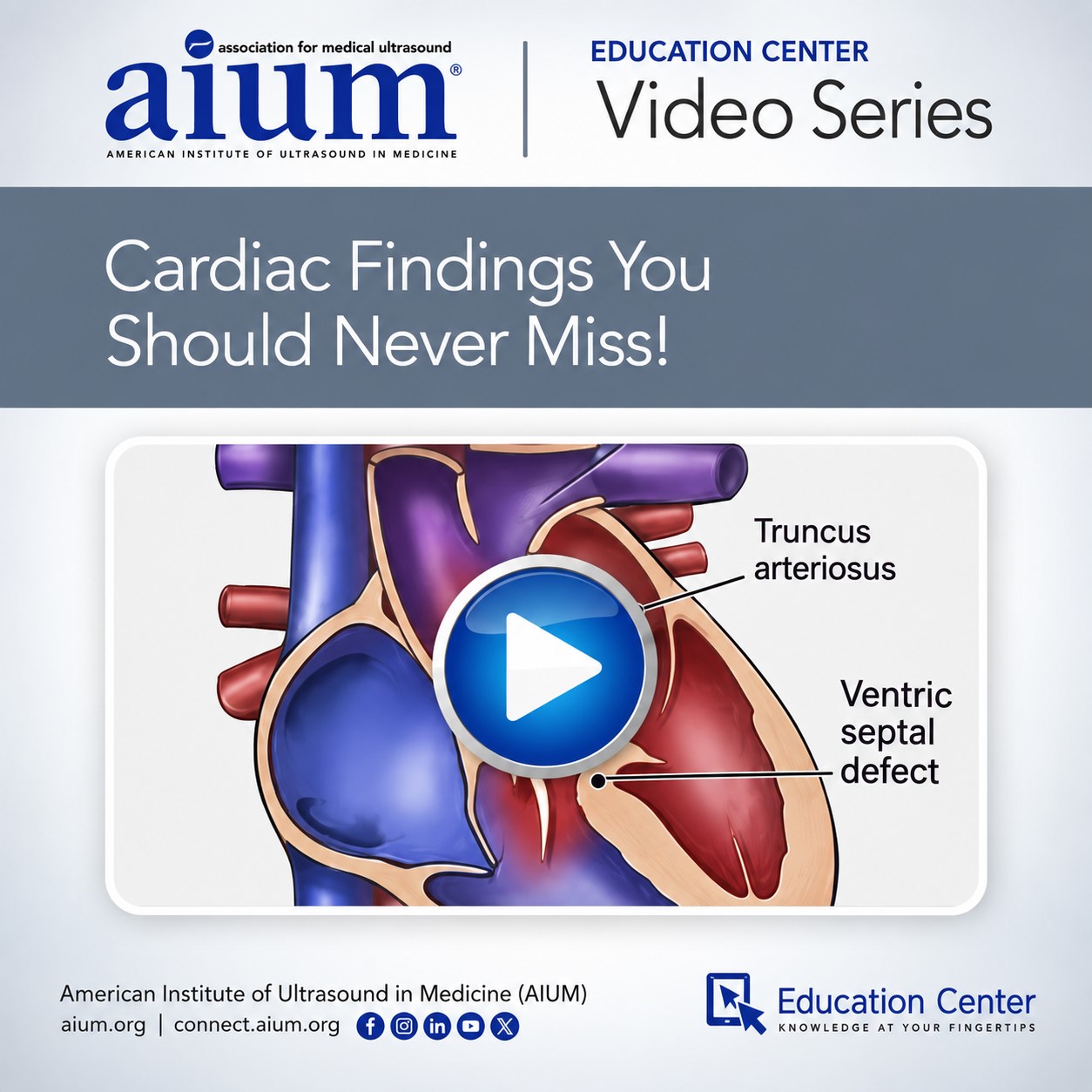
AIUM Cardiac Findings You Should Never Miss!
Original price was: $899.00.$15.00Current price is: $15.00.
This Product is shared via google drive download link, So please share your correct Gmail id while placing the order .Please note that there are no CME points or certificate associated with this course Samples for Courses Can be found here : Free Samples Here!
AIUM Cardiac Findings You Should Never Miss
Essential Fetal Cardiac Ultrasound Findings Every Sonographer and Maternal-Fetal Specialist Should Recognize
Overview
AIUM Cardiac Findings You Should Never Miss is a focused, high-yield educational program developed by the American Institute of Ultrasound in Medicine (AIUM) to improve the prenatal detection of congenital heart disease through systematic fetal cardiac ultrasound evaluation.
Congenital heart disease (CHD) remains the most common congenital malformation worldwide and is a leading cause of infant morbidity and mortality. Early prenatal diagnosis plays a critical role in optimizing pregnancy management, facilitating delivery planning at specialized centers, improving neonatal outcomes, and providing families with appropriate counseling and treatment options.
This CME-accredited course highlights the most important fetal cardiac abnormalities that should never be overlooked during routine obstetric ultrasound examinations. Through a practical and structured approach, expert faculty review key findings visible in the four-chamber view, ventricular outflow tracts, and progressive cardiac abnormalities that may significantly alter fetal cardiac function throughout gestation.
Participants will learn how to recognize subtle imaging clues associated with critical congenital heart defects, improve diagnostic confidence, and enhance their ability to identify high-risk fetuses requiring referral for comprehensive fetal echocardiography.
The course is designed to provide immediately applicable knowledge that can be incorporated into daily obstetric and fetal cardiac ultrasound practice.
Educational Credits
CME Accreditation
The American Institute of Ultrasound in Medicine designates this enduring educational activity for a maximum of:
1.0 AMA PRA Category 1 Credit™
Physicians should claim only the credit commensurate with the extent of their participation in the activity.
Additional Credit Recognition
- Accepted by ARDMS
- Accepted as ARRT Category A Credits
Credit Availability
Credits for this educational activity were available through:
July 1, 2023
Learning Objectives
After completing this activity, participants should be able to:
- Identify major congenital cardiac abnormalities using the four-chamber view.
- Recognize critical abnormalities involving the ventricular outflow tracts.
- Detect cardiac lesions that may progress during pregnancy.
- Assess fetal cardiac findings that significantly alter cardiac function and hemodynamics.
- Improve prenatal detection rates of congenital heart disease.
- Apply systematic fetal cardiac screening techniques during routine obstetric ultrasound examinations.
- Differentiate normal from abnormal fetal cardiac anatomy.
- Understand when referral for advanced fetal echocardiography is indicated.
Why This Course Is Important
Prenatal cardiac screening remains one of the most challenging aspects of obstetric ultrasound. Although many congenital heart defects are detectable before birth, a significant number continue to be missed due to subtle imaging findings or incomplete cardiac evaluation.
This course focuses specifically on the highest-yield abnormalities that sonographers and physicians are most likely to encounter and least likely to want to miss.
By concentrating on the most clinically significant findings, the course helps practitioners:
- Improve detection of critical congenital heart disease.
- Increase diagnostic confidence.
- Reduce false-negative examinations.
- Enhance fetal cardiac screening quality.
- Improve communication with referring physicians and fetal cardiology specialists.
Program Content
Module 1: Top Five Anomalies That Progress or Alter Function
Certain fetal cardiac abnormalities may appear mild during early gestation but progressively worsen as pregnancy advances.
This section reviews congenital cardiac lesions that can significantly impact fetal circulation, ventricular performance, and postnatal outcomes.
Topics Covered
- Progressive Valvular Disease
- Developing Ventricular Dysfunction
- Evolving Left Heart Obstruction
- Progressive Right Heart Obstruction
- Functional Cardiac Abnormalities
Key Learning Points
Participants learn:
- How to recognize early signs of disease progression.
- Which lesions require close prenatal surveillance.
- How evolving cardiac pathology affects fetal physiology.
- When urgent referral for fetal echocardiography is warranted.
Module 2: Top Five “Do Not Miss” Findings in the Outflow Tracts
Evaluation of the ventricular outflow tracts dramatically improves prenatal detection of congenital heart disease.
Many serious cardiac abnormalities appear normal on the four-chamber view but become obvious when the outflow tracts are carefully examined.
Topics Covered
- Transposition of the Great Arteries (TGA)
- Tetralogy of Fallot (TOF)
- Double Outlet Right Ventricle (DORV)
- Truncus Arteriosus
- Critical Outflow Tract Obstruction
Key Learning Points
Participants learn:
- Proper imaging techniques for outflow tract assessment.
- Normal relationships of the great vessels.
- Recognition of abnormal vessel alignment.
- Common pitfalls leading to missed diagnoses.
This module emphasizes the importance of comprehensive cardiac screening beyond the four-chamber view.
Module 3: Top Five “Do Not Miss” Findings of the Four-Chamber View
The four-chamber view remains the cornerstone of fetal cardiac screening.
A properly obtained four-chamber image allows detection of many major congenital heart defects.
Topics Covered
- Hypoplastic Left Heart Syndrome
- Atrioventricular Septal Defect (AVSD)
- Ventricular Septal Defects (VSD)
- Chamber Size Discrepancies
- Abnormal Cardiac Axis and Position
Key Learning Points
Participants learn:
- Systematic assessment of chamber anatomy.
- Recognition of abnormal chamber proportions.
- Identification of septal defects.
- Evaluation of cardiac position within the thorax.
- Differentiation of normal and pathological findings.
Clinical Applications
The knowledge gained from this course can be immediately applied in:
Routine Obstetric Ultrasound
- First-trimester screening
- Second-trimester anatomy scans
- High-risk pregnancy evaluations
Fetal Echocardiography
- Comprehensive fetal cardiac assessment
- Congenital heart disease screening
- Prenatal cardiac follow-up
Maternal-Fetal Medicine
- Risk stratification
- Prenatal counseling
- Delivery planning
Target Audience
This activity is designed for healthcare professionals involved in prenatal imaging and fetal cardiac evaluation.
Physicians
- Maternal-Fetal Medicine Specialists
- Obstetricians
- Radiologists
- Pediatric Cardiologists
- Fetal Echocardiography Specialists
Sonographers
- RDMS Professionals
- Fetal Cardiac Sonographers
- Obstetric Sonographers
- Ultrasound Technologists
Other Healthcare Professionals
- Nurse Practitioners
- Physician Assistants
- Prenatal Diagnostic Specialists
- Medical Trainees
Educational Benefits
Improve Detection Rates
Learn practical techniques that increase recognition of congenital heart disease during routine screening.
Enhance Diagnostic Confidence
Develop a structured approach to evaluating fetal cardiac anatomy.
Focus on High-Yield Findings
Concentrate on the abnormalities most likely to affect fetal outcomes.
Immediate Clinical Relevance
Apply the concepts learned directly to everyday ultrasound practice.
Related products

Anesthesiology & pain medicine
Medical Accounts

Internal Medicine

Critical Care - Emergency medicine
Cardiology
Critical Care - Emergency medicine

Cardiology
Internal Medicine