
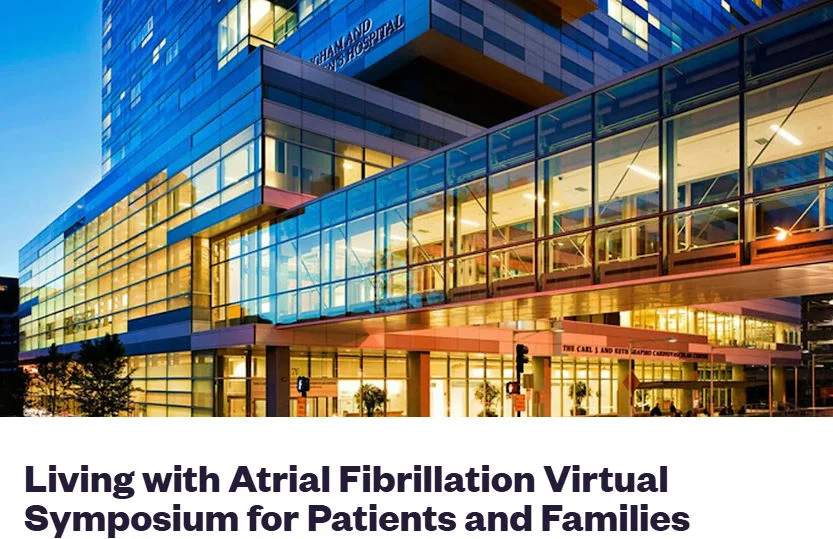
Brigham And Women’s Hospital Living with Atrial Fibrillation Virtual Symposium for Patients and Families 2025
$15.00
Atrial Fibrillation Patient Symposium 2025 covers anticoagulation, ablation, stroke prevention and practical patient support.
Delivery Information: This Product is shared via google drive download link. Please use your correct Gmail address at checkout.
Please note: there are no CME points or certificate associated with this course.
Samples for Courses Can be found here: Free Samples Here!
MedicalAmboss File Scope: This listing describes the educational subject matter for reference. Provider registration, live attendance, streaming-platform access, CME or other credit, certificates, memberships, apps, accounts, and publisher-hosted extras are not included unless they are explicitly listed as store files. MedicalAmboss.
Atrial Fibrillation Patient Symposium 2025
Atrial Fibrillation Patient Education | AFib Management | Anticoagulation | Catheter Ablation | Pulsed Field Ablation | Stroke Prevention
The Brigham And Women’s Hospital Living with Atrial Fibrillation Virtual Symposium for Patients and Families 2025 provides patient-centered education on atrial fibrillation, its treatment options, and the everyday challenges of living with a chronic heart-rhythm disorder. Designed for patients, families, and caregivers, the symposium also offers a patient-education perspective for healthcare professionals involved in cardiovascular care.
Atrial fibrillation is the most common sustained cardiac arrhythmia and can affect daily functioning and quality of life. Its association with stroke, heart failure, and other cardiovascular complications makes understanding treatment choices and long-term management particularly important. professional.heart.org
The program explores AFib mechanisms, epidemiology, genetics, and clinical presentation before addressing medications for rate and rhythm control, anticoagulation, and non-pharmacological stroke prevention. Interventional topics include radiofrequency ablation, pulmonary vein isolation, pulsed field ablation, and hybrid ablation strategies. Additional coverage addresses lifestyle modification, obstructive sleep apnea, wearable cardiac monitoring, and the psychological consequences of living with AFib.
Course Details
| Detail | Information |
|---|---|
| Presenting Institution | Brigham and Women’s Hospital |
| Program Year | 2025 |
| Original Event Date | October 4, 2025 |
| Original Event Format | Virtual symposium for patients and families |
| Clinical Focus | Atrial fibrillation, treatment options, stroke prevention, and long-term patient support |
| Educational Orientation | Patient and caregiver education, with relevance to multidisciplinary healthcare professionals |
The original event’s date and patient-and-family format are documented in the organizer’s event listing. Eventbrite
Target Audience
This symposium is intended primarily for patients living with atrial fibrillation, their families, and caregivers who want to understand the condition, become familiar with available treatments, and participate more confidently in discussions with their healthcare teams.
Additional professional audience: Clinical Cardiac Electrophysiologists, Cardiologists, Cardiac Surgeons, Sleep Medicine Specialists, Geneticists, Psychiatrists, Neurologists, and Primary Care Physicians interested in patient education, arrhythmia management, and cardiovascular wellness.
Program Overview
This educational program connects the scientific foundations of atrial fibrillation with the practical questions patients and families encounter during diagnosis, treatment, and follow-up.
The supplied course information emphasizes understanding why AFib develops, how medications support heart-rate control and rhythm management, and how anticoagulation and device-based approaches fit into stroke-prevention discussions. It also introduces catheter-based and hybrid interventions while maintaining a broader focus on daily wellbeing, lifestyle factors, sleep-related conditions, digital monitoring, and emotional health.
Learning Objectives
Upon completion of this activity, participants will be able to:
- Describe the mechanisms, risk factors, genetics, and clinical presentations of atrial fibrillation, distinguishing between paroxysmal, persistent, and refractory AFib.
- Understand pharmacological treatment strategies for atrial fibrillation, including medications used for rate control, rhythm maintenance, and systemic anticoagulation.
- Compare catheter-based and surgical interventional options, including radiofrequency ablation, cryoballoon ablation, pulsed field ablation (PFA), and hybrid ablation techniques.
- Identify non-pharmacological stroke prevention strategies, including left atrial appendage occlusion devices.
- Evaluate the role of lifestyle interventions, management of co-existing obstructive sleep apnea, and the use of wearable digital cardiac monitors in long-term rhythm surveillance.
- Recognize and address the psychological impact, anxiety, and emotional challenges associated with living with atrial fibrillation.
These learning objectives are retained from the supplied product description; they are not presented as a separately verified official objectives list.
Official Program Topics and Faculty
Block 1
| Topic | Presenter / Moderator |
|---|---|
| What is Atrial Fibrillation? | Rachel Tripp, PA-C |
| 2025 Anticoagulation Update | Mengyan (Ester) Li, PharmD, BCPS, CACP, RPh |
| Medications for Heart Rate and Rhythm Control | Bruce A. Koplan, MD, MPH |
| Block 1 – Faculty Q&A | Julie B. Shea, NP — Moderator |
Source: Brigham and Women’s Hospital cardiovascular education archive. BWHEdTech
Block 2
| Topic | Presenter / Moderator |
|---|---|
| Epidemiology and Lifestyle Modification -What is the evidence? | Usha B. Tedrow, MD, MSc |
| Genetics of Atrial Fibrillation | Victor Nauffal, MD |
| Non-Pharmacologic Strategies to Reduce Stroke Risk in AF | Sunil Kapur, MD |
| Block 2 – Faculty Q&A | William Sauer — Moderator |
Source: Brigham and Women’s Hospital cardiovascular education archive. BWHEdTech
Block 3
| Topic | Presenter / Moderator |
|---|---|
| A New Pulse on AFib Care: Comparing RF and PFA | Alex Leverton, PA-C |
| Pulmonary Vein Isolation and Treatment of Paroxysmal AF | Usha B. Tedrow, MD, MSc |
| Catheter Ablation for Treatment of Persistent Atrial Fibrillation | Paul C. Zei, MD, PhD |
| Hybrid Ablation Strategies | Thomas M. Tadros, MD, MPH* |
| New Ablation Strategies: Pulsed Field Ablation | William H. Sauer, MD |
| Block 3 – Faculty Q&A | Julie Shea — Moderator |
Source: Brigham and Women’s Hospital cardiovascular education archive. BWHEdTech
The archive spells Dr. Tadros’s surname “Tadors.” The spelling above follows the official Mass General Brigham physician directory. Mass General Brigham
Block 4
| Topic | Presenter / Moderator |
|---|---|
| Obstructive Sleep Apnea and AF | David Benavides, MD |
| Digital Care – Wearable monitors for AF Surveillance | Megan E. Antonellis, MHS, PA-C |
| Managing the psychological consequences of AF | Margo C. Funk, MD, MA, FACLP |
| Block 4 – Faculty Q&A | Julie Shea — Moderator |
Source: Brigham and Women’s Hospital cardiovascular education archive. BWHEdTech
Major Topics Covered
AFib foundations and individualized understanding: Mechanisms, epidemiology, genetic influences, risk factors, clinical presentations, and the differences between intermittent and more sustained atrial fibrillation.
Treatment options and stroke prevention: Rate-control and rhythm-control medications, systemic anticoagulation, left atrial appendage closure, catheter ablation, radiofrequency ablation, pulsed field ablation, pulmonary vein isolation, and hybrid approaches.
Long-term support and everyday wellbeing: Lifestyle modification, co-existing obstructive sleep apnea, wearable rhythm-surveillance technologies, anxiety, emotional challenges, and the psychological burden associated with chronic arrhythmia.
Course Directors and Faculty
The session-by-session faculty roster and Q&A moderators are listed above. Separate course-director designations were not verified.
Why This Course Is Relevant
For patients and families, the value of this symposium lies in bringing treatment terminology and everyday concerns into the same educational framework. Rather than focusing exclusively on procedures or medications, the supplied program description places AFib management alongside sleep, lifestyle, monitoring, and emotional wellbeing.
For healthcare professionals, its patient-centered orientation offers a useful perspective on explaining treatment choices and discussing questions that extend beyond the technical aspects of arrhythmia care.
The material is intended for education and informed discussion; it does not replace individualized medical assessment or treatment advice.
Related Learning on MedicalAmboss
Explore additional educational resources in the Cardiology courses and Internal Medicine courses collections. Medical Amboss
Short Description
Topics
-
What is Atrial Fibrillation
-
What have we learned from studying the genetics of atrial fibrillation
-
Atrial Fibrillation Epidemiology and Lifestyle Modification – What is the evidence
-
Medications for Rate Control
-
Medications for Heart Rate and Rhythm Control
-
2025 Anticoagulation Update
-
Non-Pharmacologic Strategies to Reduce Stroke Risk in AF
-
Pulmonary Vein Isolation and Treatment of Paroxysmal AF
-
Catheter Ablation for Atrial Fibrillation, Part Deux – Persistent Atrial Fibrillation
-
New Ablation Strategies – Pulsed Field Ablation
-
A New Pulse on AFib Care – Comparing RF and PFA
-
Hybrid Ablation for Treatment of Refractory Atrial Fibrillation
-
Digital Care – Wearable Monitors for Atrial Fibrillation Surveillance
-
Understanding the Intersection: Obstructive Sleep Apnea & Atrial Fibrillation
-
Managing the Psychological Consequences of Atrial Fibrillation
-
Faculty Q&A Sessions (Block 1, Block 2, Block 3, and Block 4)
Related products
Internal Medicine

Critical Care - Emergency medicine
Internal Medicine

Medical Accounts

Critical Care - Emergency medicine
Medical Accounts

Anesthesiology & pain medicine