
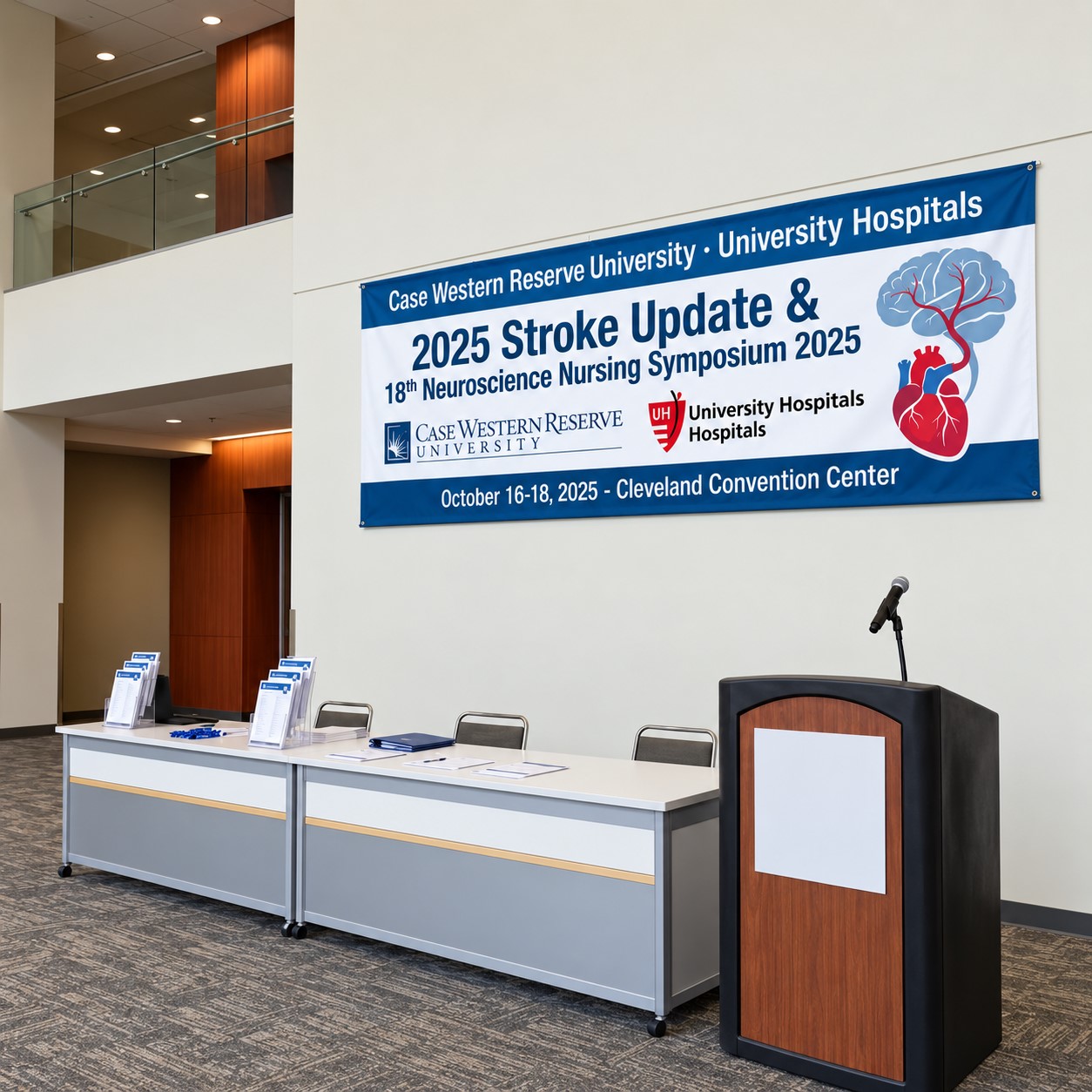
Case Western Reserve University University Hospitals 2025 Stroke Update & 18th Neuroscience Nursing Symposium 2025

Original price was: $125.00.$20.00Current price is: $20.00.
This Product is shared via google drive download link, So please share your correct Gmail id while placing the order .Please note that there are no CME points or certificate associated with this course Samples for Courses Can be found here : Free Samples Here<
Case Western Reserve University & University Hospitals 2025 Stroke Update & 18th Neuroscience Nursing Symposium
Comprehensive Stroke Medicine, Neurocritical Care & Neuroscience Nursing Update
The Case Western Reserve University & University Hospitals 2025 Stroke Update & 18th Neuroscience Nursing Symposium provides a comprehensive, multidisciplinary review of the latest advances in stroke diagnosis, treatment, prevention, neurocritical care, and neuroscience nursing. This educational program brings together experts in neurology, neurosurgery, neurointervention, neurocritical care, rehabilitation, and nursing to discuss current evidence-based practices and emerging developments in cerebrovascular medicine.
Held on September 12, 2025, in Cleveland, Ohio, the symposium focuses on improving outcomes for patients with acute ischemic stroke, hemorrhagic stroke, pediatric cerebrovascular disease, post-stroke complications, and stroke prevention. Special emphasis is placed on thrombectomy expansion strategies, neuro-prognostication, health equity, multidisciplinary stroke care, and the critical role of neuroscience nursing throughout the continuum of care.
Through expert lectures, case-based discussions, patient experiences, and practical clinical updates, participants gain valuable knowledge that can be immediately applied to both inpatient and outpatient stroke management.
Product Details
- Format: 7 Videos + 7 Audios + 7 Subtitle Files (VTT) + 8 PDFs
- Total Size: 7.21 GB
- Course Date: September 12, 2025
- Location: Corporate College East, Cleveland, Ohio
- Access: On-Demand
Program Overview
Stroke care continues to evolve rapidly with expanding treatment windows, improved endovascular techniques, advanced neuroimaging, and growing recognition of healthcare disparities affecting outcomes.
This symposium provides updates on:
- Acute ischemic stroke management
- Mechanical thrombectomy
- Neurocritical care
- Pediatric stroke
- Post-stroke seizures
- Neuro-prognostication
- Stroke prevention
- Weight loss medications and vascular risk reduction
- Health equity in stroke care
- Neuroscience nursing best practices
- Multidisciplinary stroke team coordination
The curriculum combines physician-level clinical updates with nursing-focused education, creating a highly collaborative learning experience.
Learning Objectives
Upon completion of this activity, participants will be able to:
- Review the rationale and patient selection criteria for thrombectomy beyond 24 hours.
- Identify risk factors and management strategies for post-stroke seizures.
- Implement best practices for continuous EEG monitoring and patient care.
- Evaluate pediatric stroke etiologies and acute management approaches.
- Apply neuro-prognostication principles in severe stroke cases.
- Integrate palliative care considerations into major stroke management.
- Recognize common stroke mimics and causes of inpatient stroke alerts.
- Utilize modern pharmacologic therapies for stroke prevention.
- Address racial and ethnic disparities in cerebrovascular healthcare.
- Improve patient and family education during early stroke recovery.
- Strengthen multidisciplinary collaboration within stroke systems of care.
Core Topics Covered
Acute Ischemic Stroke Management
The symposium reviews modern approaches to:
- Acute stroke evaluation
- Reperfusion therapy
- Time-sensitive interventions
- Imaging-based patient selection
- Stroke system optimization
Faculty discuss evidence-based strategies for improving functional outcomes.
SELECT LATE Trial & Extended Thrombectomy
A major highlight is the discussion of:
- SELECT LATE Trial findings
- Mechanical thrombectomy beyond 24 hours
- Patient selection criteria
- Advanced imaging techniques
- Expanding treatment eligibility
Participants learn how emerging evidence may influence future stroke protocols.
Neurointerventional Stroke Care
Topics include:
- Endovascular thrombectomy
- Large vessel occlusion management
- Neurovascular imaging
- Procedural considerations
- Post-procedural care
The program reviews evolving standards in stroke intervention.
Post-Stroke Seizures
Sessions address:
- Seizure epidemiology after stroke
- Risk stratification
- EEG monitoring
- Management strategies
- Long-term outcomes
Special emphasis is placed on continuous EEG use and nursing considerations.
Pediatric Stroke
The course explores:
- Pediatric stroke etiologies
- Acute management protocols
- Diagnostic challenges
- Neuroimaging considerations
- Long-term pediatric outcomes
Participants gain insight into this often under-recognized cerebrovascular condition.
Neuro-Prognostication & Palliative Care
Faculty review:
- Prognostic assessment after severe stroke
- Neurological recovery prediction
- Goals-of-care discussions
- Palliative care integration
- Family communication strategies
These sessions focus on patient-centered decision-making.
Inpatient Stroke Alerts & Stroke Mimics
Topics include:
- Stroke alert activation
- Common stroke mimics
- Diagnostic differentiation
- Rapid assessment protocols
- Nursing response strategies
Participants learn practical approaches to improving inpatient stroke systems.
Stroke Prevention & Cardiometabolic Health
The symposium highlights:
- New weight loss medications
- Diabetes management
- Cardiovascular risk reduction
- Stroke prevention strategies
- Obesity-related cerebrovascular risk
Faculty discuss the growing role of GLP-1 receptor agonists and related therapies in vascular prevention.
Health Equity in Stroke Care
A dedicated section reviews:
- Regional healthcare disparities
- Racial and ethnic inequities
- Access to stroke care
- Community outreach initiatives
- Prevention strategies
Participants examine evidence-based interventions designed to improve equity and outcomes.
Neuroscience Nursing
The nursing symposium component focuses on:
- Neurocritical care nursing
- Stroke patient monitoring
- EEG patient management
- Rehabilitation support
- Family education
- Multidisciplinary communication
Practical nursing strategies are emphasized throughout the course.
Educational Features
✔ Evidence-Based Stroke Updates
✔ Neurocritical Care Education
✔ Neuroscience Nursing Symposium
✔ Mechanical Thrombectomy Advances
✔ Pediatric Stroke Management
✔ Neuro-Prognostication Strategies
✔ Health Equity Discussions
✔ Patient-Centered Stroke Care
Target Audience
This course is ideal for:
- Neurologists
- Stroke Specialists
- Neurosurgeons
- Neurointerventionalists
- Neurocritical Care Physicians
- Neuroscience Nurses
- Nurse Practitioners
- Physician Assistants
- Emergency Medicine Physicians
- Rehabilitation Specialists
- Physical Therapists
- Multidisciplinary Stroke Teams
Why This Course Stands Out
✔ Combines physician and nursing stroke education
✔ Covers latest thrombectomy research and SELECT LATE data
✔ Strong focus on multidisciplinary stroke care
✔ Practical neurocritical care updates
✔ Comprehensive pediatric stroke education
✔ Addresses healthcare disparities and health equity
✔ Includes patient-centered and family-centered care approaches
✔ Evidence-based updates immediately applicable to practice
Clinical & Educational Value
The Case Western Reserve University & University Hospitals 2025 Stroke Update & 18th Neuroscience Nursing Symposium provides a highly relevant and multidisciplinary review of modern cerebrovascular medicine. By integrating advances in acute stroke intervention, neurocritical care, pediatric stroke management, prevention strategies, and neuroscience nursing, the program equips healthcare professionals with the tools needed to improve stroke outcomes and deliver comprehensive, evidence-based care.
+ Topics:
- 01 SELECT LATE Trial Thrombectomy Beyond 24 Hours
- 02 Seizure and Stroke – Rupin Singh, MD EEG Lead Care – Alla Morris R. EEG T., CLTM
- 03 Pediatric Stroke Etiologies and Acute Management
- 04 Neuro Prognostication and Palliative Care
- 05 Inpatient Brain Attacks – Case study Bedside Nurse’s role
- 06 New Weight Loss Medications and Stroke Prevention Cinema Program
- 07 Health Disparities in Northeast Ohio and in Stroke Care
Related products

Medical Accounts
Medical Accounts
Critical Care - Emergency medicine

Internal Medicine

Pediatrics
Critical Care - Emergency medicine
2022 ISICEM International Symposium on Intensive Care & Emergency Medicine

Critical Care - Emergency medicine