
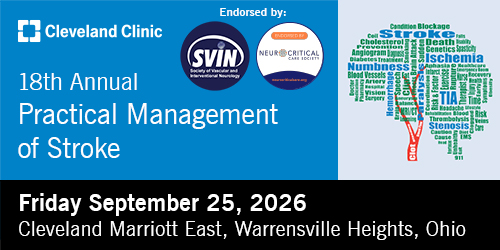
Cleveland Clinic 18th Annual Practical Management of Stroke 2026

$40.00
This Product is shared via google drive download link, So please share your correct Gmail id while placing the order .Please note that there are no CME points or certificate associated with this course Samples for Courses Can be found here : Free Samples Here!
Cleveland Clinic 18th Annual Practical Management of Stroke 2026
Acute Ischemic Stroke | Thrombolysis | Stroke Prevention | Neurorehabilitation | AHA/ASA Guidelines 2026
Target Audience
Neurologists, Vascular Neurologists, Stroke Specialists, Emergency Medicine Physicians, Neurosurgeons, Neurocritical Care Physicians, Primary Care Physicians, Internists, Rehabilitation Medicine Specialists, Physical Therapists, Occupational Therapists, Speech-Language Pathologists, Nurse Practitioners, Physician Assistants, Nurses, Residents, Fellows, and healthcare professionals involved in stroke diagnosis, treatment, prevention, and rehabilitation.
Information
Cleveland Clinic 18th Annual Practical Management of Stroke 2026 is a professional medical education symposium presented by Cleveland Clinic, focusing on current evidence, emerging therapies, and multidisciplinary strategies for improving stroke care.
Originally held on September 25, 2026, the symposium provides a comprehensive clinical review of stroke management across the patient care continuum, from emergency diagnosis and acute treatment to secondary prevention, rehabilitation, and long-term recovery.
Stroke medicine continues to evolve through advances in reperfusion therapy, clinical guidelines, vascular risk assessment, and rehabilitation strategies. These developments create opportunities to improve clinical decision-making, patient safety, and recovery outcomes.
The 2026 program explores extended-window thrombolysis, updated American Heart Association/American Stroke Association (AHA/ASA) guidelines, pediatric acute stroke, cancer-associated stroke, and newer approaches to preventing recurrent cerebrovascular events.
Additional sessions address Factor XIa inhibitors, lipoprotein testing, hospital readmissions, post-stroke aphasia, spasticity, occupational therapy, and coordinated stroke rehabilitation.
A major focus of the symposium is reducing disparities in stroke care and supporting equitable access to timely diagnosis, treatment, and recovery services.
Through expert-led educational sessions, clinical case discussions, and multidisciplinary perspectives, this program provides practical insights relevant to emergency departments, stroke units, intensive care settings, rehabilitation services, and outpatient neurology practice.
Product Details
| Information | Details |
|---|---|
| Course Title | Cleveland Clinic 18th Annual Practical Management of Stroke |
| Organizer | Cleveland Clinic |
| Edition | 18th Annual |
| Conference Date | September 25, 2026 |
| Primary Specialty | Neurology & Stroke Medicine |
| Additional Focus | Vascular Neurology, Emergency Medicine, Neurocritical Care & Stroke Rehabilitation |
| Educational Format | Medical Symposium, Lectures, Clinical Cases & Panel Discussions |
| Language | English |
| Educational Level | Professional Continuing Medical Education |
Digital Materials Notice: This description summarizes the original Cleveland Clinic symposium. The specific recordings and supporting materials included in the purchased package should be confirmed separately. Official conference registration, access to the Cleveland Clinic learning platform, live participation, CME credits, and certificates are not included unless expressly stated in the product listing.
Learning Objectives
Upon completion of this educational activity, participants should be better able to:
- Describe the clinical evidence supporting extended-window thrombolysis in acute ischemic stroke.
- Review the 2026 AHA/ASA recommendations for early management of acute ischemic stroke.
- Apply appropriate clinical considerations when evaluating and treating pediatric stroke.
- Recognize strategies for reducing recurrent stroke and preventable hospital readmissions.
- Review current evidence concerning the assessment and treatment of patients with cancer-associated stroke.
- Evaluate the clinical trial evidence surrounding Factor XIa inhibitors for secondary stroke prevention.
- Understand the potential role of lipoprotein testing in cerebrovascular risk assessment.
- Identify disparities in stroke care and examine approaches to improving equitable access to treatment.
- Strengthen recognition and diagnosis of acute stroke in emergency care settings.
- Review multidisciplinary rehabilitation strategies that support functional recovery.
- Understand emerging therapeutic approaches for post-stroke aphasia and spasticity.
- Apply patient-centered approaches to stroke survivorship and long-term care.
Core Educational Topics
Acute Ischemic Stroke Management
- Early recognition of acute ischemic stroke
- Extended-window thrombolysis
- Acute stroke treatment decisions
- Emergency neurological assessment
- Reperfusion treatment considerations
- Updated AHA/ASA guidelines
- Evidence-based stroke protocols
Pediatric Stroke
- Acute stroke in children
- Pediatric neurological assessment
- Clinical decision-making
- Pediatric stroke treatment considerations
- Age-specific management principles
Cancer-Associated Stroke
- Malignancy and thrombosis
- Cancer-associated cerebrovascular events
- Stroke risk in oncology patients
- Clinical assessment
- Treatment considerations
- Relevant AHA scientific recommendations
Secondary Stroke Prevention
- Stroke recurrence
- Risk factor modification
- Antithrombotic treatment research
- Factor XIa inhibitors
- Lipoprotein testing
- Cardiovascular risk reduction
- Long-term prevention strategies
Stroke Rehabilitation
- Functional recovery
- Occupational therapy
- Post-stroke aphasia
- Post-stroke spasticity
- Multidisciplinary rehabilitation
- Long-term disability management
- Stroke survivorship
Healthcare Quality and Stroke Readmissions
- Hospital readmissions after stroke
- Care transitions
- Discharge planning
- Multidisciplinary coordination
- Patient education
- Long-term follow-up
- Preventive strategies
Stroke Care Equity
- Disparities in stroke treatment
- Healthcare access
- Differences in stroke outcomes
- Patient-centered care
- Equitable healthcare delivery
- Quality improvement initiatives
Detailed Symposium Program
Friday, September 25, 2026
The following schedule preserves the original lecture titles, presentation times, moderators, and speakers from the supplied program.
Opening Session
6:45 AM – Continental Breakfast, Exhibits and Registration
7:10 AM – Opening Remarks
Speaker: Andrew Russman
Session I – Acute Stroke, Guidelines and Cancer-Associated Stroke
Moderators: Brent Sokola, Jonathan Solomonow, Gabor Toth
| Time | Lecture | Speaker |
|---|---|---|
| 7:15 AM | Beyond the Clock: Extended-Window Thrombolysis in Acute Stroke | Whitney Mayberry |
| 7:40 AM | Small Patients, High Stakes: Pediatric Acute Stroke Care Management | Kriti Bhayana |
| 8:05 AM | What’s New and Different? 2026 Guidelines for the Early Management of Acute Ischemic Stroke | Marco Gonzalez |
| 8:35 AM | When Malignancy Meets Thrombosis: Cancer and Stroke | Andrew Dhawan |
| 9:05 AM | Break / Exhibits | — |
| 9:25 AM | KEYNOTE: Taking Action to Reduce Disparities in Stroke Care | Bruce Ovbiagele |
Beyond the Clock: Extended-Window Thrombolysis in Acute Stroke
Speaker: Whitney Mayberry
Reviews evidence supporting extended-window thrombolysis and its clinical implications for acute ischemic stroke management.
Small Patients, High Stakes: Pediatric Acute Stroke Care Management
Speaker: Kriti Bhayana
Discusses diagnostic and treatment considerations for pediatric patients presenting with acute stroke.
What’s New and Different? 2026 Guidelines for the Early Management of Acute Ischemic Stroke
Speaker: Marco Gonzalez
Reviews important developments in the 2026 recommendations for acute ischemic stroke care.
When Malignancy Meets Thrombosis: Cancer and Stroke
Speaker: Andrew Dhawan
Examines clinical considerations in patients with malignancy-associated thrombotic and cerebrovascular disease.
Keynote: Taking Action to Reduce Disparities in Stroke Care
Speaker: Bruce Ovbiagele
Addresses disparities in stroke prevention, diagnosis, treatment, and outcomes, with an emphasis on improving equitable access to effective stroke care.
Session II – Hospital Readmissions and Stroke Survivorship
Moderators: Ana Botero, Andrew Russman
| Time | Lecture | Speaker |
|---|---|---|
| 10:15 AM | Why Stroke Patients Come Back to the Hospital and How to Prevent It | Rodica Di Lorenzo |
| 10:45 AM | Stroke Survivor Panel: Life After Stroke | David Vale (Moderator); Bryantt Green, Neale Mahon, Justin Robron |
| 11:45 AM | Lunch / Exhibits | — |
Why Stroke Patients Come Back to the Hospital and How to Prevent It
Speaker: Rodica Di Lorenzo
Reviews causes of hospital readmission following stroke and strategies that may support safer transitions and more effective follow-up care.
Stroke Survivor Panel: Life After Stroke
Moderator: David Vale
Panelists: Bryantt Green, Neale Mahon, Justin Robron
A patient-centered discussion of life after stroke, highlighting the perspectives and experiences of stroke survivors.
Session III – Stroke Rehabilitation and Vascular Risk Assessment
Moderators: Kathleen Chambers, Alex Cross, Lindsey Yingling
| Time | Lecture | Speaker |
|---|---|---|
| 12:15 PM | From ICU to Independence: The Role of OT Across the Stroke Care Continuum | Diandra Hesson, Mary O’Neill |
| 12:45 PM | Rethinking Language Recovery: Emerging Therapies in Post-Stroke Aphasia | Allison Morris |
| 1:15 PM | From Impairment to Function: Team-Based Care for Post-Stroke Spasticity | Francois Bethoux, Amanda Sperry |
| 1:45 PM | Risk Refined: Applying Lipoprotein Testing to Stroke Patient Management | Ashish Sarraju |
| 2:15 PM | Break / Exhibits | — |
From ICU to Independence: The Role of OT Across the Stroke Care Continuum
Speakers: Diandra Hesson and Mary O’Neill
Discusses the role of occupational therapy in supporting patients from acute stroke care through rehabilitation and functional recovery.
Rethinking Language Recovery: Emerging Therapies in Post-Stroke Aphasia
Speaker: Allison Morris
Explores emerging treatment approaches for language recovery following stroke.
From Impairment to Function: Team-Based Care for Post-Stroke Spasticity
Speakers: Francois Bethoux and Amanda Sperry
Reviews multidisciplinary approaches to post-stroke spasticity, functional limitations, and rehabilitation.
Risk Refined: Applying Lipoprotein Testing to Stroke Patient Management
Speaker: Ashish Sarraju
Discusses the role of lipoprotein testing in vascular risk assessment and its relevance to stroke prevention and management.
Session IV – Secondary Prevention and Emergency Stroke Care
Moderators: Maureen Buttrick, Maria Sokola
| Time | Lecture | Speaker |
|---|---|---|
| 2:35 PM | The Next Paradigm in Secondary Prevention: Factor XIa Inhibitors | Andrew Russman |
| 3:05 PM | Real Cases, Real Decisions: Learning from the ED Frontline | Steven Dorsey, Christopher Murphy, Amy Raubenolt |
| 4:00 PM | Adjourn | — |
The Next Paradigm in Secondary Prevention: Factor XIa Inhibitors
Speaker: Andrew Russman
Reviews clinical trial evidence and emerging therapeutic research concerning Factor XIa inhibitors in secondary stroke prevention.
Real Cases, Real Decisions: Learning from the ED Frontline
Speakers: Steven Dorsey, Christopher Murphy and Amy Raubenolt
A case-based educational session focusing on stroke recognition, emergency department assessment, and challenging clinical decisions.
Educational Highlights
- Cleveland Clinic Stroke Symposium 2026
- Acute Ischemic Stroke Management
- Extended-Window Thrombolysis
- AHA/ASA Stroke Guidelines 2026
- Pediatric Acute Stroke
- Cancer-Associated Stroke
- Stroke Prevention
- Factor XIa Inhibitors
- Lipoprotein Testing
- Stroke Rehabilitation
- Occupational Therapy After Stroke
- Post-Stroke Aphasia
- Post-Stroke Spasticity
- Stroke Readmission Prevention
- Stroke Survivor Care
- Emergency Stroke Assessment
- Clinical Stroke Cases
- Stroke Care Disparities
- Multidisciplinary Neurological Care
Clinical & Educational Value
Cleveland Clinic 18th Annual Practical Management of Stroke 2026 provides a multidisciplinary educational review of advances in stroke medicine and cerebrovascular care.
The symposium connects evidence-based acute treatment, updated clinical guidelines, secondary prevention, rehabilitation, and stroke survivorship.
Through presentations addressing thrombolysis, pediatric stroke, cancer-associated stroke, emerging anticoagulant research, and vascular risk assessment, the program reviews important developments relevant to modern stroke management.
Its rehabilitation-focused sessions highlight the roles of occupational therapy, language recovery, spasticity management, and coordinated care in supporting functional outcomes after stroke.
The program also addresses healthcare disparities and patient-centered approaches to improving stroke services.
This educational activity is particularly relevant to neurologists, emergency medicine physicians, neurocritical care specialists, rehabilitation professionals, and clinicians involved in stroke prevention and long-term follow-up.
Educational Notice: Educational recordings support continuing professional learning but do not replace current stroke guidelines, supervised clinical training, or independent medical judgment.
Related products
Internal Medicine

Pediatrics
Neurology / neurosurgery courses
2023 SANS Written Boards Review Course for neurological surgeons
Anesthesiology & pain medicine
Neurology / neurosurgery courses
Neurology / neurosurgery courses
Neurology / neurosurgery courses
Americas Committee for Treatment and Research in Multiple Sclerosis (ACTRIMS®) 2022 (Videos)
Anesthesiology & pain medicine