MedicalAmboss File Scope: MedicalAmboss File Scope: This listing describes the educational subject matter for reference. Provider registration, live attendance, streaming-platform access, CME or other credit, certificates, memberships, apps, accounts, and publisher-hosted extras are not included unless they are explicitly listed as store files. MedicalAmboss.
Cleveland Clinic 8th Annual Global EP Summit 2026
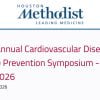
Cleveland Clinic 8th Annual Global EP Summit 2026 is an advanced cardiovascular electrophysiology educational program focused on contemporary arrhythmia management, catheter ablation, atrial fibrillation, ventricular arrhythmias, pacing technologies, stroke prevention, sudden cardiac death, and emerging innovations in clinical electrophysiology.
+ Target Audience
Physicians, fellows, residents, physician assistants, nurse practitioners, nurses, and all healthcare providers with an interest in electrophysiology.
The course is particularly relevant for:
- Cardiac Electrophysiologists
- Cardiologists
- Electrophysiology Fellows
- Cardiology Fellows
- Internal Medicine Residents
- Cardiac Surgeons
- Heart Failure Specialists
- Physician Assistants
- Nurse Practitioners
- Cardiovascular Nurses
- Allied Healthcare Professionals involved in arrhythmia care
+ Information
Join us for Cleveland Clinic’s Global EP Summit 2026.
Cleveland Clinic’s 8th Annual Global EP Summit 2026 is a two-day symposium dedicated to innovations in cardiac electrophysiology, including new devices, evolving ablation techniques, recent clinical trials, contemporary guidelines, and challenging clinical scenarios.
The program addresses major areas of modern electrophysiology, including catheter ablation, atrial fibrillation management, stroke prevention, ventricular arrhythmias, ventricular tachycardia ablation, pacing, lead management, sudden cardiac death, congenital heart disease, and emerging EP technologies.
The meeting is designed to provide attendees with a practical and comprehensive review of the current state of the art in electrophysiology while creating opportunities for interaction between faculty and participants.
Open discussions focus on arrhythmia management, difficult clinical decisions, current limitations, evolving technologies, and future directions in the field.
Cleveland Clinic’s Cardiac Electrophysiology and Pacing program provides specialized management for arrhythmias including atrial fibrillation and ventricular tachycardia and incorporates advanced mapping, ablation, pacing, defibrillator technologies, lead extraction, and remote monitoring.
Program Overview
The Global EP Summit 2026 brings together advanced concepts in cardiac electrophysiology with practical clinical decision-making.
Educational sessions emphasize contemporary and emerging approaches to:
- Atrial fibrillation
- Ventricular tachycardia
- Ventricular fibrillation
- Catheter ablation
- Pulsed field ablation
- Advanced cardiac imaging for ablation planning
- Stroke prevention
- Structural heart disease and ventricular arrhythmias
- Cardiac implantable electronic devices
- Physiologic pacing
- Lead management
- Sudden cardiac death
- Congenital heart disease
- Inherited arrhythmia syndromes
- Autonomic disorders
- Complex EP case management
The Global EP Summit series has historically emphasized fast-moving developments in atrial fibrillation ablation, ventricular arrhythmias, pacing and devices, innovation, and challenging clinical cases.
Learning Objectives
After completing this activity, participants will be able to:
- Evaluate and apply contemporary catheter ablation strategies for ventricular arrhythmias by incorporating pre-procedural MRI and CT for VT circuit identification, assessing the feasibility and outcomes of substrate-based VT ablation without VT induction, interpreting early clinical lessons from pulsed field ablation for ventricular arrhythmias, and selecting mapping and ablation approaches for challenging idiopathic ventricular arrhythmia sites and ventricular fibrillation triggers or substrate.
- Integrate and evaluate emerging evidence and new technologies for the prevention, detection, risk assessment, rhythm and rate management, and stroke prevention into the care of patients with atrial fibrillation.
- Assess candidacy for ventricular tachycardia ablation in high-risk patients, appraise the current and emerging roles of cardiac radio-ablation and cardiac sympathetic denervation for refractory VT/VF, and apply multidisciplinary clinical reasoning to complex ventricular arrhythmia cases to guide individualized management decisions.
- Apply an individualized approach to atrial fibrillation management by integrating evolving AF classification concepts, atrial myopathy assessment, heart failure and sleep apnea comorbidity considerations, obesity management strategies, and continuous monitoring data to inform the timing and selection of AF ablation.
- Discuss strategies to improve treatment outcomes in patients with ventricular arrhythmias and structural heart disease, including new ablation techniques and technologies.
- Evaluate diverse causes of sudden cardiac death across congenital heart disease, younger patient populations, and inherited channelopathies, and apply a systematic diagnostic approach to postural orthostatic tachycardia syndrome to improve risk assessment, differential diagnosis, and management planning.
Major Topics
Atrial Fibrillation
- Contemporary Atrial Fibrillation Management
- Atrial Fibrillation Classification
- Rhythm Control Strategies
- Rate Control Strategies
- Timing of AF Ablation
- Atrial Myopathy
- AF and Heart Failure
- AF and Sleep Apnea
- Obesity and Atrial Fibrillation
- Continuous Rhythm Monitoring
- Personalized AF Management
AF Catheter Ablation
- Catheter Ablation Strategies
- Contemporary AF Ablation Techniques
- Patient Selection for AF Ablation
- Mapping Technologies
- Emerging Ablation Technologies
- Pulsed Field Ablation
- Ablation Outcomes
- Complex AF Cases
Stroke Prevention in Atrial Fibrillation
- AF-Related Stroke Risk
- Risk Assessment
- Anticoagulation Strategies
- Left Atrial Appendage Management
- Left Atrial Appendage Occlusion
- Emerging Stroke Prevention Technologies
- Clinical Trial Evidence
Stroke prevention and left atrial appendage strategies have been recurring components of Cleveland Clinic’s Global EP Summit educational programming.
Ventricular Arrhythmias
- Ventricular Tachycardia
- Ventricular Fibrillation
- Idiopathic Ventricular Arrhythmias
- Structural Heart Disease
- VT Circuit Identification
- VT Substrate Mapping
- VT Ablation
- VF Triggers
- VF Substrate
- Difficult Ventricular Arrhythmia Sites
- Multidisciplinary VT Management
Advanced Ventricular Tachycardia Ablation
- Pre-Procedural MRI
- Pre-Procedural CT
- Imaging-Based VT Circuit Identification
- Substrate-Based VT Ablation
- VT Ablation Without VT Induction
- Mapping Strategies
- Advanced Ablation Technologies
- Pulsed Field Ablation for Ventricular Arrhythmias
- High-Risk VT Ablation Candidates
Refractory VT/VF
- Complex Ventricular Tachycardia
- Refractory Ventricular Fibrillation
- Cardiac Radio-Ablation
- Cardiac Sympathetic Denervation
- Multidisciplinary Decision-Making
- Individualized Management Strategies
Cardiac Pacing and Devices
- Contemporary Cardiac Pacing
- Physiologic Pacing
- New Pacing Technologies
- Cardiac Implantable Electronic Devices
- Pacemaker Management
- Implantable Cardioverter-Defibrillators
- Device Monitoring
- Lead Management
- Lead Extraction
- Device-Related Clinical Challenges
Cleveland Clinic’s electrophysiology program includes advanced pacemaker and ICD therapy, lead extraction, mapping, ablation, and device monitoring.
Sudden Cardiac Death
- Sudden Cardiac Death Risk Assessment
- Sudden Cardiac Death in Younger Patients
- Congenital Heart Disease
- Inherited Arrhythmia Syndromes
- Channelopathies
- Ventricular Arrhythmia Risk
- Diagnostic Evaluation
- Prevention Strategies
Autonomic Disorders
- Postural Orthostatic Tachycardia Syndrome
- POTS Evaluation
- Differential Diagnosis of POTS
- Diagnostic Approach
- Risk Assessment
- Management Planning
- Autonomic Dysfunction and Electrophysiology
Advanced Imaging in Electrophysiology
- Cardiac MRI
- Cardiac CT
- VT Substrate Identification
- Scar Assessment
- Ablation Planning
- Image-Guided Electrophysiology
- Integration of Imaging and Electroanatomic Mapping
Emerging Technologies and Innovation
- Pulsed Field Ablation
- Novel Energy Sources
- Advanced Mapping Technologies
- Emerging EP Devices
- Continuous Rhythm Monitoring
- Personalized Electrophysiology
- New Clinical Trial Evidence
- Future Directions in Arrhythmia Management
Previous Cleveland Clinic Global EP Summit programs have similarly highlighted pulsed field ablation, new energy sources, advanced mapping, artificial intelligence, device technologies, and evolving approaches to complex arrhythmia management.
Who Should Attend?
The course is directed to:
- Physicians
- Fellows
- Residents
- Physician Assistants
- Nurse Practitioners
- Nurses
- Healthcare providers with an interest in electrophysiology
It is particularly suitable for clinicians involved in the diagnosis and management of:
- Atrial fibrillation
- Ventricular tachycardia
- Ventricular fibrillation
- Supraventricular arrhythmias
- Sudden cardiac death
- Cardiac pacing
- Cardiac implantable electronic devices
- Catheter ablation
- Complex rhythm disorders
Why This Course Is Relevant
Cardiac electrophysiology continues to evolve rapidly with advances in ablation technology, cardiac imaging, mapping systems, pacing, stroke prevention, monitoring technologies, and treatment of complex ventricular arrhythmias.
The Cleveland Clinic 8th Annual Global EP Summit 2026 provides clinicians with an opportunity to review these developments within a practical framework focused on real-world arrhythmia management.
The course is especially relevant for electrophysiologists and cardiovascular clinicians seeking updates on atrial fibrillation ablation, ventricular tachycardia ablation, pulsed field ablation, stroke prevention, pacing technologies, lead management, sudden cardiac death, and complex EP decision-making.
Short Description
Cleveland Clinic 8th Annual Global EP Summit 2026 provides advanced education in cardiac electrophysiology, including atrial fibrillation, AF ablation, ventricular tachycardia, ventricular arrhythmia ablation, pulsed field ablation, stroke prevention, cardiac pacing, lead management, sudden cardiac death, inherited arrhythmias, and emerging EP technologies.
+ Topics:
Friday, September 18
|
|
|
7:00 AM
|
Registration & Breakfast |
|
7:30 AM
|
Welcome and Announcements Oussama Wazni, MD, MBA |
|
7:35 AM
|
Heart Rhythm Society Update Sana Al-Khatib, MD |
|
7:45 AM
|
Top EP Publications in 2026 and What to Look for in 2027 Kalyanam Shivkumar, MD, PhD |
Session 1 – Ventricular Arrhythmia Ablation
|
|
|
8:00 AM
|
Identification of VT Circuit with Pre-Procedural Cardiac Imaging (MRI and CT) Jeffrey Winterfield, MD |
|
8:10 AM
|
Substrate-Based VT Ablation with No VT Induction: Feasibility and Outcomes Andre D’Avila, MD |
|
8:20 AM
|
Early US Clinical Experience with PFA for Ventricular Arrhythmias – Lessons Learned Pasquale Santangeli, MD, PhD |
|
8:30 AM
|
Mapping and Ablation of Challenging Idiopathic Ventricular Arrhythmia Locations: Intracavitary Structures, Para-Hisian Locations, Epicardial Koji Higuchi, MD, PhD |
|
8:40 AM
|
Ablation of Ventricular Fibrillation – Ablation of Trigger or Ablation of Substrate Jakub Sroubek, MD, PhD |
|
8:50 AM
|
Panel Discussion/Q&A Session Faculty |
|
9:10 AM
|
Break |
Part 2: Bailout Strategies for Refractory Cases
|
|
|
9:20 AM
|
When to Say No to VT Ablation? Identifying the Highest Risk Patient Jakub Sroubek, MD, PhD |
|
9:30 AM
|
Cardiac Radioablation for Refractory VT – The Cleveland Clinic Experience Justin Lee, MD |
|
9:40 AM
|
Cardiac Sympathetic Denervation for VT/VF – Current Role and Future Directions Olujimi Ajijola, MD, PhD |
|
9:50 AM
|
CCF Fellow Presents Challenging VT Case and Panel Discussion Panelists: Olujimi Ajijola, MD, PhD, Roy Chung, MD, Andre D’Avila, MD, Koji Higuchi, MD, PhD, Justin Lee, MD, Pasquale Santangeli, MD, PhD, Jeffrey Winterfield, MD |
|
10:00 AM
|
Panel Discussion/Q&A Session Faculty |
|
10:20 AM
|
Break |
Session 2 – Clinical AF Management
|
|
|
10:30 AM
|
It is time to Change AF Classification System Nassir Marrouche, MD |
|
10:40 AM
|
Understanding Atrial Myopathy: A Personalized Approach to AF Ablation Nazem Akoum, MD, MS |
|
10:50 AM
|
AF Ablation in Advanced Heart Failure Philipp Sommer, MD |
|
11:00 AM
|
Sleep Apnea and AF, VT, CHF Michael Faulx, MD |
|
11:10 AM
|
AF in Obesity? Why Can’t I Use Ozempic? Leslie Cho, MD |
|
11:20 AM
|
Update on Castle II Study Nassir Marrouche, MD |
|
11:30 AM
|
How Early Should We Ablate AF, Insights from Continuous Monitoring Jason Andrade, MD |
|
11:40 AM
|
First Line Ablation for Persistent AF Oussama Wazni, MD, MBA |
|
11:50 AM
|
Panel Discussion/Q&A Session Faculty |
|
12:10 PM
|
Lunch & Optional Non-CME Satellites |
Session 3 – Stroke Prevention
|
|
|
1:10 PM
|
AF Screening: Who, When and How? Abbas Kharal, MD, MPH |
|
1:20 PM
|
Personalized and Targeted Stroke Prevention Shazam Hussain, MD |
|
1:30 PM
|
Future Directions in Stroke Prevention: Surgical, Catheter based, Adjunctive OAC and LAAO Jeff Healey, MD |
|
1:40 PM
|
ICE Guided Combined AF Ablation + LAAO Frank Cuoco, MD |
|
1:50 PM
|
Welcome to the Real World of LAA Closure: Challenges and Triumphs Walid Saliba, MD |
|
2:00 PM
|
Reverse Option Chenyang Jiang, MD |
|
2:10 PM
|
New Devices: LAAO Devices Devi Nair, MD |
|
2:20 PM
|
Panel Discussion/Q&A Session Faculty |
Session 4 – Hot Topics in AF Ablation
|
|
|
2:40 PM
|
New PFA Catheters (Sphere 360, Faraflex, Volt, etc.) DJ Lakkireddy, MD |
|
2:50 PM
|
Lesion Prediction in PFA Hiroshi Nakagawa, MD, PhD |
|
3:00 PM
|
Novel Large Footprint PFA Catheters: Early Experience Ante Anic, MD |
|
3:10 PM
|
Update on Clinical Outcomes with PFA of Atrial Arrhythmias: Clinical Trials and Real-World Data Moussa Mansour, MD |
|
3:20 PM
|
Atypical Atrial Flutters (AFL) Ablation: Impact of PFA Ayman Hussein, MD |
|
3:30 PM
|
Panel Discussion/Q&A Session Faculty |
|
3:50 PM
|
Break |
Session 5 – Mapping in AF
|
|
|
4:00 PM
|
Maximizing Success for Persistent AF Ablation: Empiric Ablation or Mapping Andrea Natale, MD |
|
4:10 PM
|
Mapping of AF: Is it Needed? Why and When? Mandeep Bhargava, MD |
|
4:20 PM
|
Cortex (Overview Tech and Case Presentation) Vivek Reddy, MD |
|
4:30 PM
|
Carto Finder Luigi DiBiase, MD, PhD |
|
4:40 PM
|
vMap in Clinical Practice: Technology Overview and Use Cases Devi Nair, MD |
|
4:50 PM
|
Panel Discussion/Q&A Session Faculty |
Session 6 – THE GREAT DEBATE
|
|
|
5:10 PM
|
OCEAN! No Need for Anything Atul Verma, MD |
|
5:20 PM
|
OPTION! Close it and Forget About it Vivek Reddy, MD |
|
5:30 PM
|
Rebuttals Atul Verma, MD and Vivek Reddy, MD |
|
5:50 PM
|
Day 1 Adjourn |
Saturday, September 19
|
|
|
7:30 AM
|
Registration & Breakfast |
Session 7 – New Frontiers in Pacing and Lead Management
|
|
|
8:00 AM
|
Conduction System Pacing Parikshit Sharma, MD |
|
8:10 AM
|
Our Experience with Leadless Device Management Thomas Callahan, MD |
|
8:20 AM
|
Avoiding Extraction Catastrophes Arshneel Kochar, MD |
|
8:30 AM
|
New Tools and Approaches in Lead Extraction David Martin, MD, MPH |
|
8:40 AM
|
Surgical Backup Shinya Unai, MD |
|
8:50AM
|
Panel Discussion/Q&A Session Faculty |
|
9:10 AM
|
Break |
Session 8 – Sudden Cardiac Death and CHD
|
|
|
9:20 AM
|
Tackling the SCA Challenge Mina Chung, MD |
|
9:30 AM
|
Sudden Cardiac Death in the Young Iqbal El-Assaad, MD |
|
9:40 AM
|
Inherited Channelopathies Jeff Courson, DO |
|
9:50 AM
|
A Systematic Approach to POTS Kenneth Mayuga, MD |
|
10:00 AM
|
Panel Discussion/Q&A Session Faculty |
Session 9 – Advances in EP
|
|
|
10:20 AM
|
Ablate First or Clip the MV First? Samir Kapadia, MD |
|
10:30 AM
|
Our PFA Experience Tyler Taigen, MD |
|
10:40 AM
|
Artificial Intelligence and Sudden Cardiac Death Justin Lee, MD |
|
10:50 AM
|
Updates from Our Preclinical Work Arwa Younis, MD |
|
11:00 AM
|
Clinical Outcomes PFA+ LAAO Chadi Tabaja, MD |
|
11:10 AM
|
MRI and EP Chris Nguyen, PhD |
|
11:20 AM
|
Panel Discussion/Q&A Session Faculty |
|
11:40 AM
|
Lunch & Optional Non-CME Satellites |
Session 10 – Cleveland Clinic EP in Action
|
|
|
12:40 PM
|
VT Ablation in Patients with Aortic and Mitral Mechanical Valves Pasquale Santangeli, MD, PhD |
|
12:50 PM
|
Tough Case of Combined AF Ablation and LAA Closure Mohamed Kanj, MD |
|
1:00 PM
|
Redo Redo AF Ablation Ayman Hussein, MD |
|
1:10 PM
|
Redo Redo AFL Ablation Walid Saliba, MD |
|
1:20 PM
|
Panel Discussion/Q&A Session Faculty |
|
1:40 PM
|
Adjourn |
Fellows Program 1:50-5:05 PM (ALL CASE BASED)
|
|
| AF Ablation/ LAA Closure | |
|
1:50-2:05 PM
|
Lesion Prediction in PFA Arwa Younis, MD |
|
2:05-2:20 PM
|
Principles of AFL Mapping and Ablation Mandeep Bhargava, MD |
|
2:20-2:35 PM
|
Maximizing Success in LAA Closure Mohamed Kanj, MD |
|
2:35-2:50 PM
|
Break and Open Discussion |
| VT Ablation | |
|
2:50-3:05 PM
|
VT Ablation in Ischemic Cardiomyopathy Pasquale Santangeli, MD, PhD |
|
3:05-3:20 PM
|
VT Ablation in Non-Ischemic Cardiomyopathy Jakub Sroubek, MD, PhD |
|
3:20-3:35 PM
|
Break and Open Discussion |
| Device Management |
|
|
3:35-3:50 PM
|
Maximizing Physiologic Pacing Success Parikshit Sharma, MD |
|
3:50-4:05 PM
|
Maximizing Extraction Success Tom Callahan, MD |
| Arrhythmia Mechanisms | |
|
4:05-5:05 PM
|
Quiz on Kahoot? Walid Saliba, MD, Mandeep Bhargava, MD and Bryan Baranowski, MD |
Related Medical Resources
Explore these related medical resources for additional study and clinical reference: