
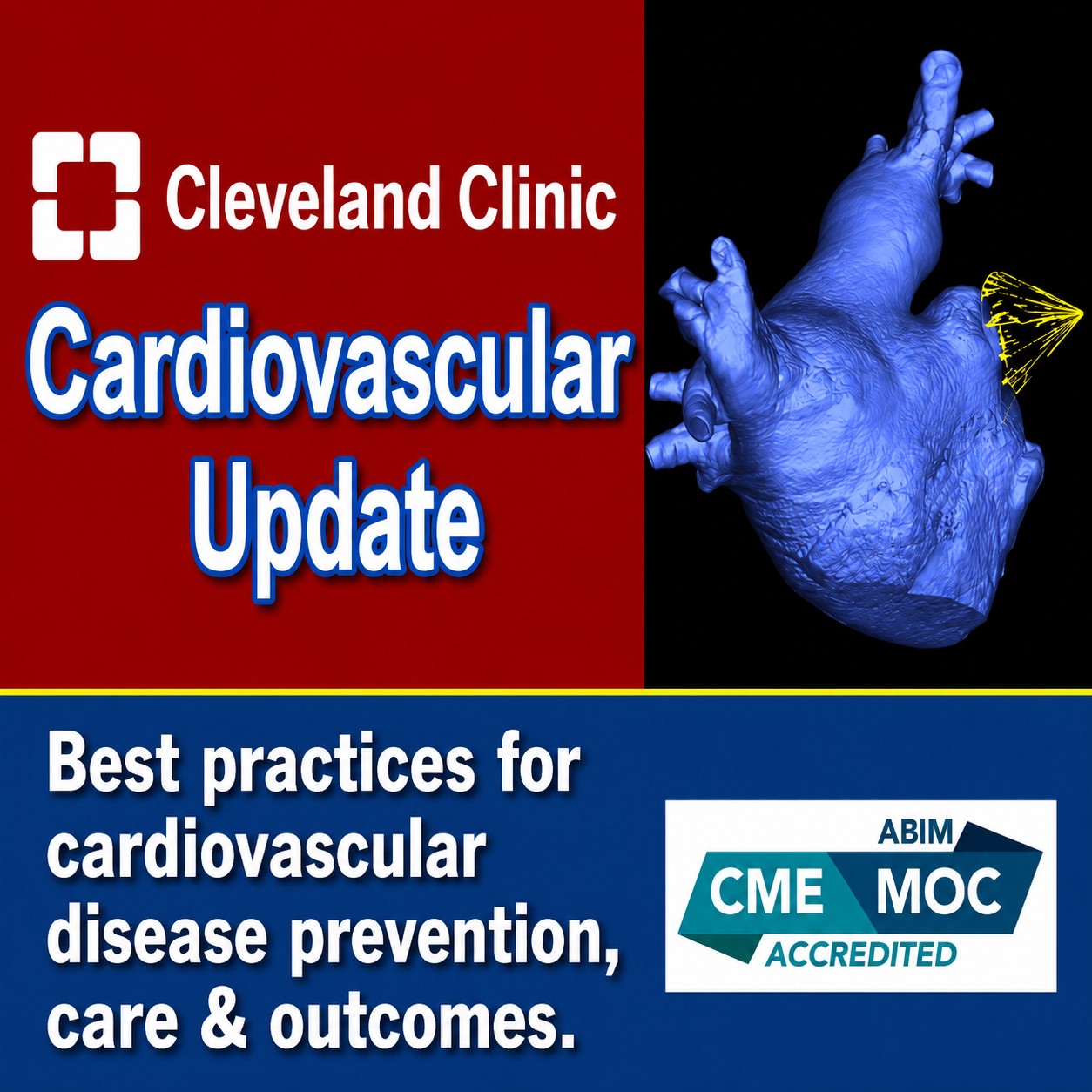
Cleveland Clinic Cardiovascular Update 2025

Original price was: $495.00.$25.00Current price is: $25.00.
This Product is shared via google drive download link, So please share your correct Gmail id while placing the order .Please note that there are no CME points or certificate associated with this course Samples for Courses Can be found here : Free Samples Here!
50 videos, size: 3.86 GB
Cleveland Clinic Cardiovascular Update 2025 (Videos + PDFs)
Comprehensive Cardiovascular Medicine Update, Board Review & Clinical Practice Enhancement
Cleveland Clinic Cardiovascular Update 2025 is a premier cardiovascular CME and board-review program designed to provide clinicians with the latest evidence-based advances in cardiology, preventive cardiovascular medicine, structural heart disease, cardiac imaging, electrophysiology, heart failure, vascular medicine, and interventional cardiology.
Developed by internationally recognized experts from the renowned Cleveland Clinic Heart, Vascular & Thoracic Institute, this comprehensive educational program delivers practical clinical insights, guideline updates, and cutting-edge cardiovascular management strategies applicable to both everyday practice and board examination preparation.
Featuring expert-led lectures, case-based discussions, and evidence-based reviews, the course helps participants stay current with rapidly evolving cardiovascular therapies, technologies, and diagnostic approaches while improving patient outcomes through contemporary cardiovascular care.
Course Overview
Cardiovascular medicine continues to experience significant advances in diagnostic imaging, pharmacologic therapies, structural heart interventions, heart failure management, electrophysiology, and preventive cardiology.
Cleveland Clinic Cardiovascular Update 2025 provides a comprehensive review of modern cardiovascular medicine, integrating the latest clinical trial evidence, guideline recommendations, and practical treatment strategies into a clinically focused educational experience.
Participants gain valuable knowledge on coronary artery disease, heart failure, atrial fibrillation, valvular heart disease, hypertension, lipid management, vascular disorders, cardiac imaging, and emerging cardiovascular technologies while strengthening board-relevant knowledge and clinical decision-making skills.
Learning Objectives
Upon completion of this activity, participants will be able to:
- Apply contemporary cardiovascular guidelines in daily clinical practice.
- Interpret current evidence from major cardiovascular clinical trials.
- Develop evidence-based treatment strategies for common and complex cardiovascular diseases.
- Evaluate patients using modern cardiac imaging techniques.
- Optimize management of coronary artery disease and acute coronary syndromes.
- Incorporate new therapies for heart failure and cardiometabolic disease.
- Apply current recommendations for atrial fibrillation and arrhythmia management.
- Assess and manage valvular and structural heart disease.
- Implement preventive cardiology and cardiovascular risk reduction strategies.
- Strengthen preparation for cardiovascular board certification and recertification examinations.
Major Topics Covered
Coronary Artery Disease (CAD)
Contemporary Management of Ischemic Heart Disease
- Stable coronary artery disease
- Acute coronary syndromes
- PCI versus CABG decision-making
- Chronic total occlusion interventions
- Coronary physiology assessment
Clinical Applications
- Risk stratification
- Secondary prevention
- Antiplatelet therapy
- Revascularization strategies
Heart Failure
Modern Heart Failure Management
- HFrEF
- HFpEF
- Acute heart failure syndromes
- Advanced heart failure therapies
- Mechanical circulatory support
Emerging Therapies
- SGLT2 inhibitors
- ARNI therapy
- Novel heart failure medications
- Cardiac contractility modulation
Preventive Cardiology
Cardiovascular Risk Reduction
- Lipid management
- Hypertension control
- Obesity treatment
- Cardiometabolic disease prevention
- Lifestyle medicine
Advanced Prevention
- Lipoprotein(a)
- PCSK9 inhibitors
- Coronary calcium scoring
- Personalized risk assessment
Cardiac Electrophysiology
Arrhythmia Management
- Atrial fibrillation
- Supraventricular tachycardias
- Ventricular arrhythmias
- Sudden cardiac death prevention
Device Therapy
- Pacemakers
- ICDs
- Cardiac resynchronization therapy
- Conduction system pacing
Valvular & Structural Heart Disease
Valvular Disorders
- Aortic stenosis
- Mitral regurgitation
- Tricuspid valve disease
- Multivalve pathology
Structural Interventions
- TAVR
- MitraClip
- TMVR
- Left atrial appendage occlusion
Cardiac Imaging
Echocardiography
- Advanced echocardiographic assessment
- Structural heart imaging
- Valvular disease evaluation
Multimodality Imaging
- Cardiac CT
- Cardiac MRI
- Nuclear cardiology
- PET imaging
Clinical Integration
- Coronary disease diagnosis
- Cardiomyopathy evaluation
- Procedural planning
Hypertension
Contemporary Hypertension Management
- Resistant hypertension
- Secondary hypertension
- Guideline-directed treatment
- Blood pressure optimization
Vascular Medicine
Peripheral Vascular Disease
- Peripheral arterial disease
- Carotid artery disease
- Aortic disease
- Venous thromboembolism
Vascular Prevention
- Risk factor modification
- Medical therapy
- Endovascular treatment strategies
Cardiomyopathies
Cardiomyopathy Evaluation & Treatment
- Hypertrophic cardiomyopathy
- Dilated cardiomyopathy
- Restrictive cardiomyopathy
- Cardiac amyloidosis
Advanced Topics
- Genetic cardiomyopathies
- Infiltrative heart disease
- Emerging therapies
Cardiometabolic Medicine
Obesity & Diabetes Management
- GLP-1 receptor agonists
- Weight reduction strategies
- Diabetes and cardiovascular disease
- Cardiometabolic risk reduction
Emerging Cardiovascular Innovations
Future of Cardiovascular Care
- Artificial intelligence in cardiology
- Precision cardiovascular medicine
- Digital health technologies
- Novel cardiovascular therapeutics
Educational Features
✔ Cleveland Clinic Heart & Vascular Institute faculty
✔ Comprehensive cardiovascular review
✔ Evidence-based guideline updates
✔ Case-based learning
✔ Board-focused cardiovascular content
✔ Multidisciplinary cardiovascular education
✔ Practical patient management strategies
✔ Advanced imaging interpretation
✔ Preventive cardiology updates
✔ Contemporary structural heart disease education
Who Should Attend?
This program is ideal for:
- Cardiologists
- Cardiology Fellows
- Internal Medicine Physicians
- Interventional Cardiologists
- Electrophysiologists
- Heart Failure Specialists
- Preventive Cardiologists
- Vascular Medicine Specialists
- Advanced Practice Providers
- Physician Assistants
- Nurse Practitioners
- Residents preparing for cardiology fellowship
- Physicians preparing for cardiovascular board examinations
Why This Course Stands Out
✔ Developed by one of the world’s leading cardiovascular centers
✔ Comprehensive review of modern cardiology
✔ Strong focus on practical clinical application
✔ Integrates guidelines, trials, and real-world management
✔ Covers preventive, diagnostic, and interventional cardiology
✔ Excellent resource for CME and board preparation
✔ Includes emerging therapies and future cardiovascular trends
✔ Suitable for both trainees and experienced clinicians
Cardiovascular Update
| Session 1: Prevention and Management of Cardiovascular Risk, Part 1 | |
| Tools in CVD Prevention and Risk Management: To Test or Not to Test? Lp(a),apoB, Non HDL-C | Dennis Bruemmer, MD, PhD |
| Statin Initiation for Primary Prevention Among Statin Naïve Adults and Reasons for Nonadherence | Vikas Sunder, MD |
| When Statins Are Not Enough – Non-statin Lipid Lowering Therapies to Manage Residual Risk | Ashish Sarraju, MD |
| Managing Anti-Hyperglycemic and CV Risk Reduction Agents in Patients With Diabetes: SGLT2i or GLP1RA or Both? | Dennis Bruemmer, MD, PhD |
| Weight Loss Pharmacotherapy: Utilizing Current Therapies and Exploring the Next Generation of Weight Loss Medications | Steve Nissen, MD |
| Keto, Low Carb, Plant Based, IF: Controversies in the Evidence for the “Best “Diet: What is the Evidence and How to Apply in Clinical Practice | Julia Zumpano, RD, LD |
| Old and Evolving Strategies for Treatment-Resistant Hypertension | Luke Laffin, MD |
| Social Determinants of Health and Cardiovascular Disease: Current State and Future Directions | Lee Kirksey, MD |
| Panel Discussion/Q&A | Session Faculty |
| Session 2: Prevention and Management of Cardiovascular Risk, Part 2 | |
| Hormone Therapy and Heart Health: Debunking Myths, Embracing Evidence | Luke Laffin, MD |
| The Intersection of Cardiovascular Disease and Chronic Kidney Disease: Strategies for Reducing Cardiovascular Risk | Crystal Gadegbeku, MD |
| Who Should Get a CAC? How Often? How to Use the Results to Assess Risk? | Milind Desai, MD |
| Management of CV Issues in the Elderly: Geriatric Cardiology | Ardeshir Hashmi, MD |
| Population Health Management: Interventions to Control Cardiovascular Disease Risk Factors: Current Status | LeRoi Hicks, MD |
| Panel Discussion/Q&A | Session Faculty |
| Session 3: Special Populations | |
| Cardiac Disease Remains the Leading Cause of Mortality in Women: What are we Doing to Address This? | Vikas Sunder, MD |
| Cardiovascular Disease and Pregnancy: Optimizing Maternal and Fetal Health | Deirdre Mattina, MD |
| Competitive Sports Participation in Athletes with Heart Disease: Evaluation and Management | Tamanna Singh, MD |
| Cardio-oncology: Optimizing the Balance Between Cancer Outcomes and Cardiac Success | Patrick Collier, MD, PhD |
| Panel Discussion/Q&A | Session Faculty |
| Session 4: Essentials of Cardiovascular Disease | |
| Role of Advanced Imaging for Ischemic Heart Disease: CT, CMR, Nuclear and Advanced Echocardiography | Saberio Lo Presti Vega, MD |
| Creating a Pathway for the Management of Stable Angina in Your Clinic: Structured Risk Assessment and Clinical Decision Making | Ben Alencherry, MD |
| ANOCA, INOCA, MINOCA: What Does It All Mean? Diagnostic Testing and Therapeutic Management | Khalid Ziada, MD |
| How Do I Manage my Post MI Patient (Including DAPT Guidelines/Duration/CardiacRehab) | Venu Menon, MD |
| Cardiac Rehab: Why it is Critical and How Can We Improve Access and Compliance? | Erik Van Iterson, PhD, MS |
| Peripheral Artery Disease: Assessment and Clinical Decision Making | Lee Kirksey, MD |
| Panel Discussion/Q&A | Session Faculty |
| Session 5: Structural Heart Disease | |
| Aortic Stenosis: Diagnosis and Management in the Modern Era | Samir Kapadia, MD |
| MR: How to Diagnose and Manage Mitral Valve Disease: When to Refer? What are the Options | L. Leonardo Rodriguez, MD |
| What to Know About the Natural History of Tricuspid Regurgitation: Current and Future Management Strategies | Amar Krishnaswamy, MD |
| Bicuspid and Aneurysm-Associated Aortic Valve Disease: Timing of Intervention and the Role of Family Screening | Milind Desai, MD |
| Guidelines for Anticoagulation Following Structural Heart Therapies | Grant Reed, MD, MSc |
| Hypertrophic Cardiomyopathy: Co-management in the Era of Emerging Precision Therapies | Milind Desai, MD |
| Panel Discussion/Q&A | Session Faculty |
| Session 6: Heart Failure | |
| Heart Failure Stages, Phenotypes and Diagnosis and How to Screen for HF in the Primary Care Setting | Randall Starling, MD |
| HFrEF: Essentials of Guideline Directed Medical Therapy Initiation and Titration | Amanda Vest, MBBS |
| Managing Comorbidities in HF: Frailty, Anemia, Sleep Apnea, AF, Obesity | Karlee Hoffman, DO |
| Essentials of Diagnosis and Management for HFpEF | Sanjeeb Bhattacharya, MD |
| Diagnosis and Management of Transthyretin Amyloid Cardiomyopathy (ATTR-CM) | Mazen Hanna, MD |
| Strategies to Enhance GDMT Implementation and Adherence | M. Trejeeve Martyn, MD |
| Managing Long Term LVADs and Transplant Recipients in the Community Setting | Ike Okwuosa, MD |
| The Importance of Collaboration Between EP and HF: CRT and Novel Pacing | Niraj Varma, MD, PhD |
| Panel Discussion/Q&A | Session Faculty |
| Session 7: Heart Rhythm | |
| Diagnosis and Management of New-Onset Atrial Fibrillation | Mohamed Kanj, MD |
| AF and Left Atrial Appendage Closure: Current and Future Directions | Mohamed Kanj, MD |
| What I Need to Know to Evaluate and Manage the Patient With PVCs and SVT | Pasquale Santangeli, MD, PhD |
| Evaluation and Management of Syncope in the Young Adult | Kenneth Mayuga, MD |
| Follow-Up of Pacemakers and ICDs For the Non-Electrophysiologist | Kevin F. Kwaku, MD, PhD |
| Wearables for Arrhythmia Care: Current Challenges and Future Prospects | Niraj Varma, MD, PhD |
| Panel Discussion/Q&A | Session Faculty |
End
Related products

Critical Care - Emergency medicine

Medical Accounts

Internal Medicine
Medical Accounts

Critical Care - Emergency medicine

USMLE / kaplan and Board Review
Uworld USMLE COMLEX Level 1 Qbank, Updated Jan 2023, System- and Subject-wise (PDF)

Family medicine
Critical Care - Emergency medicine