
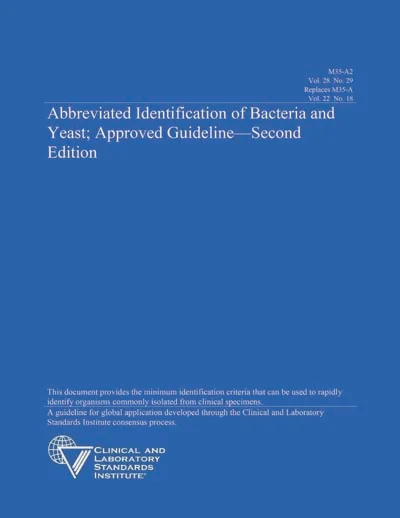
CLSI M35-A2 Abbreviated Identification of Bacteria and Yeast; Approved Guideline, 2nd edition (Original PDF from Publisher)


Original price was: $207.00.$15.00Current price is: $15.00.
Samples for Courses Can be found here : Free Samples Here!
This Product is shared via google drive download link, So please share your correct Gmail id while placing the order .Please note that there are no CME points or certificate associated with this course
CLSI M35-A2 – Abbreviated Identification of Bacteria and Yeast, Second Edition (Volume 22, No. 18)
Rapid Identification of Clinically Important Bacteria & Yeast Using Minimum Laboratory Identification Criteria
Improve the speed and accuracy of microbiology laboratory workflow with CLSI M35-A2 – Abbreviated Identification of Bacteria and Yeast, Second Edition, an essential laboratory guideline published by the Clinical and Laboratory Standards Institute (CLSI).
Developed by internationally recognized experts in clinical microbiology and laboratory medicine, this reference provides the minimum identification criteria required for the rapid identification of commonly encountered bacterial and yeast isolates from clinical specimens. By utilizing characteristic morphologic and biochemical features obtainable shortly after pure colony isolation, laboratories can confidently identify many clinically significant organisms while reducing unnecessary confirmatory testing and accelerating patient care.
This evidence-based guideline supports standardized laboratory practices, improved workflow efficiency, and timely microbiological diagnosis without compromising clinical relevance.
Product Details
- Title: CLSI M35-A2 – Abbreviated Identification of Bacteria and Yeast, Second Edition
- Publisher: Clinical and Laboratory Standards Institute (CLSI)
- Document Number: M35-A2
- Volume: 22
- Issue: No. 18
- Edition: Second Edition
- Format: PDF
- Language: English
About This Guideline
Many microorganisms routinely isolated from clinical specimens possess distinctive morphologic and biochemical characteristics that permit reliable identification shortly after colony growth. When these rapidly obtained laboratory findings provide sufficient diagnostic confidence, laboratories can minimize the need for additional time-consuming confirmatory testing, thereby improving turnaround time and facilitating earlier clinical decision-making.
CLSI M35-A2 establishes standardized abbreviated identification criteria for selected bacteria and yeast commonly recovered from patient specimens. The guideline outlines situations in which rapid identification is appropriate, discusses recognized limitations, and describes circumstances where additional confirmation may or may not be clinically necessary.
This publication serves as a practical laboratory resource for microbiologists seeking efficient, standardized identification protocols while maintaining high-quality diagnostic performance.
What You’ll Learn
After reviewing this guideline, readers will be able to:
- Apply abbreviated identification criteria for commonly isolated bacteria and yeast.
- Utilize rapid morphologic and biochemical characteristics for organism identification.
- Recognize situations in which abbreviated identification is clinically appropriate.
- Understand the limitations and potential pitfalls of rapid identification methods.
- Improve laboratory turnaround times while maintaining diagnostic reliability.
- Determine when confirmatory identification testing is warranted.
- Standardize organism identification according to CLSI recommendations.
Comprehensive Topics Covered
Rapid Microbial Identification
Develop efficient identification strategies.
Topics include:
- Rapid identification
- Clinical microbiology
- Laboratory diagnosis
- Abbreviated identification
- Diagnostic workflow
- Laboratory efficiency
- Clinical decision-making
Bacterial Identification
Strengthen routine bacterial identification.
Topics include:
- Gram-positive bacteria
- Gram-negative bacteria
- Colony morphology
- Biochemical testing
- Diagnostic characteristics
- Clinical isolates
- Laboratory interpretation
Yeast Identification
Improve rapid fungal diagnostics.
Topics include:
- Yeast identification
- Clinical mycology
- Candida species
- Morphologic characteristics
- Biochemical reactions
- Laboratory diagnosis
- Clinical relevance
Morphologic Identification
Recognize key laboratory findings.
Topics include:
- Colony morphology
- Microscopic morphology
- Gram stain interpretation
- Cellular characteristics
- Morphologic differentiation
- Preliminary identification
- Diagnostic features
Biochemical Identification
Utilize rapid laboratory testing.
Topics include:
- Biochemical reactions
- Catalase testing
- Oxidase testing
- Enzyme reactions
- Rapid biochemical assays
- Identification algorithms
- Laboratory protocols
Laboratory Workflow Optimization
Improve microbiology laboratory performance.
Topics include:
- Workflow efficiency
- Turnaround time
- Diagnostic accuracy
- Standard operating procedures
- Laboratory quality
- Clinical microbiology workflow
- Resource utilization
Diagnostic Limitations
Understand appropriate test interpretation.
Topics include:
- Diagnostic limitations
- False identification
- Confirmatory testing
- Quality assurance
- Interpretation pitfalls
- Clinical significance
- Laboratory judgment
Standardized Laboratory Practice
Apply CLSI recommendations consistently.
Topics include:
- CLSI standards
- Laboratory standardization
- Best practices
- Evidence-based protocols
- Quality management
- Clinical laboratory standards
- Diagnostic consistency
Key Educational Benefits
This guideline helps laboratories:
- Perform faster organism identification.
- Reduce unnecessary confirmatory testing.
- Improve microbiology laboratory efficiency.
- Standardize abbreviated identification protocols.
- Support timely patient management.
- Enhance diagnostic consistency across laboratories.
- Apply evidence-based microbiology practices.
Educational Highlights
- Clinical Microbiology
- Bacterial Identification
- Yeast Identification
- Rapid Identification
- Colony Morphology
- Gram Stain
- Biochemical Testing
- Diagnostic Microbiology
- Laboratory Standards
- CLSI Guidelines
- Quality Assurance
- Laboratory Workflow
- Clinical Specimens
- Evidence-Based Laboratory Practice
- Medical Laboratory Science
Why This Guideline Stands Out
CLSI M35-A2 provides a practical, evidence-based framework for abbreviated microbial identification in routine diagnostic laboratories. Rather than relying exclusively on extensive confirmatory testing, the guideline emphasizes standardized rapid identification methods that balance diagnostic accuracy with laboratory efficiency. It remains an important reference for clinical microbiologists seeking to optimize workflow while maintaining high-quality patient care.
Authors
- Ellen Jo Baron, PhD, D(ABMM)
- Mary K. York, PhD, D(ABMM)
- Mary Jane Ferraro, PhD, MPH
- John H. Rex, MD, FACP
- Barbara Ann Body, PhD, D(ABMM)
- Betz A. Forbes, PhD, D(ABMM)
- Freddie Mae Poole
- Daniel F. Sahm, PhD
- Fred C. Tenover, PhD, ABMM
- John D. Turnidge, MD
- Michael L. Wilson, MD
Target Audience
This publication is ideal for:
- Clinical Microbiologists
- Medical Laboratory Scientists
- Laboratory Directors
- Infectious Disease Physicians
- Clinical Pathologists
- Microbiology Technologists
- Laboratory Supervisors
- Pathology Residents
- Infectious Disease Fellows
- Clinical Laboratory Educators
- Medical Students interested in microbiology
Why Choose This Guideline?
Whether you manage a clinical microbiology laboratory, perform routine organism identification, or train future laboratory professionals, CLSI M35-A2 – Abbreviated Identification of Bacteria and Yeast provides a trusted, standardized reference for rapid microbial identification. Its practical recommendations help laboratories improve efficiency, reduce unnecessary testing, and deliver timely diagnostic information that supports optimal patient care.
Related products
Basic science


Anesthesiology & pain medicine