
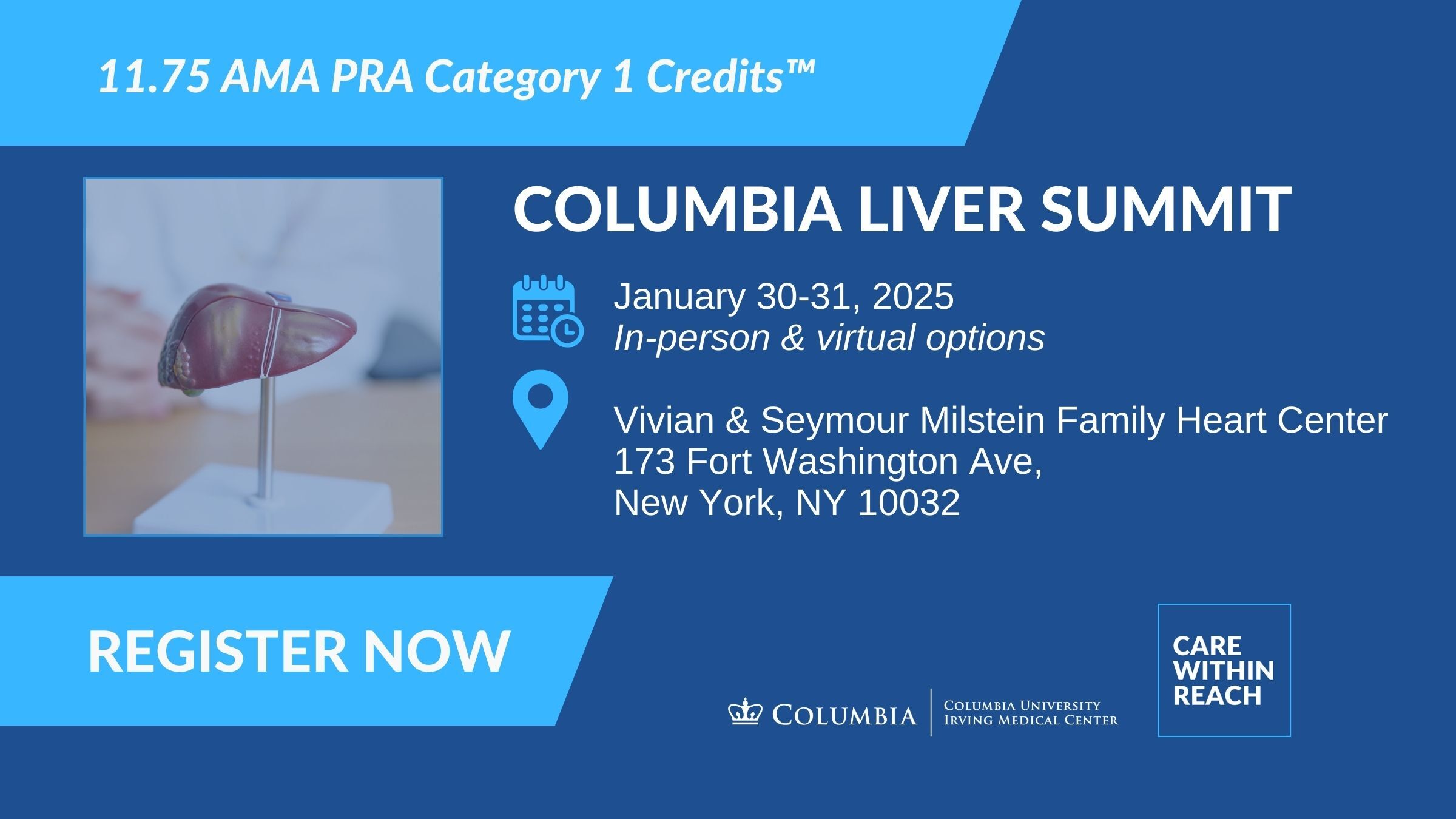


Columbia University Irving Medical Center Liver Summit 2025
The Columbia University Irving Medical Center Liver Summit 2025 is a comprehensive educational program that combines two specialized conferences covering the latest advances in pediatric liver disease, liver transplantation, hepatocellular carcinoma (HCC), and cholangiocarcinoma (CCA). Led by internationally recognized experts from Columbia University Irving Medical Center and leading academic institutions, the summit delivers evidence-based updates, multidisciplinary case discussions, and practical management strategies for both pediatric and adult liver disorders.
Recorded on January 30–31, 2025, the program features expert lectures, interactive panel discussions, clinical case presentations, and Q&A sessions focused on contemporary hepatology, transplant medicine, liver oncology, metabolic liver diseases, immunotherapy, and emerging diagnostic and therapeutic approaches.
Included Content
- 2 Full-Length Conference Videos
- 1 Complete Conference PDF Agenda
- Expert Faculty Presentations
- Case-Based Discussions
- Interactive Panel Sessions
- Multidisciplinary Liver Disease Updates
Educational Focus
This summit provides practical education in:
- Pediatric Liver Disease
- Liver Transplantation
- Hepatocellular Carcinoma (HCC)
- Cholangiocarcinoma (CCA)
- Hepatology
- Liver Oncology
- Metabolic Liver Disorders
- Transplant Surgery
- Immunotherapy
- Liver Imaging and Biomarkers
Key Topics Covered
Pediatric Liver Disease & Transplantation
- Pediatric metabolic liver disorders
- Liver injury in inherited metabolic diseases
- Pediatric liver transplantation
- Hyperammonemia management
- Nutritional management of metabolic disorders
- Psychosocial aspects of pediatric liver transplantation
- Long-term transplant outcomes
- Gene therapy in pediatric liver disease
Hepatocellular Carcinoma (HCC)
- HCC epidemiology
- Screening and surveillance
- Novel biomarkers
- LI-RADS imaging criteria
- Systemic therapy
- Immunotherapy
- Surgical resection
- Liver transplantation for HCC
- Interventional radiology treatments
- Multidisciplinary management
Cholangiocarcinoma (CCA)
- Epidemiology and pathogenesis
- Surgical management
- Systemic therapies
- Multidisciplinary treatment strategies
- Clinical case discussions
Liver Transplantation
- Transplant evaluation
- Organ selection
- Transplant surgery
- Metabolic indications for transplantation
- Pediatric and adult transplant management
- Advances in transplant medicine
Liver Oncology & Precision Medicine
- Molecular biomarkers
- Precision oncology
- Personalized treatment approaches
- Emerging therapeutic strategies
- Future directions in liver cancer management
Learning Objectives
After completing this program, participants will be able to:
- Apply current evidence-based approaches to pediatric liver disease diagnosis and management.
- Recognize metabolic disorders requiring liver transplantation.
- Implement updated screening and surveillance strategies for hepatocellular carcinoma.
- Integrate immunotherapy and modern systemic treatments into HCC management.
- Evaluate multidisciplinary treatment options for cholangiocarcinoma.
- Utilize current imaging techniques and biomarkers in the diagnosis of liver tumors.
- Improve patient outcomes through evidence-based liver transplantation and oncology practices.
Educational Benefits
Participants will gain practical, up-to-date knowledge in pediatric hepatology, liver transplantation, hepatocellular carcinoma, cholangiocarcinoma, metabolic liver disease, and liver oncology. Through expert-led lectures and multidisciplinary case discussions, the summit provides clinically relevant strategies that support evidence-based decision-making, optimize patient care, and improve outcomes for children and adults with complex liver disorders.
Related products
Anesthesiology & pain medicine
Critical Care Symposium: Mastering ED Mechanical Ventilation
Internal Medicine

Internal Medicine

Internal Medicine
Anesthesiology & pain medicine
Internal Medicine
Internal Medicine

Medical Accounts