
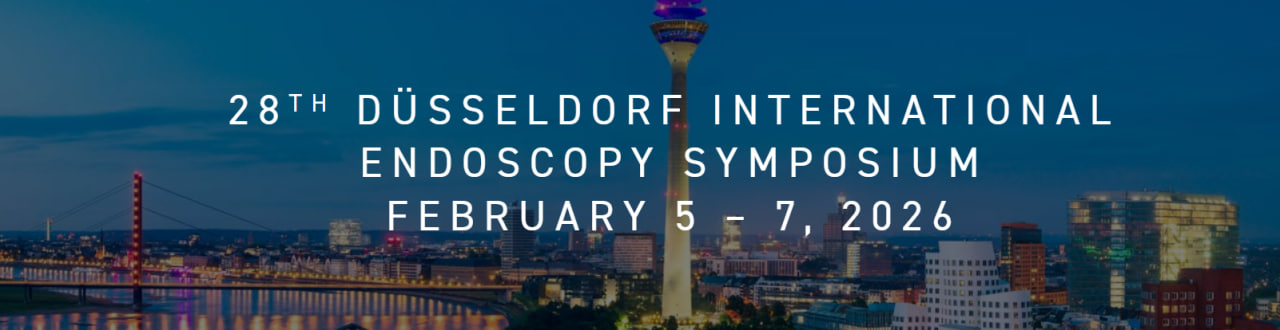
28th DÜSSELDORF INTERNATIONAL ENDOSCOPY SYMPOSIUM FEBRUARY 5 – 7 2025


Original price was: $420.00.$100.00Current price is: $100.00.
This Product is shared via google drive download link, So please share your correct Gmail id while placing the order .Please note that there are no CME points or certificate associated with this course Samples for Courses Can be found here : Free Samples Here!
28th Düsseldorf International Endoscopy Symposium 2025
Overview
The 28th Düsseldorf International Endoscopy Symposium continues its tradition as one of the most respected international meetings in gastrointestinal endoscopy. Bringing together leading experts, researchers, and healthcare professionals from around the world, the symposium offers a unique opportunity to explore the latest advances in diagnostic and therapeutic endoscopy while exchanging practical experience with colleagues working at the forefront of digestive disease care.
With more than 2,100 participants from over 50 countries attending previous editions, the meeting has become a well-established platform for discussing emerging technologies, evidence-based treatment strategies, and future developments that are shaping modern endoscopic practice.
Held at the Maritim Hotel Airport City in Düsseldorf, Germany, the symposium combines live demonstrations, hands-on training, scientific lectures, interactive discussions, and industry exhibitions to provide a comprehensive educational experience for clinicians involved in gastrointestinal endoscopy.
Event Details
- Event: 28th Düsseldorf International Endoscopy Symposium
- Date: February 5–7, 2025
- Location: Maritim Hotel Airport City, Düsseldorf, Germany
- Format: Onsite International Meeting
- Duration: 3 Days
- Educational Access: One-Year Access to the Symposium Media Library
Highlights
- Live endoscopy demonstrations by internationally recognized experts
- State-of-the-art lectures covering current clinical practice
- Mini symposia and industry-supported satellite sessions
- Dedicated educational sessions for endoscopy nurses
- Certified hands-on training opportunities
- Updates on research, innovation, and emerging technologies
- Interactive breakout sessions and case discussions
- Networking opportunities with experts from around the world
- Access to educational recordings and conference resources
Learning Objectives
Participants will be able to:
- Assess the clinical value of new imaging technologies in advanced endoscopic diagnosis.
- Understand how artificial intelligence is transforming lesion detection, quality control, and decision-making in endoscopy.
- Apply evidence-based approaches to the treatment of early gastrointestinal neoplasia.
- Review recent developments in cholangiopancreatoscopy and therapeutic biliary interventions.
- Utilize advanced EUS techniques for tissue acquisition, drainage procedures, and therapeutic interventions.
- Improve patient safety through the prevention, recognition, and management of procedure-related complications.
- Evaluate emerging endoscopic technologies and their potential impact on future clinical practice.
Topics Covered
Advanced Endoscopic Imaging
- High-definition endoscopy
- Image-enhanced endoscopy
- Optical diagnosis
- Lesion characterization
- Early gastrointestinal cancer detection
Artificial Intelligence in Endoscopy
Artificial intelligence is becoming an integral part of modern gastrointestinal endoscopy. Current applications include lesion detection, computer-aided diagnosis, quality assurance, workflow optimization, and clinical decision support. Faculty members discuss both the current evidence and future opportunities for AI-assisted endoscopic practice.
Gastrointestinal Neoplasia
- Early gastrointestinal cancer
- Endoscopic mucosal resection (EMR)
- Endoscopic submucosal dissection (ESD)
- Barrett’s esophagus management
- Evidence-based treatment strategies
Endoscopic Ultrasound (EUS)
- Tissue acquisition techniques
- Fine needle aspiration (FNA)
- Fine needle biopsy (FNB)
- Therapeutic EUS procedures
- Advanced drainage techniques
- Lumen-apposing metal stents (LAMS)
ERCP & Cholangiopancreatoscopy
- Advanced biliary interventions
- Pancreatic duct disorders
- Cholangioscopy
- Pancreatoscopy
- Complex therapeutic procedures
Patient Safety & Quality Improvement
- Infection prevention
- Endoscopy unit safety
- Adverse event recognition
- Complication management
- Quality assurance programs
- Sustainable endoscopy services
Emerging Endoscopic Technologies
- Novel therapeutic devices
- Advanced resection techniques
- Endoscopic innovation
- Future trends in GI endoscopy
Live Demonstrations
One of the most anticipated components of the symposium is the live demonstration program conducted by internationally renowned faculty from the Endoscopy Unit of Evangelisches Krankenhaus Düsseldorf. These sessions provide practical insights into advanced diagnostic and therapeutic procedures while allowing participants to observe real-time decision-making and technique refinement.
Exhibit Hall
A large international exhibition showcases a broad range of established and emerging biomedical technologies, including:
- Endoscopy platforms and accessories
- Advanced imaging systems
- Artificial intelligence solutions
- Therapeutic endoscopy devices
- Innovative biomedical technologies
- Digital healthcare solutions
The exhibition offers valuable opportunities for participants to interact directly with manufacturers, developers, and industry leaders.
Educational Benefits
By participating in this symposium, attendees will gain practical knowledge from internationally recognized faculty, improve diagnostic and therapeutic endoscopic skills, stay informed about the latest innovations in gastrointestinal endoscopy, and better understand how emerging technologies such as artificial intelligence are influencing the future of digestive disease management.
Frequently Asked Questions
Who should attend the Düsseldorf International Endoscopy Symposium?
The symposium is designed for gastroenterologists, therapeutic endoscopists, hepatologists, GI fellows, surgeons, endoscopy nurses, and healthcare professionals involved in gastrointestinal endoscopy.
What topics are covered during the meeting?
The program covers gastrointestinal endoscopy, EUS, ERCP, cholangiopancreatoscopy, gastrointestinal neoplasia, artificial intelligence in endoscopy, patient safety, quality improvement, and emerging endoscopic technologies.
Does the symposium include live demonstrations?
Yes. Live endoscopy demonstrations are a major feature of the meeting and are performed by internationally recognized experts, allowing participants to observe advanced procedures and clinical decision-making in real time.
What makes this symposium unique?
The combination of live demonstrations, hands-on training, expert lectures, international faculty, and exposure to emerging technologies makes the Düsseldorf International Endoscopy Symposium one of the leading educational events in gastrointestinal endoscopy.
Related products
Anesthesiology & pain medicine

Critical Care - Emergency medicine

Critical Care - Emergency medicine
Medical Accounts
Internal Medicine

Internal Medicine
Cardiology
Critical Care - Emergency medicine