Harvard Critical Issues in Tumor Microenvironment: Angiogenesis, Metastasis and Immunology 2025
Advanced Updates in Tumor Microenvironment, Cancer Immunology, Angiogenesis, Metastasis, CAR-T Cell Therapy, Cancer Metabolism, Biomarkers, and AI in Oncology
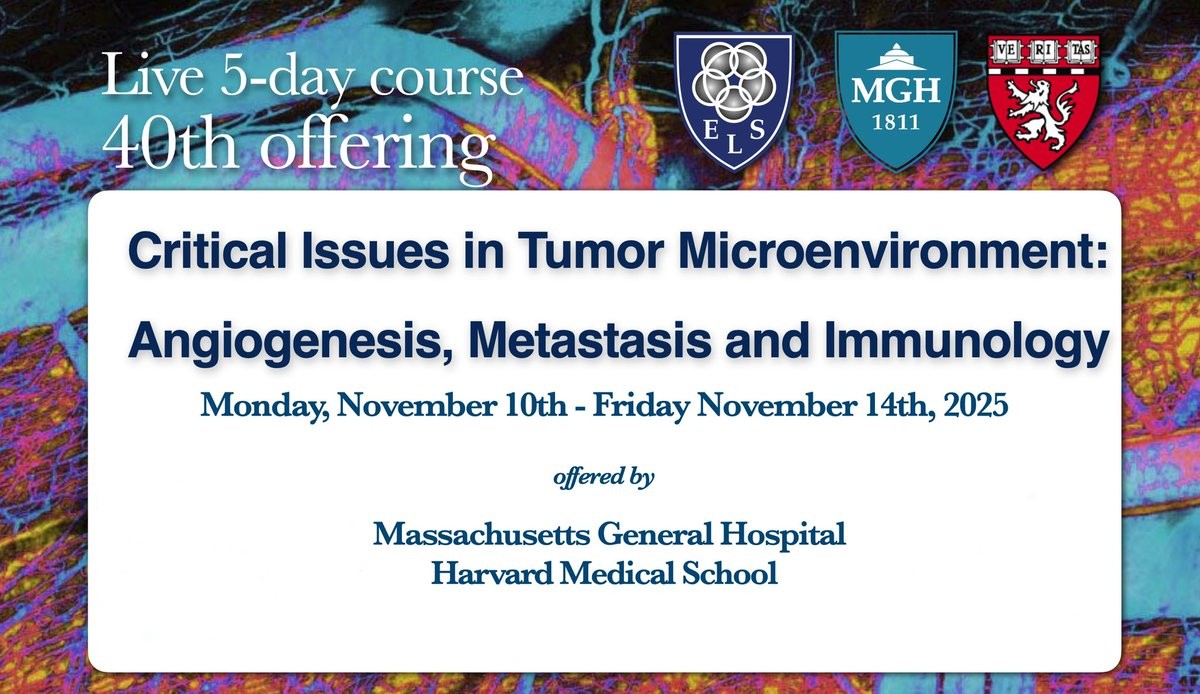
Harvard Critical Issues in Tumor Microenvironment: Angiogenesis, Metastasis and Immunology 2025 is a world-renowned multidisciplinary oncology program directed by leading cancer researcher Rakesh K. Jain. Celebrating its 40th annual offering, this advanced course delivers a comprehensive exploration of the biological mechanisms that drive cancer progression and treatment response, while highlighting emerging therapeutic strategies that are transforming modern oncology.
Through expert-led lectures, scientific discussions, translational research updates, and interactive sessions, participants gain a deep understanding of tumor biology, angiogenesis, metastasis, immunotherapy, cancer metabolism, microbiome interactions, chronobiology, and cutting-edge advances in artificial intelligence for cancer research and patient care.
The program bridges fundamental science and clinical application, helping clinicians and researchers translate laboratory discoveries into more effective cancer treatments and personalized therapeutic approaches.
Course Overview
Cancer is increasingly recognized as a complex ecosystem involving interactions between tumor cells, immune cells, blood vessels, fibroblasts, extracellular matrix components, neural networks, and host biological systems. Understanding these interactions has become essential for developing effective therapies and improving clinical outcomes.
This prestigious Harvard course focuses on the tumor microenvironment as a central determinant of cancer progression, metastasis, therapeutic resistance, and immunotherapy response. Faculty members include internationally recognized leaders in oncology, immunology, molecular biology, bioengineering, and translational medicine who present the latest discoveries from both laboratory and clinical research.
A special fifth-day trainee symposium has been added for the 40th anniversary celebration, featuring poster presentations, career development sessions, and mentorship opportunities for the next generation of cancer scientists.
Included Content
- 20 Video Lectures
- 20 Subtitle Files (.vtt)
- 14 PDF Presentations
Total Size: 21.26 GB
Course Date: November 10–14, 2025
Educational Level: Advanced
Comprehensive Curriculum
Tumor Microenvironment Biology
Participants gain an in-depth understanding of:
- Tumor-host interactions
- Tumor ecosystem dynamics
- Stromal cell biology
- Tumor evolution
- Therapeutic resistance mechanisms
- Cancer progression pathways
Faculty explore how the tumor microenvironment influences every stage of cancer development and treatment response.
Angiogenesis and Tumor Vasculature
Comprehensive sessions review:
- Tumor blood vessel formation
- Vascular abnormalities in cancer
- Angiogenic signaling pathways
- Vascular normalization strategies
- Anti-angiogenic therapies
- Mechanisms of treatment resistance
Participants learn how targeting tumor vasculature can improve drug delivery and enhance immunotherapy effectiveness.
Metastasis and Cancer Dissemination
Key topics include:
- Mechanisms of tumor invasion
- Circulating tumor cells
- Metastatic niche formation
- Organ-specific metastasis
- Cellular migration pathways
- Molecular drivers of dissemination
The course examines the biological processes responsible for cancer spread and disease progression.
Cancer Immunology and Immunotherapy
Extensive coverage includes:
- Tumor immune evasion
- Immune checkpoint biology
- T-cell activation and exhaustion
- Tumor-infiltrating lymphocytes
- Immunotherapy resistance
- Combination treatment strategies
Faculty discuss current and future approaches to harnessing the immune system against cancer.
Adoptive Cell Therapy
Advanced sessions explore:
CAR-T Cell Therapy
- Chimeric Antigen Receptor T-cell design
- Clinical applications
- Treatment limitations
- Toxicity management
- Future developments
TCR-Based Therapies
- T-cell receptor engineering
- Personalized cellular therapies
- Emerging clinical trials
Participants review the rapidly expanding field of engineered immune cell therapies.
Cancer Metabolism
Topics include:
- Metabolic reprogramming
- Tumor nutrient utilization
- Metabolic vulnerabilities
- Immune-metabolic interactions
- Therapeutic targeting opportunities
Faculty explain how cancer metabolism influences growth, survival, and therapeutic response.
Microbiome and Cancer
The program reviews:
- Gut microbiome interactions
- Microbiome-immunotherapy relationships
- Treatment response prediction
- Microbial influences on tumor progression
- Therapeutic modulation strategies
Participants learn how microbial communities affect cancer outcomes and treatment efficacy.
Chronobiology and Circadian Rhythms
Coverage includes:
- Circadian regulation of cancer biology
- Timing of treatment delivery
- Biological clock influences
- Chronotherapy applications
- Emerging research findings
Carcinoma-Associated Fibroblasts (CAFs)
Sessions explore:
- Fibroblast heterogeneity
- Tumor-supportive microenvironments
- Extracellular matrix remodeling
- Fibroblast-targeted therapies
- Resistance mechanisms
Cancer Neuroscience
An emerging area of focus examining:
- Neural-tumor interactions
- Nervous system influences on cancer
- Neurotransmitter signaling
- Tumor innervation
- Therapeutic implications
Faculty discuss how neural pathways contribute to tumor progression and metastasis.
Biomarkers and Precision Oncology
Participants review:
- Predictive biomarkers
- Prognostic biomarkers
- Response assessment tools
- Resistance biomarkers
- Molecular profiling
- Precision medicine strategies
Special emphasis is placed on biomarkers guiding immunotherapy selection and monitoring.
Genetic and Imaging Technologies
Comprehensive updates include:
- Advanced genomic techniques
- Single-cell analysis
- Molecular imaging
- Translational research tools
- Clinical implementation strategies
Faculty highlight state-of-the-art technologies transforming cancer research and patient care.
Artificial Intelligence in Oncology
The course explores:
- AI-driven cancer diagnostics
- Predictive modeling
- Imaging analysis
- Biomarker discovery
- Treatment optimization
- Clinical decision support systems
Participants gain insight into the expanding role of artificial intelligence in oncology research and clinical practice.
Translational Oncology
A major emphasis of the course is:
- Bench-to-bedside translation
- Preclinical model evaluation
- Clinical trial design
- Therapeutic development
- Personalized treatment approaches
Faculty focus on accelerating the translation of scientific discoveries into improved patient outcomes.
Learning Objectives
Upon completion of this activity, participants will be able to:
- Identify pharmacologic strategies to normalize the tumor microenvironment.
- Evaluate anti-angiogenic therapies and vascular-targeted interventions.
- Analyze mechanisms driving cancer metastasis and progression.
- Assess emerging immunotherapy approaches and combination treatment strategies.
- Incorporate biomarker data into personalized treatment planning.
- Understand the influence of fibroblasts, extracellular matrix, and neural interactions on tumor behavior.
- Evaluate the impact of microbiome and circadian biology on cancer outcomes.
- Apply advanced genetic and imaging technologies in cancer research and clinical care.
- Integrate artificial intelligence tools into oncology practice and investigation.
- Translate cutting-edge scientific discoveries into improved cancer treatment strategies.
Educational Features
✔ Internationally Renowned Harvard Faculty
✔ Advanced Tumor Microenvironment Science
✔ Angiogenesis & Vascular Biology Updates
✔ Metastasis Research Breakthroughs
✔ Cancer Immunotherapy Advances
✔ CAR-T Cell Therapy Reviews
✔ Biomarker & Precision Oncology Education
✔ AI Applications in Oncology
✔ Translational Research Focus
✔ Interactive Scientific Discussions
Target Audience
This course is designed for:
- Oncologists
- Hematologist-Oncologists
- Immunologists
- Cancer Researchers
- Translational Scientists
- Molecular Biologists
- Radiation Oncologists
- Surgical Oncologists
- Pathologists
- Pharmaceutical Scientists
- Biotechnology Professionals
- Postdoctoral Researchers
- Graduate Students
- Oncology Fellows
Why This Course Matters
The tumor microenvironment has emerged as one of the most important determinants of cancer progression, metastasis, therapeutic resistance, and immunotherapy success. Understanding the complex interactions among tumor cells, immune systems, stromal elements, and host biology is essential for advancing cancer care.
Harvard Critical Issues in Tumor Microenvironment: Angiogenesis, Metastasis and Immunology 2025 provides a unique opportunity to learn directly from world leaders in oncology and cancer research while exploring the latest breakthroughs in tumor biology, immunotherapy, precision medicine, and artificial intelligence. Participants leave with advanced knowledge that can directly impact research innovation, clinical decision-making, and future cancer treatment strategies.
+ Topics:
Monday, November 10, 2025
| 9:00 A.M | Check-in/Registration, Continental Breakfast |
| 10:00 A.M. | Opening Remarks Rakesh K. Jain |
| 10:10 A.M. | Tumor Microenvironment I: Angiogenesis and Vascular Function Rakesh K. Jain |
| 11:20 A.M. | Q&A |
| 11:35 A.M. | Break |
| 11:50 A.M. | Tumor Microenvironment II: Vascular Normalization and Immunotherapy Rakesh K. Jain |
| 1:10 P.M. | Q&A |
| 1:25 P.M. | Lunch Break – Boxed lunches provided |
| 2:25 P.M. | Tumor Microenvironment III: Extracellular Matrix, Lymphatics and Metastasis Rakesh K. Jain |
| 3:45 P.M. | Q&A |
| 4:00 P.M. | Break |
| 4:30 P.M. | Cancer Immunology and Immunotherapy Overview Arlene Sharpe |
| 5:35 P.M. | Q&A |
| 5:50 P.M. | Adjourn |
Tuesday, November 11, 2025
| 9:00 A.M. | Continental Breakfast |
| 10:00 A.M. | Circadian Clock and Metabolic Vulnerabilities of Cancer Chi Van Dang |
| 11:05 A.M. | Q&A |
| 11:20 A.M. | Break |
| 11:50 A.M. | Skull Bone Marrow as a Site for Immuno-Surveillance of Healthy Brain and Brain Tumors Jonathan Kipnis |
| 12:55 P.M. | Q&A |
| 1:10 P.M. | Lunch Break – on your own |
| 2:10 P.M. | Determinants of How Tumors Use Metabolism to Support Growth Matthew Vander Heiden |
| 3:15 P.M. | Q&A |
| 3:30 P.M. | Break |
| 4:00 P.M. | Using Cell Transfer to Remodel the Tumor Microenvrionment Carl June |
| 5:05 P.M. | Q&A |
| 5:20 P.M. | Adjourn |
Wednesday, November 12, 2025
| 9:00 A.M. | Continental Breakfast |
| 10:00 A.M. | AI in Basic and Clinical Oncology Eliezer Van Allen |
| 11:05 A.M. | Q&A |
| 11:20 A.M. | Break |
| 11:50 A.M. | Microbiota: a Key Orchestrator of Cancer Therapy Giorgio Trinchieri |
| 12:55 P.M. | Q&A |
| 1:10 P.M. | Lunch Break – on your own |
| 2:10 P.M. | Identifying Immune Vulnerabilities in Solid Tumors Lisa Coussens |
| 3:15 P.M. | Q&A |
| 3:30 P.M. | Break |
| 4:00 P.M. | RREBELLIOUS INTERFERENCE: Challenging old paradigms and discovering new strategies for targeting pediatric brain tumors Robert Wechsler-Reya |
| 5:05 P.M. | Q&A |
| 5:20 P.M. | Adjourn |
Thursday, November 13, 2025
| 9:00 A.M. | Continental Breakfast |
| 10:00 A.M. | Dissecting the Ecosystem of Gliomas by Single-Cell and Spatial Genomics Mario Suva |
| 11:05 A.M. | Q&A |
| 11:20 A.M. | Break |
| 11:50 A.M. | Mechanisms of Malignant Progression Robert Weinberg |
| 12:55 P.M. | Q&A |
| 1:10 P.M. | Lunch Break – on your own |
| 2:10 P.M. | Fibroblast Heterogeneity in Solid Tumors: Implications for Pancreatic Cancer David Tuveson |
| 3:15 P.M. | Q&A |
| 3:30 P.M. | Break |
| 4:00 P.M. | Neural Influences on Primary and Metastatic Brain Tumors Frank Winkler |
| 5:05 P.M. | Q&A |
| 5:20 P.M. | Summary and closing remarks Rakesh K. Jain |
Friday , November 14th, 2025
| 9:00 A.M. | Poster set up/ Continental Breakfast |
| 10:00 A.M. | Lessons from the Clinic: Novel Diagnostics and Therapeutic Outcomes George Sledge |
| 11:20 A.M. | Break |
| 11:50 A.M. | Emerging strategies to improve CAR-T cell therapy for glioblastoma and other solid tumors Hideho Okada |
| 1:10 P.M. | Lunch Break – Boxed lunches will be provided |
| 2:10 P.M. | Poster Session |
| 3:10 P.M. | Poster Award Presentation |
| 3:30 P.M. | Career Round Table Discussion
Academia: Frank Winkler, MD, PhD |Eva Sevick-Muraca, PhD | Melody Swartz, PhD Industry: George Sledge, MD | Zohreh Amoozgar, PhD Law Firm: Carla Mouta-Bellum, PhD, JD |
| 5:00 P.M. | Networking Reception |