
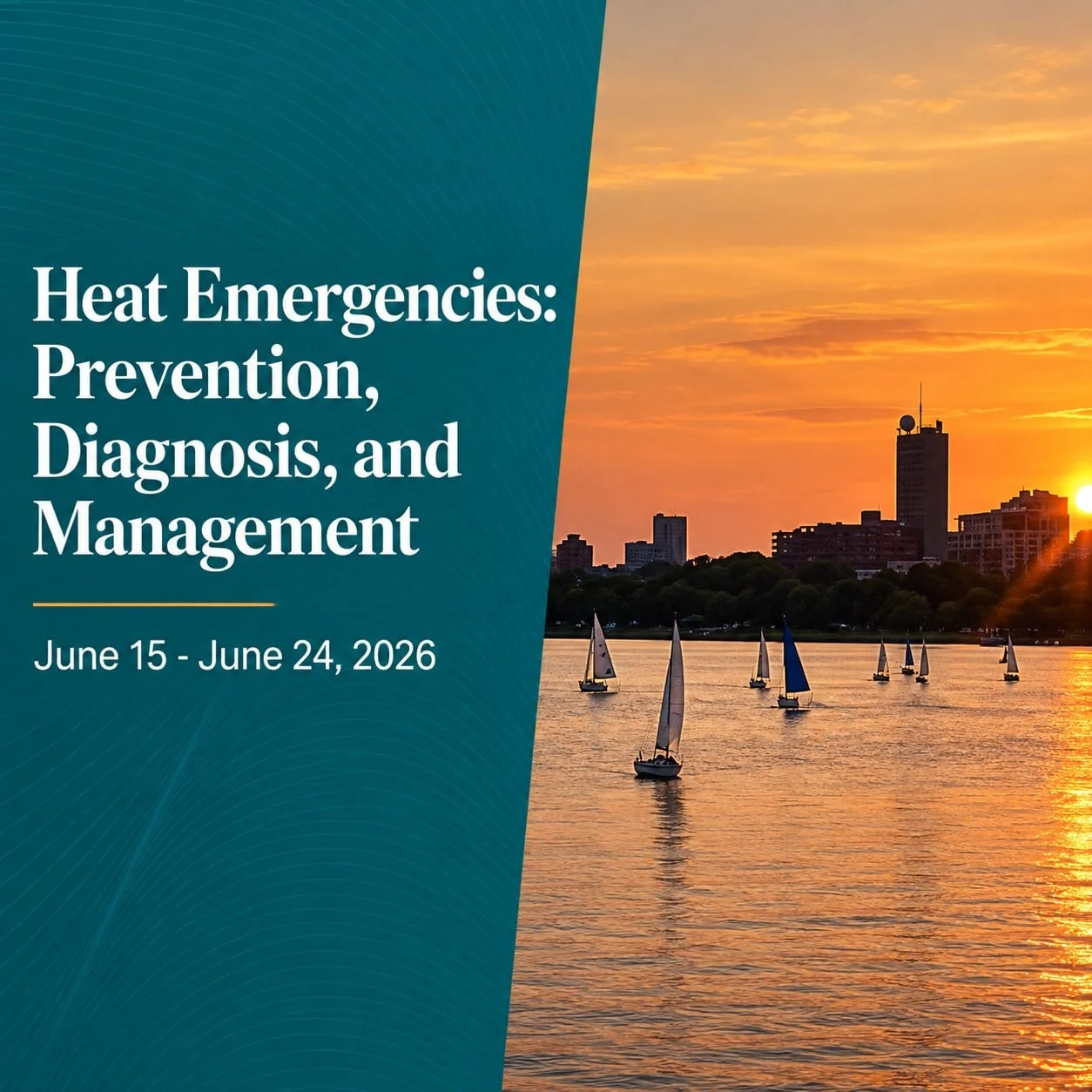
Harvard Heat Emergencies Prevention, Diagnosis, and Management 2026

$90.00
This Product is shared via google drive download link, So please share your correct Gmail id while placing the order .Please note that there are no CME points or certificate associated with this course Samples for Courses Can be found here : Free Samples Here!
Harvard Heat Emergencies: Prevention, Diagnosis, and Management 2026
Master the Recognition, Prevention, and Clinical Management of Heat-Related Illness
As global temperatures continue to rise and extreme heat events become more frequent, heat-related illnesses are emerging as a major public health challenge worldwide. From heat exhaustion and heat syncope to life-threatening heat stroke, clinicians across every level of health care are increasingly encountering patients affected by environmental heat exposure.
Harvard Heat Emergencies: Prevention, Diagnosis, and Management 2026 is a comprehensive educational program designed to equip health care professionals with the latest evidence-based knowledge for recognizing, preventing, diagnosing, and managing heat-related illnesses across diverse clinical settings.
Developed by leading experts in emergency medicine, internal medicine, nephrology, environmental health, and public health, this course provides practical guidance for clinicians caring for patients during heat waves, occupational exposure, sporting events, disasters, and other high-risk situations.
Participants will gain a thorough understanding of heat physiology, environmental medicine, emergency management, pharmacologic considerations, and public health strategies while learning practical approaches that can be immediately applied in emergency departments, hospitals, outpatient clinics, urgent care centers, and community health settings.
Why Heat Emergencies Matter in Modern Medicine
Climate change has significantly increased the frequency, duration, and intensity of extreme heat events worldwide. Heat-related illnesses now represent a growing cause of emergency department visits, hospital admissions, organ failure, and preventable mortality.
Early recognition and timely intervention are essential to reducing complications and improving patient outcomes. Clinicians must be prepared to identify vulnerable populations, recognize early warning signs, implement evidence-based treatment protocols, and develop effective prevention strategies for both individuals and communities.
This course provides an in-depth review of current clinical evidence while emphasizing practical decision-making in real-world medical practice.
Course Overview
Harvard Heat Emergencies: Prevention, Diagnosis, and Management 2026 is an advanced virtual educational program focused on the clinical recognition, differential diagnosis, treatment, and prevention of heat-related illness.
The curriculum examines the changing epidemiology of heat illness, principles of thermal physiology, environmental risk factors, pharmacologic interactions, and multisystem effects of excessive heat exposure. Through expert-led lectures and clinical case discussions, participants will learn how to safely evaluate and manage patients experiencing heat stress across various health care environments.
Special attention is given to emergency preparedness, public health planning, occupational medicine, vulnerable populations, and resource-limited settings where heat-related illness presents unique clinical challenges.
What You’ll Learn
Participants will explore a broad range of clinically relevant topics, including:
- Epidemiology of Heat-Related Illness
- Climate Change and Human Health
- Thermal Physiology
- Heat Stress and Thermoregulation
- Heat Exhaustion
- Heat Stroke
- Exertional Heat Stroke
- Classic Heat Stroke
- Heat Syncope
- Heat Cramps
- Heat Rash
- Differential Diagnosis of Hyperthermia
- Fever vs Heat Stroke
- Emergency Management of Heat Illness
- Rapid Cooling Techniques
- Fluid Resuscitation
- Electrolyte Disorders
- Kidney Injury Associated with Heat Exposure
- Acute Kidney Injury (AKI)
- Cardiovascular Complications
- Neurological Manifestations
- Mental Health and Behavioral Effects of Heat
- Pharmacologic Interactions
- Medication Safety During Heat Exposure
- Pediatric Heat Emergencies
- Geriatric Heat Illness
- Occupational Heat Exposure
- Athletic Heat Illness
- Event Medicine
- Wilderness and Environmental Medicine
- Disaster Preparedness
- Public Health Prevention Strategies
- Community-Based Prevention
- Population Health Approaches
- Health Systems Preparedness
- Clinical Guidelines and Best Practices
Learning Objectives
After completing this course, participants will be able to:
- Explain the epidemiology and global burden of heat-related illness.
- Understand the physiology of thermoregulation and heat stress.
- Recognize the clinical presentation of heat exhaustion, heat syncope, heat stroke, and related conditions.
- Develop evidence-based differential diagnoses for patients presenting with hyperthermia.
- Create comprehensive treatment plans using current clinical guidelines.
- Identify patients at increased risk for heat-related illness.
- Develop prevention strategies for vulnerable populations.
- Evaluate medication-related risks that increase susceptibility to heat illness.
- Recognize heat-related complications affecting the cardiovascular, neurological, renal, and psychiatric systems.
- Apply emergency management principles in both high-resource and resource-limited environments.
- Support community preparedness and public health initiatives during extreme heat events.
- Improve patient safety through early recognition and timely intervention.
Skills You’ll Gain
Participants will develop practical skills in:
- Recognition of Heat Emergencies
- Clinical Assessment of Hyperthermia
- Differential Diagnosis
- Emergency Stabilization
- Rapid Cooling Techniques
- Fluid and Electrolyte Management
- Kidney Protection Strategies
- Risk Stratification
- Environmental Health Assessment
- Preventive Counseling
- Medication Review During Heat Exposure
- Public Health Preparedness
- Event Medicine Planning
- Disaster Response
- Clinical Decision-Making
- Evidence-Based Patient Management
Clinical Applications
This course demonstrates practical approaches for managing heat-related illness across multiple clinical settings.
Emergency Medicine
- Heat stroke resuscitation
- Emergency cooling protocols
- Critical care stabilization
- Trauma and mass gathering medicine
Internal Medicine
- Evaluation of vulnerable adults
- Chronic disease management during heat waves
- Medication adjustments
- Prevention planning
Nephrology
- Acute kidney injury
- Dehydration management
- Electrolyte abnormalities
- Renal protection strategies
Pediatrics
- Recognition of pediatric heat illness
- Prevention counseling for children
- School and sports safety
Psychiatry and Behavioral Health
- Heat-related psychiatric complications
- Medication interactions
- Behavioral risk factors
Family Medicine and Primary Care
- Patient education
- Preventive counseling
- Chronic disease management
- Community outreach
Occupational and Sports Medicine
- Worker safety
- Athletic heat illness prevention
- Return-to-activity recommendations
- Workplace preparedness
Who Should Attend?
This program is designed for clinicians and health care professionals responsible for evaluating, treating, and preventing heat-related illness.
Ideal participants include:
- Physicians
- Emergency Physicians
- Internal Medicine Specialists
- Family Medicine Physicians
- Nephrologists
- Pediatricians
- Psychiatrists
- Clinical Pharmacologists
- Occupational Medicine Physicians
- Public Health Specialists
- Physician Assistants
- Nurse Practitioners
- Nurses
- Pharmacists
- Medical Residents
- Fellows
- Allied Health Professionals
Course Highlights
- Comprehensive review of heat-related illness
- Evidence-based clinical management strategies
- Current diagnostic and treatment guidelines
- Expert-led virtual lectures
- Practical clinical case discussions
- Emergency medicine applications
- Public health and preventive medicine perspectives
- Climate and environmental health insights
- Multidisciplinary faculty
- Real-world patient management strategies
Why Choose This Course?
Heat-related illnesses are becoming increasingly common across all regions of the world, making timely recognition and effective management essential clinical skills.
This course provides an integrated approach that combines emergency medicine, nephrology, psychiatry, pediatrics, internal medicine, occupational medicine, and public health to prepare clinicians for the growing challenges associated with extreme heat exposure.
Participants will leave with practical, evidence-based strategies that improve diagnostic accuracy, strengthen emergency response, reduce preventable complications, and enhance patient education and community preparedness.
Whether you practice in an emergency department, hospital, outpatient clinic, urgent care center, or community health setting, this program offers valuable knowledge that supports high-quality patient care during heat-related emergencies.
Topics
Day 1: Monday, June 15, 2026
-
Welcome, Overview, and Importance of Heat Clinical Education
-
Defining Heat
-
Heat Physiology
-
Epidemiological Impacts of Heat
-
Fluids, Electrolytes and Perspiration
-
Closing Remarks and Q&A
Day 2: Wednesday, June 17, 2026
-
Welcome and Recap
-
Event Medicine and Heat Related Illness
-
Current Evidence on Heat Related Illness
-
Diagnosis of Heat Related Illness
-
Management of Heat Related Illness
-
Closing Remarks and Q&A
Day 3: Monday, June 22, 2026
-
Welcome and Recap
-
Heat, Kidney Disease, and Outdoor Work
-
Pharmaceutical Considerations in Hot Weather
-
Small Group Discussions: What Special Populations Are You Worried About in Your Practice, and What can be Done to Meet Their Needs?
-
Heat-Related Illness in Special Populations
-
Heat and Behavioral Health
-
Closing Remarks and Q&A
Day 4: Wednesday, June 24, 2026
-
Welcome and Recap
-
Prevention and Management of Heat Related Illness in Low Resource Settings
-
Practical Resources for the Busy Clinician
-
Health System Impacts and Preparedness for Extreme Heat
-
Preventive Solutions Through Public Health and Public Policy
-
Closing Remarks and Q&A
Related products
Medical Accounts
Critical Care - Emergency medicine
Critical Care - Emergency medicine

Critical Care - Emergency medicine
The Brigham Board Review in Infectious Diseases Brigham and Women’s Hospital Board Review

Internal Medicine

Internal Medicine

USMLE / kaplan and Board Review
Uworld USMLE COMLEX Level 1 Qbank, Updated Jan 2023, System- and Subject-wise (PDF)