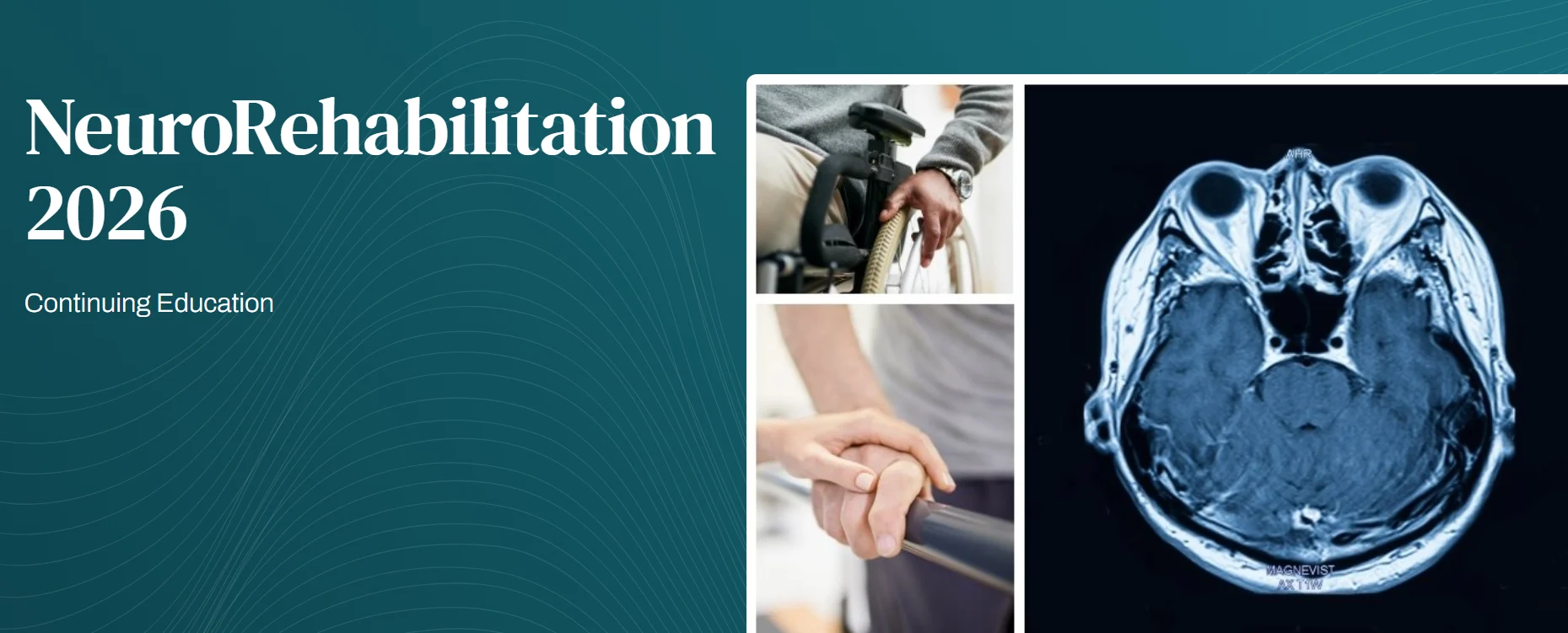
Harvard NeuroRehabilitation 2026 (Videos + PDFs)
Advanced Neurorehabilitation, Brain Injury, Stroke & Spinal Cord Rehabilitation Update
Overview
Harvard NeuroRehabilitation 2026 is a comprehensive multidisciplinary neurorehabilitation program designed to provide clinicians with the latest evidence-based strategies, emerging technologies, and advanced rehabilitation interventions for patients with neurological injury and disease.
Delivered as a live online course with recorded sessions available for later review, the program focuses on improving function, recovery, independence, and quality of life for patients affected by:
- Stroke
- Traumatic Brain Injury (TBI)
- Spinal Cord Injury (SCI)
- Multiple Sclerosis
- Parkinson Disease
- Amyotrophic Lateral Sclerosis (ALS)
- Functional Neurological Disorders
- Other neurological conditions requiring rehabilitation
The course brings together leading experts in neurology, rehabilitation medicine, neuropsychology, physical therapy, occupational therapy, speech-language pathology, and neuroscience.
Course Features
- Expert Harvard Faculty
- Live Online CME Program
- Recorded Sessions & Breakout Workshops
- Evidence-Based Neurorehabilitation Updates
- Multidisciplinary Clinical Approach
- Advanced Rehabilitation Technologies
- Artificial Intelligence Applications
- Virtual Reality Rehabilitation
- Brain Injury & Stroke Recovery Education
- Spinal Cord Injury Management
Learning Objectives
Upon completion of this activity, participants will be able to:
- Apply modern neurorehabilitation strategies to improve functional outcomes.
- Integrate emerging technologies into rehabilitation programs.
- Manage spasticity using pharmacologic and procedural approaches.
- Optimize rehabilitation after stroke, SCI, and TBI.
- Recognize neurobehavioral and cognitive complications following neurological injury.
- Develop individualized treatment plans for complex rehabilitation patients.
- Improve quality of life for patients and caregivers.
- Utilize evidence-based approaches for neurologic recovery and long-term management.
Core Topics Covered
Stroke Rehabilitation
A major focus of the course is improving outcomes after stroke.
Topics Include
- Motor recovery
- Functional restoration
- Neuroplasticity
- Gait rehabilitation
- Cognitive rehabilitation
- Vision rehabilitation after stroke
- Long-term stroke recovery strategies
Participants learn state-of-the-art interventions designed to accelerate recovery and maximize independence.
Traumatic Brain Injury (TBI)
The program provides extensive coverage of TBI rehabilitation.
Topics Include
- Mild TBI
- Moderate and severe TBI
- Pediatric TBI
- Recovery prediction
- Outcome assessment
- Post-concussion symptoms
- Behavioral complications
Special attention is given to emerging evidence and individualized rehabilitation planning.
Advanced Neuroimaging in TBI
The course reviews modern imaging approaches used to evaluate brain injury.
Covered Areas
- Advanced MRI techniques
- Biomarker assessment
- Structural imaging
- Functional imaging
- Prognostic indicators
- Recovery monitoring
These tools assist clinicians in treatment planning and outcome prediction.
Spinal Cord Injury (SCI)
Dedicated sessions focus on contemporary spinal cord rehabilitation.
Topics Include
- ASIA Classification
- Functional recovery
- Assistive technologies
- Mobility restoration
- Neurogenic complications
- Long-term SCI management
Faculty discuss both established and emerging rehabilitation interventions.
Spasticity Management
One of the most clinically relevant areas covered is spasticity treatment.
Topics Include
- Pharmacologic management
- Botulinum toxin therapy
- Intrathecal baclofen
- Denervation procedures
- Surgical interventions
- Functional outcome optimization
Participants gain practical guidance for managing challenging spasticity cases.
Multiple Sclerosis Rehabilitation
The conference reviews modern approaches to rehabilitation in MS.
Covered Topics
- Functional preservation
- Mobility management
- Fatigue treatment
- Cognitive dysfunction
- Symptom management
- Emerging therapies
The emphasis is on maintaining independence and quality of life.
Parkinson Disease Rehabilitation
Sessions examine evolving rehabilitation strategies for Parkinson disease.
Topics Include
- Forced exercise programs
- Mobility enhancement
- Balance training
- Gait optimization
- Neuroplasticity-based interventions
- Technology-assisted rehabilitation
Participants learn how rehabilitation can complement medical management.
Artificial Intelligence in Neurorehabilitation
A major innovation topic for 2026 is AI-assisted rehabilitation.
Areas Covered
- Predictive analytics
- Recovery forecasting
- Personalized rehabilitation planning
- AI-assisted monitoring
- Clinical decision support
- Future applications
Faculty discuss how AI may transform rehabilitation practice.
Virtual Reality Rehabilitation
The course explores rapidly expanding VR applications.
Topics Include
- Stroke rehabilitation
- TBI rehabilitation
- Balance training
- Cognitive rehabilitation
- Motor recovery
- Patient engagement strategies
These technologies offer novel opportunities for functional recovery.
Dysphagia & Swallowing Disorders
Important updates are provided on swallowing management.
Topics Include
- Dysphagia assessment
- Aspiration prevention
- Rehabilitation techniques
- Nutritional management
- Speech-language pathology interventions
The focus is on improving safety and functional outcomes.
Neurobehavioral & Cognitive Rehabilitation
The program addresses cognitive and behavioral complications.
Topics Include
- Insight and awareness deficits
- Denial syndromes
- Executive dysfunction
- Aggression after TBI
- Depression management
- Cognitive rehabilitation strategies
These sessions emphasize practical approaches for complex patients.
Functional Neurological Disorders (FND)
The conference reviews modern understanding of FND.
Covered Areas
- Diagnosis
- Rehabilitation strategies
- Patient communication
- Multidisciplinary treatment
- Outcome optimization
Faculty provide evidence-based approaches to a challenging clinical population.
Quality of Life & Psychosocial Rehabilitation
The course emphasizes holistic rehabilitation care.
Topics Include
- Family support
- Caregiver education
- Emotional adjustment
- ICU survivorship
- PTSD after neurological injury
- Long-term adaptation
Improving quality of life remains a central theme throughout the program.
Additional Advanced Topics
Neurological Disorders Covered
- Amyotrophic Lateral Sclerosis (ALS)
- Chronic Traumatic Encephalopathy (CTE)
- Cerebellar Cognitive Affective Syndrome
- Autonomic Dysfunction after TBI
- Covert Consciousness
- Pituitary Disorders after TBI
- Women’s Health in SCI
- Military Mild TBI & PTSD
- Withdrawal of Life-Sustaining Treatment
Target Audience
This course is ideal for:
- Physical Medicine & Rehabilitation Physicians
- Neurologists
- Neurosurgeons
- Neuropsychologists
- Physical Therapists
- Occupational Therapists
- Speech-Language Pathologists
- Nurse Practitioners
- Physician Assistants
- Psychologists
- Rehabilitation Specialists
- Trainees and Fellows
Why This Course Stands Out
✔ Comprehensive neurorehabilitation curriculum
✔ Harvard-accredited educational program
✔ Strong focus on practical rehabilitation strategies
✔ Covers stroke, TBI, SCI, MS, Parkinson disease, and ALS
✔ Includes AI and virtual reality applications
✔ Multidisciplinary faculty and clinical perspective
✔ Extensive focus on quality of life and caregiver support
✔ Evidence-based and clinically applicable content
✔ Covers both adult and pediatric neurorehabilitation
✔ Ideal for rehabilitation medicine and neurology professionals