
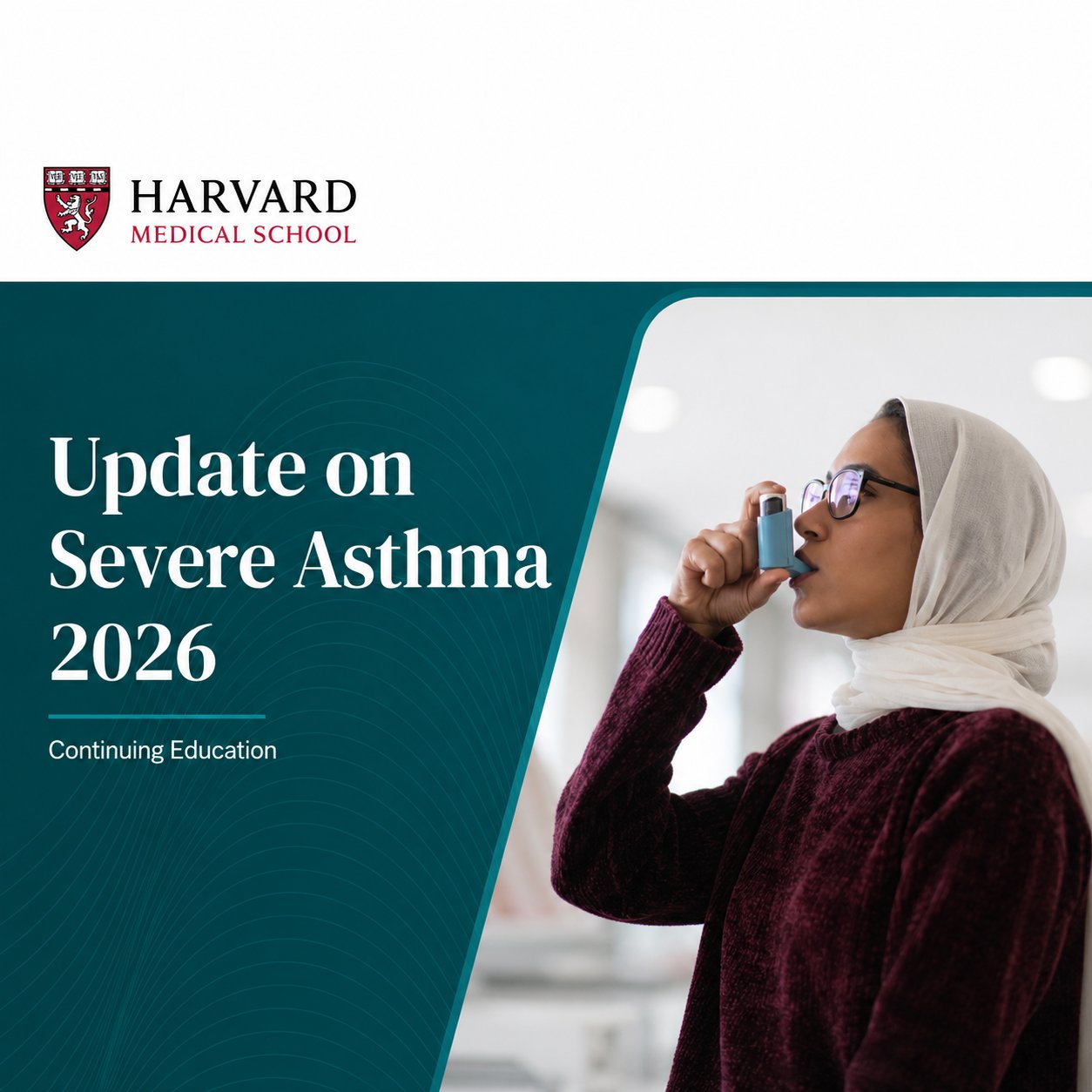
Harvard Update on Severe Asthma 2026
Original price was: $995.00.$50.00Current price is: $50.00.
This Product is shared via google drive download link, So please share your correct Gmail id while placing the order .Please note that there are no CME points or certificate associated with this course Samples for Courses Can be found here : Free Samples Here!
Harvard Update on Severe Asthma 2026
Advanced Severe Asthma, Biologic Therapy & Precision Pulmonary Medicine Update
The Harvard Update on Severe Asthma 2026, presented by Brigham and Women’s Hospital and Harvard Medical School, is a comprehensive continuing medical education program dedicated to the diagnosis, evaluation, and management of difficult-to-control and severe asthma in both adult and pediatric populations.
Designed for pulmonologists, allergists, internists, pediatric specialists, and healthcare professionals involved in asthma care, this intensive course provides the latest evidence-based strategies for understanding asthma phenotypes, immunologic mechanisms, genetic influences, and emerging targeted therapies. Participants gain practical knowledge on applying modern treatment algorithms, selecting appropriate biologic therapies, and implementing precision medicine approaches for patients with complex asthma.
The course incorporates updated recommendations from the latest GINA (Global Initiative for Asthma) and NAEPP (National Asthma Education and Prevention Program) guidelines, helping clinicians optimize outcomes for patients with severe and treatment-resistant asthma.
Product Details
- Course: Harvard Update on Severe Asthma 2026
- Provider: Brigham and Women’s Hospital / Harvard Medical School
- Release Date: March 16, 2026
- Format: Videos + PDFs
- Access: On-Demand
Program Overview
Severe asthma remains a major clinical challenge despite significant advances in biologic therapies and personalized medicine. Many patients continue to experience uncontrolled symptoms, recurrent exacerbations, reduced quality of life, and increased healthcare utilization.
This course provides an in-depth review of:
- Severe Asthma Phenotypes
- Asthma Endotypes
- Immunologic Mechanisms
- Precision Medicine
- Biologic Therapies
- Pediatric Severe Asthma
- Occupational Asthma
- Obesity-Associated Asthma
- Aspirin-Exacerbated Respiratory Disease (AERD)
- Eosinophilic Lung Disorders
- Psychiatric Comorbidities
- Population Health Strategies
Through expert-led lectures, clinical case discussions, and practical management strategies, participants gain a comprehensive understanding of contemporary severe asthma care.
Learning Objectives
Upon completion of this activity, participants will be able to:
- Identify severe asthma phenotypes and endotypes using modern diagnostic approaches.
- Apply updated GINA and NAEPP recommendations in clinical practice.
- Select appropriate biologic therapies based on individual patient characteristics.
- Recognize immunologic and genetic factors contributing to severe asthma.
- Diagnose and manage eosinophilic and other inflammatory airway disorders.
- Develop treatment plans for obesity-related and occupational asthma.
- Evaluate patients with aspirin-exacerbated respiratory disease (AERD).
- Address psychiatric and behavioral comorbidities affecting asthma control.
- Integrate precision medicine approaches into severe asthma management.
- Improve outcomes through multidisciplinary and population-based care strategies.
Core Topics Covered
Severe Asthma Phenotypes & Endotypes
- Type 2 Inflammation
- Eosinophilic Asthma
- Non-Eosinophilic Asthma
- Biomarker-Based Assessment
- Precision Phenotyping
Asthma Immunology & Genetics
- Airway Inflammation
- Cytokine Pathways
- IgE-Mediated Disease
- Genetic Susceptibility
- Emerging Molecular Targets
Biologic Therapies
- Anti-IgE Therapy
- Anti-IL-5 Agents
- Anti-IL-5 Receptor Therapies
- Anti-IL-4/IL-13 Therapies
- Biologic Selection Strategies
- Monitoring Treatment Response
Precision Medicine in Asthma
- Personalized Treatment Approaches
- Biomarker-Guided Therapy
- Individualized Risk Assessment
- Future Therapeutic Targets
Aspirin-Exacerbated Respiratory Disease (AERD)
- Clinical Recognition
- Diagnostic Evaluation
- Medical Management
- Biologic Options
- Aspirin Desensitization Strategies
Eosinophilic Lung Disorders
- Differential Diagnosis
- Laboratory Evaluation
- Imaging Considerations
- Treatment Strategies
Obesity-Related Asthma
- Pathophysiology
- Metabolic Influences
- Weight-Loss Interventions
- Comprehensive Management
Occupational Asthma
- Workplace Exposures
- Diagnostic Testing
- Exposure Prevention
- Long-Term Management
Pediatric Severe Asthma
- Childhood Asthma Phenotypes
- Biologic Therapy in Children
- Growth and Development Considerations
- Long-Term Outcomes
Psychiatric Comorbidities
- Anxiety and Asthma
- Depression and Symptom Burden
- Behavioral Health Integration
- Patient Adherence
Population Health & Asthma Care
- Health Equity
- Quality Improvement Initiatives
- Reducing Exacerbations
- Healthcare Utilization Reduction
Educational Features
✔ Harvard Medical School Faculty
✔ Brigham and Women’s Hospital Experts
✔ Evidence-Based Clinical Guidelines
✔ Precision Medicine Approaches
✔ Advanced Biologic Therapy Reviews
✔ Adult and Pediatric Asthma Management
✔ Interactive Clinical Case Discussions
✔ Practical Real-World Applications
Who Should Use This Course?
- Pulmonologists
- Allergists and Immunologists
- Internal Medicine Physicians
- Family Medicine Physicians
- Pediatric Pulmonologists
- Pediatric Allergists
- Nurse Practitioners
- Physician Assistants
- Respiratory Therapists
- Asthma Care Specialists
Why This Course Matters
The management of severe asthma has evolved rapidly with the introduction of biologic therapies, precision medicine strategies, and improved understanding of asthma endotypes. Clinicians must stay current with emerging evidence, guideline updates, and individualized treatment approaches to improve disease control and reduce exacerbations.
This course provides practical, evidence-based guidance that helps healthcare professionals deliver modern, personalized care for patients with severe and difficult-to-control asthma.
Clinical & Educational Value
The Harvard Update on Severe Asthma 2026 offers a comprehensive review of modern severe asthma management, integrating advances in immunology, genetics, biologic therapies, precision medicine, and multidisciplinary care.
By combining cutting-edge scientific knowledge with practical clinical guidance, this program equips clinicians with the tools necessary to improve outcomes for patients with complex asthma and related airway disorders.
Day 1 – Monday, March 16, 2026
| Time | Session | Speaker |
|---|---|---|
| 7:00 – 7:40 am | Registration | — |
| 7:40 – 8:30 am | Conversations in Severe Asthma (Biologic Treatment – Eosinophilic Phenotype) | — |
| 8:30 – 8:35 am | Welcome and Introduction | Elliot Israel |
| 8:35 – 9:00 am | “Can’t Miss Articles” in Severe Asthma | Benjamin Medoff, Nora Barrett |
| 9:00 – 9:40 am | Asthma Insights: The View from the Airways | Benjamin Medoff |
| 9:40 – 10:20 am | Diagnostic Assessment of Severe Asthma | Nora Barrett |
| 10:20 – 10:40 am | Break | — |
| 10:40 – 11:20 am | Managing Asthma with Aspirin-Exacerbated Respiratory Disease | Tanya Laidlaw |
| 11:20 – 12:05 pm | Panel: Primary Prevention of Asthma | Akenroye, Phipatanakul, Weiss, Nadeau |
| 12:05 – 12:40 pm | Occupational Exposures and Severe Asthma | Robert Mccunney |
| 12:40 – 1:40 pm | Break / Exhibit Hall | — |
| 1:40 – 2:20 pm | Asthma Genetics & Environment | Benjamin Raby |
| 2:20 – 2:55 pm | Severe Asthma in Children | Jonathan Gaffin |
| 2:55 – 3:15 pm | Break | — |
| 3:15 – 3:50 pm | Bronchiectasis & Asthma Overlap | James Chalmers |
| 3:50 – 4:35 pm | Precision Medicine (PreCISE Trial) | Steve Georas |
| 4:35 – 5:20 pm | Case Discussions (Diagnosis) | Panel |
Day 2 – Tuesday, March 17, 2026
| Time | Session | Speaker |
|---|---|---|
| 7:00 – 7:40 am | Registration | — |
| 7:40 – 8:20 am | Fasenra & Eosinophilic Inflammation | — |
| 8:20 – 9:00 am | Bi & Tri-Specific Antibodies | Ayobami Akenroye |
| 9:00 – 9:40 am | Choosing Among Biologics | Elliot Israel |
| 9:40 – 10:20 am | Clinical Remission in Asthma | Ian Pavord |
| 10:20 – 10:40 am | Break | — |
| 10:40 – 11:20 am | Asthma, Anxiety & Depression | E. Sherwood Brown |
| 11:20 – 12:00 pm | Eosinophilic Lung Disease | Joshua Boyce |
| 12:00 – 12:40 pm | Severe Asthma in Children | Sejal Saglani |
| 12:40 – 1:40 pm | Break / Exhibit Hall | — |
| 1:40 – 2:20 pm | Obesity, Diabetes & Asthma | Dinah Foer |
| 2:20 – 3:00 pm | Smoking, COPD & Asthma | Carrie Pistenmaa |
| 3:00 – 3:20 pm | Break | — |
| 3:20 – 4:00 pm | Anti-Inflammatory Rescue | Nancy Lange-Vaidya |
| 4:00 – 4:35 pm | Biologics & Population Health | Ayobami Akenroye |
| 4:35 – 5:20 pm | Case Discussions (Treatment) | Panel |
Related products

Medical Accounts

Critical Care - Emergency medicine
Medical Accounts
Internal Medicine
Internal Medicine
Internal Medicine

Internal Medicine

Critical Care - Emergency medicine
ASN Critical Care Nephrology – 2022 Update (On-Demand and Livestream)