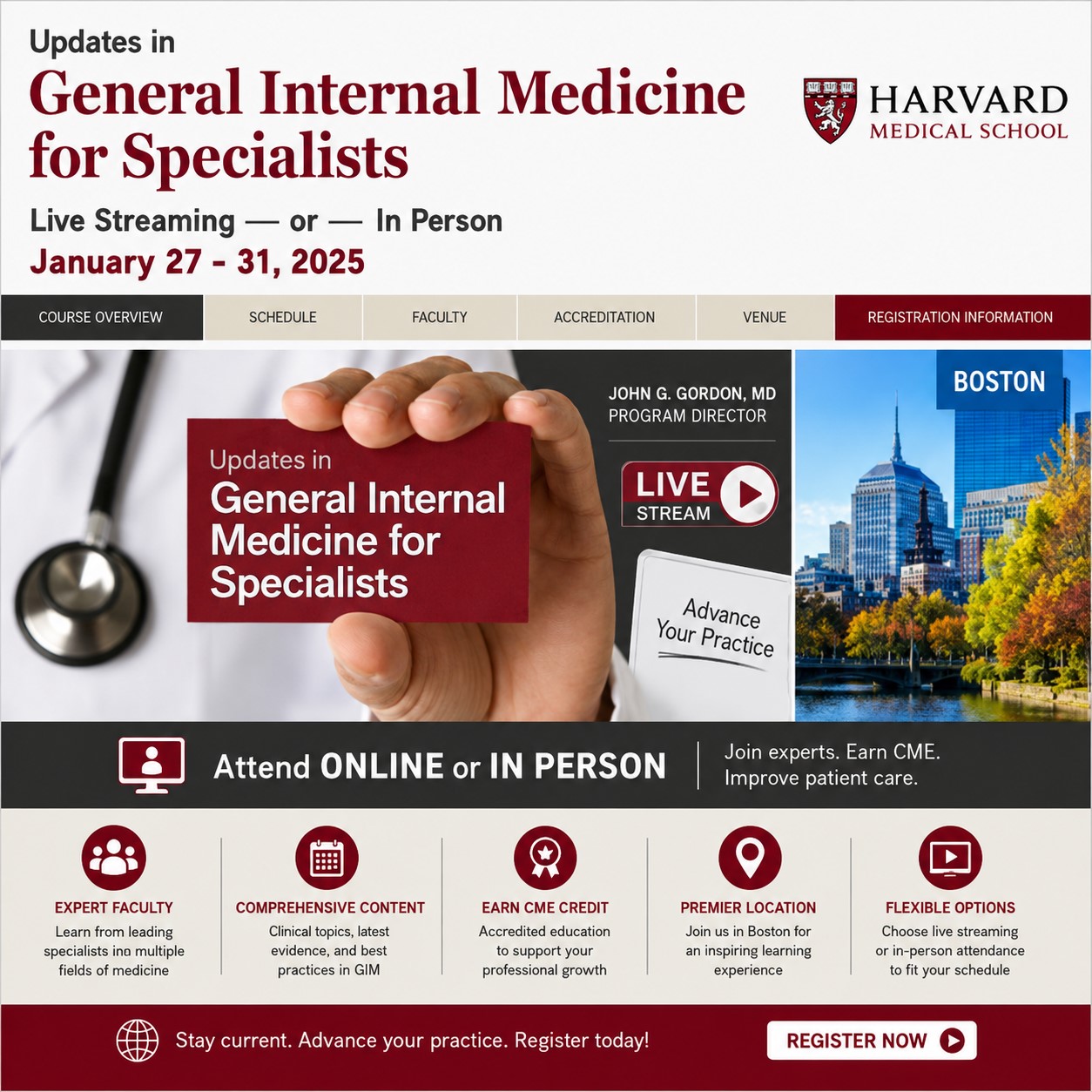
Harvard Updates in General Internal Medicine for Specialists 2025 (Videos + Slides)
Original price was: $1,595.00.$70.00Current price is: $70.00.
This Product is shared via google drive download link, So please share your correct Gmail id while placing the order .Please note that there are no CME points or certificate associated with this course Samples for Courses Can be found here : Free Samples Here!
Harvard Updates in General Internal Medicine for Specialists 2025
Introduction
The Harvard Updates in General Internal Medicine for Specialists 2025 is a comprehensive continuing medical education (CME) program developed by Harvard Medical School to help specialists stay current with the latest advances in internal medicine that influence everyday clinical practice.
Modern patient care often extends beyond a single specialty. Physicians are increasingly responsible for managing patients with multiple chronic conditions, complex medication regimens, and overlapping medical problems that require coordinated, evidence-based care. This program bridges that gap by providing concise, clinically relevant updates across a wide range of internal medicine disciplines, allowing specialists to strengthen their knowledge outside their primary area of expertise.
Presented by Harvard faculty representing more than 30 medical and surgical specialties, the course delivers practical guidance on current clinical guidelines, emerging therapies, preventive care, diagnostic strategies, and multidisciplinary management. Every session is designed to translate the latest evidence into real-world clinical practice, helping physicians improve patient outcomes while supporting informed decision-making in both outpatient and hospital settings.
Course Overview
Harvard Updates in General Internal Medicine for Specialists 2025 offers a broad review of the most important developments in internal medicine through an efficient, multidisciplinary educational format.
Rather than focusing on a single subspecialty, the curriculum explores the clinical issues specialists commonly encounter while caring for patients with complex medical conditions. Topics span cardiovascular medicine, endocrinology, pulmonology, nephrology, gastroenterology, infectious diseases, neurology, oncology, rheumatology, preventive medicine, women’s health, geriatrics, and perioperative care.
Each presentation combines current scientific evidence with practical recommendations, enabling participants to quickly incorporate updated guidelines and best practices into everyday patient management.
Included Materials
The program includes:
- High-quality video lectures
- Downloadable presentation slides
- Recorded on-demand access
- Harvard Medical School faculty presentations
- Evidence-based clinical updates
- Practical guideline reviews
- Cross-specialty educational content
- Clinical management recommendations
Educational Focus
The curriculum is designed to strengthen clinical knowledge across the broad spectrum of adult medicine, with particular emphasis on:
- General Internal Medicine
- Preventive Medicine
- Chronic Disease Management
- Cardiovascular Medicine
- Endocrinology
- Pulmonary Medicine
- Gastroenterology
- Hepatology
- Infectious Diseases
- Nephrology
- Rheumatology
- Neurology
- Oncology
- Women’s Health
- Geriatric Medicine
- Hospital Medicine
- Perioperative Medicine
- Evidence-Based Clinical Practice
- Multidisciplinary Patient Care
- Clinical Decision-Making
By integrating updates from multiple specialties into a single educational program, the course helps clinicians better recognize interactions between diseases, medications, and treatment strategies that frequently influence patient outcomes.
Why This Course Is Important
Healthcare continues to evolve rapidly, with new clinical guidelines, diagnostic technologies, and therapeutic options changing standards of care across nearly every medical specialty. Even experienced physicians can find it challenging to remain current with important developments outside their primary field.
Harvard Updates in General Internal Medicine for Specialists 2025 was created to address this need by delivering concise, high-yield education focused on the internal medicine topics that specialists encounter most frequently in clinical practice.
Whether caring for hospitalized patients, evaluating chronic comorbidities, coordinating multidisciplinary treatment plans, or managing preventive health concerns, physicians benefit from a broader understanding of internal medicine principles that extend beyond their specialty training.
The program also emphasizes collaboration between specialties, helping clinicians communicate more effectively, recognize clinically significant findings earlier, and make well-informed decisions for patients with complex multisystem disease. Through practical, evidence-based instruction from Harvard faculty, participants gain knowledge that can be immediately applied to improve diagnostic accuracy, therapeutic planning, and comprehensive patient care.
What Participants Will Learn
This course provides specialists with practical, up-to-date knowledge that extends beyond their primary field of practice. The curriculum is designed to strengthen clinical reasoning, support evidence-based decision-making, and improve the management of patients with multiple chronic conditions and complex medical needs.
By the end of the program, participants will be able to:
Apply the latest evidence-based clinical guidelines across multiple areas of internal medicine.
Recognize significant advances in diagnosis, treatment, and preventive medicine that influence everyday clinical practice.
Incorporate updated therapeutic recommendations into patient management strategies.
Improve diagnostic accuracy when evaluating patients with complex or multisystem disorders.
Optimize the care of patients with chronic diseases and multiple comorbidities.
Understand the clinical impact of emerging medications and evolving standards of care.
Strengthen interdisciplinary collaboration between medical and surgical specialties.
Enhance preventive care through updated screening recommendations and risk assessment.
Apply practical clinical strategies in both outpatient and inpatient settings.
Deliver more comprehensive, patient-centered care using current best practices.
The program emphasizes clinically relevant education that physicians can immediately incorporate into daily practice, making it valuable for both experienced specialists and clinicians seeking a broad review of modern internal medicine.
Core Educational Areas
General Internal Medicine
The course begins with a broad review of contemporary internal medicine, focusing on preventive healthcare, chronic disease management, diagnostic reasoning, and evidence-based clinical decision-making. Participants gain practical strategies for evaluating complex patients while integrating current guideline recommendations into routine care.
Cardiovascular Medicine
Topics include the diagnosis and management of ischemic heart disease, hypertension, atrial fibrillation, heart failure, coronary artery disease, lipid disorders, anticoagulation therapy, and preventive cardiology. Faculty discuss updated cardiovascular guidelines, risk reduction strategies, and advances in pharmacologic management.
Endocrinology & Metabolism
Participants review current approaches to diabetes management, obesity medicine, thyroid disorders, metabolic syndrome, and other endocrine conditions. The curriculum highlights new therapeutic options, individualized treatment strategies, and evolving recommendations for metabolic health.
Pulmonary & Critical Care Medicine
Educational sessions address chronic obstructive pulmonary disease (COPD), asthma, pulmonary infections, sleep disorders, and common respiratory conditions encountered in ambulatory and hospital medicine. Practical management strategies are presented using the latest clinical evidence.
Infectious Diseases
This section reviews antimicrobial stewardship, vaccination updates, emerging infectious diseases, and the diagnosis and treatment of common infections. Faculty emphasize evidence-based antimicrobial use, infection prevention, and current public health recommendations.
Gastroenterology & Hepatology
Participants receive practical updates on gastrointestinal disorders, chronic liver disease, colorectal cancer screening, hepatitis, and advances in hepatology. The curriculum also explores new diagnostic techniques, therapeutic developments, and evidence-based approaches to common digestive diseases.
Hematology & Oncology
The oncology component covers cancer screening, thromboembolic disease, immunotherapy, hematologic disorders, and current approaches to multidisciplinary cancer care. Special attention is given to integrating new evidence into routine clinical decision-making.
Nephrology
Faculty review chronic kidney disease, acute kidney injury, electrolyte disorders, hypertension, and medication safety in patients with impaired renal function. Participants learn practical strategies for managing kidney disease across different clinical settings.
Rheumatology & Immunology
Topics include autoimmune diseases, inflammatory disorders, biologic therapies, and multisystem rheumatologic conditions. The sessions focus on recognizing evolving treatment options and coordinating care across specialties.
Neurology & Psychiatry
The curriculum addresses stroke prevention, cognitive decline, headache disorders, anxiety, depression, and common neurological conditions encountered by physicians outside neurology. Emphasis is placed on early recognition, multidisciplinary care, and updated management recommendations.
Women’s Health & Geriatrics
Participants review menopause management, osteoporosis, healthy aging, preventive care for older adults, and common geriatric syndromes. The program also discusses age-related changes that influence diagnosis and treatment decisions across multiple specialties.
Hospital & Perioperative Medicine
This section focuses on inpatient medicine, perioperative risk assessment, multidisciplinary coordination, and acute medical management. Faculty provide practical recommendations for improving communication between specialties while optimizing patient safety throughout hospitalization and surgical care.
Educational Experience & Learning Features
Harvard Updates in General Internal Medicine for Specialists 2025 is designed to deliver high-yield education in a concise and practical format that fits the needs of busy specialists. Each session focuses on clinically meaningful updates supported by current evidence and expert consensus, allowing participants to rapidly integrate new knowledge into daily practice.
The program combines guideline reviews, clinical case discussions, and practical management strategies presented by Harvard Medical School faculty from more than 30 medical and surgical specialties. Rather than emphasizing theory alone, the course focuses on real-world patient care, interdisciplinary collaboration, and efficient clinical decision-making.
Educational Features
- Harvard Medical School expert faculty
- Evidence-based clinical updates
- Practical case-based teaching
- Cross-specialty education
- Current clinical guidelines
- Emerging therapies and treatment strategies
- Preventive medicine updates
- Hospital and ambulatory medicine review
- Multidisciplinary patient management
- On-demand educational access
This educational approach enables physicians to strengthen both specialty-specific knowledge and their broader understanding of internal medicine, improving confidence when managing patients with multiple chronic illnesses and complex clinical presentations.
Who Should Attend
This educational activity is intended for physicians and healthcare professionals who wish to remain current with clinically important developments in internal medicine that influence modern specialty practice.
The program is particularly valuable for:
- Cardiologists
- Gastroenterologists
- Endocrinologists
- Pulmonologists
- Nephrologists
- Rheumatologists
- Neurologists
- Oncologists
- Infectious Disease Physicians
- Hospitalists
- Surgeons
- Anesthesiologists
- Psychiatrists
- Radiologists
- Pathologists
- Primary Care Physicians
- Internal Medicine Specialists
- Fellows and Residents
- Advanced Practice Providers
- Physicians seeking comprehensive multidisciplinary updates
Whether practicing in academic medicine, community hospitals, or outpatient clinics, participants will benefit from concise, evidence-based education covering the most important advances across internal medicine.
Clinical Applications & Practice Benefits
The knowledge gained through this program can be applied immediately to patient care across a wide range of clinical settings. By integrating updated guidelines with practical management strategies, participants will strengthen their ability to diagnose, treat, and coordinate care for patients with increasingly complex medical conditions.
Key clinical applications include:
- Improving evidence-based clinical decision-making
- Optimizing management of chronic diseases
- Recognizing important updates across multiple specialties
- Applying preventive medicine recommendations
- Managing patients with multiple comorbidities
- Improving medication safety and reducing adverse drug interactions
- Enhancing communication between specialists and primary care providers
- Strengthening inpatient and outpatient management strategies
- Incorporating emerging therapies into routine practice
- Delivering more coordinated, patient-centered healthcare
These practical skills help clinicians improve quality of care while supporting better clinical outcomes across diverse patient populations.
Summary
The Harvard Updates in General Internal Medicine for Specialists 2025 program offers a comprehensive review of the latest evidence-based developments in modern internal medicine for physicians practicing across a wide range of specialties.
Led by distinguished Harvard Medical School faculty, the curriculum explores current clinical guidelines, preventive medicine, chronic disease management, cardiovascular medicine, endocrinology, gastroenterology, hepatology, nephrology, pulmonology, infectious diseases, neurology, oncology, rheumatology, women’s health, geriatrics, and hospital medicine.
Through practical lectures, multidisciplinary perspectives, and clinically focused recommendations, participants gain the knowledge needed to manage complex patients more effectively, improve interdisciplinary collaboration, and integrate the latest advances into everyday practice.
Whether preparing for evolving clinical challenges or seeking a comprehensive update beyond a primary specialty, this program serves as an outstanding educational resource for physicians committed to delivering high-quality, evidence-based patient care.
Related products

Critical Care - Emergency medicine

Internal Medicine

Internal Medicine
Critical Care - Emergency medicine

Pediatrics
Critical Care - Emergency medicine

Critical Care - Emergency medicine