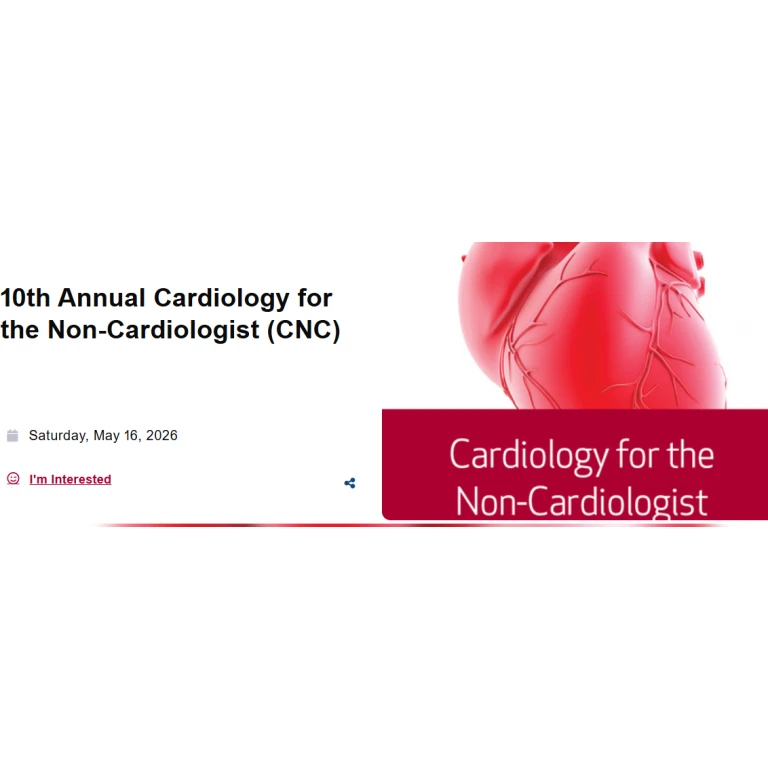
Houston Methodist 10th Annual Cardiology for the Non-Cardiologist (CNC) 2026 (Videos + Subtitles)
Houston Methodist 10th Annual Cardiology for the Non-Cardiologist (CNC) 2026 is a comprehensive cardiovascular medicine educational program presented by the Houston Methodist DeBakey Heart & Vascular Center.

Designed especially for clinicians who are not cardiovascular specialists, the conference provides practical updates on the prevention, diagnosis, testing, treatment, and long-term management of common and complex cardiovascular diseases.
Provider: Houston Methodist
Presented by: Houston Methodist DeBakey Heart & Vascular Center
Year: 2026
Format: Videos + Subtitle Files
Language: English
Number of Videos: 32
Total Video Duration: Approximately 8 Hours 10 Minutes
What Is Included?
- 32 recorded educational videos
- Subtitle files for the videos
- Expert lectures and multidisciplinary panel discussions
- Approximately 8+ hours of cardiovascular education
- Digital delivery
Important: This product contains videos and subtitle files only. No PDFs, slides, presentation handouts, or other supplementary course materials are included.
About Cardiology for the Non-Cardiologist 2026
Cardiovascular disease remains one of the most important causes of morbidity and mortality, making the ability to recognize and appropriately manage cardiovascular conditions essential far beyond the cardiology specialty.
Primary care physicians, internists, emergency medicine clinicians, critical care specialists, advanced practice providers, and other healthcare professionals frequently encounter patients with cardiovascular risk factors or established heart disease.
The 10th Annual Cardiology for the Non-Cardiologist (CNC) 2026 addresses this need by providing clinicians with practical, current information on cardiovascular disease and contemporary treatment strategies.
The program reviews important developments in coronary artery disease, heart failure, pulmonary hypertension, atrial fibrillation, structural heart disease, electrophysiology, vascular disease, cardiovascular prevention, advanced cardiac imaging, digital health, artificial intelligence, lipid management, and perioperative cardiovascular assessment.
Faculty discuss both established standards of care and newer developments relevant to clinical practice in 2026.
Major Areas of Cardiovascular Medicine Covered
The course provides updates across a broad range of cardiovascular topics, including:
- Coronary artery disease
- Percutaneous coronary intervention (PCI)
- Coronary stents
- CABG
- Dual antiplatelet therapy
- Precision PCI
- Heart failure
- Guideline-directed medical therapy (GDMT)
- Advanced heart failure
- Mechanical and surgical therapies
- Pulmonary hypertension
- Pulmonary arterial hypertension
- Atrial fibrillation
- AF catheter ablation
- Stroke prevention in AF
- Anticoagulation
- Left atrial appendage management
- ECG interpretation
- TAVR
- Aortic stenosis
- Valve-in-valve therapy
- Mitral and tricuspid transcatheter interventions
- Aortic aneurysm
- Abdominal aortic aneurysm
- Peripheral artery disease
- Chronic venous disease
- Deep vein thrombosis
- Cardiovascular disease in women
- Pregnancy and cardiovascular disease
- Menopause and cardiovascular risk
- Dyslipidemia
- Lipoprotein(a)
- Coronary artery calcium scoring
- Stress testing
- Echocardiography and Doppler
- Cardiac CT
- Cardiac PET
- Cardiac MRI
- Adult congenital heart disease
- Digital cardiovascular health
- Artificial intelligence in cardiology
- Perioperative cardiac risk assessment
Complete Course Content – 32 Videos
1. Pulmonary Hypertension: Diagnosis and Management
Duration: 15:55
Faculty: Imad Hussain
A practical review of the diagnosis and management of pulmonary hypertension and important considerations for clinicians evaluating patients with suspected pulmonary vascular disease.
2. Atrial Fibrillation: Selecting Medications and Devices for Stroke Prevention
Duration: 14:02
Faculty: Apoor Patel
Discusses contemporary approaches to stroke prevention in atrial fibrillation, including selection of pharmacologic therapies and device-based strategies.
3. Coronary Stents From Restenosis to Precision PCI: Key Advances in Interventional Cardiology
Duration: 15:30
Faculty: Alpesh Shah
Reviews the evolution of coronary stenting from the challenge of restenosis to modern precision PCI and contemporary interventional cardiology strategies.
4. CABG: Time Tested and Getting Better!
Duration: 18:21
Faculty: Yuncen Atticus He
Reviews the continuing role of coronary artery bypass grafting (CABG) and advances that are improving contemporary surgical coronary revascularization.
5. Coronary Artery Disease: Current Strategies for Antiplatelet Therapy After PCI
Duration: 18:38
Faculty: Neal Kleiman
Discusses current approaches to antiplatelet therapy following PCI, including important considerations surrounding treatment selection and duration.
6. Coronary Artery Disease Management: CABG vs PCI, DAPT Strategies, and Precision PCI – Panel Discussion
Duration: 11:31
Faculty: Alpesh Shah, Yuncen Atticus He, Neal Kleiman
A multidisciplinary discussion addressing CABG versus PCI, dual antiplatelet therapy strategies, coronary revascularization, and precision PCI.
7. Catheter-Based Mitral and Tricuspid Therapies – What You Need to Know in 2026?
Duration: 16:26
Faculty: Sachin Goel
Reviews important 2026 developments in catheter-based therapies for mitral and tricuspid valve disease.
8. Valvular Heart Disease Management After Transcatheter Valve Replacement: When Should Valve-in-Valve Therapy Be Used?
Duration: 10:00
Faculty: Sachin Goel, Dhaval Parekh, Michael Reardon, William Zoghbi
Discusses management following transcatheter valve replacement and the clinical role of valve-in-valve therapy.
9. Electrophysiology: ECG Interpretation Fundamentals for Non-Cardiologists
Duration: 19:09
Faculty: Jonathan Na
Provides practical ECG interpretation fundamentals designed specifically for clinicians who do not specialize in cardiology or electrophysiology.
10. AF Ablation Referrals: When to Transition From Medical Therapy to Catheter Ablation
Duration: 16:15
Faculty: Adi Lador
Reviews when patients with atrial fibrillation should transition from medical management to consideration of catheter ablation.
11. AFib Stroke Prevention and Digital Health: Balancing Anticoagulation, LAA Management, and Wearable ECGs
Duration: 12:24
Faculty: Jonathan Na, Apoor Patel, Adi Lador, Alpesh Shah
Explores atrial fibrillation management through anticoagulation, left atrial appendage strategies, wearable ECG technology, and digital health.
12. Aneurysm of the Aorta: Is It Going to Kill Me?
Duration: 14:22
Faculty: Alan Lumsden
A clinically focused review of aortic aneurysms, including assessment of risk and important management considerations.
13. How Should Chronic Venous Disease and DVT Be Managed Across the Disease Spectrum?
Duration: 15:34
Faculty: Charudatta S. Bavare
Reviews management of chronic venous disease and deep vein thrombosis (DVT) across different stages of disease.
14. Abdominal Aortic Aneurysms and PAD: Lifelong Management From Screening to Revascularization
Duration: 15:18
Faculty: Alan Lumsden, Charudatta S. Bavare, John P. Cooke, Alpesh Shah
Discusses the continuum of vascular care for abdominal aortic aneurysm and peripheral artery disease, from screening and surveillance to revascularization.
15. TAVR for Aortic Stenosis – Is It for Every Patient?
Duration: 09:51
Faculty: Michael Reardon
Examines the expanding role of transcatheter aortic valve replacement (TAVR) in aortic stenosis and considerations involved in selecting appropriate patients.
16. Heart Failure and Pulmonary Arterial Hypertension: Optimizing GDMT, Triple Therapy, and Timely Referral – Panel Discussion
Duration: 12:21
Faculty: Cheryl Martin, Imad Hussain, Alpesh Shah
A panel discussion focused on heart failure and pulmonary arterial hypertension, including GDMT, triple therapy, and appropriate timing of specialist referral.
17. Peripheral Artery Disease: How to Detect and Treat
Duration: 19:10
Faculty: John P. Cooke
Provides a practical approach to identifying and treating peripheral artery disease (PAD).
18. Cardiac CT and PET: What Do I Need to Know?
Duration: 16:52
Faculty: Mahmoud Al Rifai
Reviews the clinical roles of cardiac computed tomography and positron emission tomography in contemporary cardiovascular evaluation.
19. Cardiac MRI: Clinical Applications Across Cardiovascular Disease
Duration: 14:30
Faculty: Dipan Shah
Discusses the expanding applications of cardiac magnetic resonance imaging (CMR/MRI) across a range of cardiovascular diseases.
20. Advanced Cardiac Imaging: How AI Is Transforming Workflow and Clinical Decision-Making – Q&A
Duration: 11:55
Faculty: William Zoghbi, Mahmoud Al Rifai, Dipan Shah
Explores how artificial intelligence is transforming cardiovascular imaging, workflow, image interpretation, and clinical decision-making.
21. Adult Congenital Heart Disease: Navigating Lifelong Care and Transcatheter Pulmonary Valve Replacement
Duration: 15:14
Faculty: Dhaval Parekh
Reviews lifelong management of adults with congenital heart disease and the role of transcatheter pulmonary valve replacement.
22. Heart Failure: Guideline-Directed Medical Therapy to Prevent Progression to Advanced Disease
Duration: 16:39
Provider: Houston Methodist
Discusses the use of guideline-directed medical therapy to optimize heart failure care and reduce progression toward advanced disease.
23. Cardiovascular Disease in Women: Pregnancy, Menopause, and Lifetime Risk Assessment
Duration: 19:53
Faculty: Karla Kurrelmeyer
Reviews cardiovascular risk throughout a woman’s life, including important considerations related to pregnancy, menopause, and lifetime cardiovascular risk assessment.
24. CVD Prevention Panel Discussion: When Should CAC Be Repeated and How Should Lipoprotein(a) Guide Therapy?
Duration: 14:50
Faculty: William Zoghbi, Khurram Nasir, Kershaw Patel, Karla Kurrelmeyer
Discusses important preventive cardiology questions involving coronary artery calcium (CAC) scoring and lipoprotein(a).
25. Digital Health Management in Cardiovascular Disease
Duration: 16:44
Faculty: Ahmed Soliman
Examines the growing role of digital health tools in cardiovascular disease monitoring and management.
26. Stress Testing: Which Test Should I Use?
Duration: 14:53
Faculty: Miguel Quinones
Provides practical guidance for selecting the appropriate cardiac stress test based on the patient’s clinical situation.
27. Perioperative Risk Assessment: When Do I Need Cardiac Testing?
Duration: 15:05
Faculty: John Buergler
Reviews cardiovascular risk assessment before surgery and helps clinicians determine when additional cardiac testing is appropriate.
28. AI in Preoperative Cardiac Assessment: Supporting Better Clinical Decisions – Panel Discussion
Duration: 10:35
Faculty: Ahmed Soliman, Miguel Quinones, John Buergler, William Zoghbi
Discusses emerging applications of artificial intelligence in preoperative cardiovascular assessment and clinical decision support.
29. Echocardiography and Doppler: Appropriate Use in Clinical Practice
Duration: 12:21
Faculty: William Zoghbi
Reviews appropriate utilization of echocardiography and Doppler imaging in everyday clinical cardiovascular practice.
30. 2026 Lipid Guidelines: Using Coronary Artery Calcium Scores to Personalize Primary Prevention
Duration: 13:09
Faculty: Khurram Nasir
Discusses 2026 lipid guidance and the use of coronary artery calcium scores to personalize cardiovascular primary prevention.
31. Dyslipidemia Management: Navigating 2026 Guideline Updates and Emerging Lipid-Lowering Therapies
Duration: 14:33
Faculty: Kershaw Patel
Reviews current approaches to dyslipidemia management, including 2026 guideline updates and emerging lipid-lowering therapies.
32. Advanced Heart Failure: Devices and Surgical Therapies
Duration: 16:06
Faculty: Rayan Yousefzai
Reviews advanced heart failure management with a focus on device-based and surgical treatment options.
Key Learning Areas
Coronary Artery Disease & Interventional Cardiology
Learn about coronary stents, restenosis, precision PCI, CABG versus PCI, DAPT, and contemporary antiplatelet strategies after coronary intervention.
Heart Failure & Pulmonary Hypertension
Review GDMT, advanced heart failure, devices, surgical treatment, pulmonary hypertension, pulmonary arterial hypertension, and appropriate specialist referral.
Atrial Fibrillation & Electrophysiology
Explore ECG interpretation, AF medications, stroke prevention, anticoagulation, left atrial appendage management, catheter ablation, and wearable ECG technology.
Structural & Valvular Heart Disease
Review TAVR, aortic stenosis, valve-in-valve procedures, mitral and tricuspid catheter-based therapies, and transcatheter pulmonary valve replacement.
Cardiovascular Imaging
Understand clinical applications of echocardiography, Doppler, cardiac CT, PET, cardiac MRI, and the rapidly evolving role of AI in cardiovascular imaging.
Vascular Medicine
Review aortic aneurysms, abdominal aortic aneurysm, PAD, chronic venous disease, DVT, screening, lifelong management, and revascularization.
Prevention & Lipid Management
Explore the 2026 lipid guidelines, coronary artery calcium scoring, lipoprotein(a), dyslipidemia management, emerging lipid-lowering therapies, and individualized cardiovascular prevention.
AI & Digital Cardiology
Learn how artificial intelligence, wearable ECG devices, and digital health technologies are increasingly being incorporated into cardiovascular care and clinical decision-making.
Target Audience
This course is designed for:
- Physicians
- Internal medicine physicians
- Family medicine physicians
- Primary care physicians
- Emergency medicine physicians
- Critical care physicians
- Cardiologists and cardiovascular specialists
- Physician assistants
- Nurse practitioners
- Nurses
- Residents
- Fellows
- Medical students
- Other healthcare professionals involved in cardiovascular patient care
The program is particularly valuable for non-cardiologists who regularly evaluate or manage patients with cardiovascular risk factors or cardiovascular disease.
Learning Objectives
Upon completion of this activity, learners should be able to:
- Identify common cardiovascular risk factors in patients.
- Recognize new guidelines and approaches in the prevention, testing, diagnosis, and management of cardiovascular disease.
- Describe updates in medical and surgical therapies for heart disease.
- Discuss new advances in managing common cardiovascular disease pathologies.
- Explain common clinical challenges encountered when caring for patients with cardiovascular disease.
- Apply contemporary concepts involving cardiovascular imaging, preventive cardiology, structural heart disease, electrophysiology, heart failure, and vascular medicine.
- Recognize emerging applications of artificial intelligence and digital health in cardiovascular medicine.
Why This Course Is Valuable
Cardiovascular disease is encountered across virtually every area of adult medicine. Clinicians outside cardiology need to understand when cardiovascular testing is appropriate, how to recognize important warning signs, which therapies have changed, and when patients should be referred for specialized cardiovascular care.
The Houston Methodist Cardiology for the Non-Cardiologist 2026 program provides a broad update spanning everyday cardiovascular problems and newer developments in the specialty.
Rather than focusing exclusively on one area of cardiology, the program integrates preventive cardiology, coronary disease, structural heart disease, electrophysiology, heart failure, vascular medicine, advanced imaging, women’s cardiovascular health, digital medicine, and AI.
This makes it especially useful for internal medicine, family medicine, primary care, emergency medicine, and critical care clinicians who want a practical update on cardiovascular medicine in 2026.
Product Details
Course: 10th Annual Cardiology for the Non-Cardiologist (CNC)
Year: 2026
Provider: Houston Methodist
Presented by: Houston Methodist DeBakey Heart & Vascular Center
Location: Houston, Texas, USA
Number of Videos: 32
Total Video Duration: Approximately 8 Hours 10 Minutes
Language: English
Files Included
Videos + Subtitle Files Only
No PDFs, slides, presentation handouts, or other supplementary course materials are included.