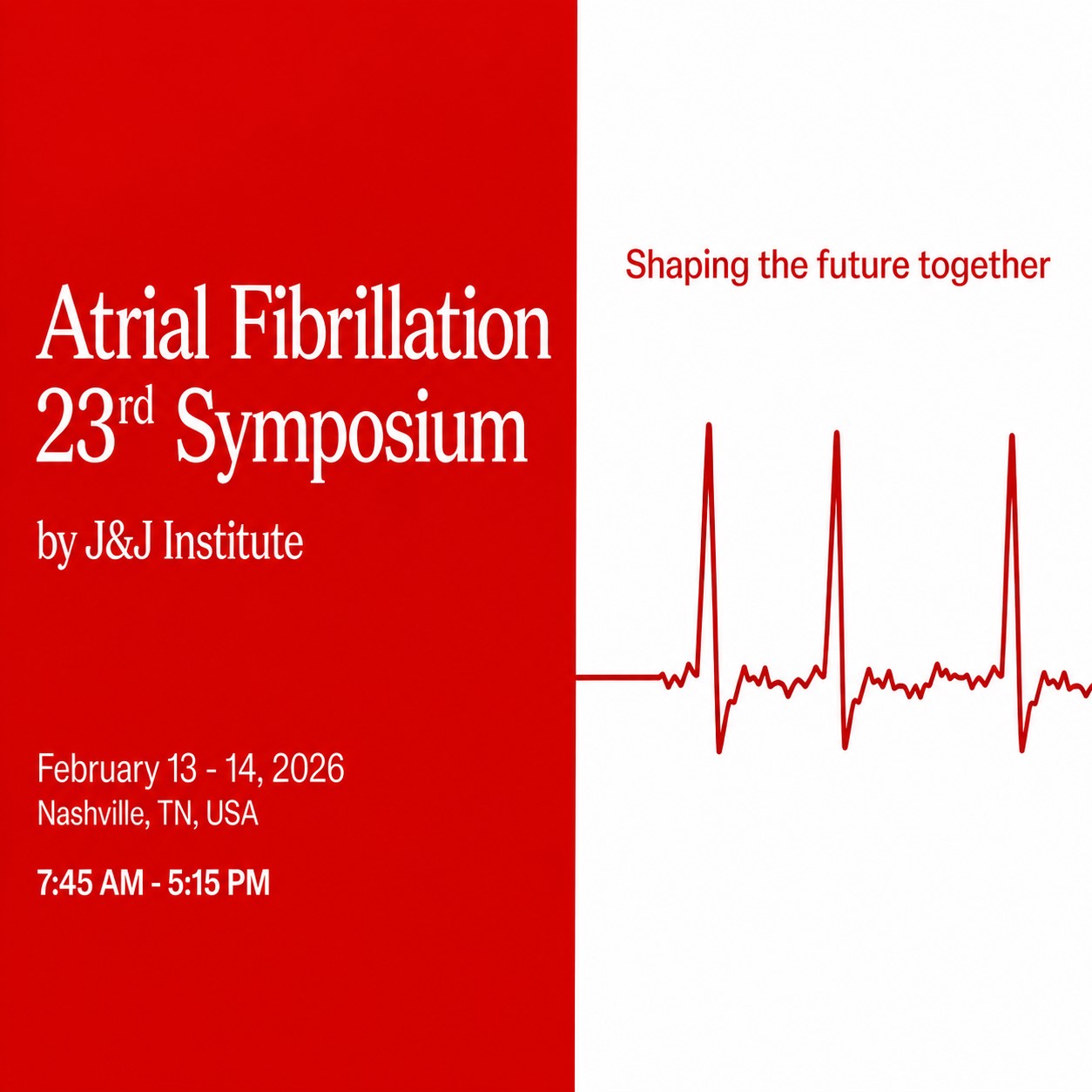


JnJInstitute Atrial Fibrillation 23rd Symposium 2025
Advanced Atrial Fibrillation & Electrophysiology Symposium
Introduction
The JnJInstitute Atrial Fibrillation 23rd Symposium 2025 is a highly specialized electrophysiology conference focused on the latest innovations, technologies, and procedural strategies in the management of atrial fibrillation (AFib).
Organized by the Johnson & Johnson Institute in collaboration with Biosense Webster, this internationally recognized symposium brings together leading electrophysiologists, innovators, and key opinion leaders to explore cutting-edge approaches to AF ablation and rhythm management.
Held in Madrid from February 12–14, 2025, the conference emphasizes highly practical, case-based education designed to improve procedural efficacy, efficiency, and safety in modern electrophysiology practice.
The program focuses on:
- Atrial fibrillation ablation
- Electrophysiology workflows
- Cardiac anatomy for AF procedures
- Lesion creation strategies
- Procedural optimization
- Mapping technologies
- Catheter ablation techniques
- Patient selection and management
- Safety and complication reduction
- Live demonstrations and case-based learning
Participants gain hands-on, clinically relevant insights into the rapidly evolving world of AF intervention and procedural electrophysiology.
You will find this course at medicalamboss.com
Course Overview
📚 Program: JnJInstitute Atrial Fibrillation 23rd Symposium 2025
🏛️ Organizers:
- Johnson & Johnson Institute
- Biosense Webster
📅 Event Dates: February 12–14, 2025
📍 Location: Madrid
🎥 Included Content
- 4 videos
- 2 PDF files
💾 Total Size: 102 GB
🎯 Educational Focus
- Atrial fibrillation
- Catheter ablation
- Electrophysiology
- AF workflow optimization
- Cardiac mapping
- Lesion creation
- Procedural safety
- Advanced EP technologies
👨⚕️ Target Audience
- Cardiologists
- Electrophysiologists
- EP fellows
- Arrhythmia specialists
- Cardiac electrophysiology teams
Educational Focus
This symposium provides advanced education in:
- AF ablation strategies
- Electrophysiology procedural workflows
- Mapping systems
- Cardiac anatomy
- Lesion optimization
- Patient management during AF intervention
The curriculum strongly emphasizes practical procedural implementation and real-world electrophysiology workflows.
Atrial Fibrillation Ablation
A major focus of the symposium is advanced AF ablation strategy.
Covered Areas
- Pulmonary vein isolation
- Persistent AF management
- Substrate modification
- Lesion durability
- Repeat ablation strategies
- Complex AF mechanisms
Faculty review procedural approaches designed to improve long-term rhythm outcomes and procedural efficiency.
Electrophysiology Workflow Optimization
Dedicated sessions address procedural workflow refinement and lab efficiency.
Educational Topics
- Procedure planning
- Workflow standardization
- Time optimization
- Catheter positioning strategies
- Efficiency improvement
- Team-based EP lab coordination
Participants learn techniques to streamline AF procedures while improving procedural safety and outcomes.
Cardiac Anatomy & Mapping
The symposium provides detailed instruction in anatomy-guided AF intervention.
Topics Include
- Left atrial anatomy
- Pulmonary vein anatomy
- Interatrial septum access
- 3D electroanatomic mapping
- Mapping interpretation
- Anatomical procedural guidance
These sessions strengthen understanding of anatomy-driven electrophysiology intervention.
Lesion Creation & Energy Delivery
A central educational theme involves optimizing lesion quality and durability.
Covered Topics
- Lesion formation principles
- Contact force optimization
- Ablation energy strategies
- RF ablation techniques
- Lesion continuity
- Procedural endpoints
Faculty discuss techniques aimed at maximizing efficacy while minimizing complications.
Procedural Safety & Complication Prevention
Advanced instruction is provided on reducing procedural risk during AF intervention.
Clinical Areas
- Esophageal injury prevention
- Pericardial tamponade management
- Thromboembolic risk reduction
- Anticoagulation strategies
- Vascular access safety
- Intraprocedural monitoring
Participants review evidence-based approaches to improving patient safety during complex EP procedures.
Case-Based Learning & Live Demonstrations
The symposium is known for its interactive educational design.
Included Educational Formats
- Case-based lectures
- Live procedural demonstrations
- Panel discussions
- Interactive expert debates
- Practical workflow sessions
These formats help participants apply advanced electrophysiology concepts directly to real-world clinical practice.
Emerging Technologies in AFib Management
The conference highlights new and evolving electrophysiology technologies.
Topics Include
- Advanced mapping systems
- Novel ablation technologies
- Contemporary EP catheters
- Future AF intervention platforms
- Procedural innovation
Faculty provide insight into how emerging technologies are reshaping AF management.
Educational Advantages
Highly Practical EP Education
Focused on real-world procedural electrophysiology.
Advanced AFib Focus
Dedicated specifically to atrial fibrillation intervention and workflow optimization.
Interactive Learning Environment
Features live demonstrations, case discussions, and expert panel interaction.
Expert Faculty Leadership
Led by internationally recognized electrophysiology specialists and innovators.
Modern Procedural Technologies
Highlights current and future AF ablation platforms and techniques.
Who Should Attend
This symposium is especially valuable for:
- Electrophysiologists
- Cardiologists specializing in arrhythmias
- EP fellows
- AF ablation operators
- Cardiac rhythm specialists
- EP lab teams
It is particularly useful for clinicians seeking to optimize AF procedural safety, efficacy, and efficiency.
Clinical Value
The JnJInstitute Atrial Fibrillation 23rd Symposium 2025 delivers advanced electrophysiology education through integrated coverage of:
- Atrial fibrillation ablation
- Pulmonary vein isolation
- Electrophysiology workflows
- Lesion creation strategies
- Mapping technologies
- Cardiac anatomy
- Procedural optimization
- AF patient management
- EP lab efficiency
- Ablation safety
- Advanced EP technologies
- Interactive case-based electrophysiology education
The combination of practical AF intervention training, expert-led procedural education, advanced mapping technologies, and workflow-focused electrophysiology strategies makes this symposium highly valuable for modern electrophysiologists and arrhythmia specialists.
+ Topics:
*Note: these are continuous video recordings during the conference, they include individual lectures mentioned in the Detail section below
Afib2025_Advance Practical_31.01.pdf
Afib2025_Scientific Advance Agenda_04.02.pdf
Feb 12.mp4 (7 hours 30 minutes)
Feb 13.mp4 (11 hours)
Feb 14 Part 1.mp4 (10 hours 40 minutes)
Feb 14 Part 2.mp4 (5 hours 10 minutes)
* Detail:
https://jnjinstitute.com/sites/default/files/2025-02/Afib2025_Advance%20Practical_31.01.pdf