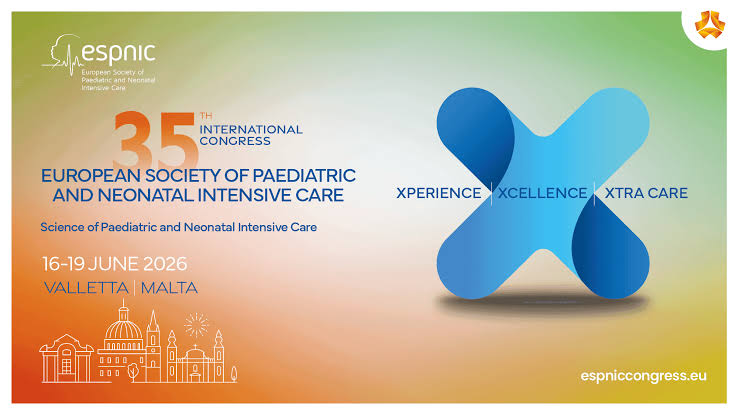
MCA Scientific Events 35th International Congress of ESPNIC 2026
$75.00
This Product is shared via google drive download link, So please share your correct Gmail id while placing the order .Please note that there are no CME points or certificate associated with this course Samples for Courses Can be found here : Free Samples Here!
MCA Scientific Events – 35th International Congress of ESPNIC 2026 (Videos)
Advanced Pediatric & Neonatal Intensive Care, PICU, NICU, ECMO, Mechanical Ventilation, POCUS & Critical Care Medicine
Advance your expertise in pediatric and neonatal critical care medicine with the 35th International Congress of the European Society of Paediatric and Neonatal Intensive Care (ESPNIC) 2026, the premier international educational event dedicated to intensive care for critically ill newborns and children.
Organized by MCA Scientific Events in collaboration with the European Society of Paediatric and Neonatal Intensive Care (ESPNIC), this prestigious congress was held June 16–19, 2026, at the Mediterranean Conference Centre, Valletta, Malta. Under the theme “Science of Paediatric and Neonatal Intensive Care,” the meeting brings together internationally recognized experts to present the latest advances in neonatal and pediatric intensive care, mechanical ventilation, extracorporeal life support, point-of-care ultrasound (POCUS), neurocritical care, sepsis management, airway management, hemodynamic monitoring, nutrition, and multidisciplinary critical care.
Designed for clinicians caring for critically ill infants and children, the congress combines evidence-based medicine, practical clinical guidance, updated international recommendations, and cutting-edge technologies to improve outcomes in both the Neonatal Intensive Care Unit (NICU) and Pediatric Intensive Care Unit (PICU).
Product Details
- Course: MCA Scientific Events – 35th International Congress of ESPNIC 2026
- Organizer: European Society of Paediatric and Neonatal Intensive Care (ESPNIC)
- Conference Organizer: MCA Scientific Events
- Conference Dates: June 16–19, 2026
- Location: Mediterranean Conference Centre, Valletta, Malta
- Format: Videos
- Language: English
- Educational Level: Advanced
- Learning Format: International Congress, Expert Lectures, Scientific Sessions, Clinical Updates, Case-Based Discussions
Course Overview
Pediatric and neonatal intensive care continues to evolve rapidly with major advances in respiratory support, extracorporeal therapies, bedside ultrasound, neuro-monitoring, hemodynamic assessment, sepsis management, and multidisciplinary critical care.
The 35th ESPNIC Congress 2026 provides a comprehensive review of modern intensive care practices for critically ill neonates and children. International experts present the latest physiological concepts, technological innovations, evidence-based guidelines, and practical bedside strategies that support safer, more effective management in both NICU and PICU settings.
The scientific program emphasizes multidisciplinary collaboration while addressing the complex respiratory, cardiovascular, neurological, infectious, renal, nutritional, and procedural challenges encountered in pediatric critical care.
What You’ll Learn
After completing this congress, participants will be able to:
- Optimize mechanical ventilation in neonatal and pediatric intensive care.
- Apply advanced Point-of-Care Ultrasound (POCUS) techniques in critically ill children.
- Utilize modern neuro-monitoring tools for neurological assessment.
- Manage septic shock using evidence-based critical care strategies.
- Perform and manage ECMO cannulation and extracorporeal support.
- Improve difficult airway management using advanced airway techniques.
- Implement current international guidelines in pediatric and neonatal intensive care.
- Enhance multidisciplinary communication and team performance within the ICU.
Comprehensive Topics Covered
Pediatric & Neonatal Intensive Care
Develop advanced intensive care skills.
Topics include:
- Pediatric critical care
- Neonatal intensive care
- PICU
- NICU
- Critical illness
- Multidisciplinary care
- Evidence-based intensive care
Mechanical Ventilation
Master advanced respiratory support.
Topics include:
- Mechanical ventilation
- Neonatal ventilation
- Pediatric ventilation
- Non-invasive ventilation
- High-frequency oscillatory ventilation (HFO)
- Prone positioning
- Ventilator optimization
Point-of-Care Ultrasound (POCUS)
Expand bedside ultrasound expertise.
Topics include:
- Cardiac ultrasound
- Lung ultrasound
- POCUS
- Vascular ultrasound
- Ultrasound-guided procedures
- Central vascular access
- Hemodynamic assessment
Neurocritical Care
Improve neurologic monitoring.
Topics include:
- Near-infrared spectroscopy (NIRS)
- Amplitude-integrated EEG (aEEG)
- Neurosonology
- Brain monitoring
- Neurologic assessment
- Neurocritical care
- Clinical decision-making
Sepsis & Hemodynamic Support
Optimize management of critically ill patients.
Topics include:
- Pediatric sepsis
- Septic shock
- Fluid resuscitation
- Vasopressors
- Inotropes
- Hemodynamic monitoring
- Blood purification
Extracorporeal Membrane Oxygenation (ECMO)
Learn advanced extracorporeal support.
Topics include:
- ECMO
- Cannulation
- Circuit emergencies
- Weaning protocols
- Extracorporeal life support
- Critical care support
- Advanced respiratory failure
Airway Management
Strengthen advanced procedural skills.
Topics include:
- Difficult airway
- Video laryngoscopy
- Fiberoptic intubation
- Front-of-neck access (FONA)
- Emergency airway
- Pediatric airway
- Neonatal airway
Critical Care Guidelines
Stay current with international recommendations.
Topics include:
- Pediatric sepsis guidelines
- Resuscitation
- Hemodynamics
- Nutrition
- Critical care protocols
- Evidence-based practice
- International recommendations
ICU Communication & Team Performance
Improve multidisciplinary care.
Topics include:
- Communication
- Debriefing
- Human factors
- Self-awareness
- Team performance
- Patient safety
- Critical care leadership
Learning Objectives
Upon completion of this educational activity, participants will be able to:
- Apply standardized terminology and optimize ventilator settings for neonatal and pediatric mechanical ventilation, including non-invasive ventilation, HFO, and prone positioning.
- Enhance communication, debriefing, and self-awareness skills within multidisciplinary critical care teams.
- Utilize advanced neuro-monitoring techniques, including NIRS, aEEG, and neurosonology, to guide clinical management.
- Perform Point-of-Care Ultrasound (POCUS) for cardiac assessment, lung evaluation, and complex vascular access.
- Manage septic shock using evidence-based antibiotic therapy, fluid management, vasoactive medications, blood purification, and ECMO when indicated.
- Perform ECMO cannulation, recognize circuit emergencies, and implement appropriate weaning strategies.
- Apply advanced airway management techniques including video laryngoscopy, fiberoptic intubation, and Front-of-Neck Access (FONA).
- Integrate current international guidelines for pediatric sepsis, resuscitation, hemodynamics, nutrition, and intensive care medicine.
Educational Highlights
- Pediatric Intensive Care (PICU)
- Neonatal Intensive Care (NICU)
- Mechanical Ventilation
- High-Frequency Oscillatory Ventilation (HFO)
- Point-of-Care Ultrasound (POCUS)
- Lung Ultrasound
- Cardiac Ultrasound
- Neurocritical Care
- NIRS
- aEEG
- ECMO
- Septic Shock
- Hemodynamic Monitoring
- Difficult Airway
- Video Laryngoscopy
- Fiberoptic Intubation
- Pediatric Sepsis
- Critical Care Nutrition
- Pediatric Resuscitation
- Continuing Medical Education (CME)
Why This Course Stands Out
The 35th International Congress of ESPNIC 2026 represents one of the world’s leading educational events dedicated exclusively to pediatric and neonatal intensive care medicine. The program combines the latest scientific evidence, international guidelines, advanced technologies, and practical bedside education into a comprehensive curriculum covering every major aspect of modern critical care. Its multidisciplinary approach makes it an essential resource for clinicians caring for critically ill newborns and children.
Target Audience
This educational activity is ideal for:
- Neonatologists
- Pediatric Intensivists
- Pediatric Pulmonologists
- Pediatric Cardiologists
- Pediatric Neurologists
- Pediatric Nephrologists
- Pediatric Oncologists
- Pediatric Emergency Physicians
- Pediatric Critical Care Fellows
- Pediatric Residents
- Critical Care Nurses
- Respiratory Therapists
- Advanced Practice Providers working in NICU and PICU
Why Choose This Course?
Whether you specialize in neonatal intensive care, pediatric critical care, pediatric pulmonology, or pediatric emergency medicine, the 35th International Congress of ESPNIC 2026 provides an exceptional evidence-based update on the latest advances in respiratory support, bedside ultrasound, neuro-monitoring, ECMO, sepsis management, airway procedures, hemodynamic optimization, and multidisciplinary intensive care. Through expert-led international lectures and practical clinical guidance, participants gain valuable knowledge that enhances patient safety and improves outcomes for critically ill infants and children.
Topics
-
Masterclasses
-
Paediatric and Neonatal Mechanical Ventilation
-
Communication and Debriefing Skills
-
Advanced Neuro-Monitoring
-
POCUS in Neonatal and Paediatric Intensive Care Unit
-
Septic Shock
-
ECMO
-
Difficult Airway Management
-
-
Plenary Sessions
-
Creating a better PICU
-
HOT LATEST GUIDELINES – New resuscitation guidelines
-
HOT LATEST GUIDELINES – SSC Guidelines
-
Frontiers in paediatric critical care: physiological & technological advances
-
When medicine meets law – decision making, disputes and future of paediatric critical care
-
What can we learn from… (pARDS, AI & digital innovation, acute kidney injury)
-
Ethical conundrums in paediatrics critical care
-
The next 10 Year
-
-
Scientific & Interdisciplinary Sessions
-
Respiratory Battles in PICU: PEEP, Breathing, and the Ventilation Divide
-
At the heart of innovation in cardiac critical care
-
The ICU moving home: transition to long-term home mechanical ventilation in children
-
Neurocritical care 2026: rethinking inflammation and perfusion targets
-
New Horizons in Neonatal High-Frequency Oscillatory Ventilation
-
Nursing care practices update
-
Beyond survival: redefining outcomes for the extremely preterm infant
-
Conundrums in liver intensive care
-
Hands-on CRRT emergencies
-
Resuscitation beyond algorithms: people, presence, and performance
-
Resuscitation without borders: neonate to trauma bay
-
Infection, inflammation and sepsis: what’s new in your field?
-
Pharmacokinetics in the fast lane
-
How POCUS changed my practice?
-
Smart but simple: practical technology in the CICU
-
Children with cancer coming to your PICU: time for personalized management?
-
PICU Liberation re-imagined
-
Creating a mindful recovery
-
PRIMERS – Back to basics: what intensivists always wanted to know about
-
Conundrums in the management of shock
-
Blood management: blood is gold
-
The ins and outs of BPD: from birth into adulthood
-
Oncological emergencies: what should the intensivist know?
-
Beyond dialysis: protecting and restoring the pediatric kidney
-
Intravenous fluid management: moving away from uncertainty
-
First, do no harm: rethinking what we infuse in PICU
-
Neurocritical care reimagined: from big data to bedside
-
High flow nasal cannula in the critically ill child: current evidence and clinical applications
-
Extracorporeal support in liver ICU
-
Protecting the paediatric lung and diaphragm: challenges and tools
-
The delicate brain: sedation, haemodynamics, and humanising care
-
Fluids, steroids, and beyond: modern cardiac critical care
-
New pediatric sepsis guidelines
-
The future is today – how AI will change pediatric and neonatal intensive care
-
The next generation of ICU healthcare professionals
-
Medication effects on growing bodies and minds with failing organs
-
The art of writing and publishing – Best of journals
-
From evidence to impact: improving outcomes in PICU
-
Clinical challenges in paediatric and neonatal critical care nutrition and metabolism
-
ESPNIC EURO-ELSO Joint session
-
The NEXT GENERATION of PICU trials
-
What’s new in your field: 2026 updates on best practices in critical care
-
ESPNIC-SCCM Session
-
Decoding the brain: biomarkers, monitoring, and meaning in neurocritical care
-
Challenges in paediatric and neonatal critical care
-
Should we offer ECMO in….?
-
Related products

Pediatrics
Critical Care - Emergency medicine
Gulfcoast Pediatric Emergency and Critical Care Ultrasound 2019

Family medicine

Critical Care - Emergency medicine
Critical Care - Emergency medicine