
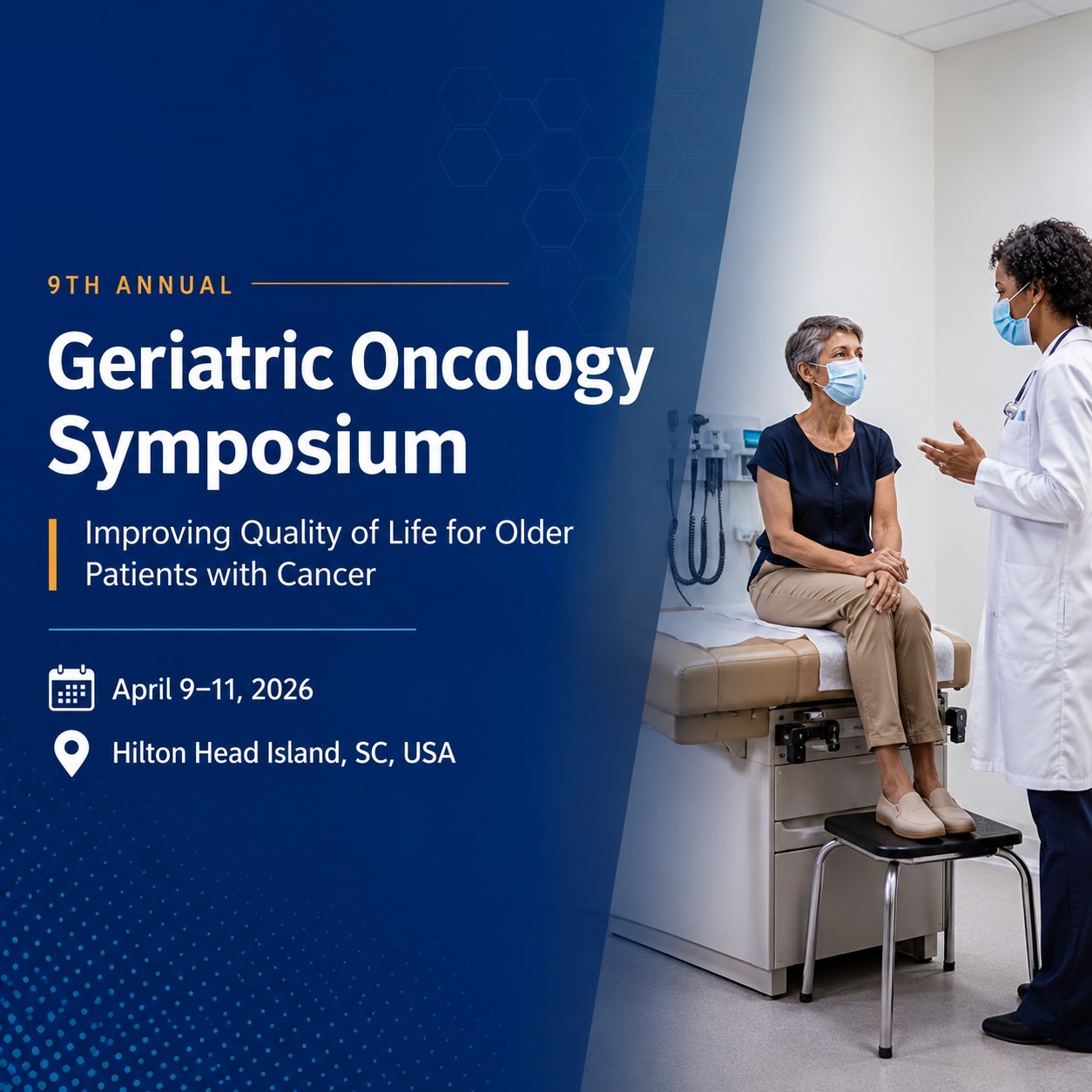
Memorial Sloan Kettering Cancer Center Geriatric Oncology Symposium Rapid Diagnosis, Early Detection, Risk Reduction, and Innovations 2026
Original price was: $350.00.$30.00Current price is: $30.00.
This Product is shared via google drive download link, So please share your correct Gmail id while placing the order .Please note that there are no CME points or certificate associated with this course Samples for Courses Can be found here : Free Samples Here!
Memorial Sloan Kettering Cancer Center Geriatric Oncology Symposium: Rapid Diagnosis, Early Detection, Risk Reduction & Innovations 2026
Advanced Geriatric Oncology Strategies for Cancer Care in Older Adults
The Memorial Sloan Kettering Cancer Center Geriatric Oncology Symposium 2026 is a comprehensive evidence-based educational program focused on improving cancer care for older adults. As the aging population continues to grow, clinicians increasingly face the challenges of managing cancer in patients with complex medical, functional, and psychosocial needs. This symposium provides practical guidance and innovative approaches to enhance diagnosis, treatment, risk reduction, and quality of life for geriatric oncology patients.
Hosted by Memorial Sloan Kettering Cancer Center (MSKCC), this one-day virtual symposium explores emerging strategies for rapid diagnosis, early disease detection, multimorbidity management, digital health integration, and personalized care delivery. Through multidisciplinary presentations and expert-led discussions, participants gain practical tools to improve outcomes while minimizing treatment-related harm in older adults with cancer.
Product Details
- Course: Geriatric Oncology Symposium: Rapid Diagnosis, Early Detection, Risk Reduction & Innovations
- Provider: Memorial Sloan Kettering Cancer Center (MSKCC)
- Course Date: April 28, 2026
- Format: Online Virtual Symposium
- Course Year: 2026
- Educational Focus: Geriatric Oncology
Program Overview
This symposium focuses on the unique challenges of caring for older adults with cancer.
Key areas of focus include:
- Geriatric Oncology
- Cancer Screening & Early Detection
- Rapid Diagnostic Pathways
- Multimorbidity Management
- Frailty Assessment
- Risk Reduction Strategies
- Digital Health
- Precision Geriatric Care
- Cancer Prevention
- Quality of Life
- Functional Assessment
- Supportive Oncology
- Care Coordination
- Health Technology Innovation
The curriculum integrates clinical, psychosocial, and technological approaches to optimize care delivery.
Learning Objectives
Upon completion of this activity, participants will be able to:
- Implement rapid diagnostic strategies for timely disease detection in older adults.
- Apply evidence-based approaches to early cancer detection and prevention.
- Assess and manage multimorbidity in geriatric oncology patients.
- Utilize digital health technologies to improve clinical care and monitoring.
- Identify risk reduction strategies that enhance patient safety and outcomes.
- Integrate multidisciplinary approaches into geriatric cancer management.
- Improve clinical decision-making through individualized patient assessment.
- Enhance quality of life and supportive care for older adults with cancer.
Core Topics Covered
Rapid Diagnosis in Older Adults
Participants review:
- Diagnostic workflow optimization
- Early symptom recognition
- Timely referral strategies
- Diagnostic efficiency
- Reducing delays in care
Faculty discuss approaches that accelerate accurate diagnosis and treatment initiation.
Early Detection & Cancer Prevention
Sessions explore:
- Screening strategies
- Risk assessment tools
- Prevention initiatives
- Early-stage disease recognition
- Population-based interventions
Evidence-based approaches for improving outcomes through earlier detection are emphasized.
Multimorbidity in Geriatric Oncology
Topics include:
- Complex chronic disease management
- Polypharmacy considerations
- Functional assessment
- Treatment decision-making
- Balancing risks and benefits
Participants learn strategies for managing medically complex patients.
Frailty & Functional Assessment
The symposium reviews:
- Geriatric assessment tools
- Frailty screening
- Functional status evaluation
- Treatment tolerance prediction
- Personalized care planning
Practical methods for incorporating geriatric principles into oncology practice are discussed.
Risk Reduction & Patient Safety
Key discussions include:
- Prevention of treatment-related complications
- Falls risk reduction
- Medication safety
- Hospitalization prevention
- Supportive care interventions
Faculty highlight strategies to minimize harm while maximizing treatment effectiveness.
Digital Health & Innovation
Participants explore:
- Telemedicine applications
- Remote patient monitoring
- Artificial intelligence in geriatric care
- Clinical decision support tools
- Digital health integration
The course examines how emerging technologies are transforming oncology care.
Quality of Life & Supportive Care
Sessions focus on:
- Symptom management
- Psychosocial support
- Cognitive health
- Patient-centered care
- Survivorship planning
Improving overall well-being remains a central theme throughout the symposium.
Multidisciplinary Geriatric Oncology Care
Topics include:
- Team-based care models
- Care coordination
- Rehabilitation strategies
- Social support systems
- Interprofessional collaboration
Participants gain insight into comprehensive approaches that improve outcomes across the continuum of care.
Educational Features
✔ Evidence-Based Geriatric Oncology Updates
✔ Rapid Diagnosis & Early Detection Strategies
✔ Multimorbidity Management
✔ Digital Health Innovations
✔ Frailty & Functional Assessment Tools
✔ Patient Safety & Risk Reduction Focus
✔ Multidisciplinary Expert Faculty
✔ Practical Clinical Applications
Target Audience
This course is ideal for:
- Medical Oncologists
- Radiation Oncologists
- Surgical Oncologists
- Geriatricians
- Internal Medicine Physicians
- Family Medicine Physicians
- Nurse Practitioners
- Physician Assistants
- Registered Nurses
- CRNAs
- Fellows & Residents
- Physical Therapists
- Occupational Therapists
- Respiratory Therapists
- Social Workers
- Case Managers
- Healthcare Professionals Caring for Older Adults
Why This Course Stands Out
✔ Dedicated focus on cancer care in older adults
✔ Addresses rapidly growing geriatric oncology needs
✔ Strong emphasis on early detection and prevention
✔ Covers multimorbidity and frailty management
✔ Integrates emerging digital health technologies
✔ Practical strategies for reducing patient harm
✔ Multidisciplinary and patient-centered approach
✔ Immediate applicability to clinical practice
Clinical & Educational Value
The Memorial Sloan Kettering Cancer Center Geriatric Oncology Symposium 2026 provides a comprehensive review of modern geriatric oncology practice. Through expert-led presentations and multidisciplinary discussions, participants gain practical knowledge on rapid diagnosis, early detection, multimorbidity management, risk reduction, supportive care, and emerging healthcare innovations. The course equips clinicians with evidence-based strategies to improve outcomes and quality of life for older adults with cancer.
4. Topics
Topics (16 Lectures):
-
CAIT Clinic Model- Updates on Risk Stratification Prior to Chemotherapy
-
Case Study
-
Digital Health- Updates on Current Research
-
Early Detection and Risk Reduction Q&A and Panel Discussion
-
EHR Implementation- Lessons learned
-
Good Time to Stop- Cancer Screening in High-risk Older Adults
-
Implications of Sensory Changes in Oncology Care
-
Improving Care for Older Adults Undergoing Surgery Implementing the ACS (GSV) Program
-
Keynote Address- Caring for Patients with Multimorbidity
-
Minimizing Postoperative Complications in Older Adults with Breast Cancer
-
Novel Technologies and Geriatric Oncology Q&A and Panel Discussion
-
Optimizing Care Q&A and Panel Discussion
-
Palliative Care and Geriatrics Service- Who Does What for Patients with Serious Illnesses-
-
RADAR and Older Adult with Cancer
-
Rapid Diagnosis Q&A and Panel Discussion
-
Reducing Risk in an Age-friendly Environment
-
Telehealth and the Older Adult
-
Upcoming MSK Technology Innovations
Related products
Critical Care - Emergency medicine
Medical Accounts
Critical Care - Emergency medicine
Critical Care - Emergency medicine
Critical Care - Emergency medicine
2022 UPDATES IN THERAPEUTICS: CRITICAL CARE PHARMACY PREPARATORY REVIEW AND RECERTIFICATION COURSE

USMLE / kaplan and Board Review
Uworld USMLE COMLEX Level 1 Qbank, Updated Jan 2023, System- and Subject-wise (PDF)