
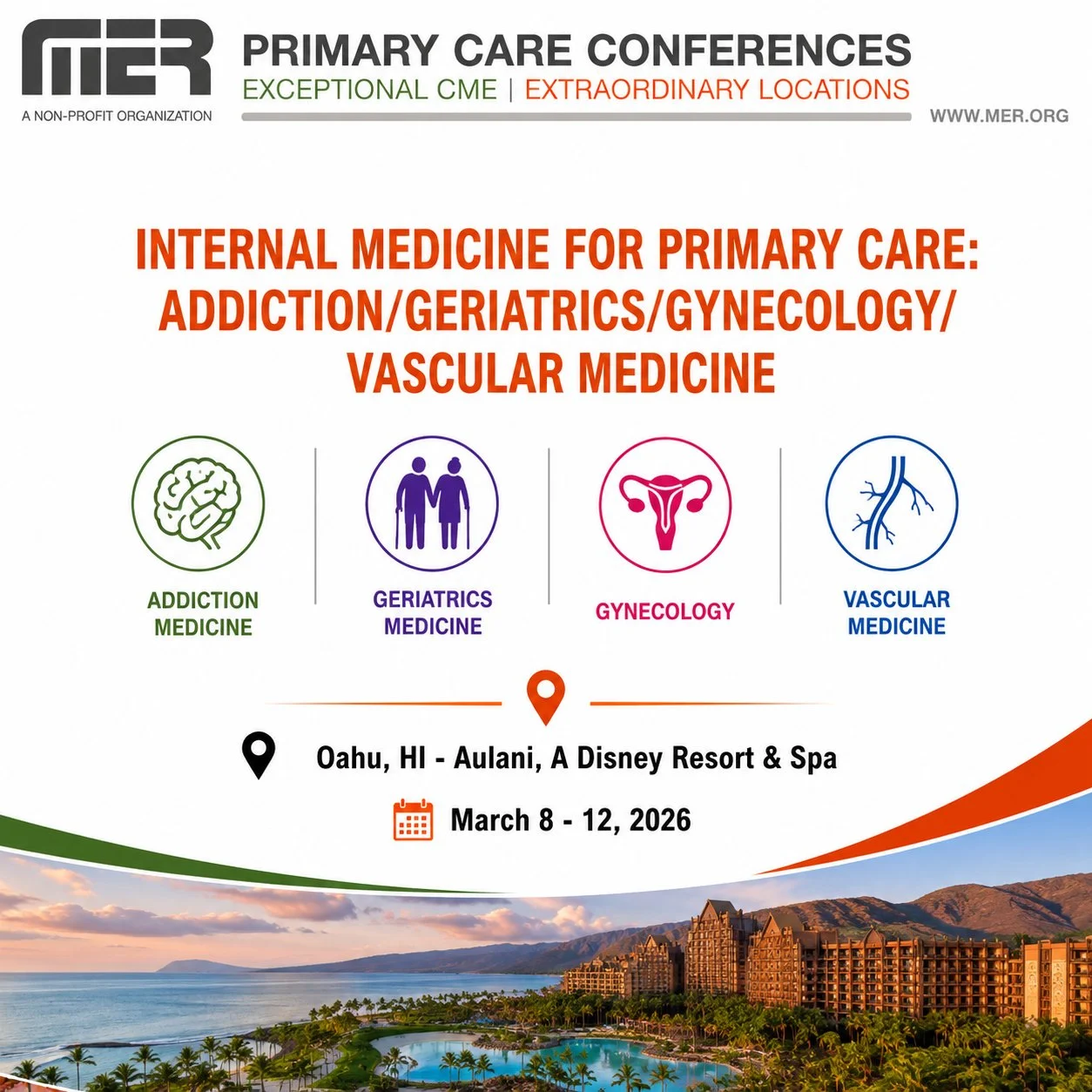
MER Primary Care Conferences Internal Medicine for Primary Care Addiction Geri Gyn Vasc Mar 08-12, 2026
Original price was: $1,195.00.$130.00Current price is: $130.00.
MER Primary Care Conferences 2026 covers addiction medicine, geriatrics, gynecology and vascular care for practical internal medicine review.
Delivery Information: This Product is shared via google drive download link. Please use your correct Gmail address at checkout.
Please note: there are no CME points or certificate associated with this course.
Samples for Courses Can be found here: Free Samples Here!
MedicalAmboss File Scope: This listing summarizes the official educational program for reference. Provider registration, live participation, streaming access, CME or MOC credit, certificates, apps, accounts, and post-course access are not represented as included unless they are explicitly present in the listed store files. MedicalAmboss.
MER Primary Care Conferences Internal Medicine for Primary Care: Addiction, Geriatrics, Gynecology & Vascular Medicine 2026
Comprehensive Primary Care Updates in Addiction Medicine, Geriatrics, Women’s Health, and Vascular Disease
MER Primary Care Conferences Internal Medicine for Primary Care: Addiction, Geriatrics, Gynecology & Vascular Medicine 2026 is a multidisciplinary continuing medical education program designed to provide primary care clinicians with practical, evidence-based updates across four important areas of modern outpatient medicine. Hosted by Medical Education Resources (MER), this comprehensive conference delivers clinically relevant education focused on substance use disorders, geriatric medicine, women’s health, cardiovascular risk reduction, and vascular disease management.
Held at Aulani, A Disney Resort & Spa in Oahu, Hawaii, the program combines expert-led lectures, case-based learning, and guideline-driven discussions that help healthcare professionals improve diagnostic accuracy, treatment planning, preventive care, and long-term patient outcomes.
Course Overview
Primary care providers frequently manage complex patients with overlapping medical, behavioral, and age-related conditions. This conference provides a focused review of common and challenging issues encountered in everyday clinical practice, including substance use disorders, heart failure, hypertension, urinary symptoms, menopause, abnormal uterine bleeding, HPV management, peripheral vascular disease, stroke prevention, and venous thromboembolic disease.
Participants gain practical strategies that can be immediately incorporated into office-based care, improving patient outcomes while staying current with evolving clinical guidelines.
Key Topics Covered
Addiction Medicine
Comprehensive sessions explore:
- Substance use disorder identification
- Screening and assessment tools
- Alcohol use disorder management
- Opioid use disorder treatment
- Harm reduction strategies
- Relapse prevention
- Behavioral interventions
- Medication-assisted treatment principles
- Case-based addiction management
Participants learn practical approaches to integrating addiction medicine into primary care.
Substance Abuse and Dependence
Coverage includes:
- Alcohol-related disorders
- Tobacco dependence
- Stimulant use disorders
- Hallucinogen-related disorders
- Sedative misuse
- Inhalant abuse
- Emerging drug trends
- Withdrawal recognition and management
Faculty discuss evidence-based treatment approaches and patient engagement strategies.
Pain Management Alternatives
Topics include:
- Non-opioid pain therapies
- Multimodal pain management
- Behavioral approaches to chronic pain
- Opioid reduction strategies
- Functional restoration techniques
- Risk mitigation practices
Participants learn how to manage pain while minimizing opioid exposure.
Geriatric Medicine
Sessions focus on:
- Healthy aging
- Functional assessment
- Frailty evaluation
- Polypharmacy management
- Urinary symptoms in older adults
- Urinary incontinence
- Chronic disease management
- Preventive care in older adults
Practical guidance is provided for caring for complex geriatric populations.
Cardiovascular Medicine
Comprehensive updates include:
Heart Failure
- Heart failure with reduced ejection fraction (HFrEF)
- Heart failure with preserved ejection fraction (HFpEF)
- Evidence-based therapies
- Guideline-directed medical treatment
- Risk stratification
- Long-term management
Hypertension
- Diagnostic evaluation
- Blood pressure goals
- Management in younger adults
- Management in older adults
- Cardiovascular risk reduction
- Contemporary treatment recommendations
Case-based discussions reinforce clinical decision-making.
Women’s Health and Gynecology
Participants review:
Abnormal Uterine Bleeding
- Evaluation strategies
- Differential diagnosis
- Medical management
- Referral considerations
Cervical Cancer Prevention
- HPV screening
- Pap smear interpretation
- Abnormal cervical cytology management
- Risk-based follow-up strategies
Menopause Management
- Menopausal transition
- Hormone therapy
- Non-hormonal treatments
- Risk-benefit discussions
- Individualized care planning
Contraception
- Shared decision-making
- Complex contraceptive counseling
- Long-acting reversible contraception
- Patient-centered family planning
Breast Cancer Screening
- Current screening recommendations
- Risk assessment
- Shared decision-making strategies
Vascular Medicine
The program provides a comprehensive review of:
Peripheral Arterial Disease (PAD)
- Diagnosis
- Risk factor modification
- Medical therapy
- Interventional treatment options
Stroke Care
- Stroke recognition
- Acute management principles
- Secondary prevention
- Vascular risk reduction
Aneurysm Management
- Screening recommendations
- Medical management
- Pharmacologic treatment options
- Referral considerations
Venous Thromboembolism
- Deep vein thrombosis (DVT)
- Pulmonary embolism
- Anticoagulation strategies
- Long-term management
Chronic Venous Disease
- Leg swelling
- Venous insufficiency
- Dysvascular ulcers
- Interventional therapies
Learning Objectives
Upon completion of this program, participants will be able to:
- Identify and treat substance use disorders using evidence-based strategies.
- Develop treatment plans for alcohol use disorder and other addictive conditions.
- Incorporate non-pharmacologic approaches into chronic pain management.
- Assess and manage lower urinary tract symptoms and urinary incontinence.
- Apply guideline-based treatment strategies for heart failure and hypertension.
- Evaluate and manage abnormal uterine bleeding.
- Interpret abnormal Pap smears and HPV testing results.
- Counsel patients regarding menopause and contraceptive options.
- Implement current breast cancer screening recommendations.
- Recognize and manage peripheral vascular disease.
- Evaluate and treat venous thrombosis and chronic venous disorders.
- Apply contemporary approaches to stroke prevention and vascular risk reduction.
Educational Features
✔ Evidence-Based Primary Care Updates
✔ Addiction Medicine Training
✔ Geriatric Medicine Review
✔ Women’s Health & Gynecology Updates
✔ Vascular Medicine Essentials
✔ Heart Failure & Hypertension Management
✔ Case-Based Clinical Discussions
✔ Practical Office-Based Strategies
✔ Multidisciplinary Learning
✔ CME-Focused Education
Target Audience
This course is designed for:
- Primary Care Physicians
- Internal Medicine Physicians
- Family Medicine Physicians
- Geriatricians
- Addiction Medicine Physicians
- Gynecologists
- Vascular Medicine Specialists
- Nurse Practitioners
- Physician Assistants
- Hospitalists
- Healthcare Professionals Providing Adult Primary Care
Why This Course Matters
Today’s primary care clinicians must effectively manage a diverse range of conditions spanning behavioral health, chronic disease, preventive care, women’s health, aging, and vascular medicine. MER Internal Medicine for Primary Care: Addiction, Geriatrics, Gynecology & Vascular Medicine 2026 provides a practical and clinically relevant review of these interconnected disciplines, helping providers deliver comprehensive, patient-centered care based on current evidence and best practices.
The program equips clinicians with actionable knowledge that enhances diagnostic accuracy, supports individualized treatment decisions, and improves outcomes across a broad spectrum of primary care conditions.
4. Topics
Here is the full and detailed list of topics covered during the conference:
Addiction:
-
Substance Use Disorders: Diagnosis and Screening for Primary Care Practitioners: Essential information and skills necessary for identifying substance use and addiction in the primary care setting; Epidemiology, assessment and screening tools; Practical steps for intervention.
-
Drugs: Review of Addictive Drugs and Their Effects: This module will review hallucinogens, stimulants, inhalants, sedatives, tobacco and alcohol.
-
The Opioid Crisis and Primary Care Providers: Update on the opioid crisis; Risk for opioid misuse and addiction; FDA approved medication for treating overdose; FDA approved medication-assisted treatment (MAT) for managing opioid addiction.
-
Treatment of Alcohol Use Disorder in Primary Care: The scope of alcohol related problems and the societal burden of Alcohol Use Disorder; Overview of FDA-approved and more common off-label pharmacotherapies for Alcohol Use Disorder.
-
Addiction Medicine Cases: Challenging case presentations in addiction medicine.
Geriatrics:
-
Urological Disorders in the Older Adult: Review common lower urinary tract symptoms (LUTS) in older adults that may progress to incontinence; Practical approaches to differential diagnoses and management of Stress Incontinence, Overflow Incontinence, and Overactive Bladder (OAB), leading to Urge Incontinence.
-
Heart Failure in Older Adults: Recognition of the high mortality associated with heart failure; Understanding how to diagnose heart failure and the difference between reduced ejection fraction and preserved ejection fraction heart failure; Evidence based treatments available for heart failure.
-
Heart Failure Discussion and Q&A: Interactive review of the principles of heart failure diagnosis and treatment in older adults, and audience questions further clarifying the topic.
-
Controversies in the Management of Hypertension in Older Adults: Best evidence for treatment goals for hypertension in diabetics and those with previous stroke; Controversial evidence for the various guidelines for diagnosing and treating hypertension in older adults; Best evidence-based medications for hypertension.
-
Hypertension Discussion and Q&A: Interactive review of the principles of hypertension diagnosis and treatment in older adults, and audience questions further clarifying the topic.
Gynecology:
-
Abnormal Uterine Bleeding: Overview of normal/abnormal menstrual physiology/profile; Menstrual disturbances; Ovulatory and anovulatory uterine bleeding; Other menstrual abnormalities; Diagnosis and appropriate treatment options.
-
Abnormal Pap Smears and High Risk HPV: Current recommendations for cervical cancer screening; Incorporating the ASCCP consensus guidelines for management of cytologic cervical abnormalities (including ASCUS, LGSIL, HGSIL and atypical glandular cells) into your practice; Algorithm for the appropriate use of HPV testing; History of HPV and effectiveness of its use; Recommendations for missed doses; Storage and administration of HPV vaccines.
-
Menopause Transition and Hormone Replacement Therapy: Symptoms of menopause, including hot flashes, night sweats, and atrophy; Menopause syndromes, including osteoporosis, breast cancer, cardiac disease, and colon cancer; Estrogen analogs; Counseling patients in options and alternatives to hormone therapy; Designer estrogens; SERMS; HRTs; Discussion of risks and benefits, especially in breast cancer and CHD.
-
Contraception: A Primary Care Review of Best Practice: Coverage of the effectiveness, side effects and non-contraceptive benefits of available contraceptive options in the U.S.; Discussion of contraceptive counseling that is patient-centric including communicating without coercion; Management strategies for medically complex contraceptive decisions (patients with a history of VTE, breast cancer, hypertension).
-
Breast Cancer Screening: Comparison of recent breast cancer screening recommendations from U.S. Preventive Services Task Force, ACOG/ACS/NCCN, including a discussion of risks and benefits of screening at various ages; Review of the new USPSTF guideline on BRCA-related cancer: risk assessment, genetic counseling, and genetic testing, including risk assessment tools for women with a personal or family history of breast, ovarian and related cancers.
Vascular Medicine:
-
Peripheral Vascular Disease and Medical Therapy: Defining the spectrum of maladies under the umbrella of Peripheral Vascular Disease including the pathophysiology of atherosclerosis and treatments highlighting lipid lowering agents and antiplatelet therapy.
-
Stroke: Initial Presentation to Medical and Surgical Treatment: An overview of embolic stroke including diagnosis and medical, surgical, and interventional therapy.
-
Aortic and Peripheral Aneurysms: A guide for primary care outlining diagnosis, management, and therapeutic options.
-
Management of Venous Thrombosis: A discussion focusing on the variety of venous thrombotic diagnoses and the multiple available treatment options.
-
The Dysvascular Limb: How to Approach Swelling and Ulcers: An organizational approach to swelling and lower extremity ulceration focusing on the differential diagnosis, pathophysiology, and treatment.
Related products
Internal Medicine

Internal Medicine

USMLE / kaplan and Board Review
Uworld USMLE COMLEX Level 1 Qbank, Updated Jan 2023, System- and Subject-wise (PDF)

Critical Care - Emergency medicine

Critical Care - Emergency medicine
Critical Care - Emergency medicine
2022 UPDATES IN THERAPEUTICS: CRITICAL CARE PHARMACY PREPARATORY REVIEW AND RECERTIFICATION COURSE
Medical Accounts

Critical Care - Emergency medicine