
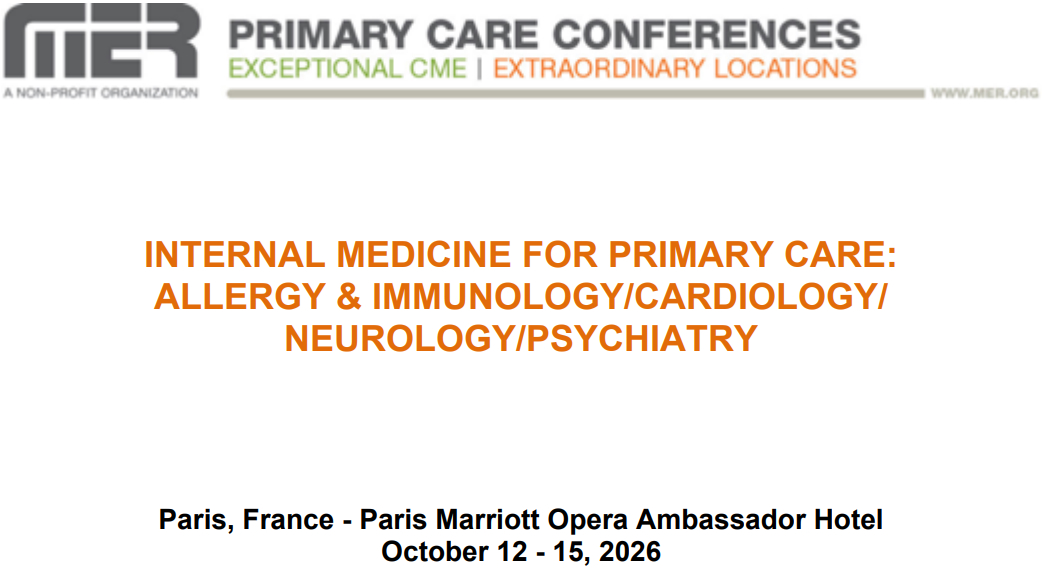
MER Primary Care Conferences Internal Medicine for Primary Care Allergy & Immuno Cardio Neuro Psych Oct 12-15, 2026

$150.00
This Product is shared via google drive download link, So please share your correct Gmail id while placing the order .Please note that there are no CME points or certificate associated with this course Samples for Courses Can be found here : Free Samples Here!
MER Primary Care Conferences Internal Medicine for Primary Care Allergy & Immuno Cardio Neuro Psych Oct 12–15, 2026
MER Internal Medicine for Primary Care 2026 | Allergy & Immunology, Cardiology, Neurology, Psychiatry, Asthma, Heart Failure, Alzheimer’s Disease, Migraine & Clinical Updates
The MER Primary Care Conferences Internal Medicine for Primary Care: Allergy & Immunology/Cardiology/Neurology/Psychiatry October 12–15, 2026 is a comprehensive four-day continuing medical education program designed for physicians, advanced practice providers, and other healthcare professionals seeking practical, evidence-based updates in outpatient and primary care medicine.
Organized by Medical Education Resources (MER), a nonprofit continuing medical education provider, the conference was scheduled for October 12–15, 2026, in Paris, France.
The educational curriculum focuses on four important areas of adult medicine: Allergy and Immunology, Cardiovascular Medicine, Neurology, and Psychiatry.
Through clinically focused presentations, case-based discussions, and updates on medical research and practice guidelines, the course aims to strengthen diagnostic decision-making, treatment selection, preventive care, patient safety, and the management of common chronic medical conditions.
The allergy and immunology curriculum emphasizes the evaluation and management of asthma, allergic rhinitis, sinusitis, atopic dermatitis, anaphylaxis, and appropriate indications for immunotherapy.
Cardiology topics include prevention of coronary artery disease, lipid management, cardiovascular risk assessment, diagnostic testing for suspected coronary disease, heart failure, cardiac arrhythmias, and atrial fibrillation.
The neurology component addresses the evaluation of weakness, Alzheimer’s disease and other dementias, Parkinson’s disease, movement disorders, and migraine headaches.
Psychiatry sessions focus on depression, suicide risk assessment, bipolar disorder, psychiatric comorbidities, and case-based approaches to mental health treatment in primary care.
The program also emphasizes physician well-being, professional fulfillment, and rediscovering satisfaction in medical practice, recognizing the importance of clinician resilience and effective patient-centered care.
The original conference is described as offering up to 16 AMA PRA Category 1 Credits, subject to MER’s accreditation and participation requirements.
Course Details
- Course: MER Primary Care Conferences Internal Medicine for Primary Care Allergy & Immuno/Cardio/Neuro/Psych
- Official Title: Internal Medicine for Primary Care: Allergy & Immunology/Cardiology/Neurology/Psychiatry
- Organizer: Medical Education Resources (MER)
- Organization Type: Nonprofit Continuing Medical Education Provider
- Edition: 2026
- Conference Dates: October 12–15, 2026
- Duration: Four Days
- Location: Paris, France
- Venue in Supplied Course Description: Paris Marriott Opera Ambassador Hotel
- Original Format: Live Continuing Medical Education Conference
- Reported Maximum CME: 16 AMA PRA Category 1 Credits
- Primary Specialty: Internal Medicine
- Core Specialties: Allergy & Immunology, Cardiology, Neurology, Psychiatry
- Additional Focus: Family Medicine, Preventive Medicine, Clinical Pharmacology and Behavioral Health
- Language: English
- Educational Approach: Clinical Updates, Evidence-Based Reviews, Case Discussions and Practical Treatment Recommendations
Venue Clarification: The supplied description identifies Paris Marriott Opera Ambassador Hotel, while an earlier MER 2026 brochure identifies Paris Marriott Champs Elysees Hotel. The final venue should be confirmed against the specific conference registration record.
Course Highlights
- Allergy and Immunology for Primary Care
- Asthma Diagnosis and Management
- Allergic Rhinitis
- Sinusitis
- Atopic Dermatitis
- Anaphylaxis
- Allergy Testing and Immunotherapy
- Coronary Artery Disease Prevention
- Dyslipidemia
- Cholesterol Management
- Cardiovascular Risk Assessment
- Suspected Coronary Artery Disease
- Cardiac Diagnostic Testing
- Heart Failure
- Cardiac Arrhythmias
- Atrial Fibrillation
- Evaluation of Weakness
- Alzheimer’s Disease
- Dementia
- Parkinson’s Disease
- Movement Disorders
- Migraine Headaches
- Depression
- Suicide Risk Assessment
- Bipolar Spectrum Disorders
- Psychiatric Comorbidities
- Case-Based Psychiatry
- Physician Well-Being and Professional Fulfillment
Target Audience
The program is intended for office-based primary care physicians and healthcare professionals involved in adult patient assessment, diagnosis, and treatment.
It is particularly relevant to:
- Internal Medicine Physicians
- Primary Care Physicians
- Family Medicine Physicians
- General Practitioners
- Allergists
- Clinical Immunologists
- Cardiologists
- Neurologists
- Psychiatrists
- Geriatricians
- Hospitalists
- Preventive Medicine Physicians
- Nurse Practitioners
- Physician Assistants
- Physician Associates
- Clinical Pharmacists
- Registered Nurses
- Medical Residents
- Clinical Fellows
- Other Healthcare Professionals Involved in Adult Outpatient Medicine
Learning Objectives
Upon completion of the original educational program, participants should be better able to:
Neurology
- Utilize patient history and physical examination to distinguish true neurological weakness from nonspecific symptoms.
- Discuss evidence-based treatment approaches for Alzheimer’s disease and related cognitive disorders.
- Recognize the cardinal features of Parkinson’s disease and differentiate common movement disorders.
- Evaluate migraine headaches, consider appropriate differential diagnoses, and review available treatment options.
Allergy and Immunology
- Apply efficient and cost-effective approaches to the management of asthma, allergic rhinitis, and sinusitis.
- Discuss the epidemiology, risk factors, and causes of atopic dermatitis.
- Recognize anaphylactic reactions, understand emergency management principles, and identify appropriate indications for allergen immunotherapy.
Cardiology
- Implement lifestyle interventions and evidence-based lipid management strategies to reduce the risk of coronary artery disease.
- Evaluate patients with suspected coronary artery disease using appropriate risk assessment methods and diagnostic testing.
- Apply current evidence and guideline-directed medical therapies to the management of heart failure.
- Review contemporary diagnostic and treatment strategies for arrhythmias and atrial fibrillation.
Psychiatry
- Recognize clinical symptoms and behavioral changes associated with increased suicide risk in patients with depression.
- Select appropriate pharmacological and nonpharmacological treatment approaches for depressive disorders.
- Review psychosocial and medication-based treatment strategies for bipolar spectrum disorders and associated psychiatric comorbidities.
- Apply case-based clinical reasoning when evaluating patients with common psychiatric presentations.
Professional Development
- Describe practical strategies for improving professional fulfillment and rediscovering satisfaction in medical practice.
Comprehensive Scientific Curriculum
The following curriculum is organized according to the four specialties and the learning objectives supplied for this conference.
The sections represent the documented educational subject areas. They are not an independently verified chronological list of lecture titles, dates, or faculty assignments.
Section I – Neurology for Primary Care
1. Evaluation of Weakness
Specialty: Neurology
Neurological weakness is an important clinical presentation that may result from central nervous system disorders, peripheral nerve conditions, neuromuscular junction disease, muscle disorders, or systemic illness.
This educational area examines approaches to distinguishing objective weakness from fatigue, generalized symptoms, or other nonspecific complaints.
Major Topics:
- Neurological Weakness
- Clinical History
- Neurological Examination
- Motor Strength Assessment
- Upper and Lower Motor Neuron Findings
- Peripheral Neuropathy
- Neuromuscular Disorders
- Myopathy
- Differential Diagnosis
- Clinical Red Flags
- Diagnostic Testing
- Specialist Referral
Clinical Focus:
Develop a structured approach to evaluating weakness and recognize findings suggesting neurological disease.
2. Alzheimer’s Disease and Other Dementias
Specialty: Neurology / Geriatric Medicine
This topic reviews clinical recognition and management considerations for Alzheimer’s disease and other disorders associated with cognitive decline.
Major Topics:
- Alzheimer’s Disease
- Cognitive Impairment
- Mild Cognitive Impairment
- Dementia
- Cognitive Screening
- Functional Assessment
- Behavioral Changes
- Differential Diagnosis
- Pharmacological Treatment
- Nonpharmacological Management
- Caregiver Support
- Specialist Referral
Clinical Focus:
Review evidence-based management options, understand diagnostic considerations, and support comprehensive care for patients with cognitive impairment.
3. Parkinson’s Disease and Other Movement Disorders
Specialty: Neurology
The curriculum addresses the clinical presentation of Parkinson’s disease and the evaluation of other movement disorders.
Major Topics:
- Parkinson’s Disease
- Bradykinesia
- Resting Tremor
- Rigidity
- Gait Abnormalities
- Postural Instability
- Essential Tremor
- Parkinsonian Syndromes
- Drug-Induced Movement Disorders
- Clinical Diagnosis
- Treatment Considerations
Clinical Focus:
Identify important clinical findings associated with Parkinson’s disease and recognize conditions that may mimic parkinsonism.
4. Migraine Headaches
Specialty: Neurology / Headache Medicine
Migraine is a common neurological condition encountered in primary care.
The curriculum includes assessment, differential diagnosis, and appropriate treatment strategies.
Major Topics:
- Migraine
- Migraine With and Without Aura
- Headache History
- Neurological Examination
- Secondary Headache Red Flags
- Acute Migraine Treatment
- Preventive Migraine Therapy
- Medication-Overuse Headache
- Lifestyle Considerations
- Referral Criteria
Clinical Focus:
Distinguish migraine from other causes of headache and review individualized treatment approaches.
Section II – Allergy and Immunology
5. Asthma Management in Primary Care
Specialty: Allergy and Immunology / Pulmonology
Asthma is a common chronic airway disease requiring appropriate clinical evaluation, treatment selection, and monitoring.
Major Topics:
- Asthma
- Airway Inflammation
- Clinical Diagnosis
- Spirometry
- Symptom Assessment
- Controller Therapy
- Reliever Therapy
- Inhaler Technique
- Exacerbation Prevention
- Treatment Adjustment
- Patient Education
Clinical Focus:
Apply evidence-based and cost-conscious strategies for diagnosing and treating asthma in outpatient settings.
6. Allergic Rhinitis and Sinusitis
Specialty: Allergy and Immunology / Otolaryngology
The course addresses common upper respiratory and allergic conditions encountered in office-based medicine.
Major Topics:
- Allergic Rhinitis
- Nonallergic Rhinitis
- Acute Rhinosinusitis
- Chronic Rhinosinusitis
- Nasal Congestion
- Allergen Exposure
- Clinical Assessment
- Intranasal Treatments
- Antihistamines
- Antibiotic Stewardship
- Referral Considerations
Clinical Focus:
Differentiate allergic and nonallergic causes of nasal symptoms and select appropriate management strategies.
7. Atopic Dermatitis
Specialty: Dermatology / Allergy and Immunology
This educational area examines the diagnosis and management of atopic dermatitis.
Major Topics:
- Atopic Dermatitis
- Eczema
- Skin Barrier Dysfunction
- Genetic Predisposition
- Environmental Triggers
- Pruritus
- Clinical Presentation
- Moisturizers
- Topical Anti-Inflammatory Treatment
- Systemic Treatment Considerations
- Patient Counseling
Clinical Focus:
Review the epidemiology, contributing factors, and management of atopic dermatitis.
8. Anaphylaxis and Immunotherapy
Specialty: Allergy and Immunology / Emergency Medicine
Anaphylaxis is a potentially life-threatening hypersensitivity reaction requiring rapid recognition and appropriate emergency treatment.
Major Topics:
- Anaphylaxis
- Allergic Reactions
- Clinical Recognition
- Emergency Assessment
- Epinephrine
- Airway and Circulatory Support
- Trigger Identification
- Allergy Testing
- Allergen Immunotherapy
- Patient Education
- Emergency Action Plans
Clinical Focus:
Recognize anaphylaxis, understand immediate treatment principles, and identify patients who may benefit from specialist evaluation or immunotherapy.
Section III – Cardiology for Primary Care
9. Primary Prevention of Coronary Artery Disease
Specialty: Cardiology / Preventive Medicine
The curriculum emphasizes evidence-based approaches to cardiovascular risk reduction.
Major Topics:
- Coronary Artery Disease
- Cardiovascular Risk Assessment
- Dyslipidemia
- LDL Cholesterol
- Lipid Guidelines
- Statin Therapy
- Nonstatin Lipid-Lowering Medications
- Hypertension
- Diabetes
- Smoking Cessation
- Nutrition
- Physical Activity
Clinical Focus:
Apply appropriate lifestyle and medication strategies to reduce cardiovascular disease risk.
10. Evaluation of Suspected Coronary Artery Disease
Specialty: Cardiology
Patients presenting with possible coronary artery disease require appropriate risk assessment and individualized diagnostic testing.
Major Topics:
- Chest Pain
- Suspected Coronary Disease
- Clinical History
- Cardiovascular Risk Factors
- Resting ECG
- Stress Testing
- Echocardiography
- Coronary CT Angiography
- Functional Imaging
- Risk Stratification
- Diagnostic Test Selection
- Specialist Referral
Clinical Focus:
Understand the selection of cardiovascular investigations according to patient characteristics and clinical risk.
11. Heart Failure
Specialty: Cardiology / Internal Medicine
Heart failure is a major cause of morbidity and healthcare utilization among adult patients.
Major Topics:
- Heart Failure
- HFrEF
- HFpEF
- Clinical Symptoms
- Physical Examination
- Natriuretic Peptides
- Echocardiography
- Guideline-Directed Medical Therapy
- SGLT2 Inhibitors
- Renin-Angiotensin System Therapies
- Beta Blockers
- Mineralocorticoid Receptor Antagonists
- Diuretic Treatment
- Referral and Follow-Up
Clinical Focus:
Review contemporary treatment strategies and evidence-based approaches to heart failure management.
12. Cardiac Arrhythmias and Atrial Fibrillation
Specialty: Cardiology / Electrophysiology
The program addresses the clinical evaluation and management of common cardiac rhythm disturbances.
Major Topics:
- Palpitations
- Cardiac Arrhythmias
- Atrial Fibrillation
- ECG Interpretation
- Ambulatory Rhythm Monitoring
- Stroke Risk Assessment
- Anticoagulation
- Rate Control
- Rhythm Control
- Medication Safety
- Ventricular Arrhythmias
- Referral Considerations
Clinical Focus:
Review diagnostic and treatment approaches for atrial fibrillation and other clinically important arrhythmias.
Section IV – Psychiatry for Primary Care
13. Depression and Suicide Risk Assessment
Specialty: Psychiatry
Depression is a common condition encountered in primary care and may be associated with significant functional impairment and suicide risk.
Major Topics:
- Major Depressive Disorder
- Depression Screening
- Psychiatric History
- Clinical Assessment
- Suicide Risk
- Warning Signs
- Safety Planning
- Urgent Referral
- Patient Communication
- Follow-Up
Clinical Focus:
Recognize depressive symptoms and evaluate warning signs that may indicate increased risk of self-harm.
14. Evidence-Based Treatment of Depression
Specialty: Psychiatry / Clinical Pharmacology
This educational area examines treatment selection for depressive disorders.
Major Topics:
- Depression Treatment
- Antidepressant Medications
- SSRIs
- SNRIs
- Medication Safety
- Psychotherapy
- Cognitive Behavioral Therapy
- Patient Preferences
- Treatment Monitoring
- Adverse Effects
- Nonresponse to Treatment
- Referral Considerations
Clinical Focus:
Compare pharmacological and nonpharmacological strategies and apply individualized treatment principles.
15. Bipolar Spectrum Disorders
Specialty: Psychiatry
The program includes the recognition and management of bipolar disorders and related psychiatric comorbidities.
Major Topics:
- Bipolar I Disorder
- Bipolar II Disorder
- Mania
- Hypomania
- Bipolar Depression
- Differential Diagnosis
- Mood Stabilizers
- Antipsychotic Medications
- Psychosocial Treatment
- Medication Monitoring
- Comorbid Anxiety
- Long-Term Management
Clinical Focus:
Review mood-stabilizing treatments and understand the importance of recognizing bipolar presentations before selecting treatment.
16. Case-Based Psychiatric Management
Specialty: Psychiatry / Primary Care
Case-oriented clinical learning can help translate psychiatric knowledge into practical primary care decision-making.
Major Topics:
- Psychiatric Assessment
- Differential Diagnosis
- Clinical Case Review
- Depression
- Bipolar Disorder
- Anxiety Symptoms
- Medication Selection
- Psychiatric Comorbidities
- Clinical Monitoring
- Multidisciplinary Care
- Specialist Referral
Clinical Focus:
Develop appropriate psychiatric assessment and treatment plans using patient-based clinical examples.
Section V – Physician Well-Being and Professional Fulfillment
17. Rediscovering Joy in the Practice of Medicine
Specialty: Physician Wellness / Professional Development
The supplied learning objectives include improving professional satisfaction and rediscovering the positive aspects of medical practice.
Major Topics:
- Physician Well-Being
- Professional Fulfillment
- Burnout Prevention
- Workplace Stress
- Clinical Workload
- Team Communication
- Resilience
- Career Satisfaction
- Patient–Physician Relationships
- Sustainable Practice
Clinical Focus:
Explore practical approaches to supporting professional well-being while maintaining high-quality patient care.
Major Topics Covered
- MER Primary Care Conferences 2026
- Internal Medicine for Primary Care
- Allergy and Immunology
- Cardiology
- Neurology
- Psychiatry
- Asthma
- Allergic Rhinitis
- Sinusitis
- Atopic Dermatitis
- Anaphylaxis
- Immunotherapy
- Coronary Artery Disease
- Cardiovascular Prevention
- Dyslipidemia
- Cholesterol Management
- Chest Pain
- Heart Failure
- Atrial Fibrillation
- Cardiac Arrhythmias
- Evaluation of Weakness
- Alzheimer’s Disease
- Dementia
- Parkinson’s Disease
- Movement Disorders
- Migraine
- Depression
- Suicide Risk Assessment
- Bipolar Disorder
- Psychiatric Case Management
- Physician Wellness
- Evidence-Based Medicine
Why This Course Is Relevant
The MER Internal Medicine for Primary Care Allergy & Immuno/Cardio/Neuro/Psych October 12–15, 2026 conference combines four specialties that are frequently encountered in adult outpatient medical practice.
Primary care clinicians routinely evaluate patients with allergic disease, cardiovascular risk factors, neurological symptoms, and psychiatric conditions.
The educational program emphasizes recognizing important clinical findings, selecting appropriate investigations, interpreting current guidelines, and developing safe treatment plans.
Its comprehensive specialty coverage is particularly useful for internists, family physicians, nurse practitioners, physician assistants, and other clinicians responsible for longitudinal patient care.
Continuing Medical Education
The original MER conference is reported to have offered up to 16 AMA PRA Category 1 Credits.
MER provides several professional accreditation pathways across its continuing education programs, but the precise category-specific credit figures for the Paris October 12–15, 2026 conference were not fully verified.
Official credits require eligible registration, participation, evaluation, and completion of the provider’s reporting requirements.
Important CME Notice
Purchasing independently distributed educational recordings or files does not automatically include:
- Official MER CME Credits
- ABIM MOC Points
- AAFP Prescribed Credits
- ANCC Contact Hours
- Official Completion Certificates
- Original Conference Registration
- Live Attendance
- Publisher Learning Platform Access
- In-Person Educational Activities
- Hotel or Travel Arrangements
Digital Course Materials
The supplied description establishes the educational objectives and principal specialties of the conference.
It does not provide a verified number of:
- Recorded Lectures
- Video Files
- Audio Files
- PDF Presentations
- Supplemental Handouts
- Subtitles
- Downloadable Study Resources
Any separately distributed course package should list the actual inventory and access conditions before purchase.
Course Information
| Feature | Details |
|---|---|
| Course | Internal Medicine for Primary Care: Allergy & Immuno/Cardio/Neuro/Psych |
| Organizer | Medical Education Resources |
| Dates | October 12–15, 2026 |
| Duration | Four Days |
| Location | Paris, France |
| Original Format | Continuing Medical Education Conference |
| Main Specialties | Allergy & Immunology, Cardiology, Neurology, Psychiatry |
| Reported Maximum CME | 16 Credits |
| Language | English |
References
Medical Education Resources:
MER Conference Schedule:
https://www.mer.org/conference-schedule/
The conference schedule identifies the Paris October 12–15, 2026 event. The supplied course information provides the learning objectives organized in this description.
A complete verified lecture-by-lecture Paris agenda, faculty schedule, and digital-file inventory were not available in the sources reviewed.
Frequently Asked Questions
What is MER Internal Medicine for Primary Care Allergy & Immuno/Cardio/Neuro/Psych 2026?
It is a four-day continuing medical education program addressing common medical conditions across allergy and immunology, cardiology, neurology, and psychiatry.
When was the conference held?
October 12–15, 2026.
Where was the conference held?
Paris, France.
What specialties are included?
Allergy and Immunology, Cardiology, Neurology, and Psychiatry.
Does the course cover asthma and allergic conditions?
Yes. The learning objectives include asthma, rhinitis, sinusitis, atopic dermatitis, and anaphylaxis.
Are cardiovascular conditions included?
Yes. The program covers coronary artery disease prevention, suspected CAD, heart failure, arrhythmias, and atrial fibrillation.
Does the course cover neurological disorders?
Yes. Topics include weakness, Alzheimer’s disease, Parkinson’s disease, movement disorders, and migraine.
Are psychiatry topics included?
Yes. Learning objectives include depression, suicide risk, bipolar disorder, and case-based psychiatric treatment.
Does the program address physician well-being?
Yes. An objective focuses on rediscovering joy and fulfillment in medical practice.
Are official CME credits included with independent educational files?
No. Official CME credits require eligible participation through the accredited provider.
Short Description
MER Primary Care Conferences Internal Medicine for Primary Care Allergy & Immuno/Cardio/Neuro/Psych October 12–15, 2026 provides a comprehensive four-day educational review of allergy and immunology, cardiology, neurology, psychiatry, and evidence-based outpatient medicine.
Held in Paris, France, the original MER conference focuses on practical diagnostic evaluation, contemporary treatment guidelines, patient safety, and effective clinical decision-making.
Topics
Monday, October 12, 2026
-
7:00 am: Check-In
-
Rooms booked as part of the MER room block include breakfast in the hotel dining room. Participants booked outside of the MER room block, please make breakfast arrangements on your own.
-
-
7:30 am – 8:30 am | Neurology: Evaluating Weakness
-
Using the history and physical examination to distinguish weakness from non-specific symptoms; characteristics of neurological diseases that produce weakness; presentations of representative diseases of the nervous system
-
-
8:30 am – 9:30 am | Neurology: Alzheimer’s & Other Dementias
-
Definition; statistics; neurological changes of normal aging; pathology; etiological theories; vascular dementias; investigations; social issues; symptomatic treatment; research therapies
-
-
9:30 am – 9:40 am: Coffee Break
-
9:40 am – 10:40 am | Neurology: Parkinson’s Disease & Other Movement Disorders
-
Epidemiology; cardinal features; secondary features; pathology; neurochemistry; differential diagnosis; treatment; complication; other movement disorders; neuroleptic-induced movement disorders; chorea
-
-
10:40 am – 11:40 am | Allergy & Immuno: Asthma, Allergic Rhinitis, and Sinusitis for Primary Care
-
Lecture focused on gaining a working knowledge of how to efficiently and cost effectively manage patients with asthma, rhinitis, and sinusitis
-
-
11:40 am – 12:40 pm | Allergy & Immuno: Urticaria, Angioedema, Eczema and Contact Dermatitis
-
Lecture focused on gaining a working knowledge of how to efficiently and cost effectively manage patients with various atopic skin conditions
-
-
12:40 pm: Session Adjourns
Tuesday, October 13, 2026
-
7:00 am: Arrival
-
Rooms booked as part of the MER room block include breakfast in the hotel dining room. Participants booked outside of the MER room block, please make breakfast arrangements on your own.
-
-
7:30 am – 8:30 am | Allergy & Immuno: Food Allergies and Hymenoptera Allergies
-
Primary care focused discussion of food and venom allergies including gaining a working knowledge of how to efficiently and cost effectively manage patients with hymenoptera hypersensitivity
-
-
8:30 am – 9:30 am | Allergy & Immuno: Burnout and Physician Wellness
-
Describe the signs and symptoms of burnout in healthcare; Articulate the causes of the epidemic of burnout; Describe strategies for rediscovering the joy in the practice of medicine
-
-
9:30 am – 9:40 am: Coffee Break
-
9:40 am – 10:40 am | Neurology: Headaches & Migraines
-
Basic headache mechanisms; headache history: characteristics, precipitating factors, medical conditions; migraine: common tension, classic, treatment, complicated, cluster, sinus; trigeminal neuralgia; Giant Cell Arteritis; brain tumor; subarachnoid hemorrhage; emergency room treatment
-
-
10:40 am – 11:40 am | Cardiology: Primary Prevention of Cardiometabolic CVD
-
Definitions; AHA/ACC and other lipid guidelines updates; HDL Cholesterol: The good cholesterol?; Metabolic syndrome and/or obesity; Who needs treatment and how much; The role of lifestyle changes, exercise and cardiac rehabilitation; Drug therapy updates; Risk calculation; Role of pooled equations for risk estimates
-
-
11:40 am – 12:40 pm | Cardiology: Work-up of Patients with Suspected CAD
-
Risk factor evaluation and risk assessment models; 2021 ACC/AHA Chest Pain Guidelines; Test selection including ECG, echo, nuclear and newer imaging modalities (including discussion of appropriate use criteria–AUC); The usefulness of CT scanning; The role of bio markers and EBCT; Suspected CAD in special populations (women, diabetics, the elderly)
-
-
12:40 pm: Session Adjourns
Wednesday, October 14, 2026
-
7:00 am: Arrival
-
Rooms booked as part of the MER room block include breakfast in the hotel dining room. Participants booked outside of the MER room block, please make breakfast arrangements on your own.
-
-
7:30 am – 8:30 am | Cardiology: Heart Failure
-
Etiologies and stages of heart failure; ACC/AHA Heart Failure Guidelines; Heart failure with reduced EF (HFrEF) and heart failure with preserved EF (HFpEF); Determining patients for referral using biomarkers, eg NT Pro BNP; Treatment options: ACE inhibitors, ARBs, ARNI, beta blockers, mineralocorticoid receptor antagonists, SGLT2i; The role of devices (ICD and/or CRT) in treatment and antiplatelet drugs; Issues related to the hospitalized patient with acute decompensated heart failure and readmissions
-
-
8:30 am – 9:30 am | Cardiology: Arrhythmias
-
Types and symptoms of arrhythmias; Approach to the patient: when to treat, when to refer, when to admit; Evaluation of the patient with palpitations; Atrial fibrilation: the use of anticoagulants indications, CVA risk scores, warfarin vs newer oral anticoagulants, controlling heart rate vs rhythm; Ventricular and other arrhythmias: when are they serious
-
-
9:30 am – 9:40 am: Coffee Break
-
9:40 am – 10:40 am | Psychiatry: Depression and Suicide
-
Assessment of depressive symptoms in adults; screening instruments; differential diagnosis of depression. Assessment and mitigation of suicide risk; the safety plan
-
-
10:40 am – 11:40 am | Psychiatry: Pharmacology for Major Depression
-
Pharmacologic treatment options and potential adverse effects. Approaches to treatment resistant depression and rational polypharmacy; nontraditional therapies
-
-
11:40 am: Session Adjourns
Thursday, October 15, 2026
-
7:00 am: Arrival
-
Rooms booked as part of the MER room block include breakfast in the hotel dining room. Participants booked outside of the MER room block, please make breakfast arrangements on your own.
-
-
7:30 am – 8:30 am | Psychiatry: Bipolar Spectrum Disorders
-
Bipolar spectrum disorders in adults as compared to youth; Comprehensive history-taking; Differential diagnosis; Co-occurring conditions. Phase specific treatment considerations and medication interventions
-
-
8:30 am – 9:30 am | Psychiatry: Catatonia and More for Primary Care
-
Clinical signs & symptoms of catatonia; Pathophysiology and genetics; Associated morbidity and mortality risks; Diagnosis; Catatonia specific rating scales; Psychiatric and medical differential diagnosis; Medical workup and treatment options
-
-
9:30 am: Conference Adjourns
Related products
Critical Care - Emergency medicine
2022 ISICEM International Symposium on Intensive Care & Emergency Medicine

Critical Care - Emergency medicine

Internal Medicine

Pediatrics

Critical Care - Emergency medicine

Medical Accounts
Critical Care - Emergency medicine
The Brigham Board Review in Infectious Diseases Brigham and Women’s Hospital Board Review

Medical Accounts