
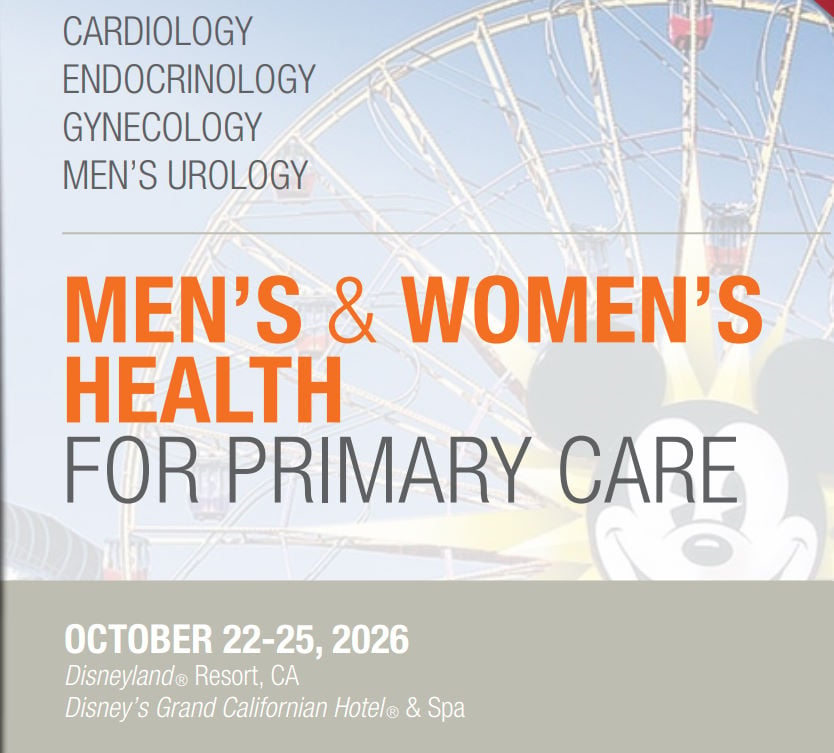
MER Primary Care Conferences Mens & Womens Health for Primary Care Cardio Endo Gyn Mens Uro Oct 22-25, 2026


$130.00
This Product is shared via google drive download link, So please share your correct Gmail id while placing the order .Please note that there are no CME points or certificate associated with this course Samples for Courses Can be found here : Free Samples Here!
MER Primary Care Conferences Mens & Womens Health for Primary Care Cardio Endo Gyn Mens Uro Oct 22-25, 2026
+ Target Audience: Primary care physicians, family physicians, internists, gynecologists, obstetricians and gynecologists (OB-GYNs), urologists, urologic oncologists, endocrinologists, diabetologists, obesity medicine specialists, bariatric surgeons, cardiologists, preventive cardiologists, lipidologists, clinical cardiac electrophysiologists, advanced heart failure specialists, infectious disease specialists, medical oncologists, breast oncologists, medical geneticists, rheumatologists, geriatricians, and healthcare professionals involved in men’s and women’s primary care.
+ Information:
- Conference Title: Men’s & Women’s Health for Primary Care: Cardiology/Endocrinology/Gynecology/Men’s Urology
- Organizer: Medical Education Resources (MER)
- Conference Dates: October 22–25, 2026
- Original Location: Disneyland Resort, California – Disney’s Grand Californian Hotel® & Spa, USA
- Primary Specialty: Family Medicine and Primary Care
- Additional Focus: Cardiology, Endocrinology, Gynecology, Men’s Urology, and Preventive Medicine
- Educational Focus: Evidence-Based Clinical Updates, Men’s and Women’s Health, Diagnostic Evaluation, Treatment Strategies, and Chronic Disease Management
+ Description:
The MER Men’s & Women’s Health for Primary Care: Cardiology/Endocrinology/Gynecology/Men’s Urology 2026 is a four-day medical education conference organized by Medical Education Resources (MER), designed to provide primary care physicians, family medicine practitioners, internists, and other healthcare professionals with clinically relevant updates across men’s and women’s health.
Held October 22–25, 2026, at Disney’s Grand Californian Hotel & Spa in California, the conference integrates evidence-based approaches to cardiovascular medicine, endocrinology, gynecology, and men’s urology.
The curriculum addresses abnormal uterine bleeding, cervical cytology abnormalities, human papillomavirus (HPV), menopause management, breast cancer screening, male sexual health, sexually transmitted infections, benign prostate conditions, prostate and testicular cancer, obesity, thyroid disorders, osteoporosis, coronary artery disease, heart failure, and cardiac arrhythmias.
Through expert-led educational presentations and clinical discussions, the program emphasizes accurate diagnosis, evidence-based treatment decisions, preventive care, appropriate screening, and practical management strategies applicable to everyday primary care.
Learning Objectives
Upon completion of this program, participants should be better able to:
- Assess and manage abnormal uterine bleeding.
- Describe the management of abnormal pap smears and HPV.
- Discuss menopausal transition and the risks/benefits of treatment options.
- Discuss the current evidence and recommendations regarding breast cancer screening.
- Discuss medical management of male sexual health.
- Evaluate and manage sexually-transmitted infections in men.
- Differentiate between benign prostate conditions and prostate cancers.
- Discuss the biology and screening, and treatment options of prostate and testicular cancer.
- Describe the pathophysiology surrounding obesity and the risks and benefits of the various weight management options.
- Identify the risks of abnormal thyroid function.
- Identify the risks and benefits of utilizing bisphosphonates in the treatment of osteoporosis.
- Describe the diagnostic evaluation of thyroid nodules with a focus on the utilization of ultrasound and cytology.
- Implement lifestyle changes as well as lipid and cholesterol guidelines for the prevention of CAD.
- Describe the work-up, risk assessment and test selection of patients with suspected CAD.
- Implement treatment strategies reflective of recent guidelines and current evidence based medicine for heart failure.
- Describe current diagnostic and treatment approaches to arrhythmias and atrial fibrillation.
Comprehensive Topics Covered
1. Gynecology and Women’s Reproductive Health
Abnormal Uterine Bleeding
Clinical evaluation of abnormal uterine bleeding, differential diagnosis, appropriate investigations, and individualized management strategies.
Abnormal Pap Smears and Human Papillomavirus (HPV)
Review of abnormal cervical screening results, HPV-related clinical considerations, risk assessment, and appropriate follow-up management.
Menopausal Transition and Treatment Options
Discussion of menopause-related symptoms, hormonal changes, available treatment approaches, and the risks and benefits of therapeutic interventions.
Breast Cancer Screening
Evaluation of current evidence and screening recommendations, including risk-based assessment and individualized preventive care.
2. Men’s Health and Urology
Male Sexual Health
Medical evaluation and management of common male sexual health concerns, including relevant clinical assessment and treatment considerations.
Sexually Transmitted Infections in Men
Diagnostic evaluation, treatment approaches, prevention, and counseling for sexually transmitted infections affecting male patients.
Benign Prostate Conditions and Prostate Cancer
Differentiation of benign prostatic disorders from malignant conditions, including clinical assessment, screening considerations, and appropriate referral strategies.
Prostate and Testicular Cancer
Review of cancer biology, screening considerations, diagnostic evaluation, and available treatment approaches for prostate and testicular malignancies.
3. Endocrinology and Metabolic Medicine
Obesity and Weight Management
Review of obesity pathophysiology, associated cardiometabolic risks, and the potential benefits and limitations of different weight management strategies.
Thyroid Function Disorders
Recognition of clinical risks associated with abnormal thyroid function, including diagnostic and management considerations.
Osteoporosis and Bisphosphonate Therapy
Evaluation of the clinical benefits, potential risks, and appropriate use of bisphosphonates in osteoporosis management.
Thyroid Nodules: Ultrasound and Cytology
Review of the diagnostic evaluation of thyroid nodules, emphasizing ultrasound assessment, cytology, and appropriate clinical follow-up.
4. Cardiology and Cardiovascular Prevention
Coronary Artery Disease Prevention
Lifestyle modification, lipid and cholesterol management, cardiovascular risk reduction, and evidence-based preventive strategies.
Suspected Coronary Artery Disease
Clinical evaluation, risk stratification, appropriate diagnostic testing, and selection of investigations for patients with suspected coronary artery disease.
Heart Failure Management
Review of guideline-based medical treatment, clinical assessment, and contemporary evidence relevant to heart failure care.
Cardiac Arrhythmias and Atrial Fibrillation
Diagnostic evaluation and management of cardiac rhythm disorders, including contemporary approaches to atrial fibrillation and associated clinical considerations.
Participating Faculty
Angela Leung, MD, MSc
Professor of Medicine, Division of Endocrinology, Diabetes, and Metabolism, Department of Medicine, UCLA David Geffen School of Medicine; VA Greater Los Angeles Healthcare System, Los Angeles, California.
Peter S. Marcus, MD
Director of Patient Quality & Safety at Women’s Hospital, St. Vincent’s Hospital, Department of Ob/Gyn, Indianapolis, Indiana; Volunteer Clinical Associate Professor, Indiana University School of Medicine.
Ileana Piña, MD, MPH, FAHA, FACC
Professor of Medicine, Thomas Jefferson University; Clinical Professor of Medicine, Central Michigan University; Senior Staff Fellow, FDA, CDRH.
Shandra Wilson, MD
Associate Professor, Urologic Oncology, University of Colorado Health; Chief of Surgery, Littleton Adventist Hospital, Denver, Colorado.
Educational Highlights
- Comprehensive men’s and women’s primary care updates
- Gynecologic conditions and reproductive health
- Abnormal uterine bleeding
- Cervical screening abnormalities and HPV
- Menopause management
- Breast cancer screening recommendations
- Male sexual health
- Sexually transmitted infections in men
- Benign prostate disorders and prostate cancer
- Testicular cancer
- Obesity and weight management strategies
- Thyroid function disorders
- Osteoporosis and bisphosphonate therapy
- Thyroid nodule evaluation with ultrasound and cytology
- Cardiovascular prevention and lipid management
- Coronary artery disease diagnosis and risk stratification
- Heart failure treatment
- Cardiac arrhythmias and atrial fibrillation
- Evidence-based diagnostic and therapeutic decision-making
Clinical & Educational Value
The MER Men’s & Women’s Health for Primary Care 2026 provides a multidisciplinary educational review of common and important conditions encountered in office-based primary care.
By integrating gynecology, urology, endocrinology, and cardiovascular medicine, the conference addresses preventive screening, diagnostic assessment, chronic disease management, treatment selection, and individualized patient care.
Its educational focus is particularly relevant to family physicians, internists, primary care clinicians, and specialists involved in the longitudinal management of men’s and women’s health.
The program supports the application of evidence-based medical recommendations, interdisciplinary collaboration, and practical clinical decision-making across a broad range of outpatient presentations.
Important Access Information
This description summarizes the original Medical Education Resources (MER) conference and its stated learning objectives.
The comprehensive topics above are organized from the supplied educational objectives and do not represent a verified session-by-session lecture schedule.
The exact number of lectures, recording duration, and completeness of any separately supplied digital educational materials have not been established by the provided information.
Official MER conference registration, live attendance, faculty interaction, access to the provider’s learning platform, CME credits, and certificates are not included unless expressly specified in the purchased package.
Short Description
The MER Men’s & Women’s Health for Primary Care: Cardiology/Endocrinology/Gynecology/Men’s Urology 2026 provides comprehensive clinical updates covering women’s reproductive health, menopause, HPV, breast cancer screening, male sexual health, prostate and testicular cancer, obesity, thyroid disorders, osteoporosis, coronary artery disease, heart failure, and atrial fibrillation.
Topics
THURSDAY, OCTOBER 22, 2026
-
7:00 am – 7:30 am: Check-In and Hot Breakfast
-
7:30 am – 8:30 am | Abnormal Uterine Bleeding — Peter S. Marcus, MD
-
Overview of normal/abnormal menstrual physiology/profile; Menstrual disturbances; Ovulatory and anovulatory uterine bleeding; Other menstrual abnormalities; Diagnosis and appropriate treatment options
-
-
8:30 am – 9:30 am | Abnormal Pap Smears and High Risk HPV — Peter S. Marcus, MD
-
Current recommendations for cervical cancer screening; Incorporating the ASCCP consensus guidelines for management of cytologic cervical abnormalities (including ASCUS, LGSIL, HGSIL and atypical glandular cells) into your practice; Algorithm for the appropriate use of HPV testing; History of HPV and effectiveness of its use; Recommendations for missed doses; Storage and administration of HPV vaccines
-
-
9:30 am – 9:40 am: Coffee Break
-
9:40 am – 10:40 am | Menopause Transition and Hormone Replacement Therapy — Peter S. Marcus, MD
-
Symptoms of menopause, including hot flashes, night sweats, and atrophy; Menopause syndromes, including osteoporosis, breast cancer, cardiac disease, and colon cancer; Estrogen analogs; Counseling patients in options and alternatives to hormone therapy; Designer estrogens; SERMs; HRTs; Discussion of risks and benefits, especially in breast cancer and CHD
-
-
10:40 am – 11:40 am | Androgen Replacement and Sexual Function — Shandra Wilson, MD
-
Treatment algorithm and safety profiles for the treatment of erectile dysfunction; testosterone supplementation for the treatment of ED or hypogonadism
-
-
11:40 am – 12:40 pm | Sexually Transmitted Infections in Men — Shandra Wilson, MD
-
Presenting symptoms, lesions, latencies, diagnostic work-ups and therapies of the common sexually transmitted diseases
-
-
12:40 pm: Session Adjourns
FRIDAY, OCTOBER 23, 2026
-
7:00 am – 7:30 am: Arrival and Hot Breakfast
-
7:30 am – 8:30 am | Benign Male Genitourinary Conditions — Shandra Wilson, MD
-
Appropriate primary medical management of lower urinary tract symptoms (LUTS) (also known as BPH) as well as identification of patients with complex or refractory cases that warrant referral; diagnosis and treatment of epididymitis, testicular pain, prostatitis and other benign findings
-
-
8:30 am – 9:30 am | Male Malignancies (Prostate & Testicular) — Shandra Wilson, MD
-
Biology and treatment options using current medical technology of prostate cancer; evaluation and treatment of testicular cancer and long-term ramifications after cure
-
-
9:30 am – 9:40 am: Coffee Break
-
9:40 am – 10:40 am | Breast Cancer Screening — Peter S. Marcus, MD
-
Comparison of recent breast cancer screening recommendations from U.S. Preventive Services Task Force, ACOG/ACS/NCCN, including a discussion of risks and benefits of screening at various ages; Review of the new USPSTF guideline on BRCA-related cancer: risk assessment, genetic counseling, and genetic testing, including risk assessment tools for women with a personal or family history of breast, ovarian and related cancers
-
-
10:40 am – 11:40 am | Top Questions in the Evaluation and Management of Obesity — Angela Leung, MD, MSc
-
Diagnosis; etiology; complications; use of appetite suppressant medications; lifestyle modifications; when surgery should be performed
-
-
11:40 am – 12:40 pm | Top Questions in the Evaluation and Management of Hypothyroidism — Angela Leung, MD, MSc
-
Prevalence, diagnosis and treatment options of hypothyroidism
-
-
12:40 pm: Session Adjourns
SATURDAY, OCTOBER 24, 2026
-
7:00 am – 7:30 am: Arrival and Hot Breakfast
-
7:30 am – 8:30 am | Top Questions in the Evaluation and Management of Osteoporosis — Angela Leung, MD, MSc
-
Review the epidemiology and pathophysiology of osteoporosis along with interpretation of DEXA scans and FRAX risk assessment; up-to-date therapeutic options
-
-
8:30 am – 9:30 am | Top Questions in the Evaluation and Management of Thyroid Nodules and Cancer — Angela Leung, MD, MSc
-
Diagnosis and treatment
-
-
9:30 am – 9:40 am: Coffee Break
-
9:40 am – 10:40 am | Primary Prevention of Cardiometabolic CVD — Ileana Piña, MD, MPH, FAHA, FACC
-
Definitions; AHA/ACC and other lipid guidelines updates; HDL Cholesterol: The good cholesterol?; Metabolic syndrome and/or obesity; Who needs treatment and how much; The role of lifestyle changes, exercise and cardiac rehabilitation; Drug therapy updates; Risk calculation; Role of pooled equations for risk estimates
-
-
10:40 am – 11:40 am | Work-up of Patients with Suspected CAD — Ileana Piña, MD, MPH, FAHA, FACC
-
Risk factor evaluation and risk assessment models; 2021 ACC/AHA Chest Pain Guidelines; Test selection including ECG, echo, nuclear and newer imaging modalities (including discussion of appropriate use criteria–AUC); The usefulness of CT scanning; The role of bio markers and EBCT; Suspected CAD in special populations (women, diabetics, the elderly)
-
-
11:40 am: Session Adjourns
SUNDAY, OCTOBER 25, 2026
-
7:00 am – 7:30 am: Arrival and Continental Breakfast
-
7:30 am – 8:30 am | Heart Failure — Ileana Piña, MD, MPH, FAHA, FACC
-
Etiologies and stages of heart failure; ACC/AHA Heart Failure Guidelines; Heart failure with reduced EF (HFrEF) and heart failure with preserved EF (HFpEF); Determining patients for referral using biomarkers, eg NT Pro BNP; Treatment options: ACE inhibitors, ARBs, ARNI, beta blockers, mineralocorticoid receptor antagonists, SGLT2i; The role of devices (ICD and/or CRT) in treatment and antiplatelet drugs; Issues related to the hospitalized patient with acute decompensated heart failure and readmissions
-
-
8:30 am – 9:30 am | Arrhythmias — Ileana Piña, MD, MPH, FAHA, FACC
-
Types and symptoms of arrhythmias; Approach to the patient: when to treat, when to refer, when to admit; Evaluation of the patient with palpitations; Atrial fibrillation: the use of anticoagulants indications, CVA risk scores, warfarin vs newer oral anticoagulants, controlling heart rate vs rhythm; Ventricular and other arrhythmias: when are they serious
-
-
9:30 am: Conference Adjourns
Related products
Medical Accounts

Internal Medicine

Critical Care - Emergency medicine
Critical Care - Emergency medicine
Critical Care - Emergency medicine
Critical Care - Emergency medicine
40th ISICEM International Symposium on Intensive Care & Emergency Medicine 2021
Internal Medicine

Medical Accounts