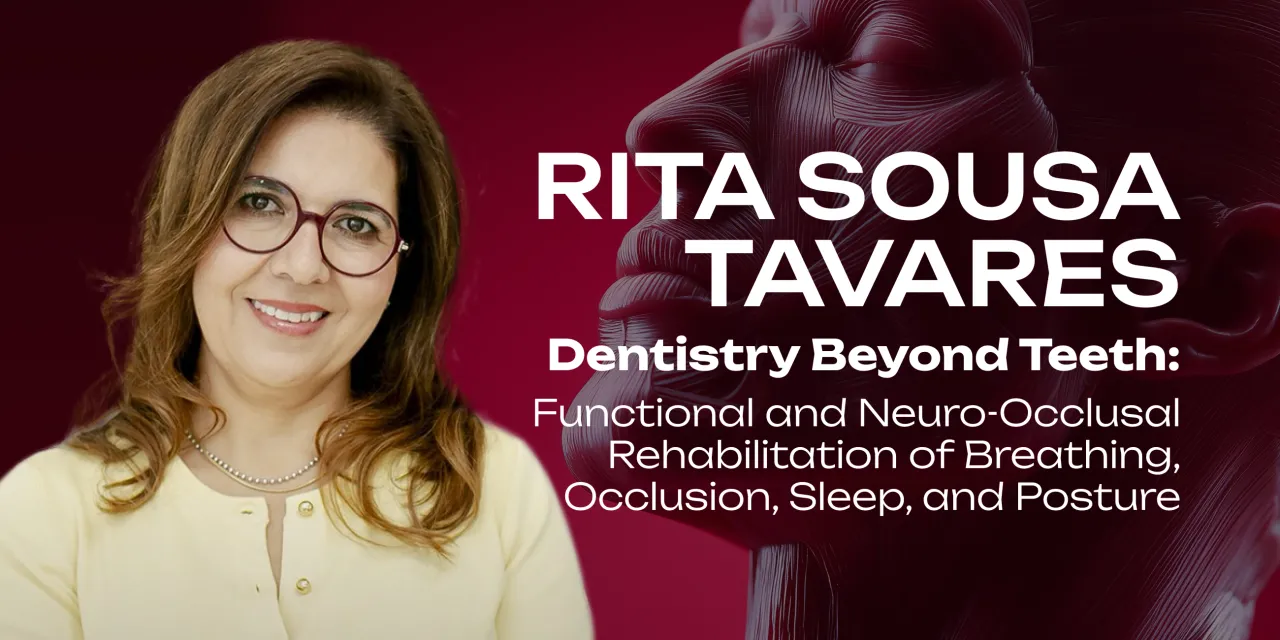
OHI-S Dentistry Beyond Teeth Functional and Neuro-Occlusal Rehabilitation of Breathing, Occlusion, Sleep, and Posture 7 lessons 3h 1min
Original price was: $350.00.$30.00Current price is: $30.00.
This Product is shared via google drive download link, So please share your correct Gmail id while placing the order .Please note that there are no CME points or certificate associated with this course Samples for Courses Can be found here : Free Samples Here!
OHI-S Dentistry Beyond Teeth
Functional and Neuro-Occlusal Rehabilitation of Breathing, Occlusion, Sleep, and Posture
6 Lessons + 1 Free | 3 Hours 1 Minute | Rita Tavares | 3.25 CE Credits
Explore a broader functional approach to orthodontic and dental assessment with OHI-S Dentistry Beyond Teeth: Functional and Neuro-Occlusal Rehabilitation of Breathing, Occlusion, Sleep, and Posture.
Presented by Rita Tavares, this course examines relationships among:
- Breathing patterns
- Lip seal
- Occlusion
- Craniofacial development
- Orofacial muscle function
- Sleep-related breathing
- Head and body posture
- Functional orthodontics
- Myofunctional therapy
- Planas Tracks
- Simões Network appliances
- Neuro-occlusal rehabilitation
The course encourages clinicians to look beyond isolated tooth position and consider how oral function, craniofacial form, breathing patterns, muscle behavior, and occlusal development may interact during assessment and treatment planning.
The clinical framework can be summarized as:
Screen Function → Identify Relevant Dysfunction → Assess Occlusion & Craniofacial Pattern → Determine Dental Scope → Refer When Necessary → Select Functional or Orthodontic Strategies → Reassess Over Time
Course Details
- Course: Dentistry Beyond Teeth: Functional and Neuro-Occlusal Rehabilitation of Breathing, Occlusion, Sleep, and Posture
- Provider: OHI-S
- Instructor: Rita Tavares
- Official Structure: 6 Lessons + 1 Free
- Total Presentations: 7
- Official Duration: 3 Hours 1 Minute
- Language: English
- Official OHI-S CE: 3.25 CE Credits
- Primary Specialty: Orthodontics
- Additional Field: Functional Dentistry
- Additional Relevance: Pediatric Dentistry
- Main Topics: Breathing, Occlusion, Sleep, Posture, Planas Tracks, Simões Network & Myofunctional Integration
Course Overview
Traditional dental treatment often begins with a localized finding:
- Crowding
- Malocclusion
- Crossbite
- Open-mouth posture
- Altered tongue function
- Occlusal instability
This OHI-S course asks clinicians to expand the assessment and consider whether those findings coexist with broader functional patterns involving:
- Nasal vs. oral breathing
- Orofacial muscle behavior
- Craniofacial growth
- Occlusion
- Posture
- Sleep-related symptoms
The objective is not to assume that one dysfunction causes every dental problem.
Instead, clinicians are encouraged to ask:
Which findings are primary, which are adaptive, which require treatment, and which require referral to another healthcare professional?
Function-Driven Assessment
A function-oriented assessment may consider:
Dental
- Tooth position
- Occlusion
- Crossbite
- Overjet
- Open bite
- Arch development
Orofacial
- Lip competence
- Tongue posture
- Swallowing
- Muscle tone
Respiratory
- Nasal breathing
- Habitual mouth breathing
- Signs suggesting airway obstruction
Sleep
- Snoring
- Mouth-open sleeping
- Restless sleep
- Suspected sleep-disordered breathing
Craniofacial / Postural
- Facial growth pattern
- Skeletal relationships
- Muscular asymmetry
- Head and neck posture
These observations can guide additional evaluation but should not automatically be interpreted as proof of a single causal diagnosis.
LESSON 1
Breath to Heal: How to Seal the Lips
Instructor: Rita Tavares
Duration: 11 Minutes
Official OHI-S CE: 0.25 Credit
The first lesson focuses on lip seal and functional breathing.
The official curriculum includes:
- Impact of lip seal on functional breathing
- Clinical prerequisites for nasal breathing
- Common barriers to nasal breathing
- Immediate clinical strategies discussed by the instructor
- Practical exercises for lip-seal training
- Clinical case analysis
Lip Seal
Lip competence is one component of normal orofacial function.
Persistent open-mouth posture may coexist with factors such as:
- Nasal obstruction
- Habitual mouth breathing
- Orofacial muscle dysfunction
- Craniofacial morphology
The presence of poor lip seal should therefore prompt assessment rather than immediate assumption about its cause.
Nasal Breathing
The course presents what Rita Tavares describes as essential clinical “permissions” for effective nasal breathing.
For MedicalAmboss, this is best positioned as:
a structured functional screening framework taught by the instructor
rather than a universally established diagnostic protocol.
When Nasal Breathing Is Difficult
Possible contributors to impaired nasal breathing can extend beyond dentistry.
Appropriate interdisciplinary evaluation may involve:
- ENT
- Sleep medicine
- Pediatrics
- Allergy care
- Myofunctional therapy
- Orthodontics
Dentists should recognize when the suspected cause lies outside dental scope.
LESSON 2
Diagnosing and Treating Functional Disorders
Instructor: Rita Tavares
Duration: 10 Minutes
Official OHI-S CE: 0.25 Credit
This lesson introduces a broader functional diagnostic approach.
Topics include:
- Dentist’s role in prevention and early recognition
- Oral functional signs
- Postural signs
- Respiratory signs
- Limits of dental clinical action
- When to refer
- Transdisciplinary assessment
- Team-based treatment
- Clinical cases
Recognizing Functional Signs
The clinician may observe signs involving:
- Oral posture
- Lip seal
- Tongue function
- Occlusion
- Facial growth
- Breathing habits
The correct next step may be:
Dental Intervention
or:
Further Assessment / Referral
depending on the suspected cause.
Knowing the Limits of Dental Treatment
This is one of the most important components of the official curriculum.
A dentist may identify signs associated with a breathing or sleep-related problem but should not automatically assume responsibility for diagnosing every underlying disorder.
A useful workflow is:
Screen → Document → Identify Red Flags → Refer → Coordinate Care
Transdisciplinary Care
Patients with complex functional problems may benefit from cooperation among:
- Orthodontists
- Pediatric dentists
- General dentists
- Pediatricians
- ENT specialists
- Sleep physicians
- Speech-language / myofunctional professionals
- Other appropriately qualified clinicians
The composition of the team depends on the patient’s findings.
LESSON 3
Orthodontics and Function: Influence, Interference, or Ignorance?
Instructor: Rita Tavares
Duration: 10 Minutes
Official OHI-S CE: 0.25 Credit
This lesson explores the relationship between orthodontic treatment and function.
Topics include:
- Orthodontics and nasal breathing
- Extractions and functional balance
- Fixed orthodontic mechanics
- Occlusal stability
- Functional orthodontics
- Mechanical orthodontics
- Preventive orthodontics
- Pediatric cases
- Comparative clinical examples
Orthodontics & Function
Orthodontics affects:
- Tooth position
- Occlusal relationships
- Arch form
- Skeletal relationships in selected growing patients
Functional assessment can add context to mechanical treatment planning.
However, treatment should remain based on:
- Diagnosis
- Evidence
- Growth status
- Skeletal and dental anatomy
- Patient-specific indications
rather than assuming that every malocclusion is primarily caused by dysfunctional breathing or posture.
Functional vs. Mechanical Orthodontics
The course compares two broad perspectives.
Mechanical Perspective
Focuses strongly on:
- Tooth movement
- Force systems
- Occlusal correction
Functional Perspective
Adds consideration of:
- Muscle behavior
- Oral posture
- Breathing
- growth
- adaptation
In contemporary practice these concepts do not necessarily need to be mutually exclusive.
Extractions & Functional Balance
The instructor discusses the impact of extraction decisions within a functional framework.
MedicalAmboss should avoid broad claims such as:
“Orthodontic extraction causes airway or systemic dysfunction.”
Extraction decisions require individualized orthodontic diagnosis and should not be portrayed as universally harmful or beneficial.
Preventive Orthodontics
Pediatric patients are an important audience for this lesson because early evaluation may identify:
- Crossbite
- Functional shifts
- Oral habits
- growth-related discrepancies
- abnormal oral posture
Intervention should be based on clear orthodontic indication rather than preventive treatment without diagnosis.
LESSON 4
What Teeth, Muscles, and Bones Reveal
Instructor: Rita Tavares
Duration: 6 Minutes
Format: Free Clinical Video
Official OHI-S CE: 0.25 Credit
This clinical video examines diagnostic clues within the stomatognathic system.
The official curriculum includes:
- Diagnostic clues from teeth and skeletal structures
- Muscular asymmetry
- Postural asymmetry
- Muscle tone and respiratory function
- Skeletal signs
- Clinical photographs
- Radiographic documentation
- A concept referred to by the instructor as “hidden cavitations”
Stomatognathic System
The stomatognathic system includes structures involved in:
- Mastication
- swallowing
- speech
- occlusion
- mandibular movement
Clinical evaluation may include:
- Teeth
- jaws
- TMJs
- masticatory muscles
- soft tissues
Muscular Asymmetry
Asymmetric muscle function may be clinically relevant in selected patients.
However, observation of asymmetry alone does not establish:
- Etiology
- respiratory disease
- sleep disorder
- systemic dysfunction
It should be interpreted together with history and examination.
Posture
The relationship among dental occlusion, craniofacial function, and body posture remains complex.
For accurate medical SEO, the safest wording is:
“The course explores proposed functional relationships between orofacial balance and posture.”
Avoid stating:
“Malocclusion causes poor body posture.”
or:
“Correcting occlusion corrects systemic posture.”
“Hidden Cavitations”
The term “hidden cavitations” appears in the official OHI-S lesson curriculum.
For MedicalAmboss, it should only be listed as:
“a diagnostic concept discussed by the instructor.”
It should not be promoted as a universally established dental diagnosis without further definition and evidence.
LESSON 5
Mouth, Sleep, and Posture: The Invisible Triad of Vitality
Instructor: Rita Tavares
Duration: 41 Minutes
Official OHI-S CE: 0.75 Credit
This lesson explores relationships among:
- Nasal breathing
- Sleep
- Open-mouth posture
- Orofacial balance
- Myofascial function
- Posture
- Sleep apnea
- Systemic health
- Clinical management
- Long-term case follow-up
Mouth Breathing & Sleep
Mouth breathing during sleep may be associated with:
- Nasal obstruction
- sleep-disordered breathing
- craniofacial factors
- habitual oral posture
It should be considered a clinical sign that may warrant further investigation rather than a stand-alone diagnosis.
Obstructive Sleep Apnea
OSA is a medical sleep disorder characterized by recurrent airway obstruction during sleep.
Dental professionals can play an important role in:
- Screening
- recognizing risk signs
- identifying craniofacial findings
- referring patients
They should not diagnose OSA solely from:
- mouth breathing
- malocclusion
- photographs
- dental radiographs
- posture
Suspected OSA requires appropriate medical evaluation.
Pediatric Sleep-Disordered Breathing
In children, signs that may warrant attention can include:
- Snoring
- Mouth breathing
- Difficult breathing during sleep
- Restless sleep
- Daytime behavioral or concentration problems
When OSA is suspected, the dental professional should facilitate appropriate medical referral.
Orthodontics & Sleep-Disordered Breathing
Orthodontic or orthopedic treatment may play an adjunctive role in selected patients with appropriate craniofacial indications.
However:
Airway treatment should not be the sole reason to perform orthodontic expansion or functional appliance therapy without a complete orthodontic diagnosis.
Treatment should be multidisciplinary when a true sleep-related breathing disorder is involved.
LESSON 6
Planas Tracks and the Simões Network in Clinical Practice
Instructor: Rita Tavares
Duration: 49 Minutes
Official OHI-S CE: 0.75 Credit
This lesson focuses on functional orthopedic and neuro-occlusal concepts.
Topics include:
- Planas philosophy
- Simões functional philosophy
- Neuro-occlusal rehabilitation
- Direct Planas Tracks
- Indirect Planas Tracks
- Clinical indications
- Occlusal development
- Simões Network appliances
- Appliance selection
- Appliance design
- Placement
- Adjustment
- Benefits and limitations
- Case analysis
Planas Neuro-Occlusal Rehabilitation
Neuro-Occlusal Rehabilitation associated with the Planas philosophy evaluates functional development of the masticatory system and occlusion.
The course discusses:
- Occlusal function
- functional stimuli
- growth
- masticatory balance
- appliance-based intervention
For SEO, use:
“Planas Neuro-Occlusal Rehabilitation concepts”
rather than implying that all concepts represent universal contemporary standards of orthodontic care.
Planas Tracks
The course covers:
Direct Planas Tracks
Constructed directly within the clinical treatment approach.
Indirect Planas Tracks
Fabricated through an appliance/laboratory workflow.
Clinical selection depends on:
- Diagnosis
- Age
- occlusal pattern
- functional objective
- practitioner training
Simões Network
The Simões Network is a family of functional jaw orthopedic appliances associated with the work of Wilma Alexandre Simões.
The course reviews:
- Treatment philosophy
- Biomechanics
- appliance selection
- design
- placement
- adjustment
The emphasis is on integrating appliances into a broader functional diagnosis rather than selecting them solely by malocclusion label.
Functional Appliances
Functional appliances may influence:
- mandibular posture
- dental relationships
- muscle activity
- growth-related treatment mechanics
Their effects depend on:
- patient age
- skeletal maturity
- appliance design
- compliance
- diagnosis
They should not be marketed as universally producing skeletal correction.
LESSON 7
Breathing and Neuro-Occlusal Rehabilitation
Instructor: Rita Tavares
Duration: 50 Minutes
Official OHI-S CE: 0.75 Credit
The final lesson integrates the principal themes of the course.
Topics include:
- Breathing
- Occlusion
- Craniofacial development
- Posture
- altered breathing patterns
- facial growth
- occlusal development
- neuro-occlusal rehabilitation
- functional orthopedics
- orthodontic approaches
- nasal breathing
- myofunctional therapy
- interdisciplinary management
- clinical cases
Breathing & Craniofacial Development
Breathing pattern and craniofacial morphology can be associated.
However, the relationship is:
Multifactorial
rather than a simple one-direction cause-and-effect model.
Possible contributors to craniofacial development include:
- Genetics
- Growth
- muscle function
- airway anatomy
- habits
- skeletal pattern
- dental development
MedicalAmboss copy should therefore avoid:
“Mouth breathing causes all malocclusion.”
Myofunctional Therapy
The program incorporates myofunctional therapy into functional planning.
Myofunctional therapy may address areas such as:
- Orofacial muscle patterns
- tongue posture
- lip competence
- swallowing function
Its use should follow appropriate assessment and, where necessary, interdisciplinary collaboration.
Nasal Breathing
Promoting nasal breathing may require identifying why nasal breathing is impaired.
Potential causes can include conditions outside orthodontic treatment.
Therefore:
Assess the Cause Before Attempting to Correct the Pattern
is a safer clinical principle than assuming an orthodontic appliance can resolve all respiratory problems.
Interdisciplinary Management
One of the strongest professional themes of this course is deciding:
When Dentistry Can Act
versus:
When Another Specialty Should Be Involved
This is especially relevant when symptoms suggest:
- Nasal obstruction
- OSA
- other sleep-disordered breathing
- significant airway pathology
SLEEP MEDICINE SAFETY POSITIONING
MedicalAmboss should include a clear distinction between:
Dental Screening
Dentists can identify signs and risk factors.
Medical Diagnosis
Sleep apnea and other sleep disorders require appropriate medical diagnostic pathways.
Adjunctive Dental Treatment
Orthodontics, oral appliances, functional approaches, or expansion may be considered in selected patients after appropriate diagnosis and interdisciplinary assessment.
This distinction substantially improves the medical accuracy of the page.
Evidence Positioning
The official OHI-S description uses phrases such as:
- “causal treatment”
- “evidence-based neuro-occlusal principles”
- “predictable clinical protocols”
For MedicalAmboss, I recommend slightly more conservative wording.
Use:
“functional and neuro-occlusal concepts presented by the instructor and applied through case-based clinical protocols.”
Avoid implying that all proposed relationships among:
- occlusion
- posture
- breathing
- sleep
- systemic health
have the same level of evidence or that correcting one necessarily corrects the others.
Long-Term Stability
Functional stability can be influenced by:
- Growth
- Occlusion
- orthodontic finishing
- habits
- oral posture
- muscle behavior
- retention
- patient compliance
The course encourages clinicians to consider these factors during long-term follow-up.
When to Treat
Treatment may be appropriate when there is:
- A clear diagnosis
- Functional impairment
- Documented orthodontic or orthopedic indication
- An expected benefit that outweighs risk
When to Observe
Observation may be reasonable when:
- Findings are mild
- normal development may change the presentation
- diagnosis is uncertain
- intervention lacks a clear indication
When to Refer
Referral should be considered when findings suggest conditions outside dental scope, including suspected:
- Upper-airway obstruction
- Sleep apnea
- Significant respiratory disease
- ENT pathology
The correct functional approach is not necessarily to treat everything within dentistry.
Major Topics Covered
- Functional Dentistry
- Functional Orthodontics
- Neuro-Occlusal Rehabilitation
- Planas Concept
- Planas Tracks
- Direct Planas Tracks
- Indirect Planas Tracks
- Simões Network
- Functional Jaw Orthopedics
- Jaw Functional Orthopedics
- Breathing and Orthodontics
- Nasal Breathing
- Mouth Breathing
- Lip Seal
- Orofacial Function
- Myofunctional Therapy
- Craniofacial Development
- Occlusal Development
- Pediatric Orthodontics
- Preventive Orthodontics
- Sleep-Disordered Breathing
- Sleep Apnea Screening
- Dental Sleep Medicine
- Posture and Dentistry
- Stomatognathic System
- Occlusal Stability
Who Should Take This Course?
The strongest target audience includes:
- Orthodontists
- Pediatric Dentists
- General Dentists
- Orthodontic Residents
- Pediatric Dentistry Residents
- Dentists with formal training in functional jaw orthopedics
It is particularly relevant to clinicians interested in:
- Growing patients
- Functional malocclusion
- Oral habits
- Mouth breathing
- Functional appliances
- Neuro-occlusal rehabilitation
- Interdisciplinary airway screening
Primary Audience
The strongest audiences are:
Orthodontists + Pediatric Dentists
because much of the curriculum focuses on:
- Craniofacial development
- Functional orthodontics
- Early diagnosis
- Planas Tracks
- Simões appliances
- growing patients
General dentists remain an important secondary audience for screening and interdisciplinary referral.
Is This a Sleep Medicine Course?
No.
Sleep and sleep apnea are important parts of the curriculum, but the overall product is primarily:
Functional Dentistry + Orthodontics + Neuro-Occlusal Rehabilitation
It should not be marketed as a replacement for formal:
- Sleep medicine training
- Dental sleep medicine certification
- Medical OSA diagnosis
Is This a Posture-Treatment Course?
Not primarily.
Posture is discussed as one part of a larger functional model.
The strongest positioning remains:
Breathing + Occlusion + Craniofacial Function + Functional Orthopedics
rather than promising correction of generalized postural disorders through dentistry.
Why This Course Is Useful
The course links seven related stages.
1. Breathing Screening
- Lip seal
- Nasal breathing
- Oral posture
2. Functional Diagnosis
- Oral signs
- Respiratory signs
- Postural observations
- Referral decisions
3. Orthodontic Context
- Mechanical vs functional treatment
- Preventive orthodontics
- Stability
4. Stomatognathic Assessment
- Teeth
- Muscles
- Skeletal findings
5. Sleep & Function
- Mouth posture
- Sleep-related breathing
- interdisciplinary screening
6. Functional Appliances
- Planas Tracks
- Simões Network
7. Integrated Rehabilitation
- Breathing
- Occlusion
- Myofunctional therapy
- Craniofacial development
The overall framework is:
Screen → Diagnose → Define Scope → Coordinate → Treat When Indicated → Reassess
Important Sleep & Airway Notice
Dentists and orthodontists can help identify patients at increased risk for sleep-disordered breathing.
However:
- Mouth breathing does not confirm OSA.
- Malocclusion does not confirm airway disease.
- Dental radiographs do not establish an OSA diagnosis.
- Orthodontic treatment should not automatically be prescribed solely to treat suspected sleep apnea.
- Patients with suspected OSA should be referred for appropriate medical assessment.
This is particularly important in pediatric patients.
Original OHI-S CE Information
The current individual OHI-S course page lists:
3.25 CE Credits
for:
6 Lessons + 1 Free / 3h 1min
The individual lesson credits also total:
- Lesson 1 — 0.25 CE
- Lesson 2 — 0.25 CE
- Lesson 3 — 0.25 CE
- Lesson 4 — 0.25 CE
- Lesson 5 — 0.75 CE
- Lesson 6 — 0.75 CE
- Lesson 7 — 0.75 CE
Total = 3.25 CE Credits
These credits apply to eligible participation through the original OHI-S educational activity.
An independently distributed MedicalAmboss recording package should not automatically be represented as including:
- OHI-S CE Credits
- OHI-S Certificate
unless official participation and CE eligibility are specifically included.
Product Summary
- Product: Dentistry Beyond Teeth: Functional and Neuro-Occlusal Rehabilitation of Breathing, Occlusion, Sleep, and Posture
- Provider: OHI-S
- Instructor: Rita Tavares
- Official Structure: 6 Lessons + 1 Free
- Total Presentations: 7
- Official Duration: 3h 1min
- Language: English
- Official Course-Page CE: 3.25 Credits
- Primary Specialty: Orthodontics
- Secondary Field: Functional Dentistry
- Additional Relevance: Pediatric Dentistry
- Core Topics: Breathing, Occlusion, Planas Tracks, Simões Network, Sleep, Posture & Myofunctional Integration
4. Short Description
OHI-S Dentistry Beyond Teeth: Functional and Neuro-Occlusal Rehabilitation of Breathing, Occlusion, Sleep, and Posture is a 3h 1min course by Rita Tavares, officially structured as 6 lessons + 1 free clinical video.
The program explores lip seal and nasal breathing, functional dental assessment, orthodontics and function, stomatognathic diagnostic signs, sleep-related breathing, mouth posture, craniofacial development, Planas Tracks, Simões Network appliances, neuro-occlusal rehabilitation, and integration of myofunctional therapy within interdisciplinary treatment planning.
Topics
Lesson 1. Breath to Heal: How to Seal the Lips
-
Understanding the impact of lip seal on functional breathing and overall health
-
The 10 most essential clinical “permissions” for nasal breathing
-
The most common blocks to nasal breathing
-
Application of immediate clinical strategies for correction
-
Integration of practical exercises for lip seal training
-
Analysis of case studies with clinical outcomes
Lesson 2. Diagnosing and Treating Functional Disorders
-
The transformative role of the dentist in prevention and early diagnosis
-
Identifying oral, postural, and respiratory signs in daily practice
-
Limits of dental clinical action and when to refer
-
Tools for transdisciplinary functional assessment
-
Integrative treatment approaches within a team
-
Clinical case discussions
Lesson 3. Orthodontics and Function: Influence, Interference, or Ignorance?
-
The relationship between orthodontics and nasal breathing
-
The impact of extractions and fixed mechanics on functional balance
-
Long-term consequences for occlusal stability
-
Functional orthodontics vs mechanical orthodontics
-
Preventive orthodontics in paediatric patients
-
Comparative clinical cases
Lesson 4. What Teeth, Muscles, and Bones Reveal
-
Identifying diagnostic clues in the stomatognathic system
-
Hidden cavitations: diagnosis and clinical impact
-
Muscular and postural asymmetries as early warning signs
-
The link between muscle tone and respiratory function
-
Interpreting skeletal signs in daily practice
-
Practical case documentation with photos and radiographs
Lesson 5. Mouth, Sleep, and Posture: The Invisible Triad of Vitality
-
How nasal breathing affects sleep quality
-
The impact of open-mouth posture on the myofascial system
-
Postural consequences of orofacial imbalance
-
Links between sleep apnoea, posture, and systemic health
-
Therapeutic strategies to restore the triad
-
Clinical cases with long-term follow-up
Lesson 6. Planas Tracks and the Simões Network in Clinical Practice
-
Foundations of the Planas and Simões functional treatment philosophies
-
Diagnostic principles and clinical indications for direct and indirect Planas tracks
-
Biomechanics and therapeutic applications of the Simões Network in occlusal development and reorganization
-
Clinical protocols for appliance selection, design, placement, and adjustment
-
Benefits, limitations, and factors influencing treatment success
-
Analysis of clinical cases demonstrating treatment planning, execution, and outcomes
Lesson 7. Breathing and Neuro-Occlusal Rehabilitation
-
Functional relationships between breathing, occlusion, craniofacial development, and posture
-
Impact of altered breathing patterns on facial growth, occlusal development, and overall function
-
Principles of neuro-occlusal rehabilitation in the management of breathing-related dysfunctions
-
Clinical protocols for promoting nasal breathing through functional orthopedic and orthodontic approaches
-
Integration of neuro-occlusal rehabilitation with myofunctional therapy and broader systemic health considerations
-
Clinical case studies demonstrating interdisciplinary approaches and treatment outcomes
Related products

DENTAL
DENTAL