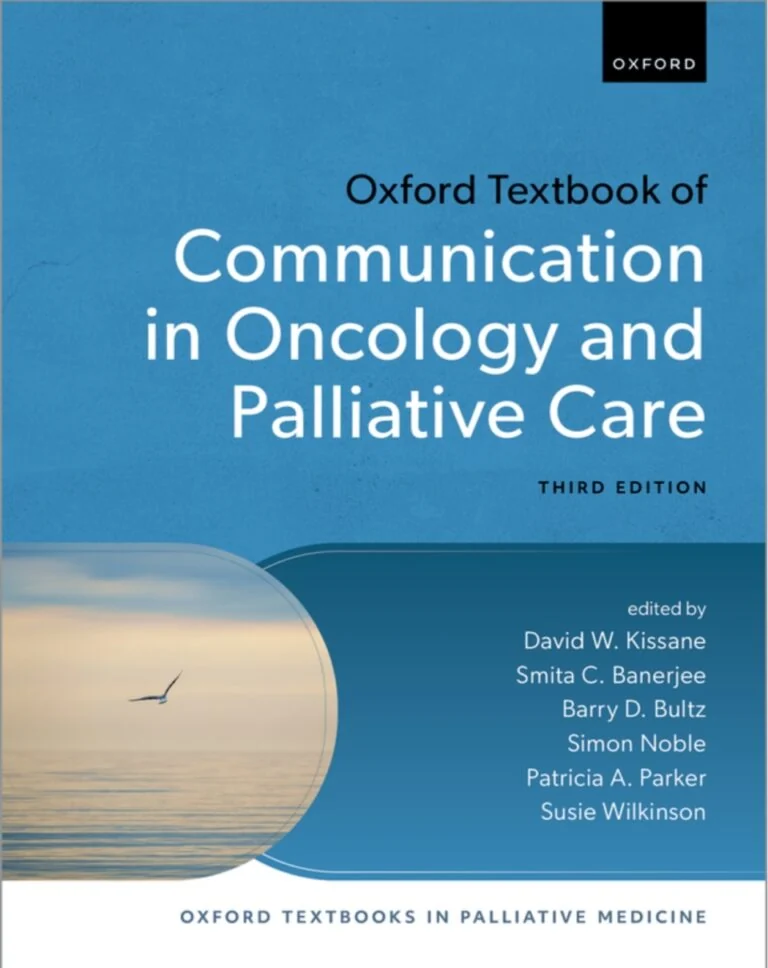
Oxford Textbook of Communication in Oncology and Palliative Care 3e, 3rd Edition (Original PDF from Publisher)
Oncology Communication | Palliative Care | Patient-Centered Communication | Psycho-Oncology | Oxford University Press 2026
Target Audience
Medical Oncologists, Radiation Oncologists, Hematologists, Palliative Care Physicians, Hospice Physicians, Psycho-Oncologists, Psychiatrists, Psychologists, Oncology Nurses, Palliative Care Nurses, Family Physicians, Internal Medicine Physicians, Clinical Social Workers, Genetic Counselors, Healthcare Educators, Medical Residents, Fellows, and multidisciplinary healthcare professionals involved in caring for patients with serious or life-limiting illnesses.
Information
Oxford Textbook of Communication in Oncology and Palliative Care, 3rd Edition is a comprehensive medical reference text associated with David W. Kissane, published by Oxford University Press in 2026.
This thoroughly revised third edition provides an evidence-based, multidisciplinary approach to communication in oncology, palliative care, and the management of serious illness.
Effective clinical communication is essential when patients and families face cancer, chronic organ failure, progressive disease, uncertain prognosis, complex treatment decisions, or the possibility of approaching the end of life.
The textbook integrates clinical experience with empirical research to provide practical communication strategies that support compassionate, comprehensive, person- and family-centered care.
An international team of contributors presents contemporary guidance across 65 chapters, addressing communication challenges encountered throughout the continuum of cancer and palliative care.
Major topics include discussing serious news, explaining prognosis, supporting treatment decisions, communicating about disease progression, addressing survivorship, and managing challenging conversations related to adverse events or medical errors.
The book also examines communication surrounding genetic risk assessment, molecular profiling, immunotherapy, targeted therapies, and the selection of appropriate treatment options.
Particular attention is given to the emotional, psychological, existential, and spiritual concerns that may arise when patients and families confront serious illness.
The third edition introduces expanded material on the core curriculum of communication skills, fundamental principles of communication science, and educational approaches tailored to nurses and multidisciplinary healthcare teams.
Specialized topics include sexuality, infertility, cultural diversity, complementary therapies, medical aid in dying, telemedicine, and communication across different healthcare systems.
The publication additionally compares international approaches to communication skills training and reviews research principles and tools used to advance communication science.
By combining clinical practice, professional education, and research, this textbook provides a valuable reference for clinicians seeking to improve communication with patients and families during difficult medical circumstances.
Book Details
| Information | Details |
|---|---|
| Book Title | Oxford Textbook of Communication in Oncology and Palliative Care |
| Contributor Named in Source | David W. Kissane |
| Publisher | Oxford University Press |
| Publication Year | 2026 |
| Edition | 3rd Edition |
| Format | Original Publisher PDF |
| File Size | 24 MB |
| Language | English |
| ISBNs | 9780198933199, 9780198933175, 9780198933205 |
| Chapters | 65 |
| Primary Specialty | Oncology and Palliative Care |
| Additional Focus | Psycho-Oncology, Clinical Communication, Medical Ethics and Healthcare Education |
Core Topics Covered
1. Foundations of Communication in Oncology and Palliative Care
The textbook examines the principles of effective clinical communication and their importance in delivering compassionate care to patients with serious illness.
Key Topics
- Clinical communication principles
- Communication science
- Evidence-based communication skills
- Person-centered care
- Family-centered healthcare
- Therapeutic relationships
- Compassionate clinical practice
2. Discussing Serious News and Diagnosis
The publication addresses the challenges involved in communicating serious diagnoses and difficult medical information.
Key Topics
- Discussing serious news
- Communication of cancer diagnoses
- Patient understanding
- Emotional responses to diagnosis
- Sensitive clinical conversations
- Supportive communication strategies
3. Prognosis and Treatment Decision-Making
This area focuses on communicating prognosis and supporting patients as they consider different treatment options.
Key Topics
- Prognostic communication
- Treatment discussions
- Shared decision-making
- Clinical uncertainty
- Patient preferences
- Informed treatment choices
- Goals-of-care communication
4. Disease Progression and Cancer Survivorship
The book explores communication challenges encountered during different stages of cancer care.
Key Topics
- Cancer survivorship
- Disease progression
- Changes in treatment goals
- Long-term care discussions
- Patient and family expectations
- Communication across the cancer continuum
5. Palliative Care and End-of-Life Communication
The publication addresses communication with patients and families facing advanced or life-limiting illness.
Key Topics
- Palliative care communication
- End-of-life discussions
- Serious illness conversations
- Family involvement
- Patient values and preferences
- Compassionate care planning
- Existential and spiritual concerns
6. Psychological, Emotional and Spiritual Communication
The textbook highlights the importance of recognizing emotional and psychological needs in patients with serious illness.
Key Topics
- Psycho-oncology
- Psychological distress
- Emotional support
- Existential uncertainty
- Spiritual concerns
- Family coping
- Supportive clinical relationships
7. Genetic Risk and Molecular Profiling
The book examines communication considerations involving advances in cancer genetics and precision oncology.
Key Topics
- Genetic risk discussions
- Molecular profiling
- Genetic information
- Communication of test results
- Treatment-related implications
- Patient understanding and counseling
8. Immunotherapy and Targeted Cancer Treatments
The publication explores communication about contemporary oncology therapies and their implications for treatment decisions.
Key Topics
- Immunotherapy discussions
- Targeted therapies
- Treatment expectations
- Benefits and uncertainties
- Patient counseling
- Shared treatment decisions
9. Communication About Medical Errors and Adverse Events
This section addresses challenging conversations involving clinical complications, errors, and unexpected outcomes.
Key Topics
- Medical error disclosure
- Adverse event communication
- Difficult conversations
- Professional responsibility
- Patient trust
- Open and compassionate communication
10. Sexuality, Fertility and Sensitive Healthcare Topics
The textbook examines communication about intimate and personally sensitive issues relevant to cancer care.
Key Topics
- Sexuality
- Infertility
- Reproductive concerns
- Sensitive patient discussions
- Patient-centered counseling
- Supportive communication
11. Cultural Diversity and Inclusive Communication
The book addresses the influence of cultural backgrounds and individual differences on healthcare communication.
Key Topics
- Cultural diversity
- Cross-cultural communication
- Patient beliefs and values
- Inclusive healthcare
- Communication differences
- Individualized clinical approaches
12. Ethical and Complex Treatment Discussions
The publication includes specialized communication topics involving difficult ethical and treatment-related issues.
Key Topics
- Medical ethics
- Medical aid in dying
- Complementary therapies
- Patient autonomy
- Sensitive treatment discussions
- Ethical communication considerations
13. Communication Through Telemedicine
The textbook explores the growing importance of communication in remote healthcare delivery.
Key Topics
- Telemedicine communication
- Virtual consultations
- Remote oncology care
- Patient engagement
- Communication challenges in digital healthcare
- Supportive remote interactions
14. Communication Skills Education and Training
The third edition expands its focus on training healthcare professionals in effective clinical communication.
Key Topics
- Communication skills curricula
- Communication science
- Clinical education
- Training for nurses
- Multidisciplinary team education
- International training approaches
- Communication skills development
15. Research in Clinical Communication
The publication discusses research methods and tools used to evaluate and improve communication in healthcare.
Key Topics
- Communication research
- Empirical evidence
- Research principles
- Assessment tools
- Educational evaluation
- Advances in communication science
Key Features of the Third Edition
- Comprehensive coverage of communication in oncology and palliative care
- 65 chapters contributed by an international team
- Evidence-based communication strategies
- Integration of clinical experience and empirical findings
- Expanded core curriculum for communication skills
- Updated principles of communication science
- Dedicated educational perspectives for nurses and multidisciplinary teams
- Communication of diagnosis, prognosis and treatment options
- Cancer survivorship and disease progression
- Family-centered and compassionate healthcare
- Psychological, existential and spiritual considerations
- Genetic risk assessment and molecular profiling
- Immunotherapy and targeted therapy discussions
- Communication about medical errors and adverse events
- Sexuality and infertility
- Cultural diversity
- Medical aid in dying and ethical challenges
- Complementary therapies
- Telemedicine
- International approaches to communication training
- Research methods and tools for communication science
Clinical & Educational Value
Oxford Textbook of Communication in Oncology and Palliative Care, 3rd Edition provides an interdisciplinary reference for clinicians seeking to strengthen communication with patients and families affected by cancer and other serious illnesses.
The textbook connects clinical communication skills with research evidence, patient-centered care, ethical decision-making, and professional education.
Its broad scope addresses communication challenges across the entire illness trajectory, from diagnosis and treatment decisions to survivorship, disease progression, palliative care, and end-of-life discussions.
The publication also recognizes the importance of psychological wellbeing, cultural sensitivity, family relationships, and individual patient preferences in effective healthcare communication.
The expanded third edition provides additional resources for communication training and multidisciplinary professional development.
This book is particularly relevant to oncologists, palliative care specialists, nurses, psychiatrists, psychologists, family physicians, and healthcare educators.
Educational Notice: This publication is a professional medical reference book. It does not include live communication workshops, supervised clinical training, CME credits, or professional certification. Discussion of ethically sensitive practices reflects educational coverage and does not establish their legal availability in any jurisdiction.