
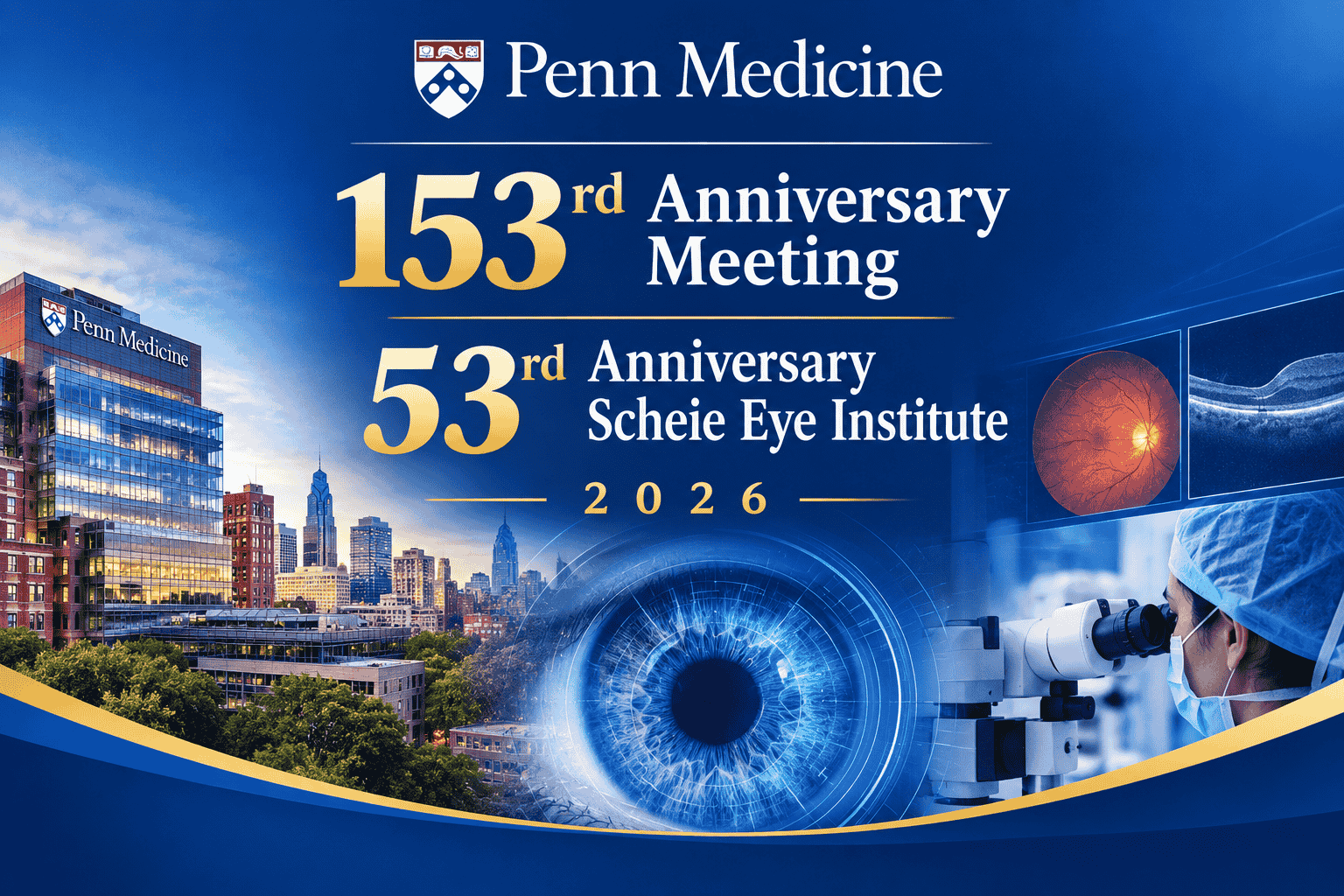
Penn Medicine 153rd Anniversary Meeting 53rd Anniversary Scheie Eye Institute 2026
$15.00
This Product is shared via google drive download link, So please share your correct Gmail id while placing the order .Please note that there are no CME points or certificate associated with this course Samples for Courses Can be found here : Free Samples Here!
Penn Medicine 153rd Anniversary Meeting 53rd Anniversary Scheie Eye Institute 2026
Ophthalmology • Vision Science • Clinical Research • Neuro-Ophthalmology
May 15–16, 2026 | Scheie Eye Institute / Penn Medicine | Philadelphia, Pennsylvania
Explore current developments in ophthalmology, vision science, clinical research, and eye care with the Penn Medicine 153rd Anniversary Meeting 53rd Anniversary Scheie Eye Institute 2026, presented by the Department of Ophthalmology at the University of Pennsylvania Perelman School of Medicine.
The Annual Anniversary Meeting was held on Friday, May 15, and Saturday, May 16, 2026, highlighting both vision science at Penn and ongoing clinical and research activities at the Scheie Eye Institute.
The Friday program was dedicated to basic and translational research, while the Saturday program focused on clinical and research updates together with a variety of clinical case studies relevant to practitioners across ophthalmic disciplines.
Major areas highlighted by the program include:
- Glaucoma
- Anterior segment disease
- Corneal disease
- Dry eye disease
- Retinal diseases
- Macular degeneration
- Ophthalmic genetics
- Oculoplastic surgery
- Pediatric oculoplastic cases
- Neuro-ophthalmology
- Optic nerve disease
- Ocular pathology
- Vision science
- Translational research
- Clinical ophthalmology
- Evidence-based eye care
Course Details
- Course: Penn Medicine 153rd Anniversary Meeting 53rd Anniversary Scheie Eye Institute 2026
- Institution: Penn Medicine / Scheie Eye Institute
- Academic Institution: University of Pennsylvania Perelman School of Medicine
- Department: Department of Ophthalmology
- Year: 2026
- Meeting Dates: May 15–16, 2026
- Saturday Program: May 16, 2026
- Saturday Time: 7:30 AM – 4:50 PM
- Venue: Kozart Auditorium / Scheie Eye Institute / PPMC
- Location: Philadelphia, Pennsylvania, USA
- Primary Specialty: Ophthalmology
- Related Specialty: Neurology
- Primary Focus: Clinical Ophthalmology / Vision Science / Research
- Language: English
Course Overview
The Penn Medicine 153rd Anniversary Meeting & 53rd Anniversary Scheie Eye Institute 2026 is a two-day academic ophthalmology meeting highlighting ongoing developments in both clinical eye care and vision research.
Following the tradition of previous Anniversary Meetings, the Department of Ophthalmology organized the program to showcase scientific work at Penn together with ongoing clinical and research activities at Scheie Eye Institute.
The meeting was structured around two complementary areas:
Basic & Translational Research → Clinical Ophthalmology & Case-Based Updates
The Friday program focused on basic and translational vision research.
The Saturday program highlighted clinical and research updates and included clinical case studies designed to appeal to practitioners across ophthalmic disciplines.
The educational content addresses several major ophthalmology subspecialties, including:
- Glaucoma
- Cornea
- Anterior segment
- Retina
- Macular degeneration
- Genetics
- Oculoplastic surgery
- Neuro-ophthalmology
- Optic nerve disorders
- Ocular pathology
Keynote Speakers & Special Lectures
Carol L. Karp, MD
Professor of Ophthalmology and Richard K. Forster Chair in Ophthalmology at the University of Miami Miller School of Medicine.
Dr. Karp delivered the:
20th David M. Kozart Memorial Lecture
Tomas S. Aleman, MD
Irene Heinz-Given and John LaPorte Research Professor and Director of the Retinal Structure and Function Laboratory, Perelman School of Medicine.
Dr. Aleman also serves as Co-Director of the Center for Hereditary Retinal Degenerations, Scheie Eye Institute.
He delivered the:
- 12th Honored Alumni Lecture
- 4th Alan M. Laties, MD Memorial Lectureship
Educational Focus
The course was designed to provide participants with current clinical advances in ophthalmology while highlighting ongoing research taking place at the Scheie Eye Institute.
Major fields represented include:
- Glaucoma
- Anterior segment
- Retinal diseases
- Genetics
- Oculoplastic surgery
- Neuro-ophthalmology
- Ocular pathology
The program brings together clinical care, scientific research, case-based discussion, and evidence-based approaches to eye and vision health.
Evidence-Based Ophthalmic Care
Evidence-based guidelines provide an important foundation for approaches intended to advance eye and vision health.
Within the framework described for this meeting, evidence-based guidance can support clinical practice by:
- Providing recommendations based on objective evidence
- Supporting consistency in clinical messaging
- Improving uniformity in patient care
- Establishing baselines for measuring improvements in care
- Supporting evaluation of patient outcomes
- Promoting accountability
- Encouraging adoption of best practices
This evidence-focused approach connects advances in ophthalmic research with practical clinical decision-making.
Learning Objectives
After completing this activity, participants should be able to:
- Identify insights into new developments in the management of glaucoma.
- Review diagnosis and management of complicated oculoplastic cases in the adult and pediatric age group.
- Identify the latest developments in treatment options for various diseases of the retina including macular degeneration.
- Review the diagnostic challenges and management of various diseases that affect the optic nerve.
- Identify new methods of diagnosis and management of various diseases of the cornea including dry eye disease.
- Review diagnostic challenges and management of various neuro-ophthalmic diseases.
GLAUCOMA
Developments in Glaucoma Management
The program reviews new developments in the management of glaucoma, providing participants with updates relevant to contemporary ophthalmic practice.
Glaucoma remains a major area of clinical and research interest within ophthalmology, requiring continued attention to advances in:
- Diagnosis
- Disease assessment
- Management
- Clinical decision-making
- Long-term ophthalmic care
OCULOPLASTIC SURGERY
Adult & Pediatric Oculoplastic Cases
The meeting includes review of complicated oculoplastic cases affecting both:
- Adults
- Pediatric patients
The educational objective emphasizes diagnosis and management of challenging presentations encountered within oculoplastic practice.
RETINA
Retinal Disease Updates
The retinal component focuses on developments in treatment options for a variety of retinal diseases.
Areas of interest include:
- Retinal disease
- Clinical management
- Treatment developments
- Research advances
Macular Degeneration
Macular degeneration is specifically identified within the learning objectives as an important retinal condition addressed during the program.
Participants review developments in available treatment approaches for retinal disease, including macular degeneration.
RETINAL RESEARCH & GENETICS
Research taking place at the Scheie Eye Institute includes important areas related to:
- Retinal diseases
- Ophthalmic genetics
- Hereditary retinal disorders
- Retinal structure
- Retinal function
The participation of leaders in retinal structure, function, and hereditary retinal degeneration reflects the meeting’s integration of clinical ophthalmology with vision science and translational research.
CORNEA & ANTERIOR SEGMENT
Corneal Disease
The course reviews methods for the diagnosis and management of diseases of the cornea.
The corneal component connects clinical assessment with developments in the management of anterior segment disease.
Dry Eye Disease
Dry eye disease is specifically included within the learning objectives.
The program reviews new methods related to:
- Diagnosis
- Clinical evaluation
- Management of corneal disease
- Management of dry eye disease
NEURO-OPHTHALMOLOGY
Neuro-Ophthalmic Diseases
The program reviews diagnostic challenges and management approaches involving various neuro-ophthalmic diseases.
Neuro-ophthalmology represents an important intersection between:
Ophthalmology + Neurology
and may require integration of ocular, neurologic, and systemic clinical findings.
OPTIC NERVE DISEASE
Diagnostic Challenges
Diseases affecting the optic nerve can present significant diagnostic and management challenges.
The meeting provides educational review related to:
- Optic nerve disorders
- Diagnostic challenges
- Clinical evaluation
- Management considerations
OCULAR PATHOLOGY
Ocular pathology is included among the major fields represented in the course.
Understanding ophthalmic disease through both clinical findings and underlying pathology can contribute to more informed diagnostic evaluation and management.
VISION SCIENCE & TRANSLATIONAL RESEARCH
The Anniversary Meeting highlights ongoing vision research taking place within Penn and the Scheie Eye Institute.
The Friday program was dedicated specifically to:
- Basic research
- Translational research
- Vision science
This provides an academic complement to the clinical ophthalmology content highlighted during the Saturday program.
CLINICAL CASE STUDIES
The Saturday program also highlights a variety of clinical case studies.
Case-based education can help participants examine:
- Diagnostic challenges
- Clinical reasoning
- Disease presentation
- Management considerations
- Complex ophthalmic cases
The cases were intended to appeal to practitioners across ophthalmic disciplines.
Cross-Specialty Clinical Focus
The program integrates multiple ophthalmic and related specialties within a single academic meeting.
Ophthalmology + Neurology
Neuro-ophthalmic and optic nerve disorders require consideration of both ocular and neurologic disease.
Key areas include:
- Optic nerve disease
- Neuro-ophthalmic disorders
- Diagnostic challenges
- Clinical management
Ophthalmology + Genetics
The meeting highlights research relevant to:
- Hereditary retinal degeneration
- Retinal disease
- Ophthalmic genetics
- Retinal structure and function
Clinical Ophthalmology + Vision Science
One of the defining aspects of the Anniversary Meeting is the connection between:
Basic Research → Translational Research → Clinical Ophthalmology
This structure provides participants with exposure to both scientific discovery and its relationship to clinical eye care.
Major Glaucoma Topics
- Glaucoma
- Glaucoma Management
- New Developments in Glaucoma
- Clinical Ophthalmology
- Evidence-Based Eye Care
Major Retina Topics
- Retinal Diseases
- Macular Degeneration
- Retina Treatment Options
- Retinal Structure
- Retinal Function
- Hereditary Retinal Degeneration
- Ophthalmic Genetics
Major Cornea & Anterior Segment Topics
- Corneal Disease
- Corneal Diagnosis
- Corneal Management
- Dry Eye Disease
- Anterior Segment Disease
Major Neuro-Ophthalmology Topics
- Neuro-Ophthalmic Disease
- Optic Nerve Disease
- Diagnostic Challenges
- Neuro-Ophthalmic Management
- Neurology and Ophthalmology
Major Oculoplastic Topics
- Oculoplastic Surgery
- Complicated Oculoplastic Cases
- Adult Oculoplastic Cases
- Pediatric Oculoplastic Cases
- Diagnosis
- Clinical Management
Major Research Topics
- Vision Science
- Basic Research
- Translational Research
- Clinical Research
- Ophthalmic Genetics
- Retinal Research
- Evidence-Based Ophthalmology
- Clinical Case Studies
- Ocular Pathology
Target Audience
The program is relevant to ophthalmologists, vision scientists, and healthcare professionals interested in clinical and scientific developments in eye care.
The listed specialties include:
- Ophthalmology
- Neurology
It is particularly relevant for:
- Ophthalmologists
- Ophthalmology Subspecialists
- Retina Specialists
- Cornea Specialists
- Glaucoma Specialists
- Neuro-Ophthalmologists
- Oculoplastic Specialists
- Pediatric Ophthalmology Professionals
- Ophthalmology Residents
- Ophthalmology Fellows
- Vision Scientists
- Optometrists
- Researchers
- Faculty
- Medical Students and Trainees
- Clinicians whose practice intersects with ophthalmic disease
What Participants Gain
The Penn Medicine 153rd Anniversary Meeting 53rd Anniversary Scheie Eye Institute 2026 combines clinical ophthalmology with ongoing academic and scientific research.
Participants can review:
- Current advances in clinical ophthalmology
- New developments in glaucoma management
- Diagnosis and management of complicated oculoplastic cases
- Retinal disease treatment developments
- Macular degeneration
- Optic nerve diseases
- Corneal disease
- Dry eye disease
- Neuro-ophthalmic disorders
- Ophthalmic genetics
- Ocular pathology
- Clinical case studies
- Basic and translational vision research
- Ongoing research at the Scheie Eye Institute
The educational framework can be summarized as:
Vision Science → Translational Research → Clinical Updates → Case-Based Ophthalmology
Why This Course Is Useful
The Penn Medicine 153rd Anniversary Meeting & 53rd Anniversary Scheie Eye Institute 2026 brings together scientific research, clinical ophthalmology, and case-based education within a single academic meeting.
The program can help learners review developments across several ophthalmology subspecialties while also gaining exposure to ongoing research within Penn Medicine and the Scheie Eye Institute.
Its combination of:
- Glaucoma
- Retina
- Cornea
- Oculoplastics
- Neuro-ophthalmology
- Genetics
- Ocular pathology
- Vision science
makes it relevant to clinicians and researchers interested in a broad academic review of modern ophthalmology.
Product Information
- Product: Penn Medicine 153rd Anniversary Meeting 53rd Anniversary Scheie Eye Institute 2026
- Institution: Penn Medicine / Scheie Eye Institute
- Academic Institution: University of Pennsylvania Perelman School of Medicine
- Department: Department of Ophthalmology
- Dates: May 15–16, 2026
- Saturday Program: May 16, 2026, 7:30 AM – 4:50 PM
- Venue: Kozart Auditorium / Scheie Eye Institute / PPMC
- Location: Philadelphia, Pennsylvania
- Primary Specialty: Ophthalmology
- Related Specialty: Neurology
- Focus: Clinical Ophthalmology / Vision Science / Research
- Available From: MedicalAmboss.com
Short Description
Penn Medicine 153rd Anniversary Meeting 53rd Anniversary Scheie Eye Institute 2026 presents clinical and research updates across glaucoma, retina, cornea, oculoplastics, neuro-ophthalmology, ophthalmic genetics, optic nerve disease, ocular pathology, and vision science.
The two-day Penn Medicine ophthalmology meeting combines basic and translational research, clinical ophthalmology updates, and case-based education, with learning objectives covering glaucoma management, complicated adult and pediatric oculoplastic cases, retinal diseases including macular degeneration, optic nerve disorders, corneal disease including dry eye, and neuro-ophthalmic diseases.
You will find it on MedicalAmboss.com.
Topics
- Glaucoma: New developments in the management of glaucoma.
- Oculoplastic Cases: Diagnosis and management of complicated oculoplastic cases in adult and pediatric patients.
- Retinal Diseases: Developments in treatment options for various diseases affecting the retina.
- Macular Degeneration: Current developments in retinal treatment relevant to macular degeneration.
- Optic Nerve Disorders: Diagnostic challenges and management of diseases affecting the optic nerve.
- Corneal Diseases: New methods of diagnosis and management of diseases affecting the cornea.
- Dry Eye Disease: Diagnostic and management approaches to dry eye disease.
- Neuro-Ophthalmic Diseases: Diagnostic challenges and management of neuro-ophthalmic conditions.
- Anterior Segment: Clinical and research updates involving anterior segment disease.
- Ophthalmic Genetics: Research and clinical developments involving genetic eye disease.
- Hereditary Retinal Degeneration: Research involving inherited retinal disorders and retinal structure and function.
- Ocular Pathology: Ophthalmic disease considered within the context of ocular pathology.
- Vision Science: Basic and translational research in vision science at Penn.
- Clinical Research: Ongoing clinical and research activities at the Scheie Eye Institute.
- Clinical Case Studies: Case-based ophthalmic education across multiple disciplines.
- Evidence-Based Ophthalmology: Application of objective evidence and best-practice guidance to eye and vision care.
Saturday, May 16, 2026
7:30AM – 7:50AM
7:45AM – 7:50AM
7:50AM – 8:00AM
Stephen E Orlin, MD
Moderators: Sonul Mehta, MD and Karen E. Revere, MD
8:00AM – 8:08AM
William V Anninger, MD
8:08AM – 8:16AM
Erin O’Neil, MD
8:16AM – 8:22AM
Karen Revere, MD
8:22AM – 8:30AM
Emily DeCarlo, MD
8:30AM – 8:38AM
Cesar Briceno, MD
8:38AM – 8:46AM
Sonul Mehta, MD
8:46AM – 8:54AM
Makayla Mccoskey, MD
8:54AM – 9:02AM
William Katowitz, MD
9:02AM – 9:12AM
Moderator: Ahmara Ross, MD
9:12AM – 9:20AM
Madhura Tamhankar, MD
9:20AM – 9:28AM
Visish Srinivasan, MD
9:28AM – 9:36AM
Ali G Hamedani, MHS
9:36AM – 9:45AM
9:45AM – 10:15AM
Moderators: Alexander J. Brucker, MD and Eydie Miller-Ellis, MD
10:15AM – 10:23AM
Stephanie Wey, MD
10:23AM – 10:31AM
Rithambara Ramachandran, MD
10:31AM – 10:39AM
Shivam Gulhar, MD
10:39AM – 10:47AM
Almiqdad Saeed, MD
10:47AM – 10:55AM
Brian L. VanderBeek, MD
10:55AM – 11:03AM
Benjamin J. Kim, MD
11:03AM – 11:11AM
Phoebe L Mellen, MD
11:11AM – 11:19AM
Lucie Y Guo, MD, PhD
11:19AM – 11:30AM
11:35AM – 12:15PM
Tomas S Aleman, MDIntroduction: Alexander J. Brucker, MD
12:15PM – 1:15PM
Moderator: Vatinee Y. Bunya, MD, MSCE
1:15PM – 1:23PM
Matthew Santos, MD
1:23PM – 1:31PM
Kristin Hammersmith, MD
1:31PM – 1:39PM
Stephen T Armenti, MD, PhD
1:39PM – 1:47PM
Parveen Nagra, MD
1:47PM – 1:55PM
Christina S Moon, MD
1:55PM – 2:03PM
Fareedah F Haroun, Other
2:03PM – 2:11PM
Vatinee Bunya, MD
2:11PM – 2:20PM
2:20PM – 3:15PM
Carol L Karp, MDIntroduction: Christina Moon, MD
3:15PM – 3:45PM
Moderator: Stephen E. Orlin, MD
3:45PM – 3:53PM
Caroline L Sherman, MD
3:53PM – 4:01PM
Christopher Anthony, MD
4:01PM – 4:09PM
Caroline B. Head, MD
4:09PM – 4:17PM
Yasaman Ataei, MD
4:25PM – 4:33PM
Samyuktha Guttha, MD
4:33PM – 4:41PM
Timothy J Goblirsch, MD
4:41PM – 4:49PM
Related products
Anesthesiology & pain medicine
Neurology / neurosurgery courses
2023 SANS Written Boards Review Course for neurological surgeons
Neurology / neurosurgery courses
56th UCSF Annual Recent Advances in Neurology 2023 (Videos + Syllabus)
Critical Care - Emergency medicine
Gulfcoast Ultrasound-Guided Upper Extremity Nerve Blocks for Emergency Medicine
Anesthesiology & pain medicine
Neurology / neurosurgery courses
Emergency Neurological Life Support -ENLS Live Lecture Series 2021
Neurology / neurosurgery courses
Americas Committee for Treatment and Research in Multiple Sclerosis (ACTRIMS®) 2022 (Videos)